Introduction

On a busy weekend afternoon in Hong Kong’s famous watch district, a young collector stepped into a boutique filled with shimmering displays of Rolex Submariners. Among them was a Rolex Submariner 126610LN, the so-called “modern black Submariner” that so many enthusiasts dream of owning. The bracelet felt solid, the bezel clicked with precision, and even the date magnifier—the cyclops lens—looked perfect. Convinced he had found an authentic piece, he nearly completed the purchase. Only later, under the scrutiny of a seasoned watchmaker, did he discover the uncomfortable truth: it was a Super Clone Submariner, crafted so precisely that even experienced eyes struggled to tell it apart from the genuine article.

Stories like this are becoming increasingly common in the modern watch market. The Rolex Submariner, first introduced in 1953 as a professional diver’s tool, has long since evolved into one of the most recognized and desired luxury timepieces in the world. With its robust case design, luminous markers, and enduring association with adventure and prestige, the Submariner holds a place few other watches can match. That level of demand, however, has made it a prime target for counterfeiters. And while low-grade replicas still exist, the industry has moved into a new era—one defined by the rise of the super clone watch.

Unlike the crude imitations of the past, today’s super clones are painstakingly engineered to mirror every detail of the genuine Rolex. The brushed finish on the Oyster bracelet, the crisp alignment on the dial, even the glow of the Chromalight lume are recreated with surprising accuracy. Many are produced using high-quality 904L stainless steel, ceramic bezels, sapphire crystals, and movements that visually replicate Rolex’s calibers. Some even mimic the smooth seconds-hand sweep that collectors know as a hallmark of Rolex precision. As a result, what once could be spotted instantly now requires expert observation.

This raises an important question for enthusiasts and buyers alike: how to tell a Super Clone Submariner. The answer is neither simple nor singular. It involves evaluating materials, finishing, dial details, crown mechanics, and the performance of the movement. It also requires an understanding of why these super clones are so convincing in the first place. For readers interested in the broader replica landscape, publications like Hodinkee have frequently discussed how the gap between genuine and clone has narrowed over the last decade.

In the sections ahead, we will explore these differences step by step. From case finishing to bezel engraving, from dial printing to movement architecture, each detail contributes to the authenticity of a Rolex Submariner—and each is carefully mimicked by clone manufacturers. Along the way, we will highlight practical tips, real-world case studies, and professional verification methods. By the end of this article, you will not only understand how to tell a Super Clone Submariner but also gain the confidence to navigate the market with greater clarity and caution.

Why the Submariner Is the Most Cloned Rolex

The Rolex Submariner is not merely a watch; it is a universal symbol of luxury, reliability, and timeless design. Since its debut in 1953 as the world’s first diver’s watch rated for 100 meters of water resistance, the Submariner has transcended its utilitarian roots to become one of the most recognized timepieces globally. From James Bond films in the 1960s to the wrists of today’s business leaders and celebrities, the Submariner consistently appears wherever cultural influence is strongest. This blend of technical innovation and cultural status makes it the most aspirational Rolex—and therefore the most frequently cloned.

Scarcity plays a central role in this phenomenon. Rolex deliberately limits its production, creating an artificial supply-demand imbalance. Visit an authorized dealer and ask for a new Submariner, and chances are you will be placed on a waiting list stretching months, if not years. In the secondary market, models like the Submariner 126610LN or 126610LV often sell well above retail. A watch with a retail price of around $9,000 may command $14,000–$16,000 on the gray market. For counterfeit manufacturers, this gap represents opportunity. By producing Submariner replicas at a fraction of the cost, they tap into an audience eager to bypass waitlists and high markups.

Recognition is another factor. The Submariner’s design is so iconic that even casual observers can identify it instantly—the rotating bezel, the Mercedes-style hands, the cyclops date magnifier, and the Oyster bracelet. This widespread recognition cuts both ways. For counterfeiters, it guarantees market appeal; for collectors, it creates heightened risk. A Super Clone Submariner offers not just visual resemblance but also tactile similarity in weight, bracelet feel, and bezel action, making it far more dangerous than the crude replicas of the past. To a new buyer, the chance of mistaking one for an authentic Rolex is higher than ever.

Technology has accelerated this shift. Modern clone factories now employ 3D scanning, CNC machining, and laser engraving to replicate Rolex’s case profiles and dial s with near perfection. Many use 904L stainless steel—the same grade employed by Rolex itself—and fit bezels with ceramic inserts modeled after Rolex’s proprietary Cerachrom material. The result is a product that does not just look like a Submariner but feels and performs similarly on the wrist. For readers seeking broader context on clone watch advancements, our detailed coverage of super clone watches highlights how this technology has reshaped the replica market.

Social dynamics amplify the effect. In professional environments, a Submariner can elevate perceptions of taste, credibility, and achievement. It is one of the few watches that transcends industries, generations, and cultures while remaining relevant. This universality creates a massive potential customer base for counterfeiters. While a clone of a niche model may only appeal to a small group of enthusiasts, a Submariner replica resonates across continents—from New York to Dubai, from London to Hong Kong. Its unique status as both Rolex’s most coveted model and the world’s most recognizable luxury watch makes it the ultimate counterfeit target.

This is why understanding how to tell a Super Clone Submariner is so critical. Collectors must recognize that the Submariner has become the “Mount Everest” of replica manufacturing. With every generation of clones, the gap between authentic and imitation narrows. For the casual enthusiast, the differences may be invisible; for the seasoned expert, identifying them requires sharper tools and deeper knowledge. This reality makes the Submariner not just Rolex’s flagship but also the centerpiece in the ongoing battle between authenticity and imitation.

Super Clone Submariner movement vs Rolex caliber

What Makes a Super Clone Different from a Regular Replica

For decades, replica Submariners were easy to identify. The cases were often made of low-grade alloys, the bezels clicked loosely, and the dial printing was full of errors. These “street replicas” served more as fashion statements than serious attempts at horology. Today, however, the situation has changed dramatically. The rise of the Super Clone Submariner has redefined the replica market by eliminating many of the obvious flaws that once gave fakes away. These new-generation clones are produced with an investment in materials, technology, and craftsmanship that rivals entry-level Swiss brands, making them dramatically harder to detect.

The first area of distinction is material quality. Standard replicas typically use 316L stainless steel, a durable but ordinary alloy commonly found in mass-produced watches. In contrast, super clones employ 904L stainless steel, the same high-grade metal that Rolex itself uses. This alloy not only provides better corrosion resistance but also creates a brighter, more luxurious sheen that is instantly recognizable on the wrist. Many buyers who compare side by side are surprised by how similar the finish appears. Some clone factories even apply alternating brushed and polished surfaces that mimic Rolex’s distinctive Oyster bracelet finishing, making the visual gap smaller than ever.

Beyond the steel, details like bezels and crystals further highlight the divide. Traditional replicas might use painted aluminum inserts that fade quickly, but super clones are fitted with ceramic bezels modeled after Rolex’s proprietary Cerachrom technology. These bezels not only capture the glossy depth of genuine Rolex inserts but also replicate the platinum-filled numerals that shimmer under light. Similarly, sapphire crystals with anti-reflective coatings give super clones the same clarity and cyclops magnification effect as authentic Submariners. For more on how these innovations compare, you can reference our in-depth breakdown of super clone watches.

The movement represents perhaps the most significant leap. Ordinary replicas rely on inexpensive Asian automatic calibers that tick unevenly and lack Rolex’s renowned smooth sweep. By contrast, many Super Clone Submariners now house custom-engineered movements designed to mirror the architecture of Rolex’s 3135 or 3235 calibers. Bridges are engraved, rotors decorated, and even balance wheels are styled to look indistinguishable from the genuine article. While these clones rarely achieve Rolex’s certified accuracy of −2/+2 seconds per day, many can hold a stable ±10 seconds daily and offer a power reserve of 40–60 hours. To the casual owner, that level of performance may feel remarkably close to the real thing.

Another factor is finishing consistency. On a standard replica, misaligned dial text or uneven lume application can usually be spotted immediately. Super clones, however, use high-resolution 3D scanning and CNC milling to replicate s, marker spacing, and lume plots with incredible accuracy. Even under a loupe, many super clones show near-perfect alignment, making them highly deceptive to inexperienced buyers. It is for this reason that collectors looking to learn how to tell a Super Clone Submariner must move beyond surface inspection and focus on deeper technical details.

In short, the distinction between a regular replica and a Super Clone Submariner comes down to ambition. Regular replicas are built to give the appearance of luxury at the lowest possible cost. Super clones, on the other hand, are engineered to stand side by side with the genuine article, tricking both the eye and, at times, the wrist. This leap in quality explains why the conversation has shifted from dismissing replicas outright to understanding the specific methods needed to separate clones from the authentic Rolex Submariner. For readers interested in exploring the broader range of Rolex homages, visit our full Rolex replica watch collection.

Key Details to Examine in a Super Clone Submariner

The Case and Bezel

One of the first areas collectors inspect when distinguishing a genuine Submariner from a Super Clone Submariner is the case and bezel. The authentic Rolex Submariner is made from 904L stainless steel, with precise brushing on the case sides and polished chamfers along the lugs. Super clones often match this finish so closely that, in hand, the weight and feel appear authentic. However, subtle differences exist: the sharpness of the chamfers, the consistency of the brushing pattern, and the robustness of the crown guards. The bezel offers another clue. Genuine Submariners use Rolex’s proprietary Cerachrom ceramic inserts with platinum-filled numerals, while many super clones, though ceramic, struggle to replicate the exact depth and shine of Rolex’s platinum filling.

The Dial and Markers

The dial is often called the “soul” of the Submariner, and it is where even minor imperfections stand out. On a genuine model, s are crisp, consistent, and evenly spaced. The lume plots are perfectly round, with Chromalight glow that lasts for hours. In contrast, a super clone dial can appear nearly identical, but under magnification, slight inconsistencies in printing thickness or lume application reveal themselves. The cyclops magnifier provides another checkpoint: Rolex ensures a 2.5× magnification over the date window, while many clones fall short at around 2×. For a detailed comparison of dial differences, our breakdown of super clone watches offers visual examples collectors should study.

The Hands and Crown

Hands are another subtle yet telling feature. Genuine Rolex Submariner hands are polished to perfection, with no visible rough edges or uneven finishes. Super clones often replicate the Mercedes-style hour hand and the sleek minute and seconds hands accurately, but occasionally show inconsistencies in length or surface polish. The crown and its guards deserve equal attention.

Authentic Submariners feature a Triplock crown with three dots beneath the Rolex logo, engineered for superior water resistance. While super clones reproduce the design, the tactile experience differs. Screwing down a genuine Rolex crown feels exceptionally smooth and secure, while a clone may feel looser or grainier. For more technical insights into crown mechanics, collectors often reference watchmaking resources such as WatchTime Magazine, which provides detailed horology guides.

The Movement

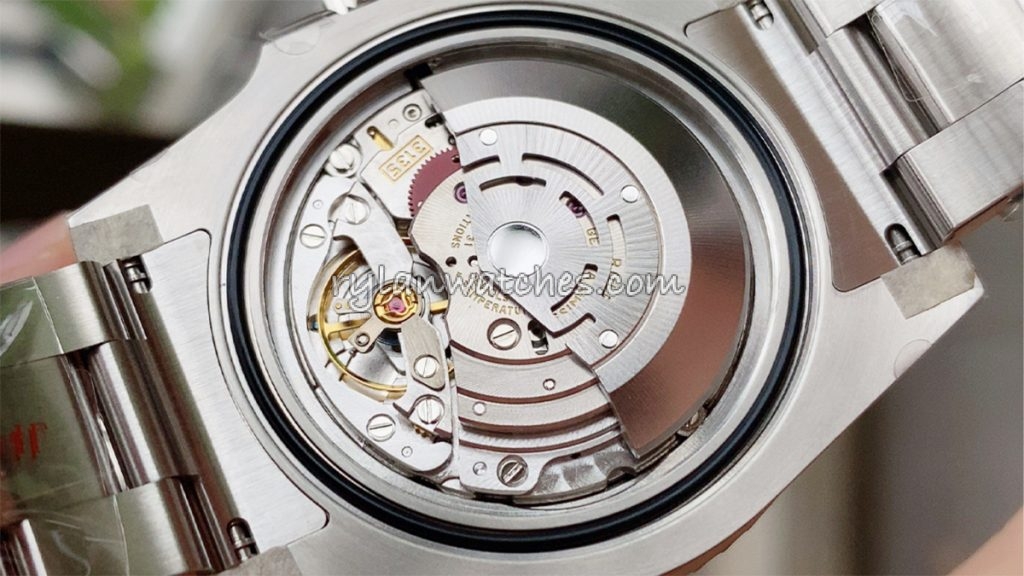
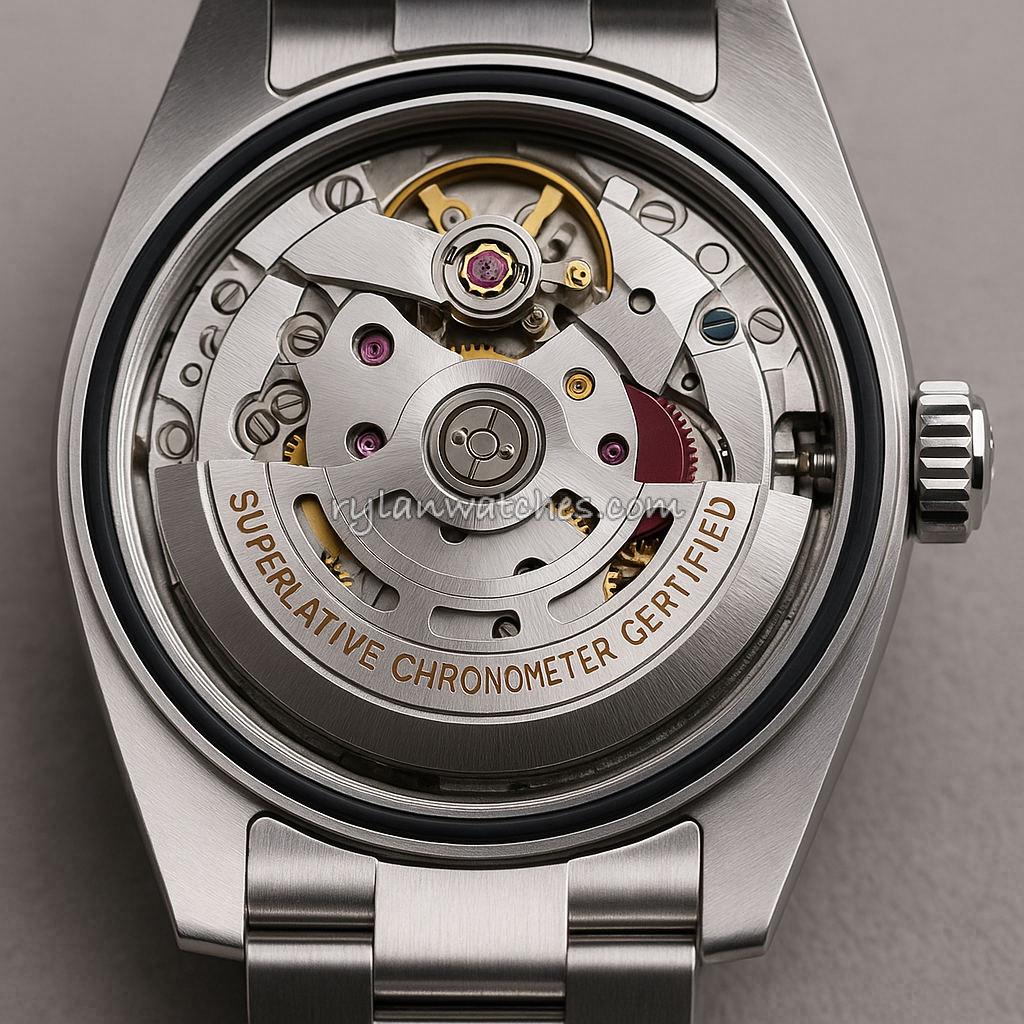
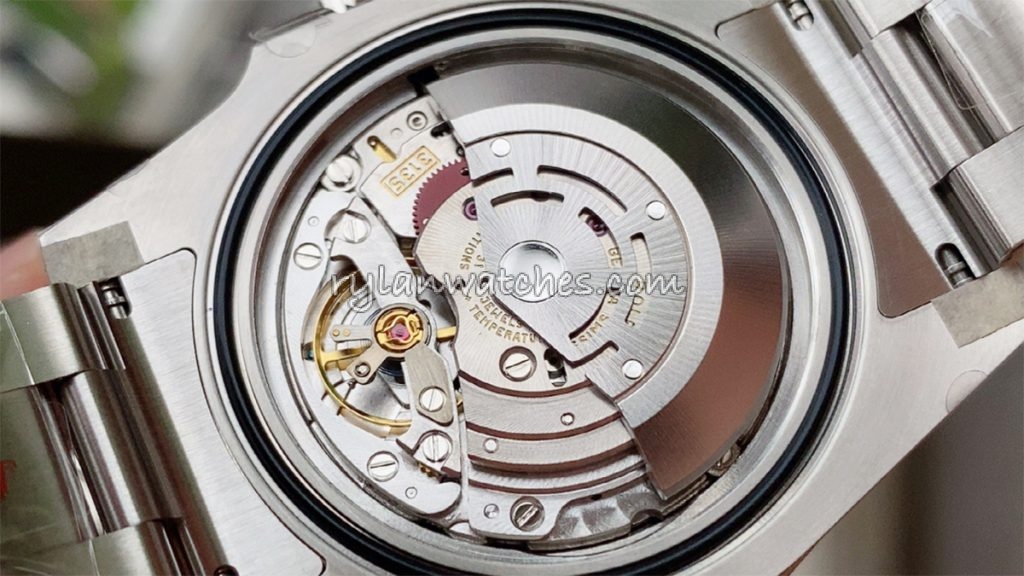
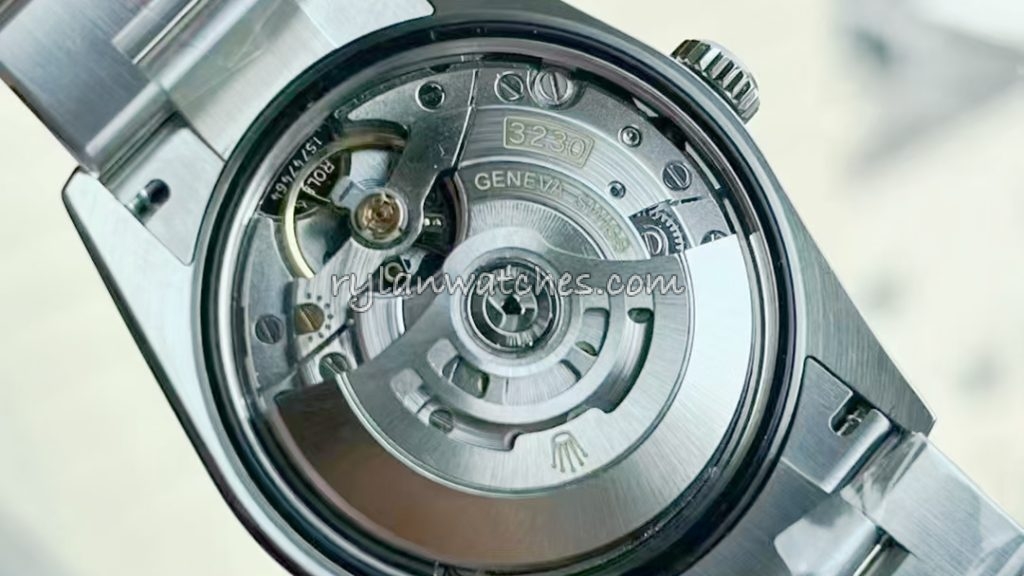
Perhaps the most decisive element is the movement. Genuine Submariners are powered by Rolex’s in-house calibers, such as the 3235, offering a 70-hour power reserve and COSC-certified accuracy of −2/+2 seconds per day. Super clone movements attempt to mimic this architecture, with decorated rotors, engraved bridges, and even fake microstella screws to deceive at a glance. However, performance usually reveals the difference.

Clones often achieve ±10 seconds per day and a 40–60 hour power reserve—impressive, but not Rolex’s level. Another giveaway is the smoothness of the seconds hand. While Rolex’s proprietary escapement provides an exceptionally smooth glide, clones, despite looking similar, may display a faint stutter under close observation. For anyone learning how to tell a Super Clone Submariner, examining the movement’s performance over days of wear is one of the most reliable methods.

Professional Tools and Techniques for Verification

Even the most experienced collectors can struggle to separate a genuine Rolex from a Super Clone Submariner. To assist, professionals rely on a combination of specialized tools and systematic inspection methods. These techniques move beyond casual observation and provide measurable, repeatable ways of identifying whether a Submariner is authentic or a highly convincing clone.

The first tool in any expert’s kit is a high-quality loupe or microscope. Rolex dials are manufactured under extremely strict tolerances, meaning s, lume plots, and logo engravings appear razor-sharp under magnification. By contrast, even the best super clones may show subtle irregularities—slightly uneven letter thickness, lume plots with tiny bubbles, or rehaut engravings that do not perfectly align with the minute markers. Using a loupe at 10× or higher magnification can reveal these inconsistencies and give collectors confidence in their assessment.

Weight and density testing are another effective method. Genuine Rolex Submariners crafted from 904L stainless steel carry a distinct heft and density compared to 316L steel or hybrid alloys often found in replicas. Jewelers sometimes employ precision scales or even spectrometry devices to measure composition. For an enthusiast at home, simply comparing the watch’s weight to official specifications can be a useful clue. Our detailed article on super clone watches outlines how material differences, while visually subtle, often stand out in practical handling.

Sound analysis offers yet another layer of verification. Rolex movements, such as the 3235 caliber, operate with a near-silent sweep thanks to precision-engineered escapements and lubricants. Super clone movements, though visually similar, often produce slightly louder ticking or irregular acoustic signatures. Professional watchmakers sometimes use microphones and software to analyze beat rate and amplitude, producing charts that reveal discrepancies invisible to the naked eye. This method is particularly useful when external appearances are nearly identical.

Caseback inspection can also be decisive, though it requires proper tools. Genuine Rolex Submariners have closed casebacks with immaculate machining. Opening them reveals a perfectly finished movement, with details like perlage, polished screws, and engraved rotors. Super clones may replicate the visual look but often cut corners in finishing consistency. While casual buyers may hesitate to open a caseback, professional services like authentication centers and horology specialists provide this service under controlled conditions. Articles from industry authorities such as Hodinkee regularly emphasize the importance of third-party verification when large sums of money are at stake.

Finally, water resistance and pressure testing offer insights into overall construction quality. A genuine Submariner is guaranteed to 300 meters, supported by the Triplock crown system and rigorous quality control. Super clones may advertise similar ratings, but in practice, they rarely achieve the same reliability. Professional watchmakers use pressure-testing machines to confirm water resistance without risking damage. While most clones survive light exposure to water, they are not recommended for diving or extreme use. Understanding this distinction is vital for buyers who plan to wear their watches in demanding environments.

In short, professional tools transform guesswork into science. By using magnification, weight measurement, acoustic analysis, and controlled testing, experts reduce the margin of error when evaluating a Submariner. For collectors determined to master how to tell a Super Clone Submariner, adopting even some of these techniques can make the difference between a costly mistake and a confident purchase.

Red Flags and Common Pitfalls

While professional tools and techniques can reveal the truth, many collectors encounter warning signs long before they even examine the watch closely. These red flags often appear in the buying process itself—pricing, paperwork, and the seller’s behavior. For anyone navigating the luxury watch market, recognizing these pitfalls is essential to avoid walking away with a Super Clone Submariner instead of a genuine Rolex.

The most obvious signal is price. Rolex Submariners are in perpetual demand, and prices rarely fall below retail unless the watch is heavily worn or damaged. If you encounter a brand-new Submariner offered significantly below market value, it should raise immediate suspicion. Super clones are often priced strategically to appear “too good to pass up”—cheap enough to tempt buyers, but high enough to feel believable. Cross-checking with secondary market prices is a must, and our comparison of super clone watches explains how these replicas are positioned to exploit gaps in consumer knowledge.

Another red flag is incomplete or inconsistent documentation. Genuine Rolex Submariners come with warranty cards, official booklets, and boxes that match the watch’s serial and reference numbers. Many super clones attempt to reproduce these accessories, but often miss fine details—typos in print, low-quality holograms, or incorrect s. Buyers should always verify whether the warranty card matches the watch in both model and serial number. According to WatchTime Magazine, discrepancies in paperwork are among the most common giveaways in high-end counterfeits.

The seller’s profile also matters. Authorized dealers and established pre-owned retailers have reputations to protect, making it unlikely they would knowingly sell a clone. Online marketplaces, anonymous social media accounts, and unfamiliar websites pose greater risks. Sellers who avoid direct answers, push buyers to act quickly, or refuse to allow independent authentication are clear red flags. In contrast, reputable sellers will provide transparency, references, and often a return policy. This is why researching sellers is as important as inspecting the watch itself.

Physical handling can reveal more subtle pitfalls. While super clones often look convincing, they may still fall short in long-term performance. Issues like poor water resistance, shorter power reserve, or unreliable lume application can emerge after weeks of wear. A buyer might initially feel confident, only to discover problems during daily use. For anyone learning how to tell a Super Clone Submariner, it is important to remember that clones often pass first impressions but fail durability tests over time.

Finally, urgency is one of the most manipulative pitfalls. Scammers and dishonest sellers often pressure buyers with claims like “one-time deal” or “someone else is about to buy it.” Genuine Rolex Submariners, with their constant demand, do not require such tactics. If a deal feels rushed or the seller insists on avoiding escrow services, it is safer to walk away. The luxury watch market rewards patience and research far more than quick decisions.

In summary, spotting red flags is about more than scrutinizing the watch—it is about evaluating the entire buying context. Price that seems too low, paperwork that doesn’t add up, evasive sellers, and exaggerated urgency are all signals worth heeding. By paying attention to these pitfalls, collectors reduce the chances of falling victim to sophisticated Super Clone Submariners and can focus instead on acquiring authentic timepieces with confidence.

Case Studies: Real vs Super Clone Submariner Examples

Sometimes the most effective way to understand the differences between a genuine Rolex and a Super Clone Submariner is to compare specific models. Two of the most popular references today are the Submariner Date 126610LN, nicknamed the “Black Submariner,” and the Submariner Date 126610LV, widely known as the “Green Submariner” or “Kermit.” These watches provide excellent case studies because both are highly desirable and heavily targeted by super clone manufacturers.

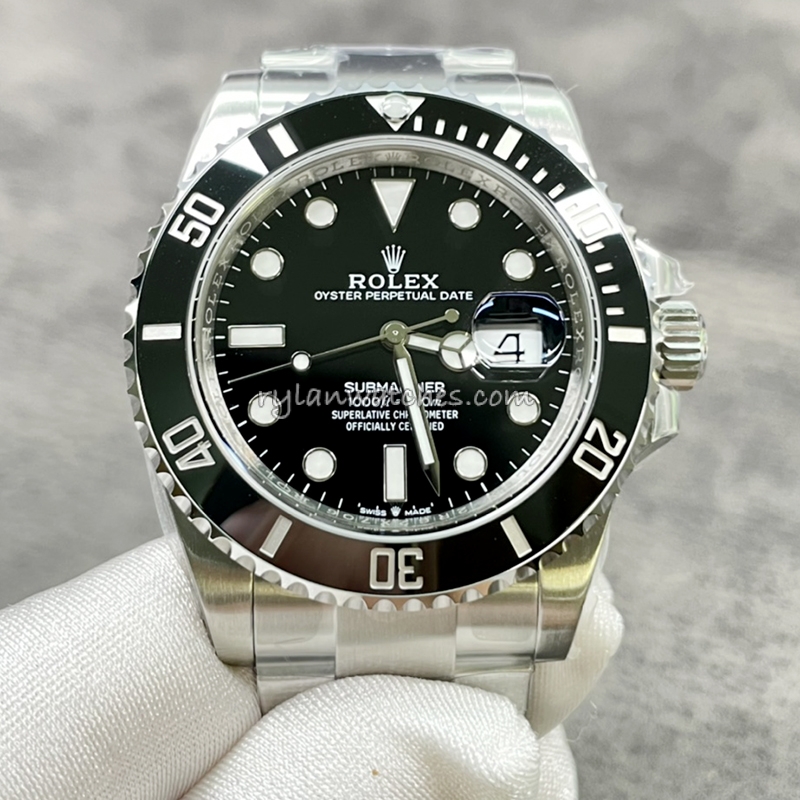
Let’s begin with the 126610LN, the modern black Submariner. In authentic form, the 41 mm case is flawlessly proportioned, with precise brushing on the lugs and polished chamfers that reflect light elegantly. The bezel insert is crafted from Rolex’s proprietary Cerachrom ceramic, giving it a glossy depth and platinum-filled numerals. A super clone version may replicate the dimensions and materials with surprising accuracy, but side-by-side comparison often reveals differences.

The platinum coloring on the numerals may look slightly dull, and the sharpness of the engraving can be less crisp. Collectors who have compared real and clone versions note that the bezel action—120 clicks in one direction—sometimes feels looser on the clone, lacking the solid feedback that Rolex is known for.

The dial of the black Submariner also offers important clues. Authentic Rolex dials are renowned for their perfect printing and Chromalight lume, which glows bright blue for hours. Super clone dials can appear nearly flawless, but under magnification, slight inconsistencies emerge. The “Swiss Made” text at six o’clock, for instance, may not align perfectly with the rehaut engravings. The cyclops lens is another test: Rolex ensures 2.5× magnification, while clones often achieve closer to 2×. Our detailed guide to super clone watches includes additional visual examples of these differences.

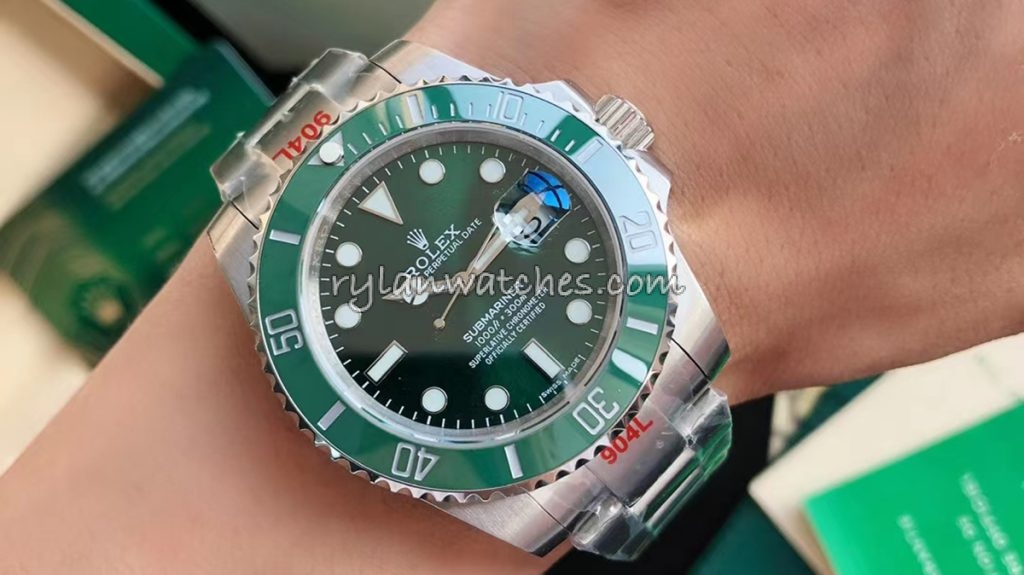
Turning to the 126610LV, the green Submariner shows how color can complicate authentication. The genuine watch features a bezel with a unique green hue, achieved through Rolex’s proprietary ceramic formula. Super clone manufacturers have invested heavily in replicating this shade, and in good lighting, the bezel may appear nearly identical. However, under different angles or lighting conditions, the clone bezel sometimes shifts to a slightly different tone, lacking the depth and vibrancy of the authentic green. This nuance can be especially tricky for inexperienced buyers who rely solely on online photos.

The movement offers further distinctions. Both the 126610LN and 126610LV house Rolex’s Caliber 3235, with a 70-hour power reserve and COSC certification. Super clones frequently use custom Asian calibers designed to look like the 3235 but rarely match its precision. While the fake rotor may be engraved to resemble Rolex’s, performance tells a different story. Clones typically deliver ±10 seconds per day with a shorter power reserve. Over weeks of wear, this discrepancy becomes evident, reminding collectors that cosmetic similarity does not equal mechanical equivalence.

Even with these examples, it is important to acknowledge that super clones are designed to exploit first impressions. A casual glance at a green or black Submariner on someone’s wrist may not reveal anything suspicious. But for serious collectors learning how to tell a Super Clone Submariner, focusing on details like bezel feedback, lume consistency, and long-term accuracy is the path to reliable authentication. Publications like Hodinkee’s coverage of the 2020 Submariner releases provide further benchmarks for what collectors should expect from authentic models.

By studying these real-world examples, buyers sharpen their ability to differentiate authenticity from imitation. Whether black or green, the Submariner remains the most copied Rolex in existence, and these case studies highlight why diligence and knowledge are crucial in avoiding mistakes.

how to tell a Super Clone Submariner on wrist

Why Super Clones Are Harder to Detect Today

A generation ago, spotting a fake Rolex was as simple as glancing at the dial. Misaligned s, lightweight cases, and cheap alloy bracelets gave replicas away instantly. Today, however, the rise of the super clone watch industry has made detection far more complex. Advanced technology, globalized manufacturing, and increasing consumer demand have fueled an evolution in which clones no longer look or feel obviously fake. Instead, they aim to replicate the smallest details of the Submariner so convincingly that even seasoned collectors hesitate before making a judgment.

One key factor is access to modern production tools. Factories producing Super Clone Submariners now use 3D scanning to replicate case geometry down to fractions of a millimeter. CNC machining produces chamfers and lug profiles nearly indistinguishable from Rolex’s, while high-resolution laser engraving recreates s and rehaut engravings with uncanny accuracy. These methods were once reserved for Swiss manufacturers but are now widely available in replica hubs across Asia, narrowing the gap between authentic and clone.

Material sourcing has also improved dramatically. In the past, most replicas used basic 316L stainless steel and aluminum bezels. Today, many super clones employ 904L stainless steel—the very same alloy used by Rolex—and ceramic bezel inserts that replicate the glossy depth of Cerachrom. Sapphire crystals with anti-reflective coatings and engraved casebacks add to the illusion. To an untrained eye, and even in the hand of many collectors, these materials feel authentic, creating a deceptive sense of confidence in the watch’s quality.

Perhaps most impressive, and concerning, is how super clones have begun imitating functional performance. A genuine Rolex Submariner is legendary for its 300-meter water resistance, achieved through the Oyster case and Triplock crown system. In fact, authentic models can remain fully functional even when left continuously submerged in a controlled aquatic environment—such as a home aquarium—for extended periods without compromising integrity. While this is not a recommended use, it illustrates the extraordinary sealing Rolex has perfected. Super clones may claim similar depth ratings, but under professional pressure testing they rarely deliver the same level of security. Their gaskets, crowns, and seals cannot consistently match Rolex’s engineering, making them more vulnerable in real-world aquatic use.

The global exchange of knowledge further complicates detection. Enthusiast communities, online forums, and social media platforms often highlight side-by-side comparisons of authentic Submariners and super clones. Ironically, this information helps counterfeiters as much as it helps buyers, since replica factories study these breakdowns and update their models accordingly. Each production cycle brings clones closer to the real thing, forcing collectors to constantly refine their ability to spot subtle tells. Publications such as Hodinkee frequently note how the replica market has shortened its innovation lag, turning what was once years into mere months.

Ultimately, the reason super clones are so difficult to detect today is not just technology, but intent. These manufacturers are not producing cheap knock-offs for casual wearers—they are deliberately engineering watches to deceive. They study Rolex innovations, replicate them, and release products that blur the boundary between imitation and authenticity. For buyers determined to master how to tell a Super Clone Submariner, this means adopting a deeper, more critical approach. It is no longer enough to glance at a dial; one must understand the engineering, performance, and long-term durability that define the real Submariner.

Should You Buy a Super Clone Submariner?

The allure of a Rolex Submariner is undeniable. For many enthusiasts, it represents the pinnacle of design, engineering, and status. Yet the difficulty of obtaining one—long waitlists, soaring secondary prices, and strict dealer allocations—drives some buyers to consider alternatives. The most tempting option is often a Super Clone Submariner, which promises the look and feel of the real thing at a fraction of the cost. But the question remains: should you actually buy one? The answer depends on whether you prioritize legality, ethics, practicality, or sheer wrist appeal.

From a legal perspective, super clones occupy a gray but dangerous zone. They infringe on Rolex’s trademarks, and in many jurisdictions, buying or selling counterfeit goods is subject to penalties. While enforcement often focuses on large-scale distributors, individuals can still face consequences if caught importing or reselling. Customs seizures are common, and confiscated watches rarely make it back to the buyer. Even if legal action is unlikely for personal ownership, the risk is significant enough that collectors should think twice before pursuing this route. For a deeper overview of legal implications, authoritative resources like Forbes coverage on counterfeit goods provide useful context.

Ethical considerations also come into play. Rolex invests heavily in research, innovation, and skilled labor to produce each Submariner. Super clone manufacturers, by contrast, leverage this intellectual property without compensation, undermining the craftsmanship and value of the originals. Many in the watch community view wearing a super clone as misrepresentation, particularly if the wearer allows others to believe it is authentic. For some, this is a dealbreaker; for others, it is simply a practical solution to enjoy a design they admire. Ultimately, the ethical dimension is subjective, but it is worth reflecting on before making a purchase.

On the practical side, super clones can offer surprising satisfaction. They often look convincing, feel solid, and in many cases, perform reliably for everyday wear. A well-made clone can accompany its owner through business meetings, social gatherings, and casual outings without drawing suspicion. However, practical drawbacks exist. Unlike genuine Submariners, which boast a 300-meter water resistance rating and can withstand extended immersion in aquatic environments, most super clones fail under professional pressure testing. Their gaskets and seals are weaker, meaning owners must be cautious with water exposure. Reliability over time is another concern—while Rolex calibers are engineered for decades of service, super clone movements may require more frequent maintenance or replacement.

For collectors, the long-term value proposition is clear. Genuine Rolex Submariners often appreciate in value, particularly popular references like the 126610LV. They hold resale potential and serve as investments as much as timepieces. Super clones, on the other hand, have no secondary market value. Once purchased, their worth is limited to personal enjoyment. For some buyers, this is acceptable; for serious collectors, it represents a loss of both financial security and horological credibility. Our breakdown of super clone watches further explores how these models differ in terms of collectibility and value retention.

So, should you buy a Super Clone Submariner? The answer is nuanced. If you seek the design, the wrist presence, and the personal satisfaction of wearing an iconic silhouette without the financial burden, a super clone may seem like a reasonable choice. But if you value legality, ethics, long-term durability, and investment potential, the genuine Submariner remains unmatched. For those learning how to tell a Super Clone Submariner, the decision is less about ownership and more about awareness—knowing the differences empowers you to make informed choices in a market where imitation and authenticity are closer than ever before.

Practical Tips for Buyers

After learning about the differences between authentic Rolex models and Super Clone Submariners, buyers may wonder what steps they can take to avoid making costly mistakes. While no single method guarantees safety, combining multiple strategies significantly reduces risk. These practical tips focus on building awareness, verifying details, and leveraging resources that protect collectors in today’s complex watch market.

The first and most important rule is to buy from trusted sources. Authorized Rolex dealers remain the safest option, but their waiting lists can be long. For pre-owned models, established retailers with strong reputations are preferable to anonymous online sellers or marketplaces. Always research the seller’s history, customer reviews, and return policies before committing. Avoid deals that rely on urgency or “one-time offers.” In the luxury market, genuine opportunities are rarely rushed. For readers exploring alternatives, our coverage of super clone watches highlights why so many risky listings exist online.

Second, insist on complete documentation and verify it carefully. An authentic Submariner comes with warranty cards, booklets, and packaging that all match the watch’s serial and reference numbers. Even skilled super clone manufacturers frequently make mistakes here—printing errors, incorrect holograms, or mismatched serials. When possible, compare the paperwork with official Rolex references. If inconsistencies arise, consider them strong red flags. According to WatchTime Magazine, many counterfeit watches are exposed through poor documentation rather than the watch itself.

Third, take advantage of professional authentication services. Many independent watchmakers and specialized centers offer verification using magnification, weight testing, acoustic analysis, and pressure testing. These methods go far beyond casual inspection and provide objective results. While there may be a fee, it is a small investment compared to the cost of mistakenly purchasing a clone. Buyers who are unsure about how to tell a Super Clone Submariner should treat professional authentication as an essential safeguard, especially in high-value transactions.

Another tip is to educate yourself on reference-specific details. Each Rolex Submariner reference—whether the black 126610LN or the green 126610LV—has unique traits. Subtle variations, bracelet codes, or lume performance may distinguish one generation from another. Super clones often target popular references, but they may miss these finer nuances. Collectors who study resources like official Rolex catalogs and detailed reviews will be better equipped to identify when something feels “off.”

Finally, build patience into your buying strategy. The Rolex market thrives on scarcity, and waiting is often part of the process. If a deal feels too convenient or too affordable, it almost always deserves skepticism. A genuine Submariner is not only a luxury product but also an investment. Taking the time to verify every detail ensures that your money is well spent and your collection remains authentic. In the end, knowledge and diligence remain the buyer’s strongest allies.

By combining trusted sourcing, documentation checks, professional verification, and patience, buyers significantly reduce their chances of being misled. For those determined to enjoy the prestige of a Rolex Submariner, these practical steps ensure confidence in every purchase decision. Awareness of the risks posed by Super Clone Submariners is not about discouragement—it is about empowerment, giving collectors the tools they need to navigate a challenging marketplace with clarity and assurance.

Conclusion

When our story began, a young collector nearly walked out of a Hong Kong boutique with what he believed was a brand-new Rolex Submariner. The weight felt right, the bracelet looked authentic, and the bezel clicked with reassuring precision. Yet it turned out to be a Super Clone Submariner—a near-perfect imitation that highlights the difficulty of navigating today’s watch market. His experience reflects a reality many collectors face: the line between genuine and clone has never been thinner.

Throughout this article, we explored why the Submariner is the most cloned Rolex, how super clones differ from regular replicas, and which details matter most during inspection. We examined professional tools, common pitfalls, real-world case studies, and the technological advances that make super clones harder to detect. We also considered the ethical and legal implications of ownership, along with practical tips for buyers determined to avoid mistakes. Each of these sections leads back to the central challenge—understanding how to tell a Super Clone Submariner.

The answer, as we have seen, is not a single trick or shortcut. It is a layered process that requires attention to both detail and context. On the watch itself, elements like case finishing, bezel engravings, dial printing, crown mechanics, and movement performance must be examined. Beyond the watch, the circumstances of the purchase—pricing, paperwork, seller credibility—often reveal even more. Relying on just one factor can mislead, but combining these observations builds a stronger case for authenticity.

It is also important to recognize what super clones cannot replicate: long-term reliability, flawless water resistance, and the enduring value of a genuine Rolex. A real Submariner can maintain its integrity under professional pressure testing and is engineered to last decades with proper care. Super clones may look the part but often fall short under sustained use. This distinction underscores why knowledge is not just a tool but a shield for collectors seeking confidence in their purchases.

Ultimately, the goal of learning how to tell a Super Clone Submariner is empowerment. With patience, research, and professional support, collectors can enjoy the thrill of acquisition without fear of deception. Whether your dream is the black 126610LN or the green 126610LV, informed buying ensures that your investment is secure and your collection authentic. The Submariner’s legacy deserves nothing less than diligence and respect, and with the right awareness, every enthusiast can approach the market with clarity, confidence, and appreciation for one of horology’s greatest icons.

Introduction – Why the Omega Seamaster Is an Icon

Few watches in modern history have achieved the cultural and technical impact of the Omega Seamaster. First introduced in 1948, the Seamaster line has been the flagship of Omega’s dive watches, celebrated for its durability, water resistance, and timeless design. Over the decades, it has evolved from a professional diver’s tool into a luxury timepiece worn by adventurers, athletes, and even James Bond on the silver screen. With models like the Seamaster Diver 300M and Planet Ocean, the collection has become synonymous with reliability under pressure and elegance above the surface.

But this popularity comes at a cost—literally. Genuine Omega Seamasters typically retail for $5,000 to $10,000, with certain special editions commanding even higher prices. For many enthusiasts, these prices create a barrier to ownership. This has given rise to an alternative: the super clone. These watches replicate the Seamaster’s aesthetic and mechanical details with remarkable accuracy, often at a fraction of the price. The growing demand for such alternatives has led to an important question: how do we evaluate an omega seamaster clone vs real?

This guide seeks to answer that question. By analyzing the case materials, dial design, movement performance, water resistance, and overall wearability, we will uncover where super clones succeed and where they fall short compared to genuine Omega Seamasters. We will also discuss practical considerations like price ranges, quality control, and ethical concerns, providing you with the knowledge needed to make an informed decision. Whether you are a curious enthusiast, a seasoned collector, or a buyer weighing your options, this article offers a comprehensive breakdown of the Seamaster’s authentic and cloned worlds.

For additional insights into the Seamaster’s heritage, readers can consult authoritative resources like Omega’s Official Website and independent reviews on WatchTime. Within our own platform, the Omega 1:1 Super Clone Collection provides curated options for enthusiasts exploring the best Seamaster super clones on the market.

The Rise of the Omega Seamaster Super Clone Market

The Omega Seamaster has long been a watch admired by both professionals and enthusiasts, but the growing exclusivity and rising prices of genuine models have made them unattainable for many. This has fueled a parallel market: the super clone industry. Unlike standard replicas of the past, which were often plagued by poor materials and obvious flaws, today’s Seamaster super clones are built with such precision that they demand serious consideration in the omega seamaster clone vs real discussion.

Factories producing modern super clones have invested heavily in CNC machining, ceramic bezel production, and movement decoration. The goal is not simply to mimic the silhouette of the Seamaster but to recreate its details with near-authentic accuracy. From helium escape valves to wave-pattern dials, today’s best Seamaster clones achieve levels of craftsmanship that would have been unthinkable a decade ago. Collectors who once dismissed replicas as crude imitations now find themselves acknowledging the technical progress of super clones, even if they still prefer the authenticity of genuine Omegas.

The rise of the super clone market is also linked to global online communities. Platforms such as Replica Watch Info and social media groups have become hubs where buyers exchange QC photos, share reviews, and compare different factory versions. This level of transparency has raised buyer confidence, allowing collectors to identify the best Seamaster clones and avoid poor-quality alternatives. The Omega Seamaster, given its iconic role as James Bond’s watch, consistently ranks among the most popular models in these communities.

On the supply side, top factories like VSF and ZF have been at the forefront of Seamaster clone production. VSF, in particular, has gained recognition for replicating the Seamaster Diver 300M’s ceramic bezel, skeletonized hands, and laser-engraved wave dial with outstanding accuracy. ZF has focused on producing Planet Ocean clones with robust stainless-steel cases and decorated movements that resemble Omega’s Co-Axial calibers. This competition between factories has elevated the overall quality of Seamaster clones, making them a compelling choice for buyers who want the look and feel of the genuine watch without the financial strain.

Ultimately, the surge of interest in Seamaster super clones reflects a broader cultural trend: the democratization of luxury. By offering access to design excellence at a fraction of the price, super clones satisfy a growing audience of enthusiasts who value aesthetics, wearability, and craftsmanship, even if they lack the investment value of a genuine piece. This makes the omega seamaster clone vs real debate not just a technical comparison but also a reflection of how luxury itself is evolving in the modern world.

Case & Materials – Stainless Steel, Ceramic Bezels, and Helium Valves

The case of the Omega Seamaster is one of its most defining features. Genuine Seamasters are crafted from premium stainless steel, ensuring both durability and an elegant finish. Omega uses advanced polishing and brushing techniques to create a seamless contrast between satin surfaces and polished bevels, giving the watch its distinctive shimmer. Ceramic bezels, introduced in later Seamaster Diver 300M models, are resistant to scratches and retain their luster even after years of use. A genuine Seamaster also includes the functional helium escape valve, a hallmark of Omega’s commitment to professional-grade diving capabilities.

In the omega seamaster clone vs real comparison, super clones replicate these elements with remarkable accuracy. High-end factories like VSF employ 316L or even 904L stainless steel, the same alloy used in Rolex models, to mimic the heft and corrosion resistance of the original. Brushing and polishing are carefully CNC-applied, creating sharp transitions between surfaces that closely mirror Omega’s meticulous finishing. For many collectors, the tactile impression of a well-made super clone case is nearly indistinguishable from the genuine Seamaster, at least under casual inspection.

Ceramic bezels in super clones have also seen dramatic improvements. Early replicas often used aluminum inserts that dulled quickly and gave away their inauthenticity. Modern clones, however, feature genuine ceramic inserts with engraved numerals filled with platinum-colored paint, closely mimicking the depth and texture of authentic bezels. Under direct light, these bezels reflect with the same glossy sheen, making it difficult to spot differences without magnification. The rotating action of the bezel, a detail often overlooked, has also been refined, producing a crisp, unidirectional click that replicates the feel of a genuine Seamaster.

The helium escape valve is another critical detail. On authentic Seamasters, this valve is fully functional, enabling saturation divers to release built-up helium during decompression. While super clones often replicate the valve aesthetically, functionality is usually absent. However, the machining and placement of the valve are now so accurate that most casual observers would not detect the difference. For collectors who wear their watches in everyday environments rather than extreme diving conditions, this omission is rarely a dealbreaker.

Ultimately, the case and materials are areas where super clones excel visually, offering a near-perfect resemblance to genuine Omega Seamasters. While genuine models benefit from proprietary steel finishing and fully functional diving features, super clones satisfy the majority of wearers seeking aesthetics and comfort. For those weighing an omega seamaster clone vs real, this section highlights one of the narrowest gaps between authenticity and replication.

omega seamaster clone vs real dial details

Dial & Hands – Accuracy in Details

One of the hallmarks of the Omega Seamaster is its dial. From the laser-engraved wave patterns on the Diver 300M to the bold Arabic numerals and luminous markers on the Planet Ocean, Omega has set a benchmark for both aesthetics and functionality. Genuine Seamasters use precise laser etching, applied indices filled with Super-LumiNova, and skeletonized hands that are not only visually striking but also highly legible under low-light conditions. These details are subtle yet critical in defining the Seamaster’s identity.

In the omega seamaster clone vs real debate, the dial is often where buyers look first. Modern super clones replicate the iconic wave-pattern dials with surprising fidelity, using laser-engraving techniques that create depth and texture similar to the original. Under magnification, the engraving may appear slightly less sharp compared to the genuine Omega, but to the naked eye, the resemblance is uncanny. Indices are applied with clean borders, and lume is evenly distributed to ensure visibility in the dark. This is a vast improvement over older replicas, where lume was weak or uneven, immediately betraying their inauthenticity.

The hands are another detail worth close inspection. On authentic models, the skeletonized sword hands or broad-arrow hands are polished to perfection, with crisp edges and uniform lume application. Premium super clones now match these proportions closely, delivering hands that reflect light in a manner nearly identical to the original. However, small differences can still be found—such as the thickness of the edges or the exact hue of the lume when charged with light. These are the subtle cues that allow a trained eye to distinguish clone from genuine.

Date windows and accuracy are also crucial. Genuine Seamasters position the date window precisely, often at 3 or 6 o’clock, with perfectly centered numerals. In high-end super clones, the aperture is crisp and the date wheel matches Omega’s typography almost perfectly. Lower-grade clones often reveal themselves with off-center windows or incorrect s. This attention to detail underscores why buyers should always request close-up QC photos when considering a clone.

Ultimately, the dial and hands are areas where modern super clones deliver exceptional value. While the most meticulous comparison under magnification may still reveal differences, the experience for everyday wearers is remarkably close to genuine. For enthusiasts weighing an omega seamaster clone vs real, it is clear that clones now replicate not only the appearance but also the functional legibility of the authentic Omega Seamaster.

Movement Comparison – Co-Axial Master Chronometer vs Clone Calibers

The movement is where the Omega Seamaster distinguishes itself most clearly from its competitors—and from super clones. Genuine Seamaster models are equipped with Omega’s in-house Co-Axial Master Chronometer movements, such as the Caliber 8800 and 8900. These movements feature Omega’s proprietary Co-Axial escapement, silicon balance springs, anti-magnetic resistance up to 15,000 gauss, and certification by METAS, ensuring precision within +5/-0 seconds per day. This combination of cutting-edge engineering and strict regulation makes the Seamaster one of the most technologically advanced dive watches on the market.

In the omega seamaster clone vs real comparison, the difference in movement is the most significant. High-end super clones produced by factories such as VSF often use decorated Asian movements (modified Miyota or ETA-based calibers) to mimic the appearance of Omega’s Co-Axial movements. Through the sapphire caseback, these clones feature rotors engraved with Omega branding, Geneva striping, and even faux silicon balance springs. To the casual eye, they look strikingly similar to the authentic movements. However, functionally, they lack Co-Axial escapements, true anti-magnetic resistance, and METAS certification.

That being said, performance in day-to-day wear is surprisingly solid. Many super clone Seamasters are regulated to run within +/- 10 seconds per day—respectable accuracy for mechanical watches and sufficient for most users. Power reserves typically range from 38 to 48 hours, depending on the clone caliber, compared to 55–60 hours on Omega’s genuine Master Chronometer calibers. Chronograph clones also provide functional timing features, though they may not offer the same smoothness or longevity as the genuine models.

Durability is another area of distinction. Genuine Omega movements are designed for longevity, with anti-magnetic technology that protects the movement from everyday hazards like smartphones, laptops, or magnetic clasps. Clone movements, by contrast, lack these protections and are more vulnerable to timekeeping issues when exposed to strong magnets. Servicing is also a consideration: while genuine Omegas can be serviced by authorized centers worldwide, clone movements typically require independent watchmakers familiar with replica calibers.

Ultimately, when evaluating an omega seamaster clone vs real, the movement is where the gap is clearest. Genuine Seamasters offer unmatched innovation and certified precision, while clones focus on visual similarity and functional adequacy. For buyers who value mechanical engineering as much as design, the genuine watch is irreplaceable. For those who prioritize aesthetics and affordability, however, clone movements deliver a surprisingly satisfying alternative at a fraction of the cost.

Water Resistance & Practicality

Water resistance is one of the defining traits of the Omega Seamaster. Since its inception, the Seamaster has been marketed as a professional diver’s watch, capable of performing in the harshest aquatic environments. Genuine models, such as the Diver 300M, are rated to 300 meters of water resistance, while Planet Ocean models extend this to 600 meters. These ratings are not just marketing claims—Omega rigorously tests its watches, and features like the screw-down crown, helium escape valve, and robust gaskets ensure reliability even under extreme pressure.

When comparing an omega seamaster clone vs real, water resistance is an area where differences become more apparent. While high-end clones often replicate the external features—such as the helium escape valve and screw-down crown—few achieve genuine water resistance beyond 3 to 5 ATM (30 to 50 meters). This level is sufficient for hand washing, rain exposure, or casual daily wear but falls far short of the performance promised by authentic Seamasters. Buyers should be cautious about wearing clones in swimming pools, showers, or diving situations, as water ingress remains a risk.

That being said, super clones have improved in this regard. Some factories now use better-quality gaskets and crown systems, providing clones with limited yet functional resistance. A handful of VSF Seamaster Diver 300M clones have been reported to pass basic pressure tests up to 50 meters, though these results vary depending on assembly quality. Unlike genuine Omegas, however, clone manufacturers do not provide standardized testing or certifications, so claims of water resistance should always be treated with skepticism.

Practicality goes beyond just water resistance. Genuine Seamasters are designed for professional use, but they are also versatile enough for everyday wear—transitioning seamlessly from a dive boat to a boardroom. Super clones successfully replicate this versatility. They offer the same bold presence on the wrist, complete with ceramic bezels, luminous markers, and sporty aesthetics, making them suitable for both casual and semi-formal settings. For many wearers, the visual and psychological impact of a clone provides much of the satisfaction that a genuine model would, even if technical limits remain.

In short, when weighing an omega seamaster clone vs real, water resistance is where the gap widens most clearly. Genuine Omegas are engineered to withstand depths that few owners will ever encounter, while clones are designed primarily for appearance and basic practicality. For enthusiasts who do not intend to dive with their watches, a well-made clone offers sufficient protection for daily life. For professional divers or those seeking absolute reliability, the genuine Seamaster remains irreplaceable.

Comfort & Wearability – On the Wrist

Beyond specifications and technical features, a watch ultimately proves its value on the wrist. The Omega Seamaster has long been celebrated not only for its professional diving capabilities but also for its everyday comfort. Genuine Seamasters feature carefully designed lugs, balanced case dimensions, and supple bracelets or rubber straps that make the watch adaptable to a wide range of wrist sizes. The weight distribution is also finely tuned, giving the watch presence without being cumbersome.

In the omega seamaster clone vs real comparison, comfort and wearability are areas where super clones have made remarkable strides. High-end factories now produce bracelets with solid links and smooth articulation, closely matching the fluidity of Omega’s signature stainless-steel bracelets. The clasps, often engraved with Omega branding, are secure and easy to operate, providing a reassuring sense of quality. While genuine bracelets may use slightly superior finishing and more advanced micro-adjustment systems, premium clones deliver comfort levels that satisfy the majority of wearers.

Rubber straps are another area where clones excel. Omega’s genuine rubber straps are soft, flexible, and resistant to wear. Clones replicate this by using high-quality vulcanized rubber, ensuring that the strap curves naturally around the wrist. In daily use, the tactile difference between genuine and clone straps is minimal, though longevity may favor the original. For casual enthusiasts who value looks and comfort, a clone provides nearly the same experience without the premium price tag.

Case ergonomics also play an important role. The Seamaster’s curved lugs and moderate thickness make it surprisingly versatile for a dive watch, fitting well under cuffs despite its bold design. Super clones, when accurately produced, replicate these dimensions with precision, ensuring the same balance on the wrist. Cheaper replicas often fail here, with overly thick cases or poorly angled lugs that compromise comfort. Buyers evaluating clones should always check dimensions carefully against genuine specifications to avoid disappointment.

Ultimately, for everyday wear, the omega seamaster clone vs real distinction narrows considerably in terms of comfort. While the authentic watch may provide marginally better finishing and durability, clones capture the essence of the Seamaster’s design and wearability with impressive accuracy. For most buyers, slipping on a well-made Seamaster super clone provides the same sense of confidence, presence, and style that makes the genuine model so iconic.

Price & Value Comparison

One of the most decisive factors in the omega seamaster clone vs real debate is price. Genuine Omega Seamasters, whether Diver 300M or Planet Ocean, typically retail between $5,000 and $10,000. Limited editions, such as James Bond anniversary models or titanium Planet Ocean variations, can easily exceed $12,000–$15,000. On the secondary market, well-maintained models often retain strong resale value, with some even appreciating depending on rarity and demand.

Super clones, by contrast, occupy a very different price bracket. High-end Seamaster clones from factories like VSF usually cost between $600 and $1,200 depending on the model, materials, and movement decoration. Skeletonized or limited-edition-inspired versions may push closer to $1,500, but this remains a fraction of the price of the genuine counterpart. Lower-quality replicas, priced around $200–$400, may look appealing but typically compromise on materials, finishing, and movement stability—making them poor long-term investments even for casual wearers.

From a value perspective, genuine Omegas hold advantages in both durability and resale. The Co-Axial Master Chronometer movements are built to last decades, and the watches benefit from Omega’s global service network. Resale markets, including platforms like Chrono24, demonstrate that authentic Seamasters retain a significant percentage of their retail value. Super clones, by contrast, have no resale value. Once purchased, they are purely for personal enjoyment. Buyers should not expect to recover costs through resale—super clones are lifestyle purchases, not investment assets.

However, for many enthusiasts, the value of a clone lies in accessibility. For under $1,000, a well-made Seamaster clone provides the look, feel, and wrist presence of a $7,000 watch. This psychological satisfaction—owning and wearing something visually indistinguishable from a luxury timepiece—represents real value to many buyers. Clones democratize access to horological design, allowing individuals to enjoy iconic aesthetics without financial strain. In this sense, value becomes subjective: genuine models excel in heritage and long-term worth, while clones excel in affordability and day-to-day satisfaction.

Ultimately, the omega seamaster clone vs real price and value comparison is a trade-off. Genuine Omegas are luxury investments with lasting significance, while clones are practical, cost-effective alternatives for those who prioritize aesthetics and comfort over legacy and resale. Each offers its own form of value, and the choice depends on whether a buyer values ownership as a financial decision or an emotional one.

omega seamaster clone vs real movement comparison

How to Spot the Difference: omega seamaster clone vs real

For many buyers, the most pressing question is simple: how do you tell the difference between an omega seamaster clone vs real? While super clones have reached impressive levels of accuracy, there are still subtle details that reveal their true nature. Knowing what to look for is crucial, whether you are buying on the secondary market or simply curious about the distinctions.

1. Caseback Engraving and Serial Numbers: Genuine Omegas feature precise laser-engraved serial numbers and Omega hallmarks on the caseback or lugs. These engravings are crisp, consistent, and easily verified through Omega’s service records. Super clones often include serial numbers, but the engraving may be shallower, uneven, or duplicated across multiple watches. When in doubt, request close-up photos of serial numbers and cross-check with Omega’s official records.

2. Dial Details: Authentic Seamasters, particularly the Diver 300M, feature laser-engraved wave patterns that are deep, uniform, and perfectly aligned. Clones replicate these with great accuracy, but under magnification, the lines may appear slightly softer or shallower. The lume on genuine models glows intensely and evenly, whereas some clones still struggle with consistency in brightness or longevity.

3. Hands and Date Window: On a real Seamaster, skeletonized sword hands or broad-arrow hands are polished flawlessly, with uniform edges and lume. Clones can come very close, but minor differences in proportions or lume hue can give them away. The date wheel on genuine Omegas uses a proprietary , perfectly centered within the aperture. In many clones, the date may appear misaligned or use a that is subtly incorrect.

4. Movement View: Through the sapphire caseback, a genuine Omega reveals its Co-Axial Master Chronometer movement with Geneva waves in arabesque and a skeletonized rotor. While high-end clones decorate their movements impressively, closer inspection shows differences in finishing quality, jewel placement, and rotor smoothness. A trained watchmaker can identify a clone movement instantly once opened.

5. Weight and Feel: Genuine Seamasters are engineered with balanced weight distribution, giving them a substantial yet comfortable presence. Some clones achieve similar heft by using 316L or 904L stainless steel, but cheaper replicas may feel lighter or uneven. The bracelet articulation on a real Seamaster is exceptionally fluid, while on clones, it may feel slightly stiffer or looser.

6. Documentation and Packaging: Authentic Omegas come with warranty cards, official booklets, and high-quality presentation boxes. While clones sometimes include packaging, the printing quality, materials, and holograms are rarely as refined as those from Omega’s authorized dealers. Buyers should be cautious when paperwork seems inconsistent or of noticeably lower quality.

In conclusion, while today’s clones are visually convincing and even wearable for daily use, differences remain when compared side by side with genuine models. Careful inspection of engraving quality, dial finishing, lume consistency, and movement decoration will usually reveal the truth. For those considering an omega seamaster clone vs real, these checkpoints provide a reliable framework to distinguish authenticity from imitation.

Buying Guide – How to Choose the Best Seamaster Super Clone

With the abundance of options in the replica watch market, buying a Seamaster super clone can be daunting. The differences between a high-quality clone and a low-grade replica are significant, and knowing how to evaluate these watches is critical. For enthusiasts weighing an omega seamaster clone vs real, this guide provides practical steps to identify the best clones while avoiding common pitfalls.

1. Choose the Right Factory: Not all factories are equal. VSF is often considered the leader in Seamaster clones, particularly the Diver 300M, due to its accurate ceramic bezels, wave dials, and decorated movements. ZF has gained attention for its Planet Ocean models with robust construction and well-executed lume. Lesser-known factories may produce cheaper versions, but their quality typically falls short. Buyers should prioritize well-reviewed factories, even if it means paying a bit more.

2. Inspect QC Photos: Before confirming a purchase, always request QC (Quality Control) photos. Look for alignment of indices, sharpness of wave patterns, lume consistency, and date window centering. Compare the details with images of genuine Omegas from reliable sources such as Omega’s official website or high-resolution reviews on Hodinkee. Inconsistencies here may signal a poor batch or assembly flaw.

3. Evaluate Movement Decoration: Through the caseback, check the rotor engraving, Geneva striping, and jewel placement. While super clones use decorated Asian calibers, high-end versions can appear very convincing. Poorly finished movements with uneven striping or incorrect engravings are a red flag. Even if functionally reliable, they may diminish the overall impression of authenticity.

4. Verify Materials: Genuine Seamasters use ceramic bezels and sapphire crystals with AR coating. A proper clone should replicate these features. Avoid models with mineral glass or aluminum inserts, as they immediately betray their lower quality. The case should feel substantial, with finishing that transitions smoothly between brushed and polished surfaces.

5. Understand Water Resistance Limits: Even the best clones rarely achieve genuine Seamaster water resistance ratings. Buyers should treat them as splash-resistant rather than dive-ready. Avoid exposing clones to showers, pools, or seawater. If water resistance is important, request pressure test reports from the seller, though results may vary.

6. Buy from Reputable Sellers: The source of purchase matters as much as the watch itself. Established sellers with community presence on platforms like Replica Watch Info are less likely to deliver poor-quality or misrepresented products. Avoid anonymous marketplaces with no buyer protections.

7. Budget Realistically: A premium Seamaster clone usually costs between $600 and $1,200. Prices far below this often indicate shortcuts in quality. While it may be tempting to save money, underpaying often leads to disappointment. Investing slightly more ensures a watch that looks and feels far closer to the original.

In conclusion, navigating the omega seamaster clone vs real market requires patience, research, and attention to detail. By focusing on reputable factories, inspecting QC photos carefully, and setting realistic expectations, buyers can secure a super clone that provides immense satisfaction at a fraction of the price of a genuine Seamaster.

Legal & Ethical Considerations

The discussion around omega seamaster clone vs real is not purely about aesthetics or performance—it also raises important legal and ethical questions. While enthusiasts may view super clones as harmless alternatives, the law and luxury industry perspectives are far more complex.

From a legal standpoint, the production and distribution of super clones infringe on Omega’s intellectual property rights. These rights cover trademarks, logos, and design patents, all of which are replicated in clone watches. Customs authorities in many countries, including the United States and European Union members, have the power to seize counterfeit goods at the border. This means that ordering a Seamaster clone online carries the risk of non-delivery if the package is intercepted. In some cases, fines or penalties may also apply, though personal-use seizures are usually limited to confiscation.

Ownership is a different matter. In most jurisdictions, it is not illegal to own a super clone for personal use, provided it is not resold or misrepresented as genuine. The real legal consequences emerge when sellers attempt to pass off clones as authentic Omegas, which constitutes fraud. Buyers considering a clone should be aware of these distinctions and accept the risks associated with international shipping and customs.

Ethically, the debate is nuanced. Critics argue that the clone market undermines luxury brands’ investments in innovation, marketing, and service infrastructure. They note that the high costs of genuine watches reflect not only materials but also research, development, and the global service network that supports ownership. From this perspective, buying a clone is seen as supporting an industry that piggybacks on the efforts of original creators without contributing to them.

Supporters, on the other hand, argue that super clones democratize access to iconic designs. For individuals who admire the Seamaster’s heritage but cannot justify or afford the genuine price, clones offer an accessible way to enjoy its design language. Some enthusiasts even use clones as “gateway pieces,” eventually upgrading to genuine models once their appreciation deepens. In this sense, clones can serve as an entry point into horology rather than a threat to it.

Ultimately, the ethical and legal questions surrounding the omega seamaster clone vs real debate depend on personal values and risk tolerance. Buyers who value absolute authenticity, heritage, and investment potential should pursue genuine Omegas. Those who prioritize affordability and design experience may find satisfaction in clones, provided they do so with full awareness of the legal gray areas and ethical considerations.

FAQ – Common Questions

1. Is it easy to tell the difference between an omega seamaster clone vs real?

High-end super clones are visually very close to genuine Seamasters, especially at a casual glance. However, under magnification or through professional inspection, differences appear in areas like movement finishing, serial number engraving, and lume performance. Trained watchmakers can identify clones quickly once the case is opened.

2. Are Seamaster clones reliable for daily wear?

Yes, many premium Seamaster clones are reliable for everyday use. They typically keep time within +/- 10 seconds per day and offer 38–48 hours of power reserve. However, they do not match the longevity, anti-magnetic resistance, or certified precision of genuine Omega Master Chronometer movements.

3. Can I swim with a Seamaster clone?

It is not recommended. Genuine Seamasters are rated to 300–600 meters of water resistance, but most clones are limited to 3–5 ATM. This makes them splash-resistant but not suitable for swimming or diving. Always avoid exposing clones to prolonged water contact.

4. Which factory makes the best Omega Seamaster super clones?

VSF is widely regarded as the top producer of Seamaster clones, especially the Diver 300M models with ceramic bezels and engraved wave dials. ZF also produces impressive Planet Ocean versions. Choosing between factories often depends on personal priorities, such as case finishing, lume brightness, or movement decoration.

5. Do Seamaster clones come with warranty cards and boxes?

Some sellers include replica packaging, booklets, and cards, but these are not official Omega documents. The quality of these extras varies widely. Genuine Omegas, by contrast, always come with verifiable serial numbers, METAS certification cards, and high-quality packaging.

6. Are there risks when buying a Seamaster clone?

Yes. Legal risks include customs seizures during international shipping, since clones infringe on Omega’s intellectual property. Ethical considerations also exist, as clones do not support Omega’s investments in innovation or after-sales service. Buyers should weigh these risks carefully before making a purchase.

Final Verdict – Which Should You Choose?

The Omega Seamaster is more than just a dive watch—it is an icon of precision, design, and cultural heritage. From its role as James Bond’s watch to its reputation among divers and collectors, the Seamaster embodies both performance and prestige. Choosing between an omega seamaster clone vs real comes down to priorities, values, and expectations.

If authenticity, technical excellence, and long-term value matter most, the genuine Seamaster is irreplaceable. Its Co-Axial Master Chronometer movement, certified precision, and robust engineering deliver a level of performance that super clones cannot match. Genuine Omegas also retain resale value and come with the assurance of global servicing and brand heritage.

For those who prioritize aesthetics, affordability, and everyday satisfaction, a well-made Seamaster super clone provides an appealing alternative. At a fraction of the cost, premium clones deliver the same iconic look, comfortable wear, and wrist presence that make the Seamaster so recognizable. While they lack the technical sophistication of the genuine article, they fulfill the desire for design and style accessibly.

Ultimately, there is no universally “right” choice. Collectors seeking legacy and investment should pursue genuine Omegas, while enthusiasts seeking design and practicality may find joy in clones. What matters most is aligning your purchase with your intentions. By understanding the strengths and limitations of both, buyers can make a decision that reflects not only their budget but also their passion for horology.

📌 Next steps:
→ Explore our curated Omega Replica Collection
→ Read our comparison on Super Clone vs Replica Difference
→ Check our ranking of Best Super Clone Watches 2025
→ Learn about the legal aspects in Are Super Clone Watches Legal?

Hublot Big Bang – The Fusion Icon of Modern Watchmaking

Since its debut in 2005, the Hublot Big Bang has been recognized as one of the most daring statements in contemporary luxury horology. With its revolutionary “Art of Fusion” philosophy, Hublot pioneered the combination of materials such as ceramic, carbon fiber, titanium, and rubber in ways that no other maison dared to attempt. The oversized case proportions, layered construction, and bold bezels with exposed screws redefined the image of a modern sports watch. These elements turned the Big Bang into a favorite among athletes, cultural icons, and collectors who desired a timepiece that embodied power, creativity, and individuality.

As the Big Bang line expanded, so did its exclusivity. Limited editions crafted in sapphire, King Gold, or with diamond-set bezels often commanded prices well above $20,000, while production volumes remained scarce. For most enthusiasts, these price levels placed genuine models out of reach. This growing gap between aspiration and affordability created demand for Swiss-style alternatives that could reproduce the visual impact and technical charm without prohibitive cost. It is in this landscape that the
Hublot Big Bang super clone gained recognition as a practical entry point for collectors.

Unlike conventional replicas that merely copy the silhouette, modern high-grade clones are engineered with attention to every structural and aesthetic detail. From the density of a full ceramic bezel to the articulation of a natural rubber strap, these watches reproduce the design DNA of the Big Bang so effectively that even seasoned enthusiasts often require magnification to distinguish them. Finishing on bridges, rotor engravings, and movement decorations now mirror the HUB4100 architecture, bringing the wearing experience remarkably close to the authentic Hublot.

This comprehensive guide explores what sets these advanced models apart. We will examine case materials, dial fidelity, and overall comfort on the wrist, while also addressing movement performance and quality control procedures that every buyer should consider. In addition, the guide provides insights into pricing trends and comparisons between well-known manufacturing houses. By the end, readers will be equipped to evaluate whether a Big Bang clone is the right addition to their collection and how to avoid the common pitfalls in the buying process.

For additional context on Hublot’s legacy and innovations, readers can reference respected sources such as
Hodinkee and
WatchTime. Within our own catalog, the
Hublot Replica Collection showcases curated Big Bang super clones that reflect the brand’s fearless design language and offer Swiss-style craftsmanship at accessible prices.

The Evolution of the Hublot Big Bang Clone Market

The luxury watch industry has always thrived on exclusivity, and Hublot has amplified this through bold design and relentless innovation. The Big Bang, with countless limited editions and high-profile collaborations, created urgency among collectors. Yet price points—often ranging from $20,000 to $40,000 and far higher for sapphire or gem-set editions—placed the series beyond the reach of most enthusiasts. This dynamic paved the way for the emergence of the Big Bang super clone, offering a Swiss-style alternative for those who admire the design but cannot access the genuine model.

Unlike older replicas that suffered from weak materials and inaccurate proportions, today’s high-grade clones are engineered with striking precision. Factories employ CNC machining, ceramic molding, and refined finishing techniques to achieve cases that mirror the authentic Big Bang in both weight and feel. Multi-layer dials, bold indices, and bezels fitted with Hublot’s signature “H” screws are reproduced with such accuracy that even experienced collectors require magnification to spot differences.

The rise of the super clone market has also been driven by global watch communities. Online platforms where enthusiasts share QC photos and reviews have introduced transparency, giving buyers more confidence when evaluating models. In these discussions, the Hublot Big Bang consistently emerges as one of the most sought-after options, thanks to its daring design and the ability of clones to replicate its imposing presence with convincing fidelity. For further insight into the Big Bang legacy, readers can also consult authoritative sources such as
Hodinkee and
WatchTime.

On the production side, leading factories such as V6F and ZF have raised their standards significantly. Early versions once struggled with case thickness, strap quality, and unreliable calibers. Today, however, advanced clones offer slimmer profiles, vulcanized rubber straps, and decorated automatic movements resembling Hublot’s HUB4100. This evolution reflects both consumer demand and the willingness of manufacturers to push boundaries in pursuit of authenticity. The Big Bang clone now represents how far the imitation market has advanced toward achieving true realism.

Close-up of Hublot Big Bang super clone with skeleton dial

Case & Materials – Ceramic, Titanium, and Gold in Clones

One of the defining features of the Hublot Big Bang is its bold use of materials. The brand pioneered the “Art of Fusion,” blending ceramic, carbon fiber, titanium, gold, and rubber in ways that few others had attempted. This approach produced watches that felt futuristic yet luxurious, rugged yet refined. For collectors considering a Hublot Big Bang super clone, evaluating how these materials are replicated is essential to judging quality.

Authentic Big Bang models are frequently crafted in high-tech ceramic, admired for its scratch resistance and ability to reflect light with both satin and polished surfaces. Modern clones replicate this with molded ceramic bezels and polishing methods that convincingly mimic the texture and finish, even under magnification. Titanium editions, known for being both lightweight and durable, are also faithfully reproduced by premium factories, delivering a similar airy feel on the wrist without sacrificing resilience.

Gold and gem-set Big Bangs present a tougher challenge, since Hublot uses proprietary alloys and genuine diamonds. High-end clones approximate the look with gold-plated stainless steel and lab-grown stones. While these substitutes lack intrinsic value, the execution can still replicate the appearance of a $40,000 watch at a fraction of the cost. Some factories now offer solid gold-plated bezels and carefully set synthetic diamonds to achieve striking realism.

Straps are equally important to the Big Bang identity. Genuine models feature vulcanized rubber straps designed for durability and comfort. Super clones use high-quality rubber composites that achieve similar flexibility, often paired with deployant clasps engraved with the Hublot logo. This attention to material details ensures that a Big Bang clone not only looks authentic but also delivers a comparable wearing experience.

Dial & Bezel Accuracy – Key Elements to Inspect

The dial is often described as the “soul” of the Big Bang, showcasing Hublot’s bold design language. Authentic models feature skeletonized layers, applied indices, and a three-dimensional depth enhanced by the bezel with its signature “H” screws. For anyone evaluating a Big Bang super clone, these are the areas that demand the closest attention.

Premium clones now use laser cutting and advanced printing techniques to recreate the skeletonized architecture, sub-dials, and even lume application. Modern models employ Super-LumiNova that glows evenly, replacing the uneven or weak lume of older replicas. These improvements allow today’s clones to achieve a level of dial depth and clarity that can deceive even experienced enthusiasts at first glance.

The bezel has also seen major progress. While earlier replicas often had misaligned screws, high-grade clones now deliver bezels where the six “H” screws are precisely oriented and flush with the surface. Ceramic bezels in particular are a standout, offering the same scratch-resistant sheen that defines the genuine Big Bang.

Buyers should also check details such as the alignment of the date window, the chronograph hand reset, and the AR coating on sapphire crystals. High-quality clones use coated crystals that reduce glare and enhance readability. For further comparisons, readers can explore reviews on Hodinkee or our in-depth Watch Comparisons section, which highlight the differences between genuine models and clones in greater detail.

Movement & Performance – Super Clone vs Genuine HUB4100

At the heart of any Big Bang lies its movement, with the authentic HUB4100 serving as a heavily modified chronograph caliber derived from the ETA 7750. It delivers a 42-hour power reserve, 28,800 vibrations per hour, and a smooth chronograph mechanism. The genuine movement is beautifully decorated, visible through the sapphire caseback, with polished bridges and a skeletonized rotor. Replicating these qualities is a challenge, yet modern Hublot Big Bang super clone manufacturers have made remarkable progress.

Most high-grade clones employ an Asian 7750 chronograph or a modified Miyota base, decorated to resemble the HUB4100 visually. Bridges feature Geneva-style striping, and skeletonized rotors carry engraved Hublot branding. While these calibers cannot fully replicate the technical refinements of the genuine HUB4100, they still provide reliable timekeeping and chronograph operation for everyday wear. Many factories regulate their clones to within +/- 10 seconds per day, a respectable level for collectors prioritizing aesthetics and wrist presence.

Where clones still fall short is long-term durability and chronograph refinement. Authentic HUB4100 movements benefit from premium-grade materials and meticulous assembly, ensuring stability under stress. By contrast, clone calibers may require servicing earlier, and users sometimes notice a less fluid chronograph reset. Buyers examining QC photos should pay attention to the alignment of sub-dials, the date wheel jump, and the responsiveness of pushers. Nevertheless, for enthusiasts focused more on appearance than engineering nuance, these decorated clone movements provide a convincing alternative.

Ultimately, movements represent the clearest distinction between genuine and clone models. Yet under casual inspection, even seasoned enthusiasts often find decorated clone calibers persuasive enough to pass unnoticed. For many buyers, the Big Bang clone offers a balance of aesthetics and functionality at a fraction of the genuine cost.

Comfort & Wearability – Rubber Straps and Wrist Presence

The Hublot Big Bang is as much about how it feels as how it looks. Its vulcanized rubber straps were groundbreaking in high horology, offering durability, sweat resistance, and comfort for everyday use. For those considering a Big Bang clone, strap quality and case ergonomics are critical in determining whether the watch becomes a daily companion or merely an occasional accessory.

Premium clones now reproduce the supple feel of genuine Hublot straps with impressive accuracy. Factories use advanced rubber composites that resist cracking and discoloration, ensuring both flexibility and longevity. The integration system curves naturally around the wrist, and deployant clasps—engraved with Hublot branding—operate smoothly. Unlike entry-level replicas, which may pinch or feel rigid, high-grade clones deliver comfort comparable to the original.

The Big Bang’s wrist presence is another defining trait. Case sizes from 42mm to 45mm dominate the wrist without compromising wearability. Super clones capture this imposing character by calibrating thickness and weight to mirror genuine proportions. Titanium versions feel featherlight, while ceramic and steel carry a reassuring heft that reinforces the luxury experience. Buyers should still evaluate QC photos for details such as clasp finishing and strap alignment, as these can affect comfort in long-term wear.

Versatility further enhances the Big Bang’s appeal. Despite its boldness, it pairs easily with casual attire and contemporary streetwear. High-quality clones maintain this adaptability, allowing owners to enjoy a watch that feels authentic in both look and presence. For more on wearability and design ergonomics, readers may reference
WatchTime’s Hublot coverage, which highlights the comfort innovations that made the Big Bang a global icon.

Price & Factory Comparisons – ZF, V6F, and N Factory

For many buyers, price is a decisive factor when considering a Hublot Big Bang super clone. Genuine Big Bang models retail from $20,000 to $50,000, with limited editions easily crossing six figures. By contrast, clones provide access to the same bold design language at a fraction of the cost. Understanding both price ranges and the factories behind them is essential for informed decisions.

Entry-level Big Bang replicas are priced around $300–$500. While they may capture the silhouette, flaws in case finishing, bezel alignment, and movement decoration are easy to spot. The most respected clones, produced by leading factories, usually range between $700 and $1,200, with skeletonized or gem-set versions costing more due to complexity. At this level, finishing and materials achieve a standard convincing enough for seasoned collectors.

Among the top factories, V6F is recognized for accurate case dimensions and strong ceramic work. ZF is known for superior dial printing and lume application, ensuring indices and sub-dials match genuine models closely. N Factory has built its reputation around decorated movements, producing calibers that mimic the HUB4100 through Geneva striping and skeletonized rotors. Choosing among them depends on priorities: case materials, strap comfort, or movement decoration.

Continuous competition between factories benefits collectors, as each generation of releases improves upon the last. A version that led the market two years ago may already be outdated today. Research and consultation with trusted sellers remain critical. Enthusiasts can reference community-driven reviews on platforms like Replica Watch Info, while also exploring analyses from established watch media such as Monochrome Watches. Careful comparison allows buyers to secure a Big Bang clone that delivers authenticity, reliability, and value aligned with their goals.

Close-up of decorated movement in Hublot Big Bang super clone

Quality Control Checklist – How to Inspect Before Buying

Purchasing a Big Bang clone can be exciting, but it requires careful inspection to avoid disappointment. Quality varies depending on the factory, production batch, and seller. Experienced collectors always request detailed QC (Quality Control) photos and videos before confirming a purchase. These checks ensure the watch delivered meets the standards of a 1:1 clone rather than a low-grade replica.

The first area to inspect is the case and bezel alignment. Ensure the six “H” screws are evenly oriented and flush with the surface, and that brushing and polishing transitions smoothly across the case. Poorly finished corners or over-polished lugs are warning signs. Factories like V6F and ZF usually excel here, producing surfaces nearly indistinguishable from the genuine watch.

Next, assess the dial accuracy. On skeletonized models, sub-dials and indices should be sharply printed, with evenly applied lume. Ask sellers for close-up shots in both natural and artificial light, since flaws are often visible only in certain conditions. Date window alignment is another common issue—on premium clones, the date sits perfectly centered.

The movement decoration is also crucial. A quality rotor should spin smoothly, with engraving and striping appearing polished rather than etched. Always request caseback photos to confirm symmetry and finishing. High-end factories mimic the HUB4100 convincingly, even if the underlying caliber is an Asian 7750 or Miyota base.

Lastly, review the strap and clasp. Genuine Big Bang straps are supple yet strong, and clones should deliver similar flexibility. Buyers should check that the deployant clasp closes securely, engravings are crisp, and no sharp edges are present. It is also worth asking for photos that show the strap under pressure, to confirm it bends naturally without cracking. For additional guidance, readers can consult buyer guides on WatchTime, which highlight quality markers in luxury sports watches.

Legal & Ethical Perspectives on Big Bang Clones

While a Hublot Big Bang super clone offers access to luxury design at a fraction of the price, it also raises important legal and ethical issues. Legally, manufacturing and selling clones infringe on Hublot’s design patents and trademarks. Customs authorities in many regions are empowered to seize shipments identified as counterfeit, making international delivery uncertain and sometimes risky. Buyers should understand these risks clearly before making a purchase.

Ownership is generally treated differently. In most jurisdictions, possessing a clone for personal use is not considered a crime, provided it is not resold or misrepresented as authentic. Problems arise mainly when sellers attempt to pass off clones as genuine Hublot models, which constitutes fraud. For informed collectors who purchase openly as super clones, the practice often exists in a tolerated gray zone. Our in-depth guide
Are Super Clone Watches Legal? explores this topic further. For broader perspective, resources from the
World Intellectual Property Organization (WIPO) provide additional context on global IP enforcement.

Ethically, the debate remains divided. Critics argue that clones undermine brand innovation, dilute exclusivity, and may involve questionable labor or environmental practices. Supporters counter that clones democratize access to iconic designs, letting enthusiasts enjoy the aesthetics without spending tens of thousands of dollars. The crucial distinction lies in value: a genuine Big Bang may hold or even appreciate in worth, while a clone has no investment potential. Buyers who recognize this difference can enjoy their watches responsibly, appreciating the craftsmanship of clones while respecting the originality of authentic models.

FAQ – Common Questions About Hublot Big Bang Clones

1. How close is a Big Bang clone to the original?

High-quality clones capture ceramic bezels, skeletonized dials, and decorated movements so well that casual observers often cannot tell them apart. The main differences are in movement refinements and microscopic finishing details.

2. Which factories are most trusted?

V6F, ZF, and N Factory are widely regarded as leaders. V6F is known for accurate cases and ceramic finishing, ZF for precise dial printing and lume, and N Factory for decorated movements. The right choice depends on whether you prioritize materials, lume quality, or movement realism.

3. Are Big Bang clones waterproof?

Most are splash-resistant (3–5 ATM) but not suitable for swimming or diving. Always request QC reports or pressure-test videos from sellers before relying on water resistance claims.

4. What is the typical price range?

The best Big Bang clones range between $700 and $1,200, with skeletonized or gem-set models priced higher. Anything far below $500 is usually a red flag for poor finishing or unreliable movements.

5. Is it legal to own one?

In most regions, personal ownership is not criminalized. Legal risks occur mainly during production, resale misrepresentation, or customs seizure when importing internationally. For more context, see our detailed guide on
clone legality.

6. Do clones hold value?

No. Unlike genuine Hublot Big Bang models, clones carry no investment potential. They are purchased purely for personal enjoyment and should not be considered assets for resale.

Final Thoughts – The Value of a Big Bang Super Clone

The Hublot Big Bang remains one of the most daring and recognizable watches in modern horology. Its fusion of bold materials, oversized presence, and avant-garde design have cemented its place as a true icon. Yet for many, financial and availability barriers make owning an authentic Big Bang unattainable. This is where the Hublot Big Bang super clone has earned its momentum among collectors worldwide.

As outlined in this guide, today’s top-tier clones excel in case finishing, dial accuracy, strap comfort, and decorated movements. They deliver a wearing experience that, in everyday situations, feels strikingly close to the genuine article. While they cannot replicate the HUB4100’s technical engineering or serve as long-term investment assets, they succeed in their core mission: democratizing access to one of the most innovative watch designs of the 21st century.

For buyers who view these models as high-quality homages rather than substitutes for authentic Swiss masterpieces, the value is undeniable. With prices averaging around $1,000, a Big Bang clone delivers style, presence, and confidence at a fraction of the cost. It is not a replacement for authenticity, but it is a practical and enjoyable alternative for those who want to experience Hublot’s DNA without financial strain.

📌 Next steps:
→ Explore our curated Hublot Replica Collection
→ Review our guide Are Super Clone Watches Legal?

In conclusion, the Big Bang clone is not just a watch—it is an accessible entry point into bold design and luxury-inspired horology. For enthusiasts who admire Hublot’s fearless aesthetic, it represents a chance to enjoy a piece of modern watchmaking history with confidence and style. This guide reflects market observations and collector insights, intended to inform buyers rather than provide investment advice.

Introduction

Few watches in the history of modern horology have captured the imagination of collectors quite like the Patek Philippe Nautilus 5711. With its distinctive porthole-inspired design, horizontally embossed dial, and integrated bracelet, the 5711 has become synonymous with understated luxury and exclusivity. When Patek Philippe officially discontinued the reference 5711 in 2021, global demand skyrocketed, and waiting lists at authorized dealers became virtually endless. Prices on the secondary market surged to multiples of the retail value, pushing this stainless-steel icon into the realm of unattainable dreams for most enthusiasts.

This situation created fertile ground for the rise of the patek philippe nautilus 5711 super clone market. Unlike basic replicas that merely copy the silhouette, today’s super clones represent a new era in watchmaking imitation—an era where the quality, precision, and user experience closely mirror the genuine article. For collectors who admire the Nautilus but cannot justify or access the six-figure prices of authentic pieces, super clones offer a tangible, wearable alternative that captures the aesthetic essence of Gérald Genta’s legendary design.

In this analysis, we will explore not only the visual similarities but also the deeper technical aspects that define the modern 5711 super clone. From case finishing and bracelet integration to movement architecture and wearability, this review aims to provide a balanced perspective: what these clones achieve brilliantly, where they still fall short, and why they continue to grow in popularity among informed buyers. By the end, you will have a comprehensive understanding of how the patek philippe nautilus 5711 super clone compares to the original and whether it represents a worthy addition to your watch collection.

For readers who wish to cross-reference authentic details, the official Patek Philippe website remains the definitive source of brand specifications, while independent industry voices like Hodinkee and WatchTime provide invaluable insights into the history and cultural significance of the Nautilus line. Throughout this article, we will also link to our curated Patek Philippe Replica Collection, where collectors can explore high-quality alternatives that embody the spirit of the 5711.

Why the Nautilus 5711 Is So Coveted

To understand the appeal of the Patek Philippe Nautilus 5711, one must first look back to the genius of Gérald Genta, the designer who revolutionized sports-luxury watchmaking. Introduced in 1976, the Nautilus challenged the norms of high horology by presenting a luxury watch in stainless steel, a material traditionally associated with tool watches. Its porthole-inspired bezel, horizontally embossed dial, and seamless integrated bracelet struck a balance between elegance and sportiness that was unprecedented at the time. The 5711, launched decades later as the ultimate evolution of this concept, quickly became one of the most sought-after watches in the world.

The 5711 is admired not only for its design but also for its symbolic status in the luxury world. Owning one became synonymous with achieving a certain level of success, taste, and exclusivity. Demand far exceeded supply, with waiting lists stretching years and resale values reaching two to three times the original retail price. This scarcity, combined with its timeless design, has elevated the 5711 to “grail watch” status among collectors. When Patek Philippe discontinued the reference in 2021, it transformed the model into a legend, cementing its place as one of the most iconic watches of modern times.

The discontinuation fueled even greater demand. Collectors who missed the opportunity to buy from authorized dealers were forced into a fiercely competitive secondary market. At one point, pre-owned 5711 models traded for well above $150,000, despite a retail price under $40,000. Such dramatic price appreciation highlighted the watch’s cultural power but also made it unattainable for the vast majority of enthusiasts. It is precisely within this environment that the patek philippe nautilus 5711 super clone gained prominence—offering a way to experience the look, feel, and prestige of the 5711 without the six-figure financial burden.

Beyond market dynamics, the 5711 holds emotional significance for many. Its slim profile, balanced proportions, and understated sophistication make it versatile enough to pair with both casual and formal attire. The blue dial variant, in particular, has become an icon in its own right, with its subtle gradient tones shifting under different light conditions. This combination of heritage, scarcity, and universal wearability is what makes the Nautilus 5711 so irresistible—and why high-quality super clones replicating its essence have found a global audience among collectors and style-conscious buyers alike.

Patek Philippe Nautilus 5711 super clone blue dial review

Rise of the Super Clone Market

The global watch market has changed dramatically in the past decade, and nowhere is this more evident than in the rise of super clone watches. As luxury icons like the Nautilus 5711 became increasingly out of reach—both financially and in terms of availability—demand for alternatives soared. Traditional replicas once filled this gap, but their poor finishing, unreliable movements, and lack of authenticity left discerning collectors unsatisfied. The emergence of the patek philippe nautilus 5711 super clone was the industry’s answer: a new class of replicas engineered with precision, often described as “1:1” or “mirror image” copies that push the boundaries of what is possible in replication.

Unlike generic replicas, super clones are produced using advanced manufacturing techniques, including CNC machining, laser etching, and improved forging processes. These technologies allow factories to achieve near-perfect case proportions, razor-sharp bevels, and bracelets that articulate as smoothly as those on authentic Patek Philippe models. The dial printing, indices, and lume application are carefully calibrated to replicate the subtle textures and tones that made the original 5711 legendary. For enthusiasts who once dismissed replicas as inferior, the new generation of super clones has rewritten the narrative by offering genuine watchmaking sophistication at a fraction of the price.

The rise of the super clone market is also fueled by digital communities. Online forums, social media groups, and dedicated watch communities such as Replica Watch Info have provided platforms where collectors share reviews, QC photos, and firsthand experiences. This transparency empowers buyers to make informed choices, ensuring they select the most accurate versions from trusted factories. The Nautilus 5711 quickly became one of the most discussed models in these circles, with collectors praising its faithful case construction, integrated bracelet, and beautifully executed blue dial.

On the supply side, replica factories have recognized the enduring demand for the 5711 and responded by investing heavily in research and production. Factories like ZF, PF, and 3K are now synonymous with high-quality Nautilus super clones, each competing to refine case polishing, improve bracelet tolerances, and upgrade movement decoration. As a result, today’s patek philippe nautilus 5711 super clone has reached a level of accuracy and performance that was unimaginable a decade ago, making it a serious consideration for enthusiasts who want the Nautilus experience without spending six figures.

Case & Dial Analysis – The Heart of Nautilus Aesthetics

When analyzing the Patek Philippe Nautilus 5711, it is impossible to ignore the case design, which has become one of the most recognizable silhouettes in the world of horology. The rounded octagonal bezel, inspired by a ship’s porthole, is both elegant and sporty, giving the Nautilus its distinct personality. In the authentic 5711, this bezel is finished with razor-sharp transitions between polished and brushed surfaces, a detail that sets Patek Philippe apart from many competitors. For a patek philippe nautilus 5711 super clone to succeed, it must replicate these subtle contrasts faithfully, as any inconsistency in finishing is immediately noticeable to seasoned collectors.

High-quality super clones achieve this with impressive precision. Using CNC machining and advanced finishing techniques, factories like ZF and PF replicate the fine vertical brushing on the bezel’s flat surface, seamlessly transitioning into mirror-polished bevels. The brushing is deep and consistent, catching light in a way nearly identical to the genuine model. The case edges are sharply defined, with no over-polishing or rounded corners that typically plague lower-grade replicas. This attention to detail ensures that when placed side by side with an authentic 5711, the super clone case holds up under scrutiny even in macro photography.

The dial is another critical element of the 5711’s identity. The authentic model features a horizontally embossed dial with subtle color gradients that shift beautifully under different lighting conditions, particularly in the iconic blue variant. Super clones replicate this gradient with remarkable accuracy, capturing the sunburst effect and the deep-to-light tonal transitions that give the watch its dynamic visual appeal. The embossed grooves are evenly spaced and crisp, avoiding the shallow or inconsistent textures often seen in lower-tier replicas. Index markers are applied with clean precision, filled with luminous material that glows evenly in low light, echoing the legibility of the original.

Even the smallest details, such as the date window, require perfection. On the genuine 5711, the date aperture has sharp cutouts and is framed with flawless printing. Top-tier super clones mirror this with correctly proportioned windows and accurate use, ensuring the display integrates naturally with the dial design. The hands—slender, polished, and lumed—are carefully manufactured to reflect the same proportions and angles as the authentic Nautilus. These refinements collectively elevate the patek philippe nautilus 5711 super clone into a category far beyond typical replicas, offering enthusiasts a visual experience nearly indistinguishable from the real thing.

For buyers focused on case and dial fidelity, the 5711 super clone represents a triumph of modern replication. The combination of sharp finishing, faithful dial reproduction, and balanced proportions demonstrates how far the super clone industry has progressed. For further technical breakdowns of finishing standards, collectors often turn to resources like WatchTime and comparison guides within our own Watch Comparisons section.

Movement & Performance – Inside the Nautilus 5711

The authentic Patek Philippe Nautilus 5711 houses the caliber 324 S C, a self-winding movement that epitomizes Swiss horological excellence. With 29 jewels, a 21k gold rotor, and a power reserve of approximately 45 hours, this movement is as refined technically as it is aesthetically. Its Gyromax balance and Spiromax balance spring are innovations that ensure long-term precision and durability. The movement is beautifully decorated with Geneva stripes, polished bevels, and perlage, all visible through the sapphire caseback. For collectors, part of the 5711’s allure lies not just in its design but in the exquisite craftsmanship of its internal mechanics.

Reproducing this movement is one of the greatest challenges for clone manufacturers. While it is nearly impossible to replicate the 324 S C perfectly, high-grade factories producing the patek philippe nautilus 5711 super clone have developed movements that are visually and functionally convincing. Many top-tier super clones use modified Miyota or ETA-based calibers, skeletonized and re-decorated to mimic the bridge architecture and rotor finishing of the genuine 324 S C. These rotors are often engraved and plated with 18k gold tones, featuring the Patek Philippe Calatrava cross, and rotate smoothly to replicate the feel of the authentic winding system.

Performance-wise, these clone movements are highly reliable for everyday use. They typically run at 28,800 vibrations per hour and offer a power reserve of 40–50 hours, which aligns closely with the genuine specification. While they may lack the micro-adjustment technology of the Gyromax balance, many clones are regulated to achieve accuracy within +/- 10 seconds per day—more than sufficient for most wearers. In practice, owners report that the super clones provide consistent reliability and smooth winding, making them suitable for both casual daily wear and formal occasions.

The biggest distinction remains in the technical innovation behind the movement. The authentic 324 S C is crafted with proprietary materials and patented technologies, ensuring superior long-term performance and resistance to environmental influences. Super clones, while visually convincing, do not match this level of innovation. Yet for many buyers, the gap is negligible because the clone still delivers the visual satisfaction of an open caseback with a decorated movement, along with practical, stable timekeeping. In many ways, this balance of form and function is what makes the patek philippe nautilus 5711 super clone so appealing—it captures the experience of the original without requiring a six-figure investment.

For readers who wish to explore deeper insights into the caliber 324 S C and its heritage, authoritative resources like Hodinkee and WatchTime provide detailed examinations of Patek Philippe’s in-house calibers. Meanwhile, our Patek Philippe Replica Collection showcases the best super clones currently available, with decorated movements designed to emulate the beauty and reliability of the genuine article.

Materials & Craftsmanship – Where Authenticity Meets Replication

One of the most defining aspects of the Nautilus 5711 is not only its design but also its material execution. The genuine Patek Philippe Nautilus 5711 is crafted from stainless steel of the highest grade, often referred to as 316L or Patek’s own proprietary steel blend. This steel is not only corrosion-resistant but also remarkably difficult to finish due to its hardness. Patek’s artisans painstakingly alternate satin brushing with mirror polishing across every surface of the case and bracelet, creating a play of light that collectors describe as “liquid metal.” The refinement of this finishing is one of the reasons the 5711 commands such high esteem in the watch world.

The patek philippe nautilus 5711 super clone strives to replicate this exact look and feel. Top factories now use either 316L stainless steel or the more premium 904L steel, which is the same alloy famously employed by Rolex. The benefit of 904L lies in its superior resistance to oxidation and its ability to hold a brighter polish. This means the best super clones not only look convincingly close to the genuine 5711 under natural light but also maintain that brilliance for years of wear. Lower-grade replicas often fall short in this area, showing uneven brushing, dull polish, or rounded case edges that betray their inauthenticity.

Another crucial component is the crystal. The genuine 5711 uses a sapphire crystal with multiple layers of anti-reflective coating, ensuring perfect legibility under any lighting condition. Super clones replicate this feature with true sapphire glass, and the best versions apply neutral AR coatings to avoid the bluish or greenish tints commonly found in entry-level replicas. The clarity of the crystal is vital, especially for showcasing the dial’s horizontal embossing and subtle gradient tones, making this a key factor in clone quality evaluation.

Attention to the bracelet cannot be overstated. The integrated bracelet of the 5711 is a hallmark of Genta’s design genius, featuring broad central links framed by thinner outer links, all with alternating brushed and polished finishes. Authentic Patek bracelets are known for their flawless articulation and buttery smooth comfort on the wrist. High-end super clones now replicate this with exceptional precision—bracelet links articulate smoothly, the clasp is machined with secure tolerances, and finishing across the links mirrors the authentic flow of polish and brushing. In fact, many collectors note that modern super clones have achieved such refinement that only under magnification do differences in bevel sharpness or link junctions become noticeable.

Finally, the caseback offers one of the most revealing details of craftsmanship. Genuine models feature sapphire backs that proudly display the caliber 324 S C, with every bridge beveled and striped to perfection. Super clones, while not reaching this level of finishing, offer decorated movements with Geneva-style striping, polished screws, and engraved rotors that convincingly mimic the authentic view. For casual wearers and even many enthusiasts, the illusion is complete, reinforcing the appeal of the patek philippe nautilus 5711 super clone as not only a visual substitute but also a tactile one, bridging the gap between desire and accessibility.

Comfort & Wearability – A Daily Luxury

One of the enduring strengths of the Patek Philippe Nautilus 5711 is its ability to combine elegance with practicality. Unlike many luxury watches that are too heavy or bulky for daily wear, the 5711 is renowned for its slim profile, balanced proportions, and seamless integration with the wrist. At just 8.3mm thick, the authentic model glides easily under a cuff, making it a favorite among collectors who demand both refinement and versatility. Its rounded octagonal bezel and integrated bracelet flow naturally with the wrist’s contour, creating an effortless wearing experience that few watches can match.

The patek philippe nautilus 5711 super clone inherits these same ergonomic qualities. High-quality super clones are engineered with accurate case dimensions and proper curvature, ensuring the watch sits flat and securely without feeling top-heavy. The lightweight steel case, combined with a fluid bracelet that drapes naturally, makes the watch exceptionally comfortable even after hours of wear. Many owners of super clones report that the experience on the wrist is virtually identical to wearing the genuine model—an achievement that underscores how far the industry has come in replicating not just the look but the feel of high horology.

Bracelet articulation plays a particularly crucial role in comfort. On the genuine 5711, each link is carefully machined and polished to ensure smooth movement and a snug fit without pinching the skin. Premium super clones replicate this with remarkable fidelity, using solid links and precision machining to mirror the bracelet’s iconic “butter-like” flow. The clasp is another area of attention: genuine clasps click shut with a satisfying precision, and today’s super clones emulate this tactile feedback with carefully adjusted tolerances, providing security without unnecessary stiffness.

Wearability also extends to versatility. The Nautilus 5711 is one of the rare watches that transitions seamlessly from a business suit to casual weekend attire. Its understated luxury communicates refinement without ostentation, making it suitable for boardrooms, dinners, or even leisure travel. Super clones successfully deliver this same flexibility, allowing enthusiasts to enjoy the 5711’s design language across multiple contexts. Whether paired with formal attire or worn casually with a polo and jeans, the patek philippe nautilus 5711 super clone exudes sophistication while remaining approachable and comfortable.

Finally, the lightweight nature of the watch enhances its day-to-day usability. At around 130 grams (including bracelet), both genuine and high-end super clone versions avoid the fatigue that often accompanies heavier luxury watches. This balance of comfort and prestige ensures that the 5711—whether authentic or a well-made super clone—remains a pleasure to wear daily, making it not just a style icon but a practical companion for modern life.

Clone vs Original – Detailed Comparison

A thorough patek philippe nautilus 5711 super clone analysis would not be complete without a structured side-by-side comparison between the genuine model and its best super clone counterparts. While photographs often reveal how visually similar they appear, the real test lies in breaking down each element—materials, finishing, movement, and overall wearability. Below is a comparison that highlights where super clones excel, and where differences remain.

Category Authentic Nautilus 5711 Super Clone 5711
Case Material High-grade stainless steel, proprietary finishing 316L or 904L steel; accurate polishing & brushing
Bezel Rounded octagonal bezel, razor-sharp brushing Excellent CNC brushing, 95% fidelity under macro
Dial Horizontally embossed blue gradient dial Gradient effect replicated; embossing precise
Movement Caliber 324 S C, 21k rotor, Geneva Seal finishing Decorated ETA/Miyota-based; gold-plated rotor
Bracelet Flawless articulation, satin-polished surfaces Solid links, smooth articulation, near-identical feel
Water Resistance 120m official rating 3–5 ATM; splash-proof, not dive-ready
Price $35,000 retail (>$100,000 secondary market) $600–$1,200 depending on factory & version

From this table, it is clear that the patek philippe nautilus 5711 super clone excels in case finishing, bracelet quality, and dial reproduction. The brushed surfaces, polished bevels, and gradient dial tones are so close to the original that most casual observers cannot tell the difference. Movement decoration is another area where clones shine visually, offering skeletonized rotors and engraved bridges that appear authentic through the caseback. However, technical performance still lags behind—the clones cannot replicate the Gyromax balance or Spiromax spring of the 324 S C caliber, nor can they match its patented anti-magnetic properties.

Water resistance is another important distinction. While the genuine 5711 offers a reliable 120 meters of protection, making it suitable for swimming and recreational diving, super clones generally achieve only 3–5 ATM. This makes them splash-proof but not dive-ready, meaning owners must be cautious around water. For daily wear, however, this limitation is not significant, as most enthusiasts do not subject luxury watches—authentic or otherwise—to extreme aquatic environments.

The final and most obvious difference is price. The authentic 5711 is one of the most expensive stainless-steel watches on the market, often exceeding six figures on the secondary market. By contrast, a high-quality super clone can be purchased for under $1,200. This stark price gap is the reason why clones continue to grow in popularity, offering the look, feel, and prestige of the 5711 without requiring a small fortune. For many enthusiasts, the choice between a six-figure investment and a one-thousand-dollar alternative makes the super clone an appealing entry point into the world of haute horlogerie aesthetics.

Patek Philippe Nautilus 5711 super clone decorated movement

Buying Guide – How to Choose the Best Nautilus 5711 Super Clone

For anyone considering a patek philippe nautilus 5711 super clone, the buying process is just as important as the watch itself. The market is flooded with options, ranging from low-cost replicas to high-end 1:1 super clones that rival the genuine in detail and execution. Knowing what to look for, which factories to trust, and how to verify authenticity can mean the difference between disappointment and a truly satisfying ownership experience.

The first factor to evaluate is the factory. Leading names such as ZF, PF, and 3K have built reputations for producing the most accurate Nautilus 5711 clones. ZF is often praised for its dial gradient and sharp case finishing, PF is known for bracelet articulation and clasp quality, while 3K has invested heavily in decorated movements that closely mimic the caliber 324 S C. Choosing a top-tier factory ensures that you start with a strong foundation and reduces the risk of receiving a substandard product.

Next is the importance of QC (Quality Control) photos. Reputable sellers will always provide high-resolution images of the exact watch you are purchasing. These photos should allow you to examine key details: the alignment of indices, the consistency of the dial embossing, the sharpness of the bezel brushing, and the clarity of the date window. If possible, request short videos showing bracelet articulation and crown operation, which give further confidence in the product’s build quality. Our Watch Comparisons section offers detailed guides to help buyers evaluate these visual cues effectively.

Pricing is another critical consideration. Entry-level 5711 clones can be found for as little as $300–$400, but these often compromise on steel quality, bracelet finishing, and dial accuracy. The best super clones typically range from $700–$1,200, depending on the factory and version. Paying within this range ensures access to premium materials (316L or 904L steel), decorated movements, and improved assembly tolerances. Going much lower in price almost always results in noticeable flaws that detract from the ownership experience.

Buyers should also consider after-sales support. Genuine Patek Philippe watches benefit from a global service network, while super clones depend on seller-backed warranties and independent watchmakers. Clarify whether the seller offers repair support, replacement parts, or strap sourcing. This transparency not only builds trust but also ensures that your watch remains serviceable in the years to come. At Rylan Watches, we provide curated super clones backed by service guarantees to give buyers peace of mind.

Finally, conduct due diligence on the seller. Established vendors with a track record of positive reviews in watch forums and social media groups are preferable to anonymous platforms with no accountability. Communities like Replica Watch Info provide valuable feedback and real-world experiences from fellow collectors. By combining careful research, factory knowledge, and proper QC verification, buyers can confidently select a 5711 super clone that delivers both satisfaction and long-term enjoyment.

Legal & Ethical Considerations

When discussing the patek philippe nautilus 5711 super clone, it is essential to acknowledge the legal and ethical questions surrounding such watches. From a legal standpoint, super clones occupy a gray area. Authentic luxury brands like Patek Philippe hold trademarks, copyrights, and design protections that prevent unauthorized reproduction of their intellectual property. Manufacturing and selling super clones clearly infringe upon these rights, which is why factories operate outside the official watch industry framework. For buyers, the risks usually emerge in importation—customs authorities in many countries may seize shipments if they identify them as counterfeit goods.

Ownership, however, is treated differently in most regions. In many jurisdictions, owning a super clone for personal use is not illegal. The legal issues arise primarily in production, distribution, and misrepresentation. If a seller markets a clone as a genuine Patek Philippe, it constitutes fraud. By contrast, when openly sold and purchased as a clone, the transaction is typically treated as a consumer choice rather than a criminal offense. That said, potential buyers must remain aware of the legal landscape in their own countries, as enforcement varies considerably.

Ethically, opinions are divided. On one side, critics argue that super clones undermine the craftsmanship and innovation of brands like Patek Philippe, diminishing the exclusivity that justifies their pricing. They also note that counterfeit industries may exploit cheap labor or cut corners in ways that raise ethical red flags. On the other side, advocates of super clones highlight their role in democratizing access to high-end design. For enthusiasts who admire the artistry of the Nautilus 5711 but cannot access a discontinued model trading for six figures, super clones provide a way to enjoy the aesthetic and emotional satisfaction without financial ruin.

There is also the question of cultural value. A genuine Nautilus 5711 represents not only engineering mastery but also an investment-grade asset with resale potential. Super clones, by contrast, have no resale market in the traditional sense. They are bought for personal enjoyment rather than as appreciating assets. This distinction is crucial for collectors: those seeking to build a portfolio of valuable watches must pursue genuine pieces, while those primarily interested in design and daily wear may find clones sufficient. To explore a deeper breakdown of ownership implications, our guide Are Super Clone Watches Legal? provides further insight.

Ultimately, every potential buyer must weigh both legal and ethical considerations when choosing a super clone. While the patek philippe nautilus 5711 super clone delivers unparalleled accessibility, it also exists outside the sanctioned luxury ecosystem. Transparency, honesty, and awareness are key—both in how these watches are purchased and how they are worn in public. Informed decisions allow enthusiasts to enjoy their timepieces while respecting the broader context of intellectual property and craftsmanship.

FAQ – Common Questions About the Nautilus 5711 Super Clone

1. How close is the Nautilus 5711 super clone to the original?

High-quality patek philippe nautilus 5711 super clone models are extremely close to the authentic version in both aesthetics and feel. The case finishing, dial gradient, and bracelet articulation are so accurate that even seasoned collectors often need a loupe to identify differences. The biggest distinction lies in the movement, where the authentic 324 S C features patented technologies that clones cannot fully replicate.

2. Which factories make the best 5711 super clones?

Top factories include ZF, PF, and 3K. ZF is known for its crisp dial gradient and sharp brushing, PF is recognized for bracelet comfort and clasp precision, and 3K produces some of the best decorated clone movements. Choosing among these depends on whether a buyer values dial aesthetics, bracelet wearability, or movement realism most. For comparison charts, see our Watch Comparisons section.

3. Are Nautilus 5711 super clones waterproof?

Authentic 5711 models are rated for 120m of water resistance, but most super clones achieve only 3–5 ATM. This is fine for hand washing or light rain but not recommended for swimming or diving. Always verify the water resistance with QC reports before purchase, and avoid exposing clones to heat or steam environments such as saunas or hot showers.

4. How much should I expect to pay for a 5711 super clone?

Prices vary depending on the factory and version. Entry-level clones may cost around $300–$400 but often compromise on finishing and durability. The best patek philippe nautilus 5711 super clone models fall in the $700–$1,200 range, offering premium materials, decorated movements, and reliable construction. Spending within this range ensures a near-authentic experience without the flaws of cheaper replicas.

5. Is it legal to own a Nautilus 5711 super clone?

In most countries, personal ownership is not criminalized, but manufacturing and selling infringe on intellectual property rights. Customs may seize imports if identified as counterfeit, so buyers should understand their local laws. To explore this in detail, read our guide Are Super Clone Watches Legal?.

6. Can super clones appreciate in value like genuine Patek watches?

No. Genuine 5711 models often trade above $100,000 on the secondary market and have real investment value. Super clones, however, do not appreciate—they are bought purely for personal enjoyment and design admiration. Their value lies in delivering the 5711 aesthetic and wearability without requiring a six-figure investment.

Final Verdict – Is the Nautilus 5711 Super Clone Worth It?

The Patek Philippe Nautilus 5711 remains one of the most iconic watches of modern times—admired for its elegant design, historical significance, and status as a grail for collectors. Unfortunately, the discontinuation of the model and the meteoric rise in secondary market prices have made it unattainable for all but a few. In this context, the patek philippe nautilus 5711 super clone has emerged as a compelling alternative, offering enthusiasts the opportunity to enjoy the aesthetics, proportions, and prestige of the 5711 without the prohibitive cost.

As our analysis has shown, today’s best super clones excel in case finishing, bracelet articulation, and dial reproduction. They deliver a wearing experience that is remarkably close to the genuine article, with decorated movements and functional reliability that satisfy most collectors. While they do not replicate the technical innovations of Patek’s caliber 324 S C, nor do they carry the investment value of authentic pieces, super clones succeed in their purpose: democratizing access to one of the world’s most celebrated watch designs.

For buyers who approach with informed expectations, the super clone is more than just an imitation—it is a well-crafted homage that provides real enjoyment and daily wearability. The decision ultimately comes down to priorities: if authenticity, heritage, and long-term value are essential, the genuine 5711 remains unmatched. If, however, design, comfort, and affordability are the goal, then a high-quality super clone is a worthy choice.

📌 Next steps for readers:
→ Explore our curated Patek Philippe Replica Collection
→ Read our guide Super Clone vs Replica Difference
→ Discover our ranking of Best Super Clone Watches 2025
→ Learn about the legal landscape in Are Super Clone Watches Legal?

With the right knowledge and careful selection, the Nautilus 5711 super clone offers a way to enjoy Gérald Genta’s legendary design at a fraction of the cost—bridging the gap between aspiration and reality in the world of fine watchmaking.

Introduction to the Richard Mille RM35-01 Super Clone

When starting this richard mille rm35-01 clone review, one must first appreciate the legacy of the RM35 series. Introduced as part of Richard Mille’s collaboration with tennis champion Rafael Nadal, the RM35-01 represents a philosophy that combines extreme durability, avant-garde aesthetics, and technological innovation. The watch is not merely a timekeeping instrument; it is a statement of modern engineering applied to horology. Collectors often describe it as a “wrist sculpture” rather than a conventional watch, and this perspective has fueled its desirability in both the authentic and super clone markets.

What makes the RM35-01 so unique is its construction. The case, forged from NTPT carbon, showcases hundreds of micro-layers compressed together to form a pattern that is instantly recognizable under natural light. This technique ensures that no two RM35-01 models look exactly the same, giving each piece a distinct personality. Super clones that aim to replicate this design must master a similarly complex layering technique to achieve an almost identical finish. Unlike cheaper replicas that rely on printed textures or painted composites, top-tier clones use genuine carbon composites with visible striations, ensuring the case reflects light dynamically—just like the authentic model.

From a cultural standpoint, the RM35-01 has become one of the most famous Richard Mille references because of its association with high-performance sports. Nadal famously wore his Richard Mille watches during live matches, proving that such a fragile-looking skeletonized design could withstand the most intense athletic activity. Super clones of this model therefore do not simply copy the visual aspects; they attempt to capture that spirit of resilience and modernity. For enthusiasts who cannot justify the six-figure price tag of the original, these clones deliver the design and presence of an RM35-01 at a fraction of the cost, making the dream of ownership far more accessible.

As we progress through this review, we will analyze how these super clones perform in terms of materials, movement accuracy, wearability, and long-term durability. For those who wish to explore further context on Richard Mille’s history and innovations, trusted publications like Hodinkee and WatchTime provide excellent background articles that highlight the brand’s disruptive approach to modern watchmaking.

Design & Materials – Why the RM35-01 Feels Different

A significant focus of this richard mille rm35-01 clone review is the groundbreaking design and the materials used in both the original and its super clone counterparts. The RM35-01 is constructed with NTPT carbon, a revolutionary material composed of hundreds of ultra-thin carbon fiber layers. Each layer is aligned at a unique angle before being compressed under heat, resulting in the distinctive wave-like striations visible on the case. This gives the watch not only an unmatched appearance but also incredible strength-to-weight ratio, making it shock-resistant and feather-light at the same time. High-end super clones aim to replicate this effect with advanced carbon composites, carefully layering materials to capture that same organic pattern and matte finish.

What sets the RM35-01 apart visually is the skeletonized dial that reveals the mechanical artistry beneath. Instead of hiding the movement, Richard Mille celebrates transparency, allowing wearers to appreciate the complexity of the bridges, gears, and balance wheel. The best super clones emulate this skeletonization with remarkable precision, using CNC machining and laser cutting to recreate open-worked bridges and plates. Under strong lighting, both authentic and high-grade clones display similar visual depth, creating the illusion of three-dimensional mechanical motion inside the case. For enthusiasts, this detail is what makes the RM35-01 such a breathtaking watch to own and wear—even in clone form.

Another key design element is the tonneau-shaped case, which has become a Richard Mille signature. It combines ergonomics with visual drama, ensuring that the watch hugs the wrist comfortably while standing out as a bold style statement. Super clones that succeed in mimicking this case design must get the proportions right: the curvature, lug angles, and crown guards all contribute to the distinctive “feel” of an RM35-01. Inaccurate replicas often fail in these small details, resulting in a watch that looks passable in photos but feels unconvincing on the wrist. By contrast, premium clones available through trusted sellers like Rylan Watches deliver a case architecture that is virtually indistinguishable from the original.

Beyond the case and dial, the integration of sapphire crystal glass with anti-reflective coating ensures legibility under all lighting conditions. Super clones replicate this with scratch-resistant sapphire and neutral-toned AR coatings, avoiding the bluish or greenish tint that betrays lower-quality replicas. Strap quality also plays a crucial role: genuine RM straps use high-grade elastomers designed for flexibility and comfort, and the best clones use fluororubber straps that mimic the texture, softness, and resilience of the original. These small yet vital components define the overall wearing experience and make the difference between a casual replica and a true 1:1 super clone.

Richard Mille Super Clone RM35-01 Review – Breaking Down the Innovation

Movement & Technical Architecture

One of the most critical aspects of any richard mille rm35-01 clone review is the movement inside the watch. The authentic RM35-01 is powered by the hand-wound RMUL3 caliber, developed exclusively for Richard Mille. This movement is incredibly lightweight, constructed with grade-5 titanium bridges, and features a skeletonized architecture designed to withstand extreme shocks. It was built with Rafael Nadal’s athletic performance in mind—engineered to survive the rigors of high-intensity tennis matches while maintaining timekeeping accuracy. Few watches in the world can claim to combine such fragility of design with such resilience in function.

For super clone manufacturers, replicating the RMUL3 exactly is nearly impossible due to the proprietary technology and research invested by Richard Mille. However, premium clone factories have developed convincing alternatives. High-quality RM35-01 super clones often use modified skeletonized automatic calibers, designed to mimic the architecture and bridge layout of the original RMUL3. These clone movements usually beat at 28,800 vph and deliver a practical power reserve of approximately 45–50 hours. While they may not replicate the extreme shock resistance of the genuine movement, they provide reliable daily wear performance and closely mirror the look and feel of the original.

One of the strengths of these high-grade movements is their decorative fidelity. Under the transparent sapphire caseback, the bridges are meticulously skeletonized, and the rotor (in automatic versions) is cut to replicate Richard Mille’s signature open-worked style. The screws, jewel settings, and even the brushed finishing are placed to emulate the genuine model’s geometry. In many cases, the movement finishing on super clones has reached such a standard that casual collectors—and even some seasoned enthusiasts—would find it nearly impossible to distinguish at a glance.

Where the difference becomes apparent is under professional inspection. Genuine RMUL3 calibers are designed to reduce inertia, with bridges crafted from titanium and optimized for weight reduction, ensuring resilience against 5,000 g’s of force. Clones cannot fully replicate this engineering, but they still perform exceptionally well under normal conditions. For most buyers, the accuracy and smoothness of the clone movement, combined with its visual authenticity, are more than sufficient for everyday use. To see how skeletonized movements have influenced modern watchmaking, publications like Hodinkee’s skeleton watch analysis provide additional insights.

Shock Protection – Functional Ruby Bearings

A technical highlight worth emphasizing in this richard mille rm35-01 clone review is the implementation of a functional shock protection system. The authentic RMUL3 caliber in the RM35-01 uses synthetic ruby bearings combined with a Swiss Kif shock absorber to handle extreme g-forces. Unlike many low-grade replicas that only add decorative jewels, the premium RM35-01 super clone we offer integrates true ruby bearings that actively reduce friction and absorb shocks. This means the movement is not only visually convincing but also engineered for durability in real-world wear.

This feature sets our RM35-01 clones apart from mass-market replicas. By using functional ruby bearings, the watch achieves smoother gear rotation, improved long-term accuracy, and resilience against sudden wrist impacts. For buyers who want more than just aesthetics, this upgrade demonstrates that a high-end super clone can deliver real mechanical advantages alongside its visual fidelity—making it a timepiece that performs as impressively as it looks.

Comfort & Wearability – Built to Disappear on the Wrist

One of the defining characteristics of the Richard Mille RM series, including the RM35-01, is its emphasis on comfort and wearability. In this richard mille rm35-01 clone review, comfort is not a minor detail—it is central to the ownership experience. The tonneau-shaped case, with its smooth curvature and ergonomic lugs, is designed to hug the wrist without creating pressure points. This is especially important given the lightweight nature of the carbon composite case, which ensures that the watch almost disappears during extended wear.

High-quality super clones replicate this comfort factor with remarkable accuracy. The case dimensions are kept precise, usually around 48mm x 39.7mm, with a thickness that balances visual presence with ergonomic practicality. The weight distribution is equally important: thanks to the forged carbon case and soft fluororubber strap, the watch feels secure but not top-heavy. Many wearers report that after a few minutes, they forget they are even wearing the watch—an effect identical to what Nadal described when using his genuine RM models in professional tennis matches.

Straps play a crucial role here as well. Genuine Richard Mille straps are famous for their flexibility and hypoallergenic properties, and leading clone factories mimic this with high-grade rubber or fluoroelastomer. Unlike cheaper replicas that use stiff or poorly molded straps, premium super clones offer pliability, sweat resistance, and a seamless integration with the curved case. The end result is a watch that doesn’t just look like an RM35-01—it wears like one, even during prolonged activity.

RM35-01 Super Clone vs Original – Side-by-Side Comparison

To truly assess authenticity, it’s necessary to compare the RM35-01 super clone directly against the original. The following analysis highlights key areas where clones excel—and the subtle differences that still separate them from the genuine article.

  • Case Material: The original RM35-01 uses NTPT carbon, with each case exhibiting unique grain patterns. Super clones achieve a very convincing visual match using layered carbon composites. While not as proprietary, the finish is nearly indistinguishable to the naked eye.
  • Crystal & Anti-Reflective Coating: Both use sapphire crystals with anti-reflective treatment. The original is flawless under all angles, while some clones may exhibit very faint tints under oblique lighting. Still, this is subtle enough that casual observers rarely notice.
  • Movement: Genuine models feature the RMUL3 hand-wound caliber, engineered for extreme resistance. Clones use decorated skeletonized movements—often automatic—with ~45–50 hours of power reserve. While not engineered for 5,000 g’s of force like the RMUL3, they are perfectly suitable for everyday use.
  • Engravings & Finishing: Super clones are now highly accurate in engraving depth, consistency, and placement. Caseback text and logo alignment are so precise that even trained collectors must use loupes to tell the difference. Minor finishing nuances, however, still distinguish the original.
  • Weight & Comfort: Both are exceptionally light, often under 90 grams with strap. The difference is negligible, with many clone owners reporting the same “barely-there” sensation as authentic wearers.
  • Service & Warranty: Here lies a clear difference. Genuine RM watches come with brand-backed service networks, while super clones depend on independent watchmakers or seller support. Buyers should be aware of this when considering long-term maintenance.

Overall, the comparison shows that modern RM35-01 super clones capture the essence of the original to an astonishing degree. For social settings, casual collectors, and even many enthusiasts, the differences are nearly invisible. The decision ultimately comes down to whether you value technical authenticity and brand backing, or whether you prioritize design, comfort, and affordability. For side-by-side reference images and expert breakdowns, visit our watch comparisons section and industry reviews from WatchTime.

Richard Mille RM35-01 clone vs authentic carbon case comparison

Buying Guide – Factories, Pricing Tiers & Smart Choices

No richard mille rm35-01 clone review would be complete without a practical buying guide. The RM35-01 super clone is produced by several well-known replica factories, each with different priorities in finishing, accuracy, and price. Understanding these differences is essential for making a smart purchase.

At the entry level, buyers can expect prices in the range of $500–$650. These versions typically offer the correct case shape and overall look but lack the deep carbon striations and fine movement decoration of higher-end clones. They are suitable for casual wearers who prioritize aesthetics without scrutinizing details. Mid-tier versions, priced around $750–$950, strike a balance by offering improved carbon layering, more accurate skeletonized movements, and tighter quality control. Finally, top-tier RM35-01 clones, often in the $1,000–$1,300 range, are the closest to genuine models, with superb finishing, refined anti-reflective coatings, and near-perfect case symmetry. These are the watches that collectors and serious enthusiasts gravitate toward.

When considering factories, names like ZF, KV, and N Factory often come up in discussions within replica communities. While branding can be inconsistent, what matters is quality control and photographic evidence. A trustworthy seller should always provide real QC photos and short videos showing crown action, bezel alignment, and movement accuracy. For buyers, requesting a timegrapher report is also smart practice—it ensures the movement is regulated and performing within healthy parameters. To explore additional comparison guides, visit our watch comparison section, where we detail the strengths and weaknesses of different factories and versions.

Another factor to consider is after-sales service. Genuine Richard Mille watches benefit from a global network of brand-authorized service centers. Clones, however, rely on independent watchmakers or seller-backed warranties. Before purchasing, clarify what support is offered, whether parts are replaceable, and if strap sizes or case components can be sourced. This transparency ensures you are not left stranded should you require maintenance in the future.

Care & Durability – Protecting Your RM35-01 Super Clone

Owning a high-quality RM35-01 super clone comes with responsibilities. While these watches are designed to be durable, they still require thoughtful handling. Water resistance, for example, is often advertised as 3–5 ATM. This is adequate for daily wear, such as hand washing or light rain, but not suitable for swimming or diving. Always avoid hot showers, saunas, or direct exposure to steam, as heat can compromise gaskets and lead to fogging inside the case.

Another critical aspect is magnetism. Modern life surrounds us with magnetic fields—laptops, smartphones, and speakers can all affect a watch’s accuracy. A quick demagnetizer, available from most watch tool suppliers, is an inexpensive investment that can restore accuracy in seconds. Cleaning is also important: regularly wipe down the strap and case with a microfiber cloth to remove sweat, oils, and dust. For deeper cleaning, a soft brush and mild soap solution are effective, but avoid soaking the watch.

Routine servicing is recommended every 2–3 years. This ensures the lubrication of the movement remains intact and prevents premature wear of gears and pivots. While clone movements may not demand the same precision service intervals as authentic RM calibers, proper maintenance can significantly extend their lifespan. For a detailed outline of how to care for your clone watch, read our Watch Maintenance Guide.

In summary, buying and owning an RM35-01 super clone is as much about informed decision-making as it is about aesthetics. By selecting the right tier, verifying quality control, and maintaining your watch with care, you can enjoy years of reliable performance and timeless style—all at a fraction of the cost of the genuine article.

FAQ – Common Questions About RM35-01 Super Clones

1. How close are RM35-01 super clones to the original?

Modern top-tier RM35-01 super clones are astonishingly close in both look and feel. From the layered carbon case texture to the skeletonized bridges visible through the sapphire crystal, these clones replicate details that cheaper replicas cannot. Under casual observation, even seasoned collectors struggle to identify differences. However, under magnification, the authentic RMUL3 movement and Richard Mille’s finishing still hold the advantage.

2. Do RM35-01 super clones use real carbon fiber?

Yes, the best super clones use layered carbon composites to mimic the distinctive striations of NTPT carbon. While not identical in proprietary process, the final effect is nearly indistinguishable in both texture and weight. Entry-level replicas may use painted effects or lower-grade composites, so it’s important to verify through high-resolution QC photos before buying. For reference images, see our Richard Mille Replica Collection.

3. Are these watches durable enough for daily wear?

Yes. While they may not withstand the extreme shock levels of Rafael Nadal’s tennis matches, premium RM35-01 super clones are durable enough for daily use. They feature sapphire crystals, reinforced case structures, and reliable movements. Avoid environments involving high heat, steam, or water immersion, and your watch will easily last for years with proper maintenance.

4. Are RM35-01 super clones waterproof?

Most high-quality super clones advertise 3–5 ATM water resistance, making them safe against splashes, rain, and everyday use. However, they are not dive watches, and swimming or sauna use is discouraged. Always ask your seller for a pressure test report if water resistance is critical for your lifestyle. For more details on clone watch water resistance, see our Water Resistance Guide.

5. How much should I pay for a convincing RM35-01 super clone?

Expect to pay around $700–$1,200 for a convincing top-tier clone. Anything substantially cheaper may compromise on case finishing, movement quality, or durability. Always consider the seller’s reputation, availability of QC photos, and after-sales support. Trusted vendors like Rylan Watches specialize in high-quality 1:1 super clones vetted for accuracy and long-term reliability.

6. Is it legal to own an RM35-01 super clone?

In most regions, ownership is legal, but selling them as genuine or importing them under false declarations can be problematic. We strongly advocate transparency and responsible ownership. For a detailed legal overview, read our article Are Super Clone Watches Legal?.

Final Verdict – Who Should Consider an RM35-01 Super Clone?

The RM35-01 is not just another watch; it is a symbol of modern horological engineering and a bold lifestyle statement. For collectors who admire Richard Mille’s design language but cannot justify the astronomical price of a genuine piece, the RM35-01 super clone offers an extraordinary solution. As our richard mille rm35-01 clone review has shown, top-tier clones capture the essence of the original with remarkable precision—from the feather-light carbon case to the skeletonized movement and comfortable wearability.

For athletes, professionals, and enthusiasts who desire a watch that blends extreme sportiness with contemporary art, a high-quality super clone provides access to this iconic design without the risks associated with wearing a $200,000+ timepiece. It allows you to experience the spirit of Richard Mille while enjoying practicality, affordability, and peace of mind.

Ultimately, choosing an RM35-01 super clone is about making a smart, informed decision. By prioritizing trusted sellers, verifying QC photos, and caring for your watch, you can own one of the most visually striking and technologically inspired designs in modern watchmaking—without compromising on quality or comfort.

📌 Next steps for readers:
→ Explore the Richard Mille Super Clone Collection
→ Learn about Super Clone vs Replica Differences
→ Discover our roundup of Best Super Clone Watches 2025

Cartier Super Clone for Women – A New Era of Affordable Luxury

In today’s luxury landscape, discerning women are no longer limited to traditional high-cost options when it comes to elegance and prestige. The rise of Cartier super clone for women represents a new chapter in accessible horological excellence—where the aesthetics, precision, and legacy of Cartier meet affordability without sacrificing quality or design heritage.

Unlike mass-produced imitations, today’s best super clones are engineered with incredible attention to detail. They often utilize genuine Swiss movements, high-quality sapphire crystal, and surgical-grade 316L or 904L stainless steel to emulate the tactile and visual cues of authentic Cartier timepieces. These watches don’t just look the part—they deliver a tactile and visual experience that rivals genuine pieces costing ten times more.

For modern women who seek elegance with everyday practicality, super clones offer an ideal balance. Whether you’re heading to the office, attending a gala, or enjoying a casual brunch, a well-made Cartier-inspired clone ensures you’re always styled to impress. Beyond their visual appeal, these watches provide excellent timekeeping accuracy, scratch resistance, and long-term durability.

Among the standout collections tailored for women are the gracefully curved Cartier Ballon Bleu clones, the minimalist allure of the Tank Française, and the panther-inspired charm of the Panthère de Cartier. Each of these super clone watches offers women the opportunity to wear timeless design without the financial burden.

At Rylan Watches, we curate only the highest-grade 1:1 super clones that go beyond surface imitation. Our selections are thoroughly vetted for design accuracy, movement performance, and build quality—ensuring every piece meets the expectations of both new buyers and seasoned collectors alike.

If you’re exploring options to elevate your wardrobe with timeless elegance, the world of Cartier super clone watches for women opens up a realm of style, sophistication, and savings. This guide will walk you through everything you need to know—from model highlights and movement comparisons to styling tips and expert insights—so you can make a confident choice in your next luxury timepiece.

Cartier Super Clone vs Authentic Side by Side

Why Women Love Cartier – More Than Just a Timepiece

Cartier has long stood as a symbol of refined femininity. From royalty like Princess Diana to modern icons such as Angelina Jolie and Kate Middleton, Cartier watches have adorned the wrists of powerful, elegant women for over a century. It’s not just the brand’s visual appeal—Cartier represents heritage, confidence, and enduring sophistication.

For women seeking that same aura of luxury without the staggering price, the Cartier super clone for women offers a compelling alternative. These finely crafted timepieces replicate not only the look of the original but also the emotional resonance that comes with owning something iconic. From the delicately curved profile of the Ballon Bleu to the minimalist geometry of the Tank or the sensual silhouette of the Panthère, every model carries Cartier’s unmistakable DNA.

With flawless sapphire crystals, polished stainless steel or rose gold finishes, and movements that mirror either high-accuracy quartz or automatic Swiss mechanisms, today’s top-tier Cartier-inspired super clones are more than just accessories—they are lifestyle statements.

Many women describe the feeling of wearing a Cartier clone as “empowering” and “refined without the guilt.” It’s a form of smart luxury—choosing aesthetic alignment, durability, and precision without overpaying. At Rylan Watches, we curate a collection of 1:1 super clone Cartier watches that perfectly serve this demand, offering women a gateway into haute horlogerie without compromise.

And as the demand for elegant but attainable timepieces grows, Cartier super clones are not only becoming more refined—but also more respected within discerning fashion circles and replica watch forums like Replica Watch Info.

Top Cartier Super Clone Models for Women

1. Cartier Ballon Bleu 33mm Super Clone

A favorite among female executives and creatives, the Ballon Bleu features a rounded case with a Roman numeral dial and signature blue cabochon crown. The Ballon Bleu super clone is a flawless reproduction of the original, often using Swiss quartz movement for daily precision. Available in stainless steel, two-tone, and rose gold finishes, it complements both business suits and evening wear.

2. Cartier Panthère de Cartier Clone Watch

For women seeking a more jewelry-like watch, the Panthère de Cartier is the epitome of grace. This 1:1 super clone features a flexible bracelet, petite case, and minimalist dial. You can explore the Panthère super clones in gold-tone or bicolor—ideal for everyday luxury.

3. Cartier Santos Demoiselle Clone

With its square case and visible screws, the Santos Demoiselle embodies power and structure. The super clone version is known for its impeccable bracelet links and flawless finishing, offering a commanding presence on smaller wrists.

Each of these clones captures the core of Cartier’s design language, using high-end materials and top-tier production techniques.

Cartier Super Clone vs Original – What Are the Real Differences?

One of the most common questions asked by first-time buyers is: how close is a Cartier super clone to the original? The answer lies in the advancement of modern watch replication technology. Today’s best super clones—especially from trusted suppliers like Rylan Watches—achieve over 95% visual and functional accuracy.

Materials: Both use sapphire crystal, 316L or 904L stainless steel, and identical plating techniques for gold models.
Movement: While genuine Cartier often uses in-house automatic movements, high-end super clones match functionality with precise Swiss quartz or Asian 2824 movements.
Details: Super clones replicate the engraved casebacks, clasp logo stamps, and even spacing with extreme precision.
Feel on Wrist: Many women can’t distinguish the difference in weight, balance, or polish under natural light.

Unless inspected under a loupe by a trained Cartier technician, most modern super clones are indistinguishable in daily use. However, they do not come with warranties or heritage value—so choosing a trusted seller becomes essential.

Styling Cartier Super Clone Watches for Every Occasion

The beauty of Cartier super clone watches lies in their versatility. Whether you’re attending a formal gala, leading a boardroom presentation, or enjoying brunch with friends, these timepieces elevate any look with effortless charm.

Business Professional: Opt for the Ballon Bleu or Santos with a steel bracelet—ideal for tailored suits and structured blouses.
Casual Chic: Panthère clones in two-tone or gold look stunning with knitwear, linen, and smart denim.
Evening Elegance: Go for diamond-accented Ballon Bleu or Cartier Baignoire designs. These clones work beautifully with silk dresses or cocktail wear.
Travel & Everyday: Slim quartz super clones with leather straps offer durability and comfort for on-the-go lifestyles.

When worn confidently, Cartier super clones for women blend seamlessly into every setting, offering the presence and prestige of the brand—without the risks of damage, theft, or overinvestment.

How to Choose the Best Cartier Super Clone for Women

With the market flooded by low-end replicas, it’s crucial to know what to look for when choosing a true super clone.

1. Movement Quality: Ensure the watch uses Swiss quartz or automatic movement, not generic factory versions.
2. Case Construction: A quality clone should have polished and brushed elements, smooth crown operation, and perfect symmetry.
3. Bracelet Finishing: Check the flexibility, clasp logo, and engraving depth—high-end clones get all this right.
4. Glass: Sapphire crystal with anti-reflective coating is a must; plastic or mineral glass is a red flag.
5. Seller Reputation: Buy only from stores like Rylan Watches with detailed specs, real photos, and customer reviews.

Bonus Tip: Always compare against official references on Cartier’s official website to confirm design fidelity and model name.

Cartier Panthère Super Clone for Women Close-Up

What Real Buyers Say About Cartier Super Clone Watches

To understand the real-world performance of a Cartier super clone for women, we gathered insights from verified buyers who wear these timepieces daily.

Customer 1 – New York, USA:
“I bought a Ballon Bleu super clone for my anniversary and wore it to a gallery opening. I stood next to someone wearing a genuine Cartier, and no one could tell the difference. The weight, polish, and dial reflection were spot on.”

Customer 2 – Singapore:
“As a working mother, I wanted something luxurious yet practical. The Cartier Panthère super clone from Rylan Watches was a perfect fit—elegant, precise, and low-maintenance.”

Customer 3 – Paris, France:
“I was skeptical at first, but once I received my Tank Française super clone, I was blown away. The detailing on the clasp, the sapphire crystal clarity, and the ticking rhythm were identical to my friend’s original.”

These testimonials echo a common theme: high-quality Cartier super clones deliver real satisfaction, especially when sourced from reliable websites offering clear specifications, support, and return policies.

Conclusion – Is a Cartier Super Clone Worth It for Women?

Absolutely—if sourced from a trusted platform, a Cartier super clone for women offers unbeatable value. You get the elegance, luxury, and social recognition of the brand, without the exorbitant cost or stress of ownership.

Whether you’re looking to elevate your daily style, accessorize a special occasion, or gift a piece of timeless beauty, Cartier super clones provide a smart, sophisticated solution.

✅ Stunning design accuracy
✅ Reliable movements (Swiss/Asian)
✅ High-end materials
✅ Perfect for gifting, travel, or daily wear
✅ Affordable and discreet luxury

Where to Buy the Best Cartier Super Clone Watches?

For the most accurate, quality-checked, and professionally reviewed Cartier super clones, visit Rylan Watches – Cartier Super Clone Collection. Explore Ballon Bleu, Panthère, Santos, Tank, and more—all crafted to near perfection.

Also read:
Super Clone vs Replica: What’s the Difference?
Official Cartier Website (for reference)

Frequently Asked Questions About Cartier Super Clones for Women

1. What is the difference between a Cartier super clone and a factory replica?

A super clone is crafted with a higher degree of precision, featuring Swiss movement, sapphire glass, and near-identical case finishing. Factory replicas typically have lower build quality and less accurate details. Learn more in our full Super Clone vs Replica guide.

2. Can a Cartier super clone be worn daily?

Yes. Many women choose Cartier super clones for daily wear thanks to their durability and comfort. Look for models with sapphire glass and 316L stainless steel for best results.

3. Are Cartier super clones waterproof?

While many are splash-resistant, we recommend avoiding water exposure unless the product specifically states “tested waterproof to 3ATM or higher.” Always dry thoroughly and avoid steam or sauna use.

4. Will anyone notice I’m wearing a clone?

In most social settings, no. A well-made super clone is nearly indistinguishable from an original unless opened by a professional watchmaker.

5. What’s the best website to buy Cartier super clones?

We recommend Rylan Watches for premium 1:1 Cartier super clones backed by customer service and return policies.

Super Clone vs Replica: Key Differences Explained

In this detailed ap super clone review, the super clone vs replica difference has become one of the most important discussions in today’s luxury watch market. Many collectors are faced with the choice between super clone watches and standard replicas. While both categories aim to emulate high-end brands like Rolex, Patek Philippe, and Audemars Piguet, the differences are clear. Super clones stand out for their precision, superior materials, and long-term reliability, whereas replicas often compromise on finishing and movement accuracy. Understanding these distinctions is crucial for enthusiasts and buyers looking for quality alternatives without overspending.

For instance, a super clone Rolex Daytona is often built with Swiss movement and 904L steel, making it nearly indistinguishable from the genuine model. On the other hand, a standard replica may compromise on finishing, movement accuracy, and durability. As A Blog To Watch notes, attention to detail in watchmaking—whether genuine or high-grade clone—is what separates exceptional craftsmanship from mediocrity.

Material Quality and Craftsmanship

Super clones are engineered with premium materials such as sapphire crystal, ceramic bezels, and authentic-grade steel alloys. These details not only enhance the aesthetics but also improve durability. Standard replicas, by contrast, often use mineral glass or lower-grade steel, which makes them more prone to scratches and wear. Collectors who value authenticity lean towards Rolex super clones due to their near-perfect finishing and long-lasting quality.

Movement Precision

The movement is arguably the heart of any watch. Super clone watches typically feature Swiss or top-tier Asian movements that replicate the functionality of the original models. This includes complications such as chronographs, perpetual calendars, and tourbillons. Replicas, however, may use basic Miyota or Chinese movements, which can lack accuracy and smooth operation. According to Worn & Wound, the difference in movement performance is one of the clearest ways to evaluate a watch’s authenticity level.

Legality and Ethical Considerations

While neither super clones nor replicas are officially endorsed by luxury brands, the ethical implications vary. Standard replicas are often marketed with misleading claims, while super clones are positioned as homage pieces for collectors who admire design and craftsmanship. For transparency and education, guides such as our How to Spot a Fake Patek Philippe article help readers navigate the grey areas of the market with confidence.

Detailed Audemars Piguet super clone guide

Value for Collectors

Ultimately, the super clone vs replica difference boils down to value. Super clones command higher prices because they deliver near-authentic experiences—both visually and mechanically. Standard replicas, while cheaper, tend to disappoint over time due to poor reliability and lack of refinement. Collectors who want timepieces that balance affordability with luxury aesthetics overwhelmingly choose 1:1 Patek Philippe super clones.

AP Super Clone Buying Guide (2025 Edition)

This section is written for readers who want practical, screenshot-level clarity when shortlisting an AP. It distills years of forum chatter, lab micrometry, and side-by-side teardowns into a simple path you can follow. If you’ve skimmed a dozen posts titled ap super clone review and still feel uncertain, use this as your decision tree.

1) Shortlist Like a Pro: Case, Dial, Movement

  • Case geometry: Check bezel bevel width and the sharpness of the octagon on Royal Oak references. The best clones keep consistent brushing direction and crisp transitions on the mid-case and lug shoulders. Compare with macro shots from Hodinkee or WatchTime.
  • Dial texture: On Royal Oak 15500/15400, the “Grande Tapisserie” should have square pyramids with clean walls; printing must be centered, and the minute track shouldn’t kiss the tapisserie ridges. See our macro checklist in the Watch Comparisons hub.
  • Movement layout: Avoid modules that misplace sub-dials or date windows. On Offshore chronos, pusher feel and reset alignment should be snappy and dead-center. If a listing doesn’t show caseback and rotor shots, request them.

2) Grade & Factory: What Actually Matters

Ignore alphabet-soup marketing. Instead, verify specs you can measure:

  • Steel: 316L is fine; premium builds use 904L for sheen and pitting resistance (a genuine-like glow after polishing).
  • Crystal: Sapphire with inner AR is standard on top builds; double AR is a plus if color-neutral.
  • Gaskets & seals: Properly seated gaskets and a greased crown-tube are worth more than any “V10/V12” label.
  • Bracelet: Solid links, tight tolerances at end-links, and brushed surfaces that flow from case to link without a step.

We keep a rolling spec table in our AP section: Audemars Piguet Super Clones.

3) Pricing Tiers (What You Get for the Money)

  • Entry (≈$3xx–$5xx): Mineral crystal or basic sapphire, good dial printing, generic movement. Great for styling, not for scrutiny.
  • Mid (≈$6xx–$8xx): Sapphire with AR, improved tapisserie, better clasp tolerances, regulated automatic calibers.
  • Top (≈$9xx–$1.3k): Best case finishing, accurate thickness, strong bracelet feel, decorated rotors, tighter QC. These are the builds that consistently earn “double-take” praise in any ap super clone review.

4) Dealer Sanity Check

  • Insist on macro images (bezel corners, dial print, date window, end-link seams).
  • Ask for a timegrapher shot (amplitude & rate) and a water-resistance reading for peace of mind.
  • Cross-read buyer photos on forums; ignore studio-only galleries. Compare against our in-hand shots in Royal Oak picks and Offshore picks.

Model Notes: Royal Oak, Offshore & Concept (What to Watch For)

AP references behave differently on the wrist and under macro. These notes condense the quirks we see most in lab checks and owner reports.

Royal Oak 15500 / 15400

  • Bezel & brushing: The eight facets should reflect light evenly; inconsistent brushing is a red flag.
  • Hands & indices: Check the polished bevels; they should reveal a crisp line under oblique light.
  • Thickness: Top builds match genuine thickness closely; thicker mid-case usually means older cases or cheaper seals.

Royal Oak Offshore Chronograph

  • Ceramic bezel quality: Density and polish must be uniform. Look for clean countersinks around screws.
  • Pusher feel: Crisp start/stop/reset; mushy travel suggests tolerance issues.
  • Sub-dial spacing: Misplaced registers are the fastest giveaway—compare against press photos from Audemars Piguet.

Concept / Skeletonized Builds

  • AR color: Prefer neutral AR; blue-tinted coatings can cheapen skeleton views.
  • Finishing: Bridges should have clean interior angles and consistent brushing; overspray or rough edges are a no-go.

We maintain side-by-side macro galleries and teardown notes here: AP vs AP Super Clone comparisons. If you’re scanning an ap super clone review on a forum, use these checkpoints to separate hype from substance.

Close-up of AP super clone movement in review

Fit, Wear, and Ownership Experience

AP cases have personality. A 41 mm Royal Oak often wears larger than the number implies due to its flat lugs and integrated bracelet. Meanwhile, Offshore’s height adds presence that photos can’t convey. Before you buy, test your preferred case thickness and bracelet taper on any integrated-bracelet watch to simulate the feel.

  • Balance & weight: Top builds carry their weight like the genuine—bracelet mass centers the watch, reducing “wobble”.
  • Clasp confidence: Check for play at the hinge and a positive, two-stage snap. The right clasp is half the premium feel.
  • Daily reliability: Properly regulated movements hold ±10s/day or better and survive desk-diving knocks without drama.

For maintenance intervals, water checks, and magnetism fixes, see our Watch Maintenance Guide.

Care, Water Resistance & Service

Even the best super clones deserve sensible care—especially integrated-bracelet APs where sharp transitions can snag sleeves if edges are rough. Follow this regimen:

  1. Annual gasket check: Ask for a 3–5 ATM pressure test. Clones with proper crown-tube grease routinely pass light water exposure.
  2. Desk-diver rule: Avoid hot tubs/saunas (thermal shock & steam defeat seals). Rinse in fresh water after sweat or salt contact.
  3. Regulation & clean: A 2–3 year service keeps amplitude high and wear low.

On strap swaps and sizing tutorials, our step-by-step lives here: Straps & Sizing.

A quick primer we include in every serious ap super clone review:

  • IP landscape: Design, trademarks, and trade dress are protected in many regions. Read the Swiss-Made criteria (FH) and WIPO’s IP primers to understand where the lines are drawn.
  • Customs reality: Border agencies can seize goods they deem infringing. Be transparent with your seller about routing, declarations, and after-sales support.
  • Marketing clarity: We label products and comparisons accurately. For policy details, see our legal explainer and shipping policy.

AP Super Clone FAQ (Reader-Tested)

Q1. How close are top AP super clones to genuine?

In hand, the best builds are shockingly close: bezel facet symmetry, bracelet articulation, and tapisserie depth often pass casual scrutiny. Under macro, finishing delta remains—but it’s narrowed year over year. Use our photo grids in Comparisons to self-audit.

Q2. What movement should I target?

For three-hand Royal Oaks, regulated automatics with robust winding trains and decent amplitude. For Offshores, prioritize clean chrono engagement and zero-bounce reset. If a seller can’t show timegrapher traces, pass.

Q3. Are water-resistance claims real?

Some are—when gaskets and crown tubes are properly set. We test to 3–5 ATM for daily safety but never endorse diving. Annual pressure checks are cheap insurance. Our care guide shows the routine.

Q4. Will bracelets stretch?

Poor bracelets do. Top builds with tight pin/screw tolerances and hardened links resist stretch well if cleaned periodically. See our Royal Oak bracelet notes.

Q5. Is an AP super clone worth it vs saving for genuine?

It’s about use-case. If you value the design and wrist experience today, a great super clone makes sense. If you prize provenance and residual value, save for genuine. Our balanced ap super clone review stance: decide by wear time and peace of mind.

Your Next Step: Shortlist, Verify, Enjoy

If you’ve read this far, you’re serious about doing it right. Start with our curated AP picks and macro checklists, then request the exact photos and tests outlined above. Two good links to begin:

Still weighing options after reading another ap super clone review? Drop us a note with the listing photos—bezel, dial macro, caseback, bracelet end-links—and we’ll help you vet them against our lab checklist, no fluff.

Why Choosing Between a 1:1 Super Clone vs Factory Replica Matters in 2025

In the world of luxury watch collecting, enthusiasts often face a critical choice: should they invest in a 1:1 super clone or settle for a factory replica? The decision is more than just about saving money—it’s about craftsmanship, authenticity, performance, and long-term satisfaction. With the rise of highly accurate clones that rival genuine Swiss timepieces in every detail, the debate between 1:1 super clone vs factory replica has never been more relevant.

While factory replicas have been around for decades, their quality has traditionally lagged behind. On the other hand, today’s best 1:1 super clones are built using premium materials, Swiss-grade movements, and meticulous assembly processes. They are no longer the cheap imitations of the past—they are precision-engineered alternatives that can satisfy even the most discerning collectors.

In this guide, we’ll explore why a 1:1 super clone might be the smarter choice over a factory replica, breaking down differences in design, movement, durability, and ownership experience.

What is a 1:1 Super Clone?

A 1:1 super clone is the highest grade of replica watch available on the market, designed to mirror the genuine timepiece down to microscopic details. These watches use advanced manufacturing techniques, high-grade metals like 904L stainless steel or titanium, genuine-grade sapphire crystal, and often feature Swiss ETA or cloned in-house movements. The goal is simple: to make the watch virtually indistinguishable from the original, even under professional inspection.

One of the most significant aspects of a 1:1 super clone is the case-to-movement integration. Unlike many factory replicas, which use generic movements and modified cases, 1:1 super clones are reverse-engineered from genuine models, ensuring exact case dimensions, dial printing precision, and mechanical feel. This level of detail appeals to serious collectors who demand both aesthetic and functional authenticity.

For a deeper dive into watch craftsmanship, see our Replica Watch Guide for technical insights.

Watchmaking process for 1:1 super clone compared to factory replica

What is a Factory Replica?

A factory replica is a mass-produced imitation of a luxury watch, usually manufactured with less precision and lower-grade materials compared to a 1:1 super clone. These watches are often made in large quantities with generic cases, lower-quality stainless steel (such as 316L instead of 904L), mineral glass instead of sapphire crystal, and basic automatic or quartz movements. While they may look reasonably close to the genuine model from a distance, the difference becomes apparent under closer inspection.

Factory replicas are typically assembled with the aim of replicating the aesthetic appeal of the original, but without the engineering complexity. This often leads to discrepancies in case dimensions, dial printing alignment, lume quality, and the weight of the watch. For a casual wearer, these differences might be acceptable, but for collectors or enthusiasts, they are considered major drawbacks.

Another issue with factory replicas is the inconsistency in production. Since they are not reverse-engineered with the same rigorous standards as 1:1 super clones, two watches from the same batch can have noticeable variations in finishing, color tones, and movement performance. This inconsistency is one of the key reasons many collectors, after learning the differences, prefer to invest in a 1:1 super clone vs factory replica.

In terms of market positioning, factory replicas are usually cheaper—often 50% to 70% less expensive than their 1:1 counterparts. While the lower price might be appealing for newcomers, it comes at the cost of long-term satisfaction, durability, and in some cases, functionality. A poorly built replica may not withstand daily wear, leading to additional maintenance costs or the need for a complete replacement.

To see detailed comparisons and watch reviews, visit our Watch Comparisons Section where we break down design, movement, and durability across various replica categories.

Full Comparison – 1:1 Super Clone vs Factory Replica

When comparing a 1:1 super clone vs factory replica, the differences go beyond just price and appearance. Below is a detailed breakdown of the most important factors that set them apart, helping you decide which option best matches your expectations and budget.

1. Craftsmanship & Attention to Detail

1:1 Super Clones: These watches are reverse-engineered from genuine timepieces, ensuring that case dimensions, dial s, lume application, and even the weight distribution match the original. The finishing is done using high-precision CNC machinery, with hand-polishing for certain components. This meticulous approach makes it almost impossible to distinguish them from the real watch, even under magnification.

Factory Replicas: While they aim to replicate the general look, small details often reveal the difference—slightly misaligned hour markers, incorrect thickness, subpar lume brightness, and noticeable weight differences. These flaws may not be visible at first glance, but any seasoned collector will spot them quickly.

2. Materials Used

1:1 Super Clones: Often use premium materials like 904L stainless steel, ceramic bezels, genuine-grade sapphire crystal, and anti-reflective coatings on both sides. Some high-end models even incorporate titanium or precious metal plating to match the original specifications.

Factory Replicas: Generally made with 316L stainless steel, mineral glass, and cheaper plating that wears off faster. Ceramic bezels, if present, are often of lower density and may scratch more easily. This leads to a shorter lifespan and less durability.

3. Movement & Accuracy

1:1 Super Clones: Many come equipped with Swiss ETA movements, cloned in-house calibers, or high-grade Asian movements that mimic the exact layout and functions of the genuine watch. This means functional chronographs, working GMT hands, and smooth sweeping seconds hands.

Factory Replicas: Often rely on generic automatic or quartz movements that may only partially mimic the original watch’s functions. Chronographs may be decorative, GMT hands may not adjust correctly, and timekeeping accuracy can be inconsistent.

4. Durability & Longevity

1:1 Super Clones: Built for long-term use, with water resistance ratings closer to the original (though still not recommended for deep diving) and more robust construction. Components like gaskets, crown tubes, and screw-down pushers are better engineered, offering improved reliability.

Factory Replicas: Typically have lower water resistance, weaker case seals, and cheaper internal parts. They are more prone to damage from everyday wear and environmental exposure.

5. Price & Value

1:1 Super Clones: Higher initial cost (often 2–3 times that of a factory replica), but better value in the long run due to durability, accuracy, and satisfaction in ownership.

Factory Replicas: Cheaper up front, but may require replacement or frequent repairs, leading to higher total costs over time.

For more detailed breakdowns and in-hand reviews, check our in-depth Best Super Clone Watches Guide where we compare top-tier models and market trends.

Close-up of high-quality super clone watch movement

Craftsmanship, Materials, and Movement in Depth

The distinction between a 1:1 super clone vs factory replica becomes most apparent when we examine the level of craftsmanship, the quality of materials, and the type of movement used. This is where the true value of a 1:1 super clone shines through, and where factory replicas often fall short.

1. Case Construction

1:1 Super Clones: Cases are constructed to match the exact dimensions and tolerances of the genuine watch. Edges are precisely beveled, brushing is consistent, and polishing is mirror-like. Even the caseback engraving depth and style are replicated to match the original, ensuring authenticity down to microscopic details.

Factory Replicas: While they may look similar from a distance, the finishing often lacks refinement. Bevels may be uneven, brushing can be inconsistent, and polish may appear cloudy. Caseback engravings may be shallow, off-centered, or use incorrect s.

2. Dial & Hands

1:1 Super Clones: Dials are printed with the exact size, weight, and spacing used by the original brand. Lume is applied evenly, offering a glow intensity and color identical to genuine models. Hands are often heat-treated or coated with premium finishes to prevent discoloration.

Factory Replicas: Printing may appear slightly fuzzy under magnification, lume application can be uneven, and hand finishes may tarnish over time. Subdials may be incorrectly spaced or scaled.

3. Crystal & Bezel

1:1 Super Clones: High-quality sapphire crystals with double anti-reflective coating ensure clarity in all lighting conditions. Bezels, whether ceramic or metal, are crafted with the same density and finish as the original, offering precise click rotations.

Factory Replicas: Often use mineral glass that scratches more easily and lacks anti-reflective coating. Bezels may be made from lower-density ceramic or coated metal, leading to faster wear.

4. Movement Engineering

1:1 Super Clones: Many integrate cloned Swiss movements or modified Asian calibers that duplicate the original’s complication layout and performance. This includes functioning chronographs, GMT hands, and even tourbillons in high-end replicas.

Factory Replicas: Use generic, often unbranded movements that may not support all complications. Chronograph pushers may be decorative, and timekeeping can vary widely between watches.

5. Strap & Bracelet

1:1 Super Clones: Bracelets use solid end links, precise screw systems, and premium finishing. Rubber straps are often made with vulcanized rubber, matching the feel and flexibility of the original.

Factory Replicas: Hollow end links, weaker clasp mechanisms, and lower-quality rubber or leather that cracks over time.

For a closer look at these details, our Watch Materials Guide provides in-depth photography and comparisons between genuine, super clone, and factory replica materials.

Ownership Experience & Long-Term Value

When evaluating a 1:1 super clone vs factory replica, the ownership experience extends far beyond the initial purchase. From day-to-day wear to long-term satisfaction, the choice you make will influence how you enjoy the watch, how often it requires maintenance, and even how it’s perceived by others.

1. Wearability & Comfort

1:1 Super Clones: Designed with ergonomics in mind, these watches match the weight, case curvature, and bracelet articulation of the genuine model. The result is a balanced feel on the wrist, reducing fatigue during long wear. High-grade finishing also means there are no sharp edges or rough surfaces that could cause discomfort.

Factory Replicas: The lighter weight from cheaper materials may feel less substantial, and case or bracelet imperfections can lead to an uncomfortable fit. Clasps may feel flimsy, and strap stiffness can persist over time.

2. Reliability in Daily Use

1:1 Super Clones: Built with better movement calibration and tighter tolerances, they maintain accuracy longer and are less prone to sudden breakdowns. Even if issues arise, parts compatibility with certain Swiss calibers can make repairs more straightforward.

Factory Replicas: Lower-tier movements are more vulnerable to dust, moisture, and mechanical failure. In some cases, repairs may be impractical, leading to the need for a complete replacement within a short period.

3. Maintenance & Servicing

1:1 Super Clones: Though not officially serviced by luxury brand service centers, many skilled independent watchmakers can work on these watches due to their similarity to Swiss calibers. Components like gaskets, crystals, and crowns are often interchangeable with genuine parts.

Factory Replicas: Their generic parts and inconsistent construction make servicing more difficult, and some watchmakers may refuse to work on them entirely. The lack of parts standardization also shortens the potential service life.

4. Perception & Social Confidence

1:1 Super Clones: For those who value discretion, these watches offer peace of mind in social settings. They withstand scrutiny better, whether at a watch meetup or under the curious eye of a collector friend.

Factory Replicas: Subtle inaccuracies are more easily spotted by enthusiasts, which may lead to awkward situations if the watch is examined closely.

5. Long-Term Value

1:1 Super Clones: While neither type will appreciate like a genuine luxury watch, the durability and higher satisfaction rate of super clones often result in a better cost-per-wear ratio over years of ownership.

Factory Replicas: Faster wear, higher risk of malfunction, and lower user satisfaction lead to a shorter usable life, which can make them a false economy.

For readers seeking detailed ownership advice and aftercare tips, our Watch Maintenance Guide provides expert insights tailored to super clone owners.

Risks, Ethics, and Legal Considerations

The debate over a 1:1 super clone vs factory replica isn’t purely about quality—it’s also about the legal, ethical, and reputational implications that come with owning and wearing either type of watch. While many collectors prioritize aesthetics and mechanical performance, ignoring the broader implications can have unintended consequences.

1. Legal Risks

In many jurisdictions, producing or selling a watch that carries a counterfeit trademark or logo is illegal. While some buyers assume that ownership alone is safe, certain countries impose strict regulations that can lead to confiscation, fines, or even prosecution if the watch is imported or resold. For example, U.S. Customs and Border Protection actively seizes counterfeit watches at entry points.

For more details on how these laws work, see our in-depth guide: Are Super Clone Watches Legal?

2. Ethical Considerations

There is an ongoing ethical debate around replicas. Some argue that 1:1 super clones are a form of tribute to horology, allowing enthusiasts to enjoy otherwise unattainable designs. Others counter that they undermine the intellectual property and heritage of the original brands. The conversation becomes even more complex when factory replicas with poor quality tarnish the perception of the entire replica market.

For a broader perspective, resources like the World Intellectual Property Organization (WIPO) offer extensive discussions on design protection and trademark rights.

3. Reputation and Social Perception

While some collectors proudly share that their watch is a high-end super clone, others prefer discretion to avoid potential stigma. In enthusiast circles, a well-made 1:1 super clone may pass unnoticed, but a factory replica with visible flaws can quickly damage one’s credibility among watch aficionados.

4. Import and Customs Challenges

Bringing any replica into countries with strong IP enforcement can be risky. Customs agents are trained to detect counterfeit goods, and penalties vary widely between countries. A 1:1 super clone may pass as authentic to the untrained eye, but legally it’s still classified under counterfeit goods if it carries trademarked branding without authorization.

5. Balancing Passion and Caution

For collectors committed to the craft of watchmaking, choosing a 1:1 super clone vs factory replica often comes down to balancing the desire for authenticity with the realities of budget and legality. Informed decision-making is key—understanding both the benefits and the risks ensures that your enjoyment isn’t overshadowed by unwanted complications.

If you want a complete breakdown of the safest ways to buy, ship, and maintain a super clone watch, visit our Super Clone Watch Buying Guide for practical advice.

Luxury 1:1 super clone watch worn on wrist

Making the Right Choice for Your Collection

For any serious collector, the decision between a 1:1 super clone vs factory replica is more than a simple matter of price—it’s about aligning your passion, expectations, and values. Whether you’re a newcomer to the world of horology or an experienced enthusiast seeking to expand your collection, the choice you make today will influence your long-term satisfaction.

1. Assessing Your Priorities

If your goal is to enjoy a watch that captures the look, feel, and mechanical quality of a genuine Swiss timepiece, a 1:1 super clone remains the superior option. The precision in finishing, the smooth movement operation, and the overall wearing experience bring you closer to the essence of true luxury watchmaking.

On the other hand, if budget is your only concern and you’re willing to accept compromises in quality, reliability, and detailing, a factory replica may serve as a short-term solution. However, be prepared for limitations in durability and potential embarrassment in knowledgeable circles.

2. Factoring in Longevity and Cost-per-Wear

One of the most practical ways to make your decision is by considering the cost-per-wear. A higher upfront investment in a 1:1 super clone often pays off in the long run due to its durability, accuracy, and reduced need for replacements. In contrast, a cheaper factory replica may end up costing more over time due to frequent repairs or the need for complete replacement.

3. Considering Legal and Ethical Comfort

Before making your purchase, weigh your comfort level with the legal and ethical aspects. While owning a super clone is generally tolerated in many regions, importing or reselling it can raise legal challenges. Understanding these implications can help you make a decision that aligns with your personal values and avoids unnecessary risks.

For an in-depth breakdown of the legal side, read our article: Are Super Clone Watches Legal?

4. Where to Buy

Trusted sources matter. If you’re investing in a 1:1 super clone, ensure you’re buying from reputable sellers who provide detailed product descriptions, high-resolution images, and transparent policies. Avoid marketplaces where product accuracy and quality control cannot be verified. To explore our handpicked collection of verified 1:1 super clones, visit our official store.

5. Final Thoughts

At its core, the decision between a 1:1 super clone vs factory replica is about finding the right balance between craftsmanship, authenticity, and practicality. While factory replicas may serve as an entry point, those seeking a refined experience that truly mirrors the genuine article will find their satisfaction in a high-quality 1:1 super clone. By understanding the differences, weighing the pros and cons, and purchasing from a trusted source, you can enjoy the art of horology without compromise.

For more expert insights on watch collecting, movement technology, and luxury timepiece alternatives, check out the latest guides on our blog.

Why 2025 is the Year for the Best Super Clone Watches

When it comes to collecting luxury timepieces, 2025 has proven to be a game-changer for the best super clone watches 2025. Enthusiasts around the world are no longer limited to spending tens of thousands on a single Swiss masterpiece. Instead, they are turning their attention to a new category of precision-crafted alternatives that deliver both visual perfection and mechanical reliability—at a fraction of the price.

Why Super Clone Watches Are Taking Over in 2025

Five years ago, the term “super clone” was still a niche insider’s phrase in the watch-collecting community. Fast-forward to today, and it has become a global talking point among collectors, investors, and even first-time buyers. The growing appeal comes down to three factors:

  • 1. Nearly Identical to Originals: The best examples are so close in design, weight, and finishing that even seasoned watch experts may need specialized tools to tell them apart.
  • 2. Accessible Price Point: Instead of paying $20,000 to $50,000 for a luxury watch, collectors can own a piece for under $1,000 that delivers 95% of the experience.
  • 3. Rapid Improvement in Craftsmanship: Modern CNC machining, sapphire crystal, Swiss-grade movements, and precision assembly have elevated the super clone industry into a serious contender in the watch world.

It’s not just about cost—many buyers in 2025 see these watches as a way to enjoy multiple styles without locking themselves into a single high-value piece that requires constant security and insurance.

How We Selected the Best-Selling Models of 2025

For this article, we examined more than 50 popular models across different categories—from dress watches to sports chronographs. We analyzed sales data from watch forums, independent retailers, and insider reports. Additionally, we looked at feedback from real owners to ensure our picks are based on actual wear experience, not just marketing claims.

We also factored in trends from authoritative industry sources like
Hodinkee and
Wikipedia’s luxury watch overview, comparing these with the technical improvements found in 2025 super clones.

Luxury super clone watch 2025 with detailed craftsmanship

Why This Guide Matters for Watch Enthusiasts

For many enthusiasts visiting
Rylan Watches, the primary goal is to experience the feeling of wearing an iconic timepiece without the financial risks. This guide goes beyond a simple list—it’s a roadmap for choosing a super clone that delivers in looks, performance, and long-term durability. Whether you are upgrading from an entry-level clone or searching for your first investment-grade replica, you’ll find insider tips that help you buy with confidence.

Top Contenders for the Best Super Clone Watches 2025

When evaluating the best super clone watches 2025, it’s important to consider not just brand recognition but also how faithfully each watch replicates the aesthetics, materials, and technical specifications of its luxury counterpart. Let’s explore some standout models that have impressed both enthusiasts and first-time buyers.

1. Rolex Daytona Super Clone (Caliber 4130)

The Rolex Daytona remains an icon in motorsport-inspired timepieces, and in 2025, its super clone variant has reached a new level of precision. Using a high-grade 904L stainless steel case and sapphire crystal, this model mirrors the original down to the smallest engraving. The movement, modeled after the Cal. 4130, delivers smooth chronograph performance and an impressive 70-hour power reserve.

Enthusiasts often praise its dial accuracy, where sub-dials align perfectly and lume application matches the original’s signature glow. For anyone seeking a balance between heritage and affordability, this Daytona clone is hard to beat.

2. Audemars Piguet Royal Oak Offshore Chronograph Clone

The 2025 iteration of the Royal Oak Offshore super clone captures the bold, industrial design of the original with its brushed stainless steel bezel, exposed screws, and intricate tapisserie dial pattern. The replica’s pushers and crown guards replicate the tactile feel of the genuine AP, making it not just a visual twin but also an ergonomic one.

As highlighted in a Hodinkee review, even seasoned collectors find it challenging to distinguish between the super clone and its authentic counterpart without opening the caseback. This makes it one of the most convincing choices of the year.

3. Patek Philippe Nautilus Super Clone (Blue Dial)

The blue-dial Patek Philippe Nautilus clone continues to be a best-seller, thanks to its sleek profile and flawless sunburst finish. The 2025 version employs an upgraded case polishing process, producing a near-identical reflection quality to the original.

The movement offers reliable automatic winding with a 60-hour power reserve—practical for everyday wear. Pair this with a water resistance rating equivalent to casual swimming, and you have a watch that’s not just beautiful but also functional.

What Sets the Best Super Clone Watches 2025 Apart?

Three main factors make these top picks stand out:

  1. Material Quality: Premium stainless steel, ceramic bezels, and sapphire crystals are now standard in high-grade super clones.
  2. Movement Engineering: Clone movements are getting closer to Swiss calibers in accuracy and smoothness, making them practical for daily use.
  3. Detail Precision: From the on the date wheel to the hand stack height, every detail is crafted to mimic the original.

For more insights into choosing the right watch, check our Super Clone Watch Buying Guide.

Innovation and Technology Behind 2025’s Best Super Clone Watches

One of the most compelling aspects of the best super clone watches 2025 is how far they have advanced in terms of technology. Leading factories are now using 904L stainless steel, identical to what Rolex uses in its luxury timepieces. This material is corrosion-resistant, hypoallergenic, and offers a brilliant luster that lasts for decades. Additionally, sapphire crystal glass with anti-reflective coatings has become standard, delivering exceptional clarity and durability.

Modern clones also employ high-precision movements, often Swiss-made or Swiss-grade, with accuracy levels rivaling their luxury counterparts. For example, top-tier Rolex Daytona super clones now integrate movements with a chronograph function accurate to 1/8th of a second, just like the original Calibre 4130. This commitment to mechanical authenticity ensures that watch enthusiasts can enjoy a tactile and visual experience virtually indistinguishable from the real thing.

For more technical insights, you can check Hodinkee’s horology guides—a trusted source in the watch industry that also acknowledges the technological sophistication of today’s high-quality replicas.

Design Trends Defining the Best Super Clone Watches in 2025

Design has always been a driving force in the luxury watch market, and the best super clone watches 2025 are no exception. This year, there’s a clear trend toward bold dial colors, intricate skeletonized movements, and diamond-set bezels—all features once exclusive to ultra-high-end pieces. These design choices are no longer limited to the elite; now, collectors with modest budgets can enjoy the same aesthetic richness.

One standout example is the Patek Philippe Nautilus super clone with a gradient blue dial that transitions from deep navy to bright azure under direct light. This subtle color shift mirrors the originals so closely that even seasoned collectors are taken aback. Similar innovations can be found in the Audemars Piguet Royal Oak super clones, which now boast hand-finished cases with a brushed and polished interplay that matches the authentic finishing techniques.

Why Enthusiasts Are Choosing Super Clones Over Originals in 2025

From the reader’s perspective, the decision to purchase a super clone over an original often comes down to three factors: value, accessibility, and peace of mind. The best super clone watches 2025 offer 95% of the look, feel, and performance of a luxury watch at less than 10% of the price. This allows collectors to enjoy multiple models without the financial strain of a single high-ticket purchase.

Accessibility is another major factor. With waitlists for luxury watches sometimes stretching into years—especially for models like the Rolex Submariner or Patek Philippe Nautilus—super clones provide immediate gratification. Moreover, wearing a high-quality clone eliminates the anxiety of damaging or losing a timepiece worth tens of thousands of dollars.

For a deeper dive into the psychology of collecting and why many turn to high-quality replicas, visit our in-depth feature on Why People Choose Super Clones.

Care and Maintenance Tips for Your 2025 Super Clone Watch

Even the best super clone watches 2025 require proper care to maintain their performance and aesthetics. Here are a few essential tips from seasoned collectors:

  • Regular Cleaning: Use a microfiber cloth to wipe down the case and bracelet after each wear. For deeper cleaning, use lukewarm water and mild soap, but avoid immersing non-waterproof models.
  • Avoid Extreme Environments: Keep your watch away from extreme temperatures, high humidity, and strong magnetic fields.
  • Movement Maintenance: Just like luxury watches, high-quality clones benefit from a movement service every 3–5 years to ensure accuracy and longevity.
  • Proper Storage: Store your watch in a dedicated watch box or winder to prevent scratches and maintain optimal function.

Final Thoughts

The landscape of replica watches has transformed dramatically in recent years. The best super clone watches 2025 are no longer crude imitations—they are engineering achievements that combine luxury design with accessible pricing. For enthusiasts who value craftsmanship, aesthetics, and practicality, today’s super clones offer an unmatched proposition. Whether you’re new to collecting or a seasoned horologist, exploring this category in 2025 is a journey worth taking.

Ready to explore the finest selection of super clone watches available today? Visit RylanWatches.com and discover how close perfection can be—without the luxury markup.

5. Factors to Consider When Choosing the Best Super Clone Watch in 2025

When selecting a super clone watch in 2025, buyers are becoming more informed and detail-oriented than ever before. Rather than simply focusing on the model name or brand, they now look for specific craftsmanship details, build quality, and long-term durability. This shift reflects the growing maturity of the super clone market and the increasing expectations from its customer base.

Material Quality

The material of the watch case, bracelet, and even the crystal plays a vital role in determining the authenticity of the replica experience. For instance, 904L stainless steel is preferred over 316L because it more closely matches the sheen and durability of luxury originals. Ceramic bezels, sapphire crystal with anti-reflective coating, and solid case backs with accurate engravings are now considered standard in premium clones.

Movement Accuracy

In 2025, top-tier clone watches are powered by movements that are either Swiss ETA-based or high-grade Asian clones with remarkable accuracy. Some super clones even replicate the original movement’s architecture, such as the Rolex Caliber 4130 in Daytona replicas. The ability to mimic not just the exterior but also the mechanical performance has become a key buying factor.

Finishing and Craftsmanship

Luxury originals are renowned for their meticulous finishing—polished bevels, brushed lugs, and flawless dial printing. In 2025, the best super clone watches achieve a near-identical finish through advanced CNC machining and skilled hand-assembly. For example, the texture of a Patek Philippe Aquanaut super clone dial can now mirror the depth and clarity of the authentic version.

Price-to-Value Ratio

One of the main reasons enthusiasts turn to super clone watches is value. While genuine luxury watches may cost tens of thousands of dollars, a high-end super clone offers a similar aesthetic and mechanical experience for a fraction of the price. However, in 2025, buyers are increasingly willing to pay a premium for higher-grade clones rather than settling for entry-level versions.

Seller Reputation

With the rise of online marketplaces, choosing a trusted seller has become more important than ever. Websites like Rylan Watches provide detailed product descriptions, high-resolution images, and transparent return policies, helping customers make confident purchases. A reputable seller ensures you receive a product that lives up to its description, minimizing the risk of disappointment.

6. Why 2025 is a Landmark Year for Super Clone Watches

As we progress through 2025, the super clone watch industry is experiencing a golden age. The combination of advanced manufacturing techniques, global consumer awareness, and shifting luxury watch trends has propelled the market to new heights.

Technological Breakthroughs

One major factor driving this evolution is the use of high-precision 3D scanning and laser engraving. These technologies allow clone manufacturers to replicate every contour and engraving of the original watch with microscopic accuracy. For example, the engraving depth on a Rolex Daytona super clone is now indistinguishable from the genuine article to the naked eye.

Changing Luxury Mindset

Many collectors who once saw super clones as inferior now acknowledge their role as functional, stylish, and cost-effective alternatives. With genuine luxury watches becoming harder to obtain due to waitlists and exclusivity, super clones offer immediate access without sacrificing the joy of wearing an iconic design.

Increasing Global Demand

Regions such as Southeast Asia, the Middle East, and parts of Europe have shown a surge in demand for high-end super clones. This growing international interest is fueling innovation and pushing manufacturers to raise their quality standards even further. Enthusiasts are no longer satisfied with “good enough”—they want “virtually perfect.”

High-quality 2025 super clone watches with premium design

7. Final Thoughts

The best super clone watches 2025 are more than just replicas—they are precision-engineered timepieces that rival their luxury counterparts in design, feel, and performance. For buyers, the key lies in identifying reputable sellers, understanding the technical specifications, and appreciating the fine details that separate premium clones from the rest.

If you’re considering adding a super clone to your collection, make sure to explore trusted platforms like Rylan Watches. Whether you’re after a sport chronograph, a classic dress watch, or a modern skeleton design, the right clone can deliver both satisfaction and value for years to come.

For more in-depth watch comparisons and market insights, check out Hodinkee, one of the most respected authorities in the horology world.

6. How to Spot the Best Super Clone Watches in 2025

Even if you’re not an industry expert, there are several ways to identify a best super clone watch 2025 that truly delivers on its promise. The following checklist can help you ensure you’re investing in a piece that offers value, style, and longevity.

  • Movement Quality: Look for clone watches equipped with Swiss-made or Grade AAA+ automatic or manual movements, ensuring smooth operation and accuracy.
  • Material Authenticity: The best super clone watches in 2025 use real sapphire crystal, high-grade stainless steel, and in some cases, full ceramic cases to replicate the feel of luxury originals.
  • Dial and Finishing: Attention to micro-details such as logo placement, thickness, and lume application makes a huge difference in realism.
  • Water Resistance: Although most clones are not meant for extreme diving, premium ones still offer 5–10 ATM resistance with proper sealing.
  • Weight and Balance: A watch that feels “right” on the wrist often indicates high-quality construction and accurate replication of the original’s specifications.

7. Are Super Clone Watches Legal in 2025?

One of the most commonly asked questions is about legality. The answer is nuanced: owning a clone watch for personal use is typically not illegal in many countries, but selling them with counterfeit branding as if they are originals is prohibited. For those concerned about this topic, it’s important to research your local regulations. You can also review an in-depth discussion on the World Intellectual Property Organization (WIPO) website for more clarity on intellectual property laws.

At RylanWatches.com, we prioritize transparency and ensure that our products are marketed honestly as high-quality replicas for enthusiasts, not as genuine luxury items.

8. The Future of Super Clone Watches Beyond 2025

The future looks promising for enthusiasts of super clone watches. With the integration of AI-assisted design, 3D printing technology, and advanced micro-machining, the best super clone watches in 2025 may soon rival not just the look but also the internal craftsmanship of their luxury inspirations. This means more accessible luxury, improved durability, and a wider selection of styles for every type of watch lover.

We also predict that customization will be a major trend—allowing buyers to personalize details like dial colors, strap materials, and engraving. This bridges the gap between clones and bespoke watchmaking, offering something truly unique for the modern collector.

Conclusion

For collectors, style-conscious professionals, and horology enthusiasts alike, the best super clone watches 2025 present an exciting opportunity to own stunning, high-performance timepieces without the financial burden of a luxury purchase. By focusing on build quality, accurate replication, and transparent sourcing, buyers can enjoy the satisfaction of wearing a masterpiece on their wrist every day.

If you’re ready to explore our expertly curated collection, visit RylanWatches.com’s 2025 Collection and discover how accessible true watch craftsmanship can be.

Call to Action: Experience the artistry, precision, and elegance of the best super clone watches 2025. Explore our exclusive lineup and find your next timeless companion today at RylanWatches.com.

The Rise of Super Clone Watches: Are They Legal?

The luxury watch industry has long been known for its precision, craftsmanship, and exclusivity. Brands like Rolex, Patek Philippe, and Audemars Piguet are synonymous with status, success, and ultimate luxury. However, with prices often reaching astronomical amounts, not everyone has the financial means to indulge in these iconic timepieces. Enter the world of super clone watches—highly accurate replicas of luxury watches, meticulously crafted to resemble the originals in both design and functionality. But with this rise in demand for super clones comes a critical question: Are super clone watches legal?

In this article, we will explore the legality of super clone watches, providing insights into intellectual property laws, trademark issues, consumer rights, and the ethical considerations surrounding these high-quality imitations. By the end of this guide, you will have a deeper understanding of the potential legal implications of buying, owning, or selling super clone watches and the broader context of this rapidly growing market. Additionally, we will link to some authoritative sources that will further deepen your understanding of this complex issue, such as WIPO (World Intellectual Property Organization).

What Are Super Clone Watches?

Super clone watches are the pinnacle of the replica watch industry. Unlike lower-quality replicas that typically use cheap materials and inferior manufacturing processes, super clones are designed to replicate the finest details of luxury watches with remarkable accuracy. A super clone watch is often crafted using premium materials, such as stainless steel, gold, ceramic, and sometimes even platinum, mimicking the authentic feel of luxury timepieces. These watches are made to closely resemble the originals, often indistinguishable to the untrained eye.

The movement inside a super clone watch is often a highly accurate mechanical or automatic movement, sometimes sourced from Swiss manufacturers or expertly engineered to replicate the performance of high-end models. While these watches do not bear the official brand’s logo or name, they are designed to replicate the luxury watch’s overall appearance, including the shape, style, dial design, and materials. For many buyers, super clones offer a way to own a watch with the same aesthetic and functional qualities as a luxury piece, without the hefty price tag. If you are interested in understanding more about the craftsmanship behind luxury watchmaking, you can read articles on A Blog to Watch.

Legal Risks of Buying and Selling Super Clone Watches – Intellectual Property Laws

Super Clone Watches vs. Replica Watches: What’s the Difference?

Before delving into the legalities of super clone watches, it’s essential to distinguish them from regular replica watches, as these two categories, while similar, carry different legal implications. The term “replica” is often used as a catch-all for imitation watches, but it encompasses a broad range of quality levels. While both super clones and standard replicas aim to replicate the look and feel of luxury watches, they do so in very different ways.

Replica Watches

Replica watches are generally low-quality copies that aim to mimic the overall look of luxury watches but often fail to replicate the craftsmanship, movement, or functionality of the originals. These watches are typically mass-produced, and manufacturers tend to use inferior materials, resulting in watches that are easily distinguishable from the real thing. Common features of replica watches include cheap metals, plastic parts, and poorly designed movements that can break down quickly. Many replica watches also carry counterfeit logos and brand names, which are direct violations of trademark law and make these products illegal in most jurisdictions. If you’re curious about the legal aspect of counterfeit goods, you can explore Intellectual Property Office for further insights.

Super Clone Watches

Super clone watches, on the other hand, are high-end replicas that aim to replicate not just the outward appearance of luxury watches but also the internal workings, often using high-quality materials and movements sourced from reputable manufacturers. The key distinction between super clones and regular replicas is that super clones are designed to be indistinguishable from the originals in both look and feel, and they generally do not feature counterfeit logos or names. Instead of trying to pass off the watches as genuine articles, super clones are marketed as high-quality alternatives, making them less likely to violate trademark laws directly.

Because of their high-quality craftsmanship and attention to detail, super clone watches often attract enthusiasts who want to experience the luxury watch experience without paying the exorbitant prices associated with authentic pieces. These watches are not just about appearance; they often function in the same way as the original, providing a similar level of performance, precision, and durability. For a better understanding of how luxury watch brands protect their designs and patents, you can refer to Patek Philippe’s intellectual property page.

The Legal Landscape: Are Super Clone Watches Legal?

Now that we have a better understanding of what super clone watches are, let’s dive into the legal issues that surround them. The legality of super clone watches is largely determined by intellectual property laws, particularly those related to trademarks, copyrights, and design patents. Luxury watchmakers such as Rolex, Patek Philippe, and Omega invest significant resources into creating their brand identities and protecting their designs through trademarks and patents. However, since super clones do not carry the brand logos or names, they avoid direct trademark infringement. Let’s break down the key legal concerns surrounding super clone watches.

Trademark Infringement: A Core Concern

The primary legal concern when it comes to luxury watch replicas, including super clones, is trademark infringement. A trademark is a legally registered symbol, name, or design that identifies the source of a product. Luxury watch brands heavily protect their trademarks to prevent unauthorized use of their names and logos. By doing so, they can ensure that their brand identity remains distinct and that customers know they are purchasing authentic, high-quality products.

Super clones typically avoid trademark infringement by not using the official brand name, logo, or other distinctive brand identifiers. While the design and craftsmanship of a super clone may closely resemble that of the original, the absence of the brand’s trademarked symbols means that the watch is not technically a counterfeit.

However, the legal grey area arises when super clones are marketed in a way that could mislead consumers into believing they are purchasing an authentic luxury timepiece. If a super clone is sold with the intent to deceive or mislead buyers, it could still fall under the category of false advertising and consumer fraud, potentially leading to legal action. For more information on trademark law, check out United States Patent and Trademark Office.

Copyrights and Design Patents: Protecting Unique Designs

In addition to trademarks, luxury watch brands protect their unique designs through copyright and design patents. Design patents safeguard the ornamental design of a functional product, while copyrights protect the artistic elements of a design. Many luxury watches have patented or copyrighted designs, which means that reproducing these designs without authorization is considered an infringement of intellectual property law.

Super clone manufacturers often try to avoid direct copyright or patent infringement by making subtle changes to the design of the watch. For example, they might alter the shape of the case, modify the dial layout, or slightly change the arrangement of the hands. While these changes may seem minor, they help super clone manufacturers stay within the bounds of the law while still producing watches that are strikingly similar to the originals. However, it is important to note that even slight modifications can lead to legal challenges if they are deemed to be too close to the original design. For more information on design patents, visit WIPO’s Designs page.

Super Clone Watches vs Replica Watches – Legal Differences Explained

Is It Legal to Buy and Own Super Clone Watches?

In general, owning a super clone watch is not illegal, as long as the watch does not infringe upon trademark or patent laws. The legality of buying and owning super clone watches can vary depending on where you live, as different countries have different laws surrounding intellectual property and counterfeit goods. For example, in the United States, owning a super clone watch is typically not illegal unless it is sold with the intention to deceive consumers about its authenticity.

It is important to note that while owning a super clone may not be illegal, selling these watches can be problematic, especially if the watches are marketed with deceptive intent. For instance, selling a super clone watch as an authentic luxury timepiece could be considered fraud or false advertising, both of which are illegal in many jurisdictions. If you are interested in how counterfeit goods are legally defined, you can review Federal Trade Commission (FTC) guidelines.

Country-Specific Laws

In some countries, intellectual property laws are more stringent, and super clones may be treated as counterfeits even if they do not carry the brand’s logo. For example, in the European Union, customs authorities have the right to seize goods that closely resemble trademarked products, even if they do not carry counterfeit logos. This is because the design and appearance of luxury watches are often protected by design patents or copyrights, and reproducing these designs without permission can still be considered an infringement.

Importation Risks

Another legal risk associated with super clone watches is the potential for customs seizures. Even if it is legal to own a super clone in your country, importing these watches could lead to complications at customs. Some countries, such as the United States and the United Kingdom, have strict customs regulations that prohibit the importation of counterfeit goods, which includes items that closely resemble trademarked products. Even if the super clone does not carry the brand’s logo, it may still be seized if it is deemed to violate intellectual property laws.

Ethical Considerations: Should You Buy a Super Clone Watch?

While the legality of super clone watches may seem clear, the ethical considerations surrounding their purchase and ownership are more nuanced. Many luxury watch brands argue that super clones undermine their brand integrity and contribute to the erosion of their intellectual property. They view super clones as a form of theft, as the design and craftsmanship of their watches are being copied without compensation. For these brands, super clones represent unfair competition, as they allow individuals to enjoy the look and feel of a luxury watch without paying for the original.

On the other hand, supporters of super clone watches argue that they provide an affordable option for those who cannot afford the high prices associated with genuine luxury timepieces. They believe that super clones allow people to experience the beauty and functionality of high-end watches without the hefty cost, and they view the purchase of these watches as a harmless alternative to owning a genuine piece. From this perspective, super clones democratize access to luxury, allowing a broader audience to appreciate the craftsmanship and design that go into creating these iconic timepieces. To explore luxury watches from various brands, visit our collection of Audemars Piguet Replica Watches.

Conclusion: The Legality and Ethics of Super Clone Watches

In conclusion, super clone watches occupy a legal grey area. While they do not infringe directly on trademark laws and often avoid copyright or patent violations through design modifications, the sale and marketing of super clone watches can still lead to legal complications. Owning a super clone watch is generally not illegal, but buyers should be cautious of potential risks when importing or selling these watches. As with any product, it is essential to be informed about the laws in your country and to ensure that you are not engaging in deceptive practices when purchasing or reselling super clones.

As the market for super clone watches continues to grow, so too will the legal and ethical discussions surrounding them. Whether you decide to buy a super clone or an authentic luxury watch ultimately depends on your personal values, budget, and perspective on intellectual property. Understanding the legal landscape and the ethical implications of your choices will help you make an informed decision. For further guidance on intellectual property issues, visit WIPO.

Shopping Cart