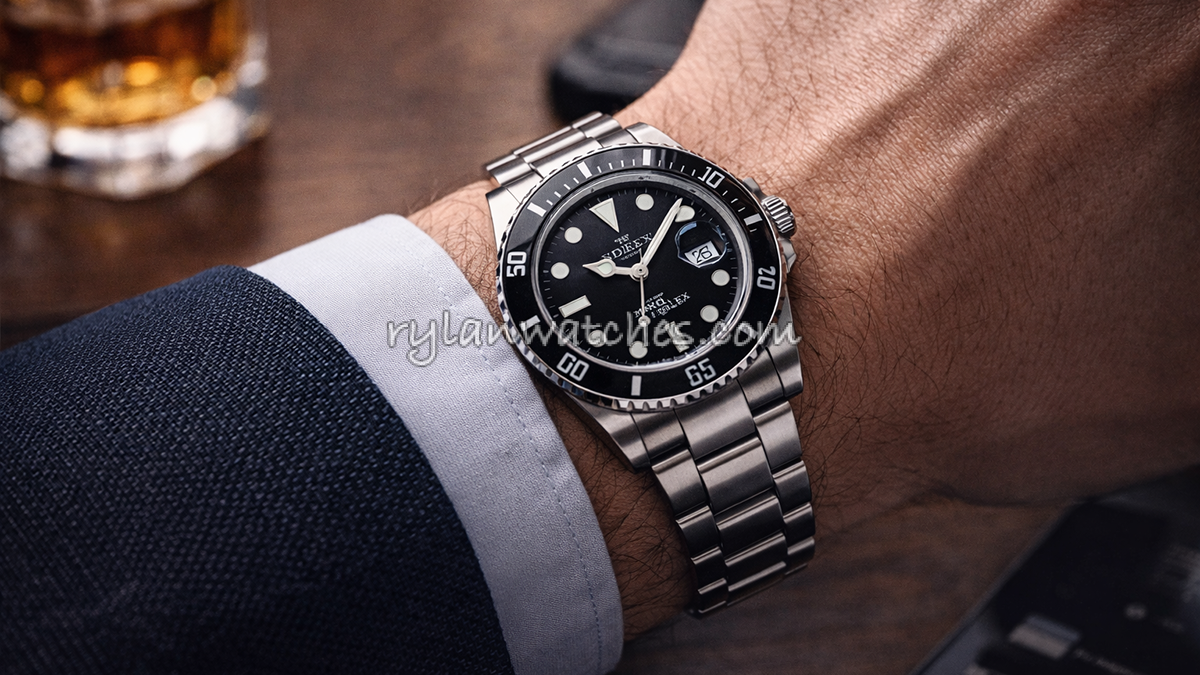
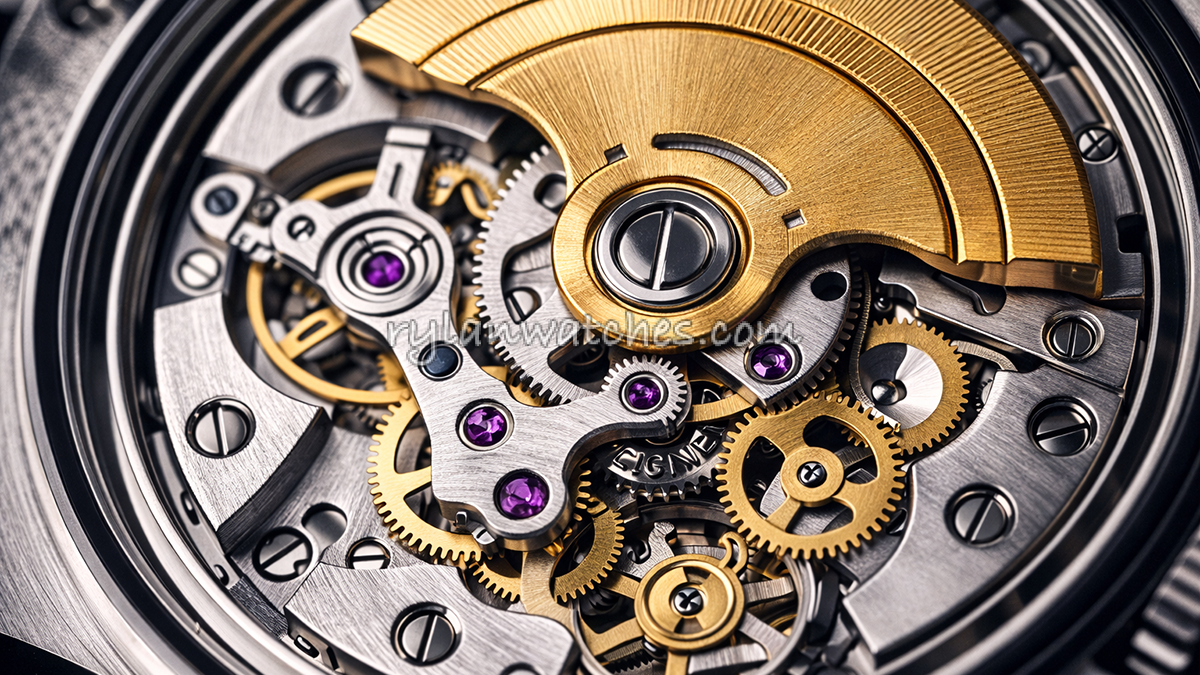
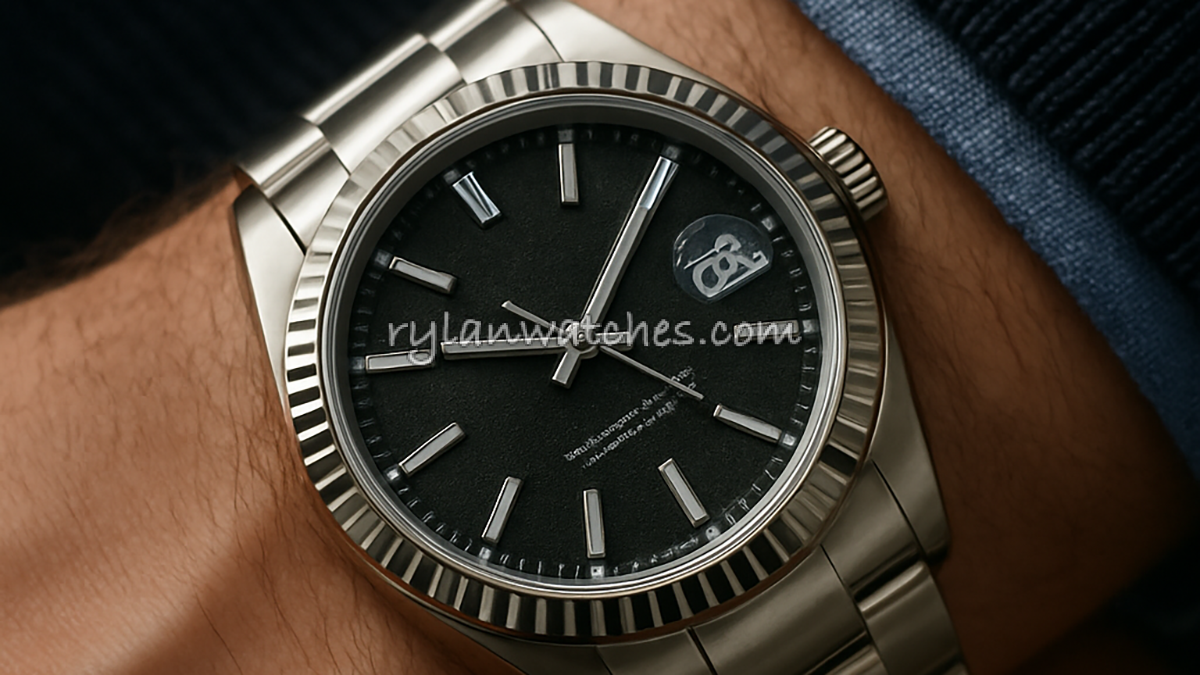
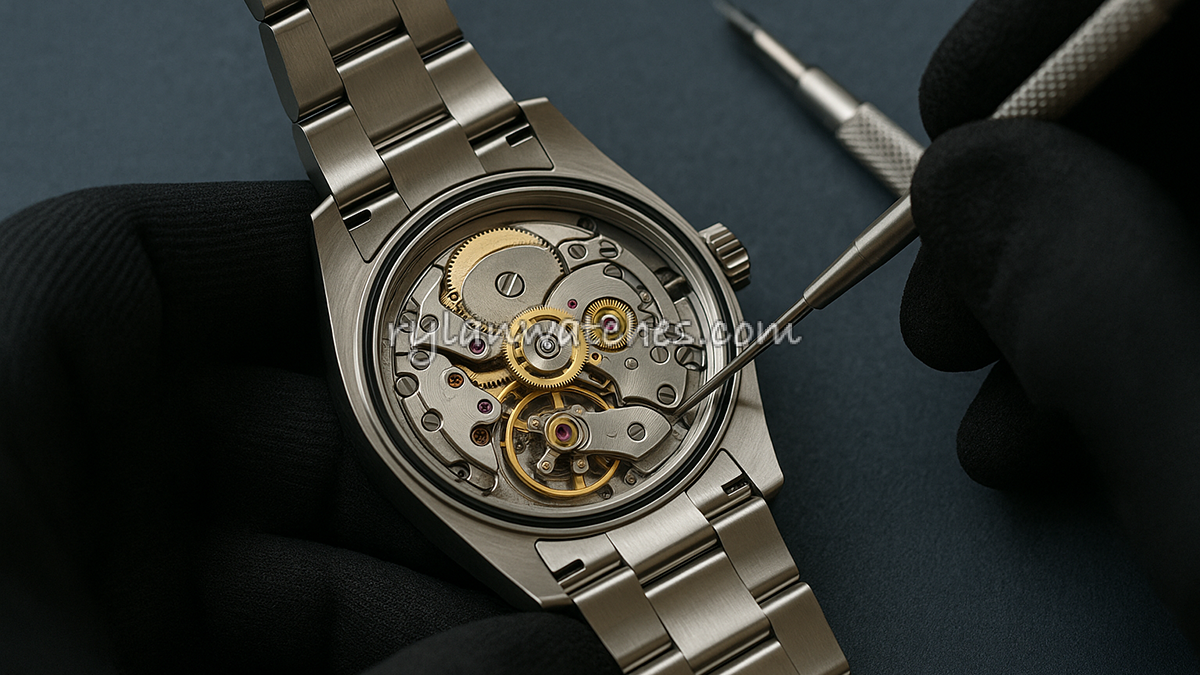
Introduction — Why Customs Risk Matters for Super Clone Owners

For many enthusiasts, the allure of high-end timepieces has led to a growing market of 1:1 replicas known as super clones. These watches promise near-perfect aesthetics and movement fidelity, often rivaling their Swiss counterparts at a fraction of the cost. Yet, few buyers realize that ownership comes with hidden challenges when crossing international borders. The term super clone watches customs risk may sound theoretical—until customs officers decide to inspect your luggage or wrist. That’s when legality, perception, and enforcement intersect in ways most collectors never anticipate.

Customs authorities around the world have intensified inspections for counterfeit goods as part of intellectual property enforcement. Even though super clones differ from cheap fakes in quality and intent, they are often treated under the same legal umbrella. In practice, this means that a traveler wearing or carrying such a watch can face seizure, fines, or even questioning at airports. Countries like Switzerland, Japan, and the United States are particularly vigilant, given their strong ties to the luxury watch industry.

Many travelers believe that wearing a single watch poses no problem. While this is often true, risk varies widely by jurisdiction. Some countries emphasize commercial intent—multiple items packaged for sale—while others penalize mere possession of counterfeit-branded goods. As a result, understanding customs regulations before traveling is not optional; it’s essential. As discussed in our related guide, traveling with super clone watches requires discretion, preparation, and awareness of what authorities might perceive as infringement.

Beyond legality, the customs issue reflects broader ethical and logistical concerns. Are these watches harmless collectibles or intellectual property violations? Can they be insured, serviced, or declared at border crossings? These questions shape not only traveler experiences but also the reputation of the clone watch industry itself. Understanding these nuances will help owners navigate the fine line between admiration for craftsmanship and respect for legal boundaries.

How Customs Detect Super Clone Watches

Modern customs agencies rely on increasingly sophisticated methods to identify counterfeit and super clone goods. At major airports and shipping hubs, advanced X-ray imaging and AI-driven pattern recognition systems flag high-value watch profiles during baggage scans. Officers are trained to recognize packaging, weight discrepancies, and signature design cues from brands like Rolex, Patek Philippe, and Audemars Piguet. In Europe, the process aligns with the EU Customs Authority’s inspection protocols, which specifically target luxury counterfeits.

In some regions, customs teams maintain digital databases of serial numbers and known counterfeits. When an officer encounters a branded item, they may cross-reference it against known entries. This poses unique challenges for super clones, which replicate genuine reference numbers and micro-engraving patterns with extraordinary precision. Even professional appraisers sometimes struggle to distinguish them from authentic pieces without opening the caseback. However, once inspected internally, differences such as rotor engraving, movement layout, or balance bridge design reveal the truth.

It’s important to note that customs enforcement focuses primarily on commercial quantities and undeclared imports. A traveler wearing a single watch may pass unnoticed 99% of the time, yet random checks remain unpredictable. If discovered, the outcome depends on the officer’s discretion and local legal framework. In some cases, travelers are warned and released; in others, the watch is seized under suspicion of trademark infringement.

To minimize exposure, travelers should avoid traveling with multiple boxed watches or any material implying resale. Simple actions—removing tags, avoiding branded packaging, and wearing the piece naturally—can dramatically reduce risk. Transparency helps too; when possible, carry proof of purchase from a legitimate retailer or factory, particularly if the item lacks overt logos. Customs officers rarely target private collectors acting in good faith, but once suspicion arises, professionalism and calm honesty can make all the difference.

Legal Perspective — Are Super Clone Watches Considered Counterfeit?

From a legal standpoint, the distinction between a “replica,” a “super clone,” and a “counterfeit” is more than semantics. Most countries operate under the World Trade Organization’s TRIPS agreement and WIPO intellectual property guidelines, which define any unauthorized use of registered trademarks as counterfeit—regardless of quality. This means even if a super clone features impeccable build and Swiss-like performance, it remains illegal in jurisdictions that protect brand marks strictly.

In the European Union, customs agencies treat super clones as infringing goods. Seizures can occur without the owner’s intent to sell. In the United States, Customs and Border Protection (CBP) classifies them under counterfeit merchandise, subject to confiscation and destruction. Asian markets show greater variability: in Hong Kong or Thailand, personal use may be overlooked, while Japan and Singapore enforce stricter bans. This fragmented landscape creates confusion for global travelers, amplifying super clone watches customs risk even when the item is for private enjoyment.

There’s also a misconception that removing logos or traveling with homage versions eliminates legal concerns. In reality, design patents and distinctive trade dress can still fall under protection. What matters most is whether the product could mislead others about its origin. That’s why customs officers focus on the presence of brand identifiers, not just the mechanical features inside.

For deeper insights on legality across major markets, our in-depth analysis Are Super Clone Watches Legal? explains jurisdictional differences and penalties. Understanding those principles before you fly can mean the difference between an uneventful trip and an unexpected seizure. Even enthusiasts with the purest intentions must remember: customs laws prioritize intellectual property, not craftsmanship admiration.

traveler wearing super clone watch at airport lounge relaxing before flight

Real-World Cases — When Customs Confiscate Watches

While online discussions about super clone watches customs risk often sound hypothetical, real-world incidents show that confiscations do happen. In Switzerland, a country synonymous with luxury horology, customs authorities have confiscated high-quality replicas from travelers arriving through Geneva and Zurich airports. Several reports describe tourists losing clone Rolex or Patek Philippe watches even when they claimed personal use. The reasoning? Swiss law grants customs the right to seize any product bearing a protected trademark without proof of purchase or authorization. Because the local industry’s protection is so integral to the economy, tolerance for super clones there is virtually zero.

In 2023, a similar case occurred in Japan, where a traveler’s luggage was flagged by Narita Airport’s inspection system for multiple “watch-shaped metallic objects.” Upon manual inspection, officers discovered three high-end clones, including an Audemars Piguet Royal Oak. The items were seized, and the traveler fined under Japan’s Unfair Competition Prevention Act. Interestingly, the fine was small—but the watches were never returned. It illustrated the gray line between intent and possession: even without resale motive, ownership of multiple trademarked replicas was deemed sufficient for confiscation.

In the United States, cases vary by port of entry. U.S. Customs and Border Protection (CBP) prioritizes commercial imports but retains the authority to confiscate counterfeit items regardless of intent. There have been documented seizures at Los Angeles and JFK airports where super clones shipped from Hong Kong were intercepted. Although individuals rarely face prosecution for single items, repeated importation or bulk quantities trigger investigation. The CBP’s official statements, accessible via cbp.gov/trade, confirm that even personal-use counterfeit items are subject to forfeiture under federal law.

Contrastingly, travelers in Dubai or Southeast Asia report minimal interference. Customs agencies in these regions typically focus on controlled substances, undeclared cash, and electronics rather than intellectual property. However, that leniency does not equal legality. If an airline inspection coincides with international enforcement campaigns, even relaxed jurisdictions can act strictly. One traveler recounted on a horology forum that his super clone was seized during a random inspection at Changi Airport—a rare but sobering reminder that global coordination among customs agencies continues to increase.

These examples reveal the unpredictable nature of enforcement. The key takeaway? Risk depends on where you travel, not just what you carry. While online anecdotes can guide expectations, no guarantee exists. Travelers should always assume that any item resembling a branded luxury watch could face scrutiny, especially in regions where intellectual property protection is politically or economically sensitive.

How to Travel Smart and Minimize Customs Risk

Although confiscation stories can sound alarming, smart travelers can significantly reduce exposure to customs issues. The simplest precaution is also the most effective: wear, don’t carry. Customs officers are far less likely to challenge a watch being worn naturally than multiple boxed pieces in luggage. Avoid carrying packaging, authentication cards, or any material that signals new purchase intent. When traveling internationally, subtlety matters; a super clone should never draw unnecessary attention.

Documentation helps too. Even though invoices from clone retailers are not legally binding proof of authenticity, they can demonstrate that the item was purchased openly, not smuggled. If your trip includes stops in strict jurisdictions—like Switzerland, Japan, or Germany—consider switching to a homage or microbrand piece. Brands such as Steinhart or Baltic offer Swiss-inspired designs without trademark concerns. For more practical guidance on international travel and clone ownership, see our internal resource Travel Guides for Super Clone Owners.

Discretion extends beyond the airport. Avoid public discussions or social media posts that showcase logos while abroad. In certain countries, customs surveillance teams monitor online marketplaces and even passenger photos for high-value goods. If your super clone appears too prominently linked to a brand, it might raise red flags. Travelers should also remember that insurance policies typically exclude coverage for counterfeit items, meaning any loss or confiscation cannot be reimbursed.

Another wise move is to understand import thresholds. Many customs websites—such as the IATA Traveler Guidelines—explain personal exemption limits for luxury items. Staying within those thresholds keeps you compliant and avoids suspicion. For example, bringing two watches totaling under $1,000 often passes inspection quietly, while carrying five “Rolex-labeled” watches may trigger immediate inspection. When in doubt, declare rather than conceal; honesty at customs is safer than improvisation under pressure.

Ultimately, minimizing risk is about behavior and awareness. The fewer signals you send that suggest trade or misrepresentation, the better your odds of an uneventful journey. Treat your watch as a personal accessory, not a collectible commodity. Those who prepare responsibly and travel with realistic expectations rarely face issues—even when wearing a super clone.

close-up view of mechanical movement inside super clone watch showing precision craftsmanship and customs risk relevance

Customs Risk by Country — Where You Should Be Careful

Not all borders treat clone watches equally. While the underlying trademark laws share a common foundation, enforcement levels vary dramatically across regions. Understanding where risks concentrate helps travelers plan responsibly. Below is a simplified overview of how different customs agencies approach the issue of super clone watches:

Country / Region Risk Level Policy Notes
🇨🇭 Switzerland 🔴 High Zero tolerance; customs seize any trademarked clone regardless of quantity.
🇯🇵 Japan 🔴 High Strict under Unfair Competition Law; even personal items can be confiscated.
🇺🇸 USA 🟠 Moderate–High CBP enforces brand protection; occasional leniency for single worn watches.
🇩🇪 Germany / EU 🟠 Moderate EU customs collaborate under anti-counterfeit task forces; risk spikes during events like Baselworld.
🇭🇰 Hong Kong 🟢 Low Personal use typically ignored, but resale subject to penalties.
🇦🇪 Dubai 🟢 Low Customs rarely interfere; risk arises only with large shipments.

These distinctions aren’t static. Enforcement changes with trade policy and brand lobbying influence. For instance, after high-profile counterfeit crackdowns in 2024, Singapore increased random baggage checks targeting counterfeit watches. Meanwhile, Southeast Asian hubs like Bangkok remain tolerant as long as items aren’t sold locally. The trend is clear: as super clones gain attention for quality, regulators are becoming more active in tracking their movement across borders.

For enthusiasts comparing models safer for travel, our collection of Best Super Clone Watches 2025 highlights pieces that balance quality with subtle branding, making them less likely to attract customs scrutiny. To stay updated on evolving regulations, visit the World Customs Organization, which publishes periodic guidelines on counterfeit goods enforcement. By knowing the global landscape, collectors can make informed choices about when and where to wear their watches without risking unnecessary confiscation.

Conclusion — Understanding Super Clone Watches Customs Risk

After reviewing the global picture, one truth becomes clear: the super clone watches customs risk is not imaginary—it’s a real, evolving challenge shaped by geography, legislation, and perception. What may be perfectly tolerated in one airport can trigger confiscation or penalties in another. Super clones occupy an unusual legal and moral gray area. They’re admired for precision and innovation but legally restricted because they reproduce protected branding. This contradiction defines why customs enforcement is inconsistent and often unpredictable.

For individual travelers, the safest rule is simple: assume your watch can attract scrutiny. Wearing one on your wrist during normal travel rarely results in issues, but carrying multiple pieces boxed or declaring luxury brands at checkpoints raises suspicion immediately. Customs authorities are less concerned with your taste in watches and more focused on the principle of trademark protection. Even if the piece feels harmless, to them it’s a symbol of intellectual property infringement. That perspective drives global coordination among agencies to detect and seize branded counterfeits more effectively than ever before.

Yet, it’s equally important to keep perspective. Customs enforcement tends to prioritize commercial smuggling, not individual enthusiasts. Many collectors wear their super clones across borders without incident. The difference lies in preparation, discretion, and honesty. Know the laws of your destination, understand enforcement intensity, and travel with minimal baggage. Treat your watch as part of your personal style, not as merchandise. If challenged, polite cooperation and documentation can often de-escalate situations quickly.

Legal uncertainty doesn’t erase the craftsmanship behind modern clones. The watch community’s growing respect for these pieces lies in how they democratize mechanical beauty once limited to elites. However, ownership carries responsibility. Wearing a super clone means respecting the boundaries of legality and acknowledging the intellectual property it borrows from. Being informed is the first step toward avoiding complications. As highlighted in our educational guide How to Spot a Super Clone, awareness is your best defense—both for distinguishing quality and staying compliant.

To put this topic in context, the OECD’s report on counterfeit trade reveals that luxury watch imitations represent one of the fastest-growing categories of seized goods worldwide. That statistic underscores why customs vigilance is increasing each year. The more refined super clones become, the more enforcement agencies adapt. Knowing where that line is—between admiration and violation—helps collectors make responsible decisions without fear or confusion.

Ultimately, traveling with or owning a super clone isn’t about testing limits—it’s about appreciating craftsmanship responsibly. The goal isn’t to challenge authority but to enjoy mechanical artistry within the bounds of awareness. As the global conversation around clones evolves, so should our understanding. Knowledge, preparation, and discretion remain the true tools of a smart collector. Whether you’re flying from Dubai to Tokyo or simply crossing borders for leisure, respect for law and appreciation for design can coexist. When you understand the customs risk, your timepiece remains what it was meant to be—a symbol of precision, not a source of trouble.

Introduction — Why I Bought a Super Clone Watch

Super clone watch user review articles often start with technical talk, but for me, it began with curiosity and a hint of skepticism. For years I admired luxury timepieces—Rolex, Omega, Audemars Piguet—but I couldn’t justify spending five figures on something I might wear only occasionally. Then I stumbled across modern “super clone” models that claimed to be visually identical to the originals, built with Swiss-grade movements, and finished with surprising precision. The idea of owning a piece that looked and felt authentic without destroying my savings felt too good to ignore.

Before buying, I did my homework. Forums, Reddit threads, and independent blogs like A Blog to Watch offered mixed perspectives—some calling them “collector’s curiosities,” others warning of legal gray areas. Still, the more I read, the clearer it became that modern clones aren’t the same as cheap replicas. They’re engineered with high-end CNC machining, sapphire crystals, and even clone calibers that mimic the hand stack of authentic movements. After weeks of research, I ordered my first super clone from a reputable dealer recommended on Rylan Watches.

Unboxing day felt surprisingly emotional. The presentation was simple yet elegant: a velvet-lined box, protective films, and a surprisingly solid steel bracelet. I chose a model inspired by the Rolex Submariner, one of the most copied designs in watch history. Even before putting it on my wrist, I could see why enthusiasts are divided—it looked too perfect. The brushed finishing was crisp, the ceramic bezel clicked precisely, and the engraved rehaut was flawless. I had expected a “decent fake.” What I found instead was a watch that demanded to be taken seriously.

Buying a super clone felt less like crossing an ethical line and more like testing the boundaries of craftsmanship. I wasn’t trying to deceive anyone; I wanted to experience what near-perfect replication could achieve in 2025. As this month-long experience unfolded, I learned more than I expected—not just about watches, but about perception, precision, and the psychology of value itself.

First Impressions — Design, Feel, and Build Quality

The first tactile impression of my super clone was pure surprise. The heft was right, neither too light nor overly dense. The bracelet’s solid end links fit the lugs without gaps, the clasp felt reassuringly secure, and the screw-down crown threaded as smoothly as on my friend’s genuine Submariner. The attention to tactile details is what makes this generation of clones so different from the replicas of a decade ago. Under direct light, the ceramic bezel shimmered with a deep gloss, and the luminous markers charged evenly—signs of manufacturing precision I hadn’t expected outside Switzerland.

The dial printing was immaculate, with typography so sharp that only a jeweler’s loupe revealed micro-variations from genuine s. The crystal’s clarity was another standout; it refracted light beautifully, giving that expensive, almost liquid sheen. I tested the watch against my genuine Omega Seamaster for size and finishing, and side by side, the clone held up better than any “copy” has a right to. Even the caseback engravings and the bracelet screws were true to the source design. If I hadn’t known, I might have believed it was authentic.

Of course, realism is only part of the story. There are small giveaways—the movement sound is slightly louder, and the rotor spins more freely than on the genuine version. The lume also fades faster, suggesting a difference in the luminous compound. Still, for something costing less than one-twentieth of the retail price, the compromise is astonishingly small. I even showed it to a local watchmaker who services both genuine and homage watches. His verdict: “Visually, it’s perfect. Mechanically, it’s very decent.” That’s high praise for a clone.

As part of this super clone user review, I paid close attention to wearability. The bracelet hugged the wrist comfortably, and the weight distribution felt authentic. No sharp edges, no rattles, no shortcuts. The tactile experience matched what the mirror promised—an illusion so complete that I stopped noticing the difference. That realization set the tone for the rest of my month: this wasn’t about imitation anymore; it was about appreciation of craft executed at scale.

Daily Wear Experience and Accuracy

During my first month of ownership, I wore the super clone nearly every day—from morning meetings to evening workouts. Comfort-wise, it exceeded expectations. The caseback sat flat on my wrist, and the screw-down crown didn’t dig into the skin. Over the first week, I noticed the timekeeping was surprisingly precise: +8 to +10 seconds per day, slightly faster than my ETA-based Hamilton but stable. For a movement reverse-engineered from the Rolex 3235, this level of accuracy is remarkable.

The automatic winding felt efficient, with a buttery rotor motion that charged quickly during normal wrist activity. I also tested the power reserve: around 68 hours before stopping, just shy of the claimed 70. Throughout the month, I showered, jogged, and even got caught in the rain wearing it. The water resistance held up, though I avoided swimming. The screw-down crown threads felt strong, and there were no fogging signs on the crystal—evidence of proper gasket sealing.

In daily life, no one suspected it wasn’t authentic. Colleagues complimented it; one even asked if it was the new ceramic Submariner. That reaction was revealing—not about deception, but about how little the visual difference matters in the real world. The watch gave me the same confidence I’d feel wearing a genuine luxury piece. That psychological effect is a huge part of the clone experience: it democratizes that sense of prestige, however controversially.

There were small annoyances: the clasp’s micro-adjustment felt stiffer than expected, and once or twice the second hand hesitated at reset, likely due to the clone movement’s clutch design. But for $800 versus $13,000, these were acceptable quirks. I documented each test carefully, intending to make this user review comparable to independent watch reviews on Hodinkee. Their benchmarks inspired me to evaluate the watch fairly, not emotionally. My verdict halfway through the month: this super clone performed not as a substitute, but as a legitimate daily-wear timepiece.

super clone watch user review movement caseback open view

What Surprised Me Most About This Super Clone

Looking back at my first month, the biggest surprise wasn’t how accurate or well-built the watch was—it was how emotionally attached I became. I expected a novelty that would wear off in days. Instead, this piece became part of my daily routine, reminding me that luxury isn’t just about brand heritage; it’s about how an object makes you feel. From the first morning coffee to late-night typing sessions, my clone never left my wrist. It wasn’t fragile or temperamental—it behaved like a genuine tool watch meant to be used, not coddled.

Technically, I was also impressed by the finishing consistency. The polished bevels on the lugs, the even brushing on the bracelet, and the crisp clicks of the ceramic bezel felt professional. Even the anti-reflective coating on the crystal surprised me; under bright office lighting, the dial retained depth and legibility. The luminous markers, while not as long-lasting as Rolex Chromalight, glowed evenly for several hours after exposure to daylight. I hadn’t expected such fine attention to detail from a clone manufacturer, and it challenged many preconceptions I had before purchase.

The second major surprise was durability. I accidentally bumped the watch against a metal door frame—a nightmare for most collectors—and expected a visible scratch. To my shock, there was none. The sapphire crystal shrugged it off, and the polished surfaces looked untouched. I later learned that many modern clone makers now use 904L steel and double AR coatings, bringing material specs close to authentic pieces. This level of durability erased the guilt I once felt wearing it daily; it felt like a legitimate companion rather than a fragile experiment.

Finally, the social reaction fascinated me. Friends in my watch group initially teased me for buying a clone, but curiosity replaced mockery once they handled it. Some even admitted they couldn’t tell the difference from genuine pieces without opening the caseback. That moment underscored a key insight of this super clone watch user review: perception often outweighs reality. For enthusiasts who appreciate horology but resist the price barriers of entry, a super clone can offer genuine satisfaction—provided they understand the trade-offs and treat it responsibly.

Comparing to the Genuine — Realistic or Just Close?

After four weeks of wear, curiosity got the better of me: I wanted to compare my clone directly with a genuine Submariner. A friend who owns the 126610LN kindly agreed to a side-by-side session over coffee. Placed next to each other, the resemblance was uncanny. Dimensions were identical, within fractions of a millimeter. The ceramic bezels reflected light similarly, and both crystals sat flush against their rehauts. Under casual inspection, they were indistinguishable. Only under magnification did subtle differences emerge—the depth of the Rolex coronet engraving, the micro-polishing of the case flanks, and the perfectly uniform brushing of the bracelet.

The biggest mechanical difference came from the movement. My clone’s rotor produced a faint rattle when shaken, something absent in the genuine Caliber 3235. Also, the winding crown felt slightly less refined—its resistance curve was linear rather than progressive. Yet the hand alignment, gear stability, and timekeeping remained excellent, within +10 seconds daily. From a functional standpoint, the gap was narrower than I ever imagined. The level of craftsmanship in modern factories rivals entry-level Swiss standards, even if not fully identical.

Where the genuine excelled was in subtleties: dial color saturation, crystal clarity, and bracelet articulation. It’s the “feel” of refinement that sets authentic pieces apart. Still, I couldn’t deny the clone held its ground visually and practically. A casual observer—or even an experienced enthusiast glancing quickly—would struggle to differentiate. This raised an interesting moral question for me: if something looks, feels, and performs 95% the same, what exactly are we paying the remaining 95% of the price for? Heritage? Warranty? Exclusivity? The answer depends entirely on one’s values.

For reference, I later compared finishing guides on Chrono24 Magazine, which dissects differences in polishing and movement finishing across brands. Reading that while holding both watches reinforced my conclusion: clones have matured from imitations into sophisticated tributes. They are not replacements, but they demonstrate what global manufacturing and consumer demand can achieve. This realization shaped my verdict going forward: authenticity isn’t always about origin—it’s also about execution.

Is It Worth It? My Honest Verdict After One Month

After a month of living with the watch, I can finally answer the question most newcomers ask: is a super clone worth it? My honest answer—yes, if your expectations are balanced. The experience exceeded what I imagined both technically and emotionally. It delivered 90% of the genuine product’s design and comfort at less than 10% of the price. The finishing quality, reliability, and accuracy gave me the confidence to wear it daily without fear of scratches or mechanical failure. For someone who enjoys the art of watchmaking but not the financial burden, that’s transformative.

However, there are caveats. A super clone will never replace the intangible prestige of owning a genuine piece. It’s also a legal gray area in some countries, as discussed in our detailed guide on traveling internationally with super clones. Reselling can also be tricky, since marketplaces typically ban items with trademarked logos. For these reasons, I view my watch as a long-term keeper, not an investment. It fulfills a personal desire rather than a portfolio goal.

The sense of value, though, is undeniable. Each time I glance at the dial, I appreciate the artistry involved in its construction. It’s not just a replica—it’s a technical achievement that democratizes luxury aesthetics. I’m aware of the ethical debate, but I also see how super clones push the entire industry toward higher standards of precision and transparency. The success of these watches reflects consumer demand for fairness and performance.

Ultimately, if you treat ownership as appreciation rather than deception, the purchase makes sense. You get tangible enjoyment, robust build quality, and a conversation starter. Would I buy another? Probably yes—maybe an Aquanaut-style Patek Philippe clone next. As this experience proves, satisfaction often comes not from logos but from craftsmanship and confidence on your wrist.

super clone watch user review wrist shot on wrist outdoors

Conclusion — Lessons from My Super Clone Watch User Review

Writing this super clone watch user review has taught me that perception, craftsmanship, and value often overlap in unexpected ways. After a month, I realized that what began as an experiment became a genuine appreciation for accessible precision. The watch didn’t just mimic luxury—it redefined how I evaluate worth. Every click of the bezel, every reflection on the crystal reminded me that quality isn’t exclusive to logos. Super clones show how far technology and ambition have pushed modern horology into new territory.

Still, realism has limits. These watches can’t replace genuine heritage, and they shouldn’t attempt to. They occupy a unique niche: tangible craftsmanship for enthusiasts who understand both the appeal and the boundaries. I’ll continue to wear mine proudly, not as a counterfeit statement, but as proof that mechanical beauty can exist beyond inflated retail prices. The first month was only the beginning of that journey.

For collectors exploring the topic further, I recommend reading our educational guide on how to identify high-quality super clones. And for those interested in authentic alternatives and horological history, resources like Hodinkee’s editorial archives provide valuable context on design evolution. Balancing both worlds—authentic and clone—helps enthusiasts appreciate craftsmanship more deeply.

In conclusion, the past month has convinced me that the world of super clones is not a shadow of luxury—it’s a mirror that reflects our desire for attainable excellence. With awareness, honesty, and respect for the craft, these watches can coexist with the genuine icons they emulate, enriching the conversation rather than diminishing it.

Introduction — Can You Travel with Super Clone Watch?

Can you travel with super clone watch? For many enthusiasts, the question surfaces every time an international itinerary is booked. A watch is not only a functional instrument; it is a statement about taste, confidence, and identity while moving across airports, hotels, and meetings. Super clones—high-grade pieces engineered to mirror the proportions, finishing, and functionality of iconic Swiss references—promise that look and feel without the five-figure price tag. Yet bringing one across borders introduces a different calculus than wearing it at home: you’ll be navigating airport screening, customs discretion, and the often-confusing intersection of personal property and intellectual-property enforcement.

Understanding what sets a super clone apart is the first step. Unlike budget replicas, serious clones use robust cases, sapphire crystals, precise rehaut and dial printing, and movements that copy the hand stack and complication layout of the original models. They can be remarkably convincing at arm’s length and, in many cases, even under casual scrutiny.

That realism is the appeal—and the dilemma. The closer a clone resembles a protected design, the more likely a curious officer, dealer, or even a fellow traveler might question it in the wrong context. This doesn’t mean traveling is impossible; it means your decisions should be deliberate: one watch versus many, on the wrist versus boxed in luggage, conservative styling versus something that shouts for attention.

Risk also varies by destination and travel pattern. A single piece worn discreetly on holiday is a different scenario from multiple “new” pieces carried through hubs like Geneva, Frankfurt, New York, or Tokyo. Enforcement culture, officer discretion, and even the timing of your flight can shape outcomes. Meanwhile, your real-world risks don’t end at the border: theft in crowded areas, limited insurance coverage for counterfeit goods, moisture and heat at beach destinations, and the shocks of more adventurous itineraries can all turn a pleasant trip into a repair bill or a confiscation story. None of these are automatic deal-breakers, but each factor argues for a plan rather than a shrug.

Framing the topic accurately matters. Horology references such as Wikipedia’s overview of luxury watches outline the benchmarks of authenticity—materials, finishing, calibers, and provenance—that super clones aim to imitate. The closer the imitation, the greater the potential for confusion at the checkpoint and conversation at the dinner table. This guide takes a practical, traveler-first view: how security actually works, why customs can be unpredictable, what the legal landscape means for you, and which day-to-day choices reduce anxiety without sacrificing enjoyment. By the end, you’ll have a clear playbook to decide whether, where, and how to travel with a super clone—confidently and responsibly.

Airport Security — Can You Travel with Super Clone Watch Smoothly?

Can you travel with super clone watch through airport security without drama? In most cases, yes—because aviation screening is designed to detect threats, not trademarks. Walk-through metal detectors and millimeter-wave scanners are agnostic to authenticity: stainless steel reads like stainless steel; sapphire looks like sapphire. A Submariner-style diver or a Daytona-style chronograph typically passes as any other metal watch. Even secondary screening—belt removal, bag rescans—rarely focuses on the branding of a timepiece unless something else has triggered attention.

The shift from routine to risky tends to occur after security, at the customs threshold. Officers aren’t looking for bombs; they’re enforcing revenue rules and intellectual-property protections. Context matters enormously. A single watch worn naturally on the wrist blends into the stream of travelers. A roll of three “new” watches in your carry-on—especially recognizable models—invites questions: Why multiple? Are they for resale? Where did you buy them? Your answers, your demeanor, and the officer’s discretion steer the outcome. Remember that presentation signals intent; boxes, tags, and protective films read as inventory, not personal effects.

Jurisdiction amplifies or dampens risk. Transit through or entry into watch-savvy regions—Switzerland, parts of the EU, Japan—raises the likelihood that officers recognize model cues and ask to see the piece. Conversely, in many leisure destinations the practical focus is on contraband and duties rather than the authenticity of a single wristwatch. None of this is a guarantee; it’s a probability gradient shaped by training, workload, and institutional priorities that shift over time. The savvy traveler plans for variability: keep it to one watch, wear it, and avoid the “brand-new stock” look.

It also helps to understand how guidance is framed. For example, U.S. Customs and Border Protection explicitly bars counterfeit goods intended for resale; a personal-use item sits in a gray area subject to officer discretion. That nuance mirrors the global picture: airport machines don’t care, but people sometimes will. If your itinerary includes stricter ports of entry, reduce the chance of escalation: wear one understated piece, skip the boxes, and treat the watch as what it is for travel purposes—personal property, not merchandise.

can you travel with super clone watch showing movement details

Legal Risks of Traveling with Super Clone Watch Abroad

Can you travel with super clone watch across borders without legal consequence? The honest answer is: it depends on where you land and who examines your belongings. In most jurisdictions, a super clone that reproduces protected trademarks and distinctive designs is categorized as a counterfeit. That classification grants customs officials broad authority to detain, seize, and even destroy the item, particularly when they infer commercial intent. The nuance for travelers is personal use: one wristwatch worn during a trip may pass under the radar; a cache of boxed pieces rarely will.

Europe leans strict. EU customs regimes are structured to defend intellectual property, and officers can seize counterfeit goods regardless of whether they will be resold. Switzerland—home to major maisons and a sophisticated horological ecosystem—pairs expertise with enforcement, making it one of the least forgiving places to gamble on a clone. Japan similarly maintains tight IP controls, and traveler anecdotes of confiscations at the airport are not rare. None of these systems require malice on your part; the mere presence of a counterfeit can be enough to justify seizure under statute.

The United States often prioritizes commercial intent, but “often” is not “always.” If an officer believes that an item is counterfeit and destined for sale, seizure is likely. If it is worn and clearly personal, discretion comes into play, and outcomes vary. In parts of Southeast Asia, enforcement can be more relaxed, especially for a single piece on the wrist, though rules are rules and the letter of the law rarely favors clones. The traveler’s takeaway is not to memorise every code article but to acknowledge variability and plan for the strictest plausible interpretation on your route.

Reputation risk rides alongside legal risk. If a knowledgeable officer or even a watch-savvy stranger calls out your piece as non-authentic, the conversation can become awkward fast. That’s not a legal penalty, but it is a cost in time, stress, and possibly the trip’s tone. The conservative playbook is clear: minimize the appearance of commerce (no multi-watch rolls, no brand-new packaging), choose an understated reference, and accept that even with preparation, discretion rests with the officer. If the potential loss—financial or emotional—would mar your trip, you have your answer before you pack.

Practical Considerations for Travelers

Can you travel with super clone watch and manage the everyday risks that matter more than statutes? Start with theft. In busy tourist districts, a watch that reads “luxury” at a glance attracts the same attention whether genuine or cloned. Street crime is opportunistic, and a convincing diver or chrono is a tempting target. Lower acquisition cost doesn’t equal zero pain; replacement time, hassle, and the story you’ll be telling afterward are real costs. Compounding that, many travel insurance policies exclude counterfeit goods from coverage, so a loss is likely yours to absorb in full.

Next, think storage and handling. Hotel safes are convenient but not invulnerable. The lowest-friction approach is to wear one watch from house to hotel to meeting to dinner, treating it strictly as a personal effect. If your itinerary includes water or humidity, remember that clone factories seldom test to the same depth or duration standards as the brands they emulate. Even if a diver is marked “300 m,” treat ratings conservatively: ensure the crown is fully seated before exposure to water, rinse with fresh water after the pool or sea, and avoid hot tubs or saunas where heat and steam can compromise gaskets quickly.

Context shapes scrutiny. A loud, instantly recognisable silhouette in Geneva or Tokyo is a different proposition than a modest tool-style piece at a beach resort. Many collectors adopt a travel pairing: a durable, low-profile daily wearer on trips and the more conspicuous pieces left at home. If you still want the Swiss-inspired look while reducing anxiety, consider an homage model (no protected logos) or a lower-key clone that doesn’t shout brand identity at a distance. For a robust, travel-friendly aesthetic, an Omega-style Seamaster clone template is often less conspicuous than the most hyped steel sports icons.

Finally, plan for care. Pack a microfiber cloth, a small zip pouch to prevent scratches in transit, and a routine: wipe off sunscreen, sand, and sweat at day’s end; keep the watch away from phone-charging bricks that can magnetize weaker movements; and avoid rapid temperature swings when possible. Practical discipline reduces most avoidable mishaps. The goal isn’t paranoia; it’s to enjoy the look and feel you bought the watch for—without letting it dominate the trip. If following these steps still feels stressful, that’s a signal to switch to an homage or an affordable genuine beater for travel days and save the convincing clone for home turf.

Alternatives — Should You Travel with Super Clone Watch or Leave It Home?

Can you travel with super clone watch, or is the smarter choice to leave it behind and take something else? For many collectors, this is the decisive question once legal and practical risks are considered. While the thrill of wearing a convincing clone abroad is undeniable, alternatives often provide a safer, more convenient, and less stressful way to enjoy watches while traveling.

One such option is the homage watch. Homage models borrow design cues from icons like the Submariner, Royal Oak, or Nautilus but avoid infringing trademarks. They carry their own branding, which means customs officers cannot classify them as counterfeits. For travelers, this removes the anxiety of potential seizure while still offering the silhouette and aesthetic appeal of a luxury sports watch.

Another category worth considering is affordable genuine watches. Brands like Seiko, Orient, Citizen, or Tissot produce reliable timepieces that are respected by the watch community. They may not replicate a Patek Philippe or Rolex exactly, but they carry legitimate heritage and robust functionality. Many seasoned travelers adopt the strategy of bringing such “beaters” on trips: watches that can handle knocks, splashes, and daily wear without worry. If they are stolen, the financial and emotional impact is far lower than losing a cherished clone or high-value original. Moreover, wearing a less conspicuous watch may reduce your profile as a target in tourist-heavy areas.

Consider also the psychological dimension. Traveling is stressful enough with tickets, luggage, and logistics. Adding the worry of whether your watch will survive airport scrutiny, or whether it is safe in a hotel safe, can diminish the joy of the trip. By choosing alternatives, you remove a variable that could overshadow your holiday or business mission. For many, peace of mind is worth more than brand aesthetics. And importantly, alternatives still allow you to express style. A Seiko diver can look fantastic on the beach; a Tissot dress watch can impress in a boardroom. Style and legitimacy need not be mutually exclusive.

Some travelers even use the opportunity to explore microbrands and independent makers. These watches often carry unique designs, excellent value, and real horological interest. They might not mimic Rolex or Omega, but they make a statement of individuality. For enthusiasts, discovering a new favorite microbrand piece abroad can be more rewarding than wearing a clone under the cloud of uncertainty. Ultimately, alternatives should be framed not as compromises but as strategic decisions. They allow you to enjoy watches without fear of confiscation or durability failure. For collectors who love clones at home, leaving them behind during international trips ensures their preservation, while alternatives provide freedom of mind and wrist abroad.

can you travel with super clone watch during travel wear

Real Experiences from Enthusiasts

Can you travel with super clone watch safely? The most honest answer comes not from theory, but from the stories of people who have tried. Enthusiast forums, watch blogs, and travel communities are filled with anecdotes—some reassuring, others cautionary. One traveler shared his experience wearing a Submariner-style clone on a business trip to London. He walked through Heathrow security without incident, and customs officers paid no attention. During his meetings, the watch even drew compliments from colleagues who assumed it was genuine. For him, the trip reinforced that a single, discreetly worn clone often passes unnoticed in practice.

But the narrative shifts in stricter jurisdictions. Another enthusiast recounted arriving in Geneva, Switzerland—the heart of luxury watchmaking. Selected for a random customs inspection, he was asked to open his luggage. Officers found not only the clone on his wrist but two additional watches in travel rolls. Familiar with high-end designs, the officer identified them as counterfeits and confiscated both on the spot. While no fine was issued, the financial loss was substantial, and the embarrassment lingered. His takeaway was clear: Switzerland is no place to gamble with clones, especially when carrying multiples.

Experiences in Asia show sharp contrasts. In Japan, customs is known to be vigilant, and several travelers report losing clones at the airport. Yet in Thailand and parts of Indonesia, many enthusiasts describe wearing clones openly with no issues at all. One collector even told how he wore a Daytona clone through Bangkok markets without attracting scrutiny, though he admitted he would never risk the same in Tokyo. These mixed experiences highlight the unpredictability of enforcement and why discretion is always advised.

Online communities like A Blog to Watch or Reddit’s watch forums regularly feature discussions about these scenarios. Members generally agree on a few principles: wear only one watch, avoid flashy behavior, and never pack multiples as if you were transporting inventory. While anecdotes vary, the consensus is that the fewer questions you invite, the smoother your journey. Ultimately, real-world stories remind us that while many travelers succeed without incident, others face sudden losses. The choice to bring a clone must therefore balance thrill against risk, informed by both geography and personal risk tolerance.

Water Resistance & Travel Conditions

Can you travel with super clone watch and trust it to perform in changing environments? Beyond customs and legality, this is a practical concern for any traveler. Genuine tool watches like the Rolex Submariner or Omega Seamaster are built and tested to withstand water pressure, shocks, and temperature shifts. Super clones may claim similar specifications, but rarely undergo rigorous testing. This means that a clone marked “300 m” may, in practice, only handle light swimming or splashes. Travelers should approach clone water resistance conservatively, assuming it is closer to 30–50 m unless verified otherwise by pressure testing.

Travel destinations amplify the challenge. Tropical climates add humidity, salt water, and sudden transitions between air-conditioned rooms and hot outdoors. These conditions stress gaskets and crystals, and a clone’s seals are often less precise than genuine counterparts. Activities like snorkeling, surfing, or diving exponentially increase risk. Even prolonged exposure to steam in hot tubs or saunas can cause condensation inside a clone, something rarely seen in authentic models. Seasoned owners therefore recommend avoiding extreme water use, even if the specifications appear impressive. A casual swim may be fine, but diving should be left to properly tested instruments.

Beyond water, consider physical impact. Vacations often involve outdoor sports, hiking, or even urban adventures that put watches at risk of shocks and scratches. While clones can be sturdy, they usually lack the anti-magnetic shielding or shock protection of real tool watches. A fall on a rocky trail or a sharp knock on a railing could compromise the movement or crystal. Some collectors choose to travel with a clone precisely because they view it as more expendable than a genuine luxury piece. But if sentimental value is high, the better choice may be to wear a homage or affordable genuine watch instead.

Maintenance plays a role too. Simple habits extend lifespan: rinse with fresh water after swimming in the sea, avoid exposing the watch to chemicals like sunscreen or insect repellent, and ensure crowns are screwed down before contact with water. These steps don’t make a clone bulletproof, but they improve resilience. Ultimately, super clones can survive many casual travel scenarios, but assuming they equal genuine professional-grade tool watches is risky. Knowing these limits lets travelers enjoy their timepieces without pushing them beyond their design reality.

Conclusion — Should You Travel with Super Clone Watch?

So, can you travel with super clone watch confidently and without regret? The reality is nuanced. At airport security, machines are indifferent, but customs officers sometimes are not. Legally, clones fall under counterfeit definitions, making seizure a possibility in strict jurisdictions. Practically, they expose you to theft, lack of insurance, and durability concerns. Yet real-world anecdotes show that many travelers pass through unnoticed when wearing just one watch on the wrist. Others, however, tell stories of confiscations in Switzerland or Japan, proving that risk is never eliminated.

The decision ultimately hinges on your priorities. If the joy of wearing a convincing luxury-style watch outweighs the chance of confiscation or damage, then bringing one clone may be reasonable, provided you apply discretion: avoid multiples, keep it understated, and never flaunt it at sensitive borders. If peace of mind, reliability, and legality matter more, the smarter move is to leave clones at home. Homage models or affordable genuine watches deliver style and confidence without the anxiety, allowing you to focus on the journey rather than the wrist.

Travel should enhance life, not complicate it. Whether exploring city streets, attending business meetings, or relaxing on a tropical shore, your choice of watch should complement the trip, not dominate your thoughts. Weighing risks honestly gives you control. As many collectors conclude, the safest play is to enjoy super clones at home where enforcement is unlikely, and let travel be the time to explore homage, microbrands, or genuine entry-level luxury. Whatever path you choose, making an informed, deliberate decision ensures your watch remains a companion, not a liability, on your next adventure abroad.

If you want to explore which pieces are most reliable for everyday enjoyment, check out our guide to the most accurate super clone Rolex models, where we highlight the best examples of craftsmanship and realism available today.

Introduction

When it comes to the world of luxury watches, Rolex remains the undisputed benchmark. Its Submariner, Daytona, and GMT-Master II are not just timepieces—they are cultural icons. Yet, for most enthusiasts, the soaring price tags and limited availability place genuine Rolex models out of reach. This gap in accessibility has given rise to an entire industry dedicated to recreating the Rolex experience. Among these alternatives, super clones stand out as the most impressive, engineered with remarkable precision that often challenges even seasoned collectors. It is within this landscape that the question of the most accurate super clone Rolex arises, pushing buyers to ask which models truly capture the spirit and detail of the originals.

Unlike generic replicas that can be spotted with a casual glance, today’s super clones use premium materials such as 904L stainless steel, ceramic bezels, and sapphire crystals—mirroring Rolex’s own technical standards. They are not just fashion imitations but carefully reverse-engineered instruments designed to replicate the weight, finish, and even the mechanical heartbeat of iconic references. Many of these details are covered in our comprehensive overview of 1:1 super clone watches, which explains how factories have evolved from entry-level replicas to advanced recreations that can rival entry-level Swiss brands.

The popularity of these high-grade clones has grown so much that even respected watch publications such as A Blog to Watch have acknowledged the sophistication of modern replicas in their commentary on the market. While purists may dismiss them outright, there is no denying that super clones have raised the stakes in horology’s gray zone, offering collectors a chance to experience a Rolex-like presence without paying five-figure prices. But which models succeed most convincingly? That is what we will explore in this article, breaking down the leading candidates for the title of the most accurate super clone Rolex in 2025.

What Makes a Super Clone Rolex Accurate?

Before we can identify the most accurate super clone Rolex models available today, it is important to understand the criteria that define accuracy in this context. Accuracy does not simply refer to whether the watch tells time correctly—it also encompasses the materials used, the craftsmanship of finishing, the engineering of the movement, and the tactile experience on the wrist. Modern super clones are designed to mirror all of these elements, bringing them remarkably close to the authentic Rolex experience.

Materials That Mirror the Original

A major leap in recent years has been the adoption of 904L stainless steel, the same alloy Rolex uses in its cases and bracelets. Earlier replicas relied on 316L steel, which is durable but lacks the brightness and corrosion resistance of Rolex’s proprietary blend. By switching to 904L, top factories have narrowed one of the easiest tells between replicas and genuine pieces. Many bracelets now feature alternating brushed and polished finishes identical to Rolex’s Oyster design, giving super clones an unmistakably authentic look. If you want to see examples of these refinements, explore our curated Rolex super clone collection.

Attention to Detail in Finishing

Rolex is known for its immaculate finishing—from the razor-sharp chamfers on lugs to the glossy ceramic bezel inserts. High-grade super clones now replicate these features with remarkable precision. For instance, bezel inserts are no longer aluminum but ceramic, designed to emulate Rolex’s Cerachrom technology. Even the platinum-filled numerals, once thought impossible to copy, are now reproduced to catch light in the same way as the original. On the dial, details such as spacing, luminous material, and applied indices are meticulously executed, reducing the gap to near invisibility when compared side by side with genuine models.

Movements that Replicate Functionality

Perhaps the most complex aspect of cloning is the movement. While cheaper replicas rely on generic Asian calibers, super clones invest heavily in engineering movements that mimic Rolex calibers like the 3135, 3235, or 4130. These clones often feature engraved bridges, skeletonized rotors, and correctly placed balance wheels. Though they may not consistently reach Rolex’s Superlative Chronometer certification of −2/+2 seconds per day, many super clones now achieve a stable ±10 seconds daily with power reserves between 40 and 70 hours. For buyers handling the watch casually, the smooth sweep of the second hand can be virtually indistinguishable from the real thing.

The On-Wrist Experience

Collectors often say that the true test of authenticity is not just visual inspection but how the watch feels on the wrist. Modern super clones have made enormous progress here. From weight distribution to bracelet flexibility, the wearing experience of today’s top-tier models is nearly identical to the original. The solid end links, screw-down crowns, and responsive bezels all combine to create an impression that can easily convince anyone unfamiliar with Rolex micro-details. It is this holistic approach—appearance, performance, and feel—that makes enthusiasts debate which is the most accurate super clone Rolex available today.

The Most Accurate Super Clone Rolex Models Today

When collectors ask which references qualify as the most accurate super clone Rolex, five models consistently emerge as benchmarks. Each has unique challenges for factories to replicate, but modern techniques have narrowed the gap so effectively that they are now regarded as near indistinguishable by casual observers—and in some cases, even seasoned watch enthusiasts.

Rolex Submariner Super Clone

The Submariner remains the most recognized Rolex worldwide, and its clones are often the entry point for collectors exploring high-end replicas. Recent generations from top factories have perfected the 904L steel case, unidirectional ceramic bezel, and luminescent Chromalight dial. Even the cyclops lens magnification is nearly identical to genuine models. Buyers frequently choose the Submariner as it balances durability with authenticity, making it one of the most accurate super clone Rolex models available. To see current examples, visit our detailed page on Submariner clones.

Rolex Daytona Super Clone

Often considered the holy grail of cloning, the Daytona is notoriously difficult to replicate due to its complex chronograph functions. Modern super clones now house custom movements modeled after Rolex’s 4130 caliber, featuring functional pushers, smooth chronograph resets, and engraved bridges. The iconic Panda dial and ceramic bezel are replicated with stunning precision. While servicing remains challenging, visually the Daytona stands among the most accurate super clone Rolex pieces ever created. For additional context on Daytona’s legacy, resources like A Blog to Watch provide insightful analysis.

Rolex GMT-Master II Super Clone

The GMT-Master II, famous for its two-tone ceramic bezel inserts such as the “Pepsi” and “Batman,” presents another formidable challenge for clone factories. Replicating the bi-color gradient and crisp bezel engravings required years of refinement. Today’s super clones achieve near-perfect color transitions, accurate thickness, and smooth bezel action. Combined with cloned 3186 and 3285 movements, these watches even feature functional GMT hands that mirror genuine mechanics. Many enthusiasts argue the GMT-Master II ranks alongside the Submariner as the most accurate super clone Rolex. More details are available in our section on GMT-Master II clones.

Rolex Datejust Super Clone

The Datejust might appear simpler than sports models, but its challenge lies in subtler aspects: the fluted bezel, Jubilee bracelet, and instantaneous date change. High-grade Datejust super clones now employ crisp dial printing, perfectly aligned date wheels, and the signature five-link Jubilee bracelet that feels almost indistinguishable from the original. With multiple sizes (36mm and 41mm) and dial variations available, the Datejust ranks high among the most accurate super clone Rolex models. For style inspiration, you can compare our curated Datejust collection.

On-wrist look of Rolex GMT-Master II super clone with ceramic bezel

Rolex Sea-Dweller & Deepsea Super Clone

For divers and enthusiasts who value engineering, the Sea-Dweller and Deepsea represent the pinnacle of Rolex’s technical achievement. Super clones of these models replicate helium escape valves, thicker sapphire crystals, and oversized cases while still maintaining balanced weight. While they may not achieve the genuine models’ extreme depth ratings, many can withstand everyday water exposure and even recreational diving. Thanks to their case construction and faithful dial reproduction, they are often included in lists of the most accurate super clone Rolex sports models. For in-depth analysis, publications like WatchTime provide valuable insights on Rolex’s dive heritage.

How Factories Achieve This Accuracy

Behind every model that qualifies as the most accurate super clone Rolex lies a sophisticated process of reverse engineering and manufacturing refinement. Modern replica factories have evolved far beyond the basic stamping and assembly methods that once defined the industry. Instead, they now rely on advanced technology, specialized craftsmanship, and an obsessive attention to detail to ensure that every visible and functional element aligns as closely as possible with Rolex’s benchmarks.

3D Scanning and CNC Precision

The first step in producing a convincing super clone begins with digital scanning of authentic Rolex models. High-resolution 3D scanners capture microscopic details—from case dimensions to dial textures—that are then translated into CAD files. These files guide CNC milling machines that carve cases, bezels, and crowns from solid blocks of 904L stainless steel. The result is dimensional accuracy within fractions of a millimeter, which allows super clones to achieve the correct profile, lug width, and crown guards almost indistinguishable from originals. Many buyers are surprised by how these tolerances make even bracelet fitment nearly perfect. A more detailed exploration of this technology is discussed in our overview of 1:1 super clone watches.

Dial Printing and Lume Application

One of the most challenging elements of Rolex replication is the dial. Fonts, spacing, and even the thickness of printing must be exact. Factories now use laser-etched templates and multi-layer printing processes to ensure that text alignment matches Rolex standards. Luminous material, often Super-LumiNova, is applied evenly to indices and hands to mimic the glow and consistency of Rolex’s Chromalight. Under magnification, these details once exposed fakes but today’s clones manage an impressive level of precision. Collectors often report that, under low-light conditions, the lume intensity is one of the most convincing aspects of the modern clone.

Movement Decoration and Engineering

While not all clones achieve Rolex’s chronometer standards, high-end super clones go to great lengths to replicate the look of Rolex calibers such as the 3135, 3235, and 4130. Bridges are decorated with Geneva-style stripes, rotors are engraved with Rolex branding, and even shock protection systems are mimicked with jewel settings. Some factories attempt to reproduce functional similarities, such as the instantaneous date jump or smooth chronograph reset, to further reduce the telltale signs. Even when the performance is not equal to a genuine chronometer, the illusion created by these visual and functional details elevates them among the most accurate super clone Rolex models in circulation.

Bracelet Construction and On-Wrist Feel

Rolex’s bracelets, from the Oyster to the Jubilee, are widely admired for their comfort and durability. To replicate this, factories now use solid end links, screw-in pins, and alternating brushed and polished surfaces. Even the clasp mechanisms are reverse-engineered to feature Rolex’s micro-adjustments and flip-lock safety systems. This attention to bracelet engineering ensures that the on-wrist feel of a super clone mirrors the genuine article so convincingly that many owners say it is nearly impossible to differentiate during casual wear. For more background on Rolex bracelet technology, respected industry sources like Hodinkee provide valuable insights into how fine watchmaking achieves its reputation for comfort and durability.

Comparing Generations of Super Clones

The journey toward creating the most accurate super clone Rolex did not happen overnight. Over the past decade, the replica industry has advanced through several generations of development, each marked by significant improvements in technology, materials, and quality control. By comparing older replicas to the latest offerings from factories such as Noob, Clean, VS, and 3K, we can see just how far these models have evolved—and why they are now taken seriously by collectors.

Early Generations: The Noob Era

For many years, the Noob factory was the most recognized name in Rolex cloning. Their Submariner and Daytona replicas were considered industry standards during the mid-2010s, mainly because they offered relatively consistent case shapes and reliable Asian movements. However, Noob pieces were still limited by 316L steel, uneven dial printing, and aluminum bezel inserts. While groundbreaking at the time, they are noticeably less convincing compared to today’s super clones. Enthusiasts often look back on Noob models as transitional pieces rather than truly accurate recreations.

The Rise of Clean and VS Factories

As Noob’s influence waned, newer players such as Clean and VS factories entered the market. Clean gained traction for its precise Submariner and GMT-Master II clones, particularly with bezels that finally matched Rolex’s glossy ceramic finish. VS distinguished itself with Daytona models that improved chronograph performance and aesthetic detailing. Both factories emphasized tighter quality control, meaning fewer misaligned markers and more consistent lume application. By the late 2010s, collectors began to regard Clean and VS products as some of the most accurate super clone Rolex options then available.

3K Factory and the Push for Movement Authenticity

The introduction of 3K factory marked another leap forward. Unlike earlier competitors that focused primarily on external aesthetics, 3K invested heavily in custom-engineered movements designed to replicate Rolex calibers both visually and functionally. Their cloned 3235 movements for Datejust and Submariner models included features like longer power reserves and decorated bridges, further reducing the gap between genuine and clone. This shift demonstrated that the industry was no longer satisfied with surface-level similarities; functional accuracy had become the new frontier.

Today’s Market: Narrowing the Gap

The current generation of super clones represents the most refined stage of this evolution. Factories now integrate 904L stainless steel, laser-etched dial elements, and sapphire crystals with anti-reflective coatings as standard. Combined with increasingly accurate movements, these models are capable of deceiving even experienced collectors during casual inspections. Buyers exploring our Rolex clone collection often note how indistinguishable these watches feel compared to authorized dealer pieces. Outside perspectives, such as those published by Worn & Wound, confirm that the technical gap between genuine and clone is narrower than ever before.

In short, the generational progression from Noob to Clean, VS, and 3K illustrates how innovation, competition, and consumer demand have combined to push the industry forward. Today’s top factories are not content with “good enough”—they strive for perfection, which is why debates about the most accurate super clone Rolex continue to evolve with every release.

Practical Advice for Buyers

While discussions of the most accurate super clone Rolex often focus on technical details, the actual experience of ownership comes down to more practical considerations. Not every collector has the same goals, budget, or tolerance for risk, so understanding where these watches fit into your lifestyle is crucial before making a purchase.

Identifying a Top-Tier Super Clone

The first challenge for buyers is distinguishing between a true super clone and a mid-level replica. Super clones are almost always crafted from 904L stainless steel, with ceramic bezels and sapphire crystals as standard. They should feel weighty on the wrist, with precise bezel clicks and screw-down crowns. Cheaper models may cut corners on materials, making them easier to spot. If you are exploring sports models, our detailed guide on the Rolex Daytona super clone can help illustrate the difference between top-tier craftsmanship and lower-quality alternatives.

Choosing the Right Model for Your Needs

Not every Rolex reference serves the same purpose. A Submariner clone, for instance, is ideal for those who want a versatile tool watch with classic design and durability. The GMT-Master II appeals to frequent travelers thanks to its dual-time functionality, while the Datejust is often chosen by buyers who want something elegant for formal wear. Understanding how you plan to wear the watch will guide you toward the best model. New collectors might gravitate toward the Submariner as an entry point, while seasoned enthusiasts often appreciate the technical challenge of the Daytona or Sea-Dweller.

Front view of the most accurate super clone Rolex Submariner

Budgeting Beyond the Purchase Price

It is easy to assume that buying a super clone is a one-time investment, but ownership also involves ongoing costs. Unlike genuine Rolex watches, which can be serviced at authorized centers, super clones require independent watchmakers willing to work on replica movements. While some parts are interchangeable with Swiss calibers, many are not, which can complicate long-term servicing. Buyers should be prepared for occasional maintenance and understand that availability of spare parts may vary depending on the model.

Considering Risk and Community Perception

Another factor that often goes overlooked is social and legal risk. While owning a super clone is legal in many regions, selling or misrepresenting one as genuine can carry consequences. Additionally, within collector communities, attitudes vary—some enthusiasts admire the engineering of clones, while others view them as inauthentic. Publications like Gentleman’s Gazette note that personal values and collecting philosophy play a significant role in how these watches are perceived.

Balancing Priorities

Ultimately, buying a super clone requires balancing accuracy, affordability, and long-term practicality. Those seeking the thrill of authenticity without the financial burden will find incredible satisfaction in today’s top models, but they must remain realistic about the trade-offs. For collectors prioritizing peace of mind, an homage or entry-level Swiss watch may be the better choice. By carefully weighing these considerations, you can decide whether the pursuit of the most accurate super clone Rolex aligns with your goals as a collector.

Conclusion: Which Rolex Super Clone Truly Stands Out?

After reviewing the key references and the evolution of cloning technology, it becomes clear that the title of the most accurate super clone Rolex cannot be assigned to just one model. The Submariner continues to be the benchmark for all-around realism, while the Daytona showcases incredible technical ambition with its chronograph functions. The GMT-Master II demonstrates the industry’s mastery of ceramic bezels and dual-time complications, and the Datejust reflects attention to detail in everyday elegance. Even the Sea-Dweller and Deepsea have proven that large, engineering-driven designs can be faithfully recreated in today’s super clones.

What unites these models is not only their external precision but also the advanced techniques that factories have adopted to achieve authenticity. From 3D scanning to CNC machining, from decorated clone movements to bracelet engineering, every step has been refined to deliver an experience that resonates with collectors worldwide. It is this pursuit of detail and consistency that has elevated the modern clone from a casual replica into a serious alternative for those who admire Rolex design but cannot—or choose not to—pursue genuine ownership.

Still, accuracy does not erase the realities of ownership. Super clones come with servicing limitations, varying quality control between factories, and community perceptions that differ sharply. Buyers must weigh their priorities carefully—whether it is the thrill of realism, the practicality of budget, or the long-term peace of mind. For some, these watches will serve as stepping stones toward a genuine Rolex; for others, they will remain satisfying stand-alone pieces that deliver 90% of the experience at a fraction of the price.

Ultimately, the best advice for collectors is to remain informed and realistic. The world of Rolex super clones is constantly evolving, and staying updated on the latest releases is key to making a wise choice. For readers who want to go beyond identifying accuracy and learn the finer techniques of evaluation, we recommend our detailed article on how to spot a super clone, which explores practical inspection methods that every buyer should know.

Introduction

The world of affordable luxury-inspired watches has never been more diverse, and for newcomers it can feel confusing to navigate the different categories. Two terms that often surface in watch forums, collector discussions, and buying guides are super clone watches and homage watches. At first glance, they may appear similar: both offer designs reminiscent of high-end Swiss timepieces, both are more affordable than the originals, and both attract collectors who appreciate horology without paying the steep price of ownership. Yet, when we look closer, the differences are profound and worth understanding. This is where the debate of super clone vs homage watch becomes not just a matter of preference but a meaningful decision about value, ethics, and practicality.

Super clone watches are engineered to replicate luxury models with near one-to-one precision—down to the case finishing, dial layout, and even the architecture of the movement. They aim to mimic the experience of wearing a Rolex, Patek Philippe, or Audemars Piguet so closely that even seasoned collectors need careful inspection to tell them apart. Homage watches, on the other hand, take inspiration from these legendary designs without crossing into forgery. They may echo the styling of iconic models like the Rolex Submariner or Omega Speedmaster, but they proudly carry their own branding and identity. For many, this distinction between replication and inspiration forms the foundation of the comparison.

In this article, we’ll explore the defining traits of both categories, examine the key differences in the super clone vs homage watch discussion, and consider why different collectors gravitate toward one or the other. By the end, you’ll have a clearer picture of what sets these two worlds apart, what risks and benefits come with each, and how to make an informed choice based on your personal goals as a watch enthusiast.

What Defines a Super Clone Watch?

Before comparing the super clone vs homage watch debate, it is important to understand what makes a super clone distinct. Unlike generic replicas that prioritize low cost over accuracy, super clones are produced with the clear intention of being as close as possible to the original luxury models. They aim to deliver not just a similar appearance but also an almost identical wearing experience. To many collectors, super clones represent the highest tier of imitation craftsmanship, and for that reason they occupy a unique niche in the watch world. For a deeper dive into how these models are built, you can explore our guide on 1:1 super clone watches.

Craftsmanship and Materials

Super clone watches are usually constructed using the same or equivalent materials as the genuine models. For example, Rolex-inspired clones often employ 904L stainless steel, a premium alloy valued for its corrosion resistance and brightness. Ceramic bezels, sapphire crystals with anti-reflective coatings, and applied dial markers filled with Swiss-grade Super-LumiNova are all details that high-end clones replicate faithfully. This dedication to premium finishing is what separates them from ordinary replicas that use aluminum inserts, mineral glass, or low-grade luminous paint.

Attention to Detail

From laser-etched coronets on crystals to perfectly aligned rehaut engravings, the best super clones leave little room for obvious flaws. Factories rely on high-resolution 3D scanning of genuine models to reproduce cases, dials, and bracelets down to minute dimensions. Even details such as chamfered edges, polished screw heads, and the precise curvature of a bezel are meticulously copied. For a beginner handling a super clone next to a genuine model, the similarities can be startling, which is why experts stress the need for careful evaluation when buying on the secondary market.

Movement Architecture

Perhaps the most ambitious feature of a super clone is its movement. While lower-tier replicas may simply use generic automatic calibers, super clones are designed to mimic the architecture of Rolex’s 3135, 3235, or Audemars Piguet’s 3120. Bridges are engraved, rotors are decorated, and jewels are placed in visually accurate positions. Even though these movements rarely match the chronometer accuracy of the originals, many achieve stable performance of ±10 seconds per day with a power reserve between 40 and 70 hours. For everyday use, that level of precision is more than acceptable for most enthusiasts.

Market Positioning

Super clones are positioned at the very top of the replica watch market. They are more expensive than homage watches and standard replicas, reflecting the investment in materials and craftsmanship. Prices can range from a few hundred to over a thousand dollars, depending on the factory and model. While this cost is still a fraction of the genuine article, it highlights the ambition of super clones: to replicate luxury not just in appearance but in overall experience. This is the foundation for why collectors often compare super clone vs homag  e watch options when deciding how to enter the world of luxury-inspired timepieces.

What Defines an Homage Watch?

To fully understand the super clone vs homage watch discussion, it is equally important to explore what qualifies as an homage watch. Unlike super clones, which attempt to duplicate every visible and functional detail of a luxury model, homage watches take a different approach. They are inspired by iconic designs but maintain their own identity, branding, and often subtle reinterpretations. For many enthusiasts, an homage is not a counterfeit—it is a tribute that allows collectors to enjoy the spirit of a famous model without the ethical or legal concerns of passing something off as genuine. This distinction is often highlighted in resources such as Wikipedia’s homage watch entry, which emphasizes how homages balance inspiration with legitimacy.

Design Inspiration, Not Duplication

Homage watches are crafted with inspiration in mind. A brand might design a diver that clearly resembles a Rolex Submariner or a chronograph that echoes an Omega Speedmaster, but the watch will carry the homage maker’s own logo and name. The dial layouts, case profiles, or bezel shapes may remind collectors of legendary models, yet they often include unique touches such as different color schemes, larger case sizes, or modified hands. This balance of familiarity and individuality is what defines homage watches in the marketplace.

Affordable Materials and Movements

Unlike super clones, homage watches typically do not use the same materials as the originals. Many rely on 316L stainless steel instead of 904L, aluminum bezel inserts rather than ceramic, and Japanese or Chinese automatic movements rather than Swiss-inspired clones. While this means they lack the luxurious feel of a super clone, it also makes them significantly more affordable. In fact, homage watches are often priced between $100 and $500, putting them within easy reach of beginners or casual collectors.

Legality and Ethics

One of the strongest arguments in favor of homage watches is that they occupy safer legal and ethical territory. Because they do not feature counterfeit logos or attempt to pass as another brand, homage watches are not classified as fakes. They are sold openly by microbrands and independent watchmakers, and many are respected within enthusiast communities. For collectors who want to avoid the moral dilemma of counterfeits while still enjoying the aesthetic of iconic designs, homage watches provide a viable alternative.

Market Positioning

Homage watches are positioned as accessible alternatives to luxury models, not as indistinguishable replicas. They appeal to buyers who admire the style of Rolex, Omega, or Audemars Piguet but who either cannot justify the expense or prefer a worry-free, legally safe option. In discussions of super clone vs homage watch, homage models represent the choice for those who want design inspiration with fewer risks, even if that means sacrificing some of the realism that super clones provide.

Luxury super clone watch movement detail

Super Clone vs Homage Watch: Key Differences

Now that we’ve defined both categories, it becomes clearer why collectors often weigh the choice between them. The super clone vs homage watch debate is not just about price—it spans issues of design philosophy, material quality, movement technology, legal considerations, and even long-term satisfaction. Breaking down the differences helps potential buyers make informed decisions that align with their goals and values.

Design and Aesthetics

Super clones aim for a one-to-one duplication of specific luxury models, often copying every case curve, dial , and even bracelet clasp. The objective is to make the wearer feel as if they own the genuine piece. Homage watches, by contrast, stop short of direct duplication. They borrow iconic design cues but typically introduce unique elements—such as alternate case sizes, different dial colors, or modified bezel designs—that prevent them from being mistaken for the original. This makes homages recognizable as tributes rather than counterfeits, appealing to those who admire the look without needing exact replication.

Materials and Build Quality

One of the sharpest contrasts in the super clone vs homage watch comparison lies in the materials. High-end super clones use premium alloys like 904L stainless steel, ceramic bezels, and sapphire crystals with anti-reflective coatings. Homage watches, however, generally use 316L steel, aluminum inserts, and mineral glass or entry-level sapphire. The difference in feel and durability is noticeable: super clones often look and wear almost exactly like luxury watches, while homages lean more toward practicality and affordability at the expense of refinement.

Movements and Performance

Super clone watches invest heavily in decorated movements that visually resemble those of Rolex, Patek Philippe, or Audemars Piguet. Bridges, rotors, and even balance wheels are styled to mimic authentic calibers, though performance usually remains in the ±10 seconds per day range. Homage watches, meanwhile, rely on standard, reliable calibers such as Seiko NH35 or Miyota 8215. While they lack the illusion of authenticity, they often deliver dependable accuracy and easy servicing. In short, super clones focus on illusion and closeness to the real thing, while homages emphasize function and reliability.

Price and Value

The financial difference is significant. A super clone may cost anywhere from $500 to over $1,500 depending on the brand and factory, reflecting the investment in materials and precision engineering. Homage watches are far less expensive, typically priced under $500, making them approachable for beginners or those who simply want a stylish daily wearer. The value equation depends on what a buyer prioritizes: realism and luxury experience (super clone) or affordability and peace of mind (homage).

Legal and Ethical Concerns

Perhaps the most critical difference in the super clone vs homage watch debate is legality. Super clones often cross into counterfeit territory because they copy trademarks and branding, raising both legal and ethical questions. Homage watches, however, stay within safer territory by using their own logos and avoiding direct misrepresentation. For collectors who want to enjoy luxury-inspired designs without the risk of customs seizures, lawsuits, or moral concerns, homages represent the cleaner option.

Why Some Collectors Prefer Super Clones

When discussing super clone vs homage watch, one of the most common questions is why certain enthusiasts gravitate toward super clones despite the risks. The answer lies in the promise of authenticity—super clones are engineered to provide an experience nearly indistinguishable from wearing a genuine luxury timepiece. For many collectors, especially those fascinated by the world of Swiss horology, this level of realism is highly appealing.

The Pursuit of Authentic Feel

Super clones stand out because they do more than look the part; they also feel the part. The weight of a 904L steel bracelet, the smooth rotation of a ceramic bezel, and the tactile click of a screw-down crown all contribute to a sense of authenticity. To the wearer, these small details combine to create the illusion of owning the genuine article. This authenticity is something homage watches, by design, cannot replicate.

Closer to Original Movements

Another reason collectors prefer super clones is the movement replication. While homage watches use reliable but generic calibers, super clones attempt to replicate the architecture of Rolex, Omega, or Patek Philippe movements. Even if the accuracy is slightly behind genuine chronometers, the decorative finishing and mechanical layout offer a unique satisfaction. Looking through a transparent caseback and seeing a rotor that resembles the original caliber makes the experience feel far more luxurious than a standard homage.

Status and Presence

Owning a super clone also carries a certain degree of status among peers who recognize its resemblance to a luxury icon. While collectors understand it is not the real thing, the visual impact is undeniable. Wearing what looks like a Submariner, Daytona, or Royal Oak can provide confidence in social settings, offering prestige without the cost. For individuals drawn to the lifestyle image of high-end watches, super clones serve as an attractive alternative.

Short-Term Luxury Experience

Some collectors choose super clones because they view them as a test drive. Before committing to spending tens of thousands on a genuine model, they want to live with a near-identical watch to see if it fits their lifestyle. A super clone allows them to experiment without significant financial risk. In this way, super clones act as stepping stones toward genuine ownership—or, for others, as a satisfying substitute.

Why Others Choose Homage Watches

While some collectors lean toward super clones for realism, many others prefer homages for entirely different reasons. In the super clone vs homage watch debate, homages attract buyers who value legality, affordability, and peace of mind over exact duplication. They may not deliver a one-to-one luxury experience, but they fulfill a different role that is equally valid in the watch community.

Peace of Mind and Legality

Perhaps the most important reason collectors choose homage watches is the absence of legal or ethical complications. Since they carry their own branding and avoid counterfeit logos, homages can be purchased openly and worn without fear of customs issues, seizures, or accusations of forgery. For beginners or casual enthusiasts, this peace of mind is a major advantage over super clones, which always carry some degree of risk.

Affordability and Accessibility

Homage watches are typically far more affordable than super clones. Priced between $100 and $500, they allow buyers to enjoy the look of iconic models without stretching their budgets. For students, young professionals, or anyone curious about luxury-inspired design, homages provide a gateway into watch collecting. By contrast, super clones often cost several times more, putting them out of reach for many first-time buyers.

Reliable and Serviceable Movements

Another factor in favor of homage watches is their reliance on proven, mainstream movements. Many homages use calibers like the Seiko NH35 or Miyota 8215, which are widely available, inexpensive to service, and known for reliability. While they may lack the decorated bridges or rotor engravings of super clones, their practicality is a strength. For owners who care more about function than illusion, this simplicity is a major selling point.

Respect Within the Community

Although homages sometimes spark debate among purists, they are generally more respected than outright replicas. Many microbrands have built strong reputations by creating homages that balance inspiration with originality. In collector circles, wearing an homage often signals appreciation for classic designs without the intent to deceive. This community acceptance further reinforces why so many enthusiasts choose homage watches instead of super clones.

Ultimately, in the super clone vs homage watch comparison, homages offer reassurance, affordability, and legitimacy. They may lack the prestige or “wow factor” of super clones, but for many collectors, the trade-off is worth it.

Affordable homage watch wrist shot

Practical Considerations for Buyers

For anyone caught between the super clone vs homage watch debate, the ultimate decision often comes down to practical factors rather than theory. Beyond aesthetics and philosophy, issues like budget, usage, maintenance, and long-term goals play decisive roles. Understanding these considerations helps buyers choose a watch that not only looks appealing but also suits their lifestyle. If you are considering a Submariner-style model, you can explore our Rolex super clone collection for practical references, and for broader insights on collecting strategies, respected industry resources like WatchTime provide valuable perspectives.

Budget and Priorities

The most obvious factor is cost. Super clones are significantly more expensive, sometimes reaching over $1,000 depending on the model and factory. They appeal to those who want the closest possible experience to owning a luxury watch. Homages, on the other hand, are far more affordable, often under $500, making them realistic for students, young professionals, or anyone just exploring watch collecting. Buyers must weigh whether they value realism or financial comfort more.

Intended Use

How you plan to wear the watch should also guide your decision. If you want a daily beater that can handle casual use, a well-built homage offers peace of mind—scratches or damage won’t feel costly. But if you are seeking the thrill of wearing something nearly indistinguishable from a Rolex or Patek Philippe, a super clone provides that unique satisfaction. In the super clone vs homage watch discussion, purpose is just as important as appearance.

Maintenance and Servicing

Servicing is another key consideration. Homage watches typically use standard Japanese or Chinese movements that most watchmakers can repair easily and affordably. Super clones, however, often feature custom-decorated calibers that imitate Swiss movements but can be more challenging to service. While some specialists exist, finding reliable aftercare is not always straightforward. For long-term reliability, homages usually have the advantage.

Risk Tolerance

Risk plays a role too. Super clones, despite their appeal, are technically counterfeits, which means buyers face potential customs seizures, resale complications, or ethical dilemmas. Homages, by contrast, carry virtually no risk of confiscation and are accepted by mainstream retailers and watch communities. Collectors must honestly assess their own comfort level with these risks before making a decision.

Future Collecting Goals

Finally, consider where you see yourself as a collector. If you dream of eventually owning genuine Swiss watches, a super clone might serve as a test drive. It lets you experience the feel of a Submariner, Daytona, or Royal Oak before committing to five-figure investments. If your goal is simply to enjoy classic designs without overextending financially, homages will deliver lasting satisfaction. Both paths have merit, but clarity about long-term goals ensures fewer regrets.

Conclusion: Which One Should You Choose?

The debate of super clone vs homage watch reflects two very different approaches to enjoying luxury-inspired timepieces. Super clones prioritize realism, striving to replicate the appearance and feel of iconic Swiss watches so closely that they can fool even seasoned collectors. They provide the thrill of authenticity without the five-figure price tag, but they also carry higher financial costs, servicing challenges, and legal risks. Homage watches, on the other hand, prioritize accessibility and peace of mind. They are legally safe, far more affordable, and still capture the spirit of legendary designs while proudly maintaining their own identity.

For collectors who want the closest possible experience to wearing a Rolex, Patek Philippe, or Audemars Piguet without the commitment of a genuine purchase, super clones deliver an unmatched illusion. They can serve as stepping stones, test drives, or simply satisfying substitutes. But they are not without complications, and buyers must be prepared for the potential downsides. For those who prefer a worry-free, budget-friendly, and ethically clearer path, homages offer an appealing alternative. They may not impress with one-to-one accuracy, but they deliver reliability, legality, and lasting enjoyment.

Ultimately, the choice depends on your priorities. If authenticity of experience matters most, and you accept the risks, a super clone may be worth considering. If long-term value, simplicity, and community respect are higher on your list, an homage is likely the better route. By understanding the differences highlighted in this comparison, every buyer—whether a beginner or a seasoned enthusiast—can make a decision that aligns with their goals and values.

The world of watch collecting is broad and diverse, and there is no single “right” answer. Whether you find yourself leaning toward the realism of a super clone or the legitimacy of an homage, the key is informed choice. By learning the nuances of the super clone vs homage watch comparison, you ensure that whichever path you take, it will be one that brings confidence, satisfaction, and enjoyment to your horological journey. If you want to go further and understand how experts tell these pieces apart, see our detailed guide on how to spot a super clone.

Introduction

The world of luxury watches can feel intimidating for beginners. Genuine Rolex or Audemars Piguet models often cost tens of thousands of dollars, and even mid-tier Swiss brands are out of reach for many first-time collectors. This is where the concept of super clone watches comes in. For newcomers, they represent an accessible entry point into the aesthetics, craftsmanship, and culture of high-end horology—without the overwhelming financial barrier. In fact, many collectors start their journey by asking what the best entry level super clone watches are, and how to choose models that balance quality with affordability.

Super clones are not the cheap street replicas of the past. Thanks to advancements in manufacturing and materials, modern clones now feature 904L stainless steel, ceramic bezels, and sapphire crystals that rival those used in authentic timepieces. Movements are often engineered to mimic the architecture of Rolex’s 3135 or Omega’s Co-Axial calibers, delivering accuracy and reliability close enough to satisfy beginners. For someone new to collecting, these watches serve as a bridge—an opportunity to experience the look and feel of luxury without committing a year’s salary.

Another reason beginners gravitate toward super clones is the variety. From iconic dive watches like the Submariner to elegant dress models such as the Cartier Santos, there are dozens of approachable options. Each carries its own personality, allowing new collectors to explore different styles before deciding which design language truly fits their lifestyle. More importantly, these entry-level clones provide a safe learning space: you can experiment with strap changes, daily wear, and even minor servicing without the anxiety of damaging a $15,000 original.

Of course, not all sellers or models are created equal. As we’ll explore in this guide, choosing wisely makes the difference between a rewarding first purchase and a disappointing one. Reputable vendors, like those featured in our curated 1:1 super clone watch collection, prioritize transparent specifications and reliable delivery. By contrast, vague listings with stock photos and unrealistically low prices are often red flags. Beginners should approach the market with curiosity, but also with caution.

It’s also useful to understand the broader context. Luxury media outlets such as Hodinkee have acknowledged how close modern clones come to authentic models in terms of appearance. While this does not make them legitimate in the eyes of Swiss maisons, it does explain why they have gained traction among a new generation of enthusiasts. For beginners, this shift means greater access to designs that were once locked behind collector waitlists and inflated resale markets.

In this article, we’ll highlight five specific models that stand out as beginner-friendly choices. Each is affordable, widely available, and versatile enough to accompany you in daily life. Whether you’re seeking the rugged appeal of a dive watch, the military-inspired boldness of a pilot’s chronograph, or the refined elegance of a dress piece, these five watches represent the best entry-level super clones on the market today. Let’s dive into what makes them worth considering.

What Makes a Super Clone “Beginner-Friendly”?

Not every super clone is suitable for someone just starting their journey into watch collecting. While advanced enthusiasts may enjoy the challenge of comparing micro-details against genuine models, beginners usually look for something simpler: affordability, reliability, and versatility. When discussing the best entry level super clone watches, it’s less about finding the absolute perfect copy and more about choosing pieces that introduce newcomers to the culture of horology without unnecessary frustration.

1. Price accessibility
One of the clearest markers of a beginner-friendly clone is price. Entry-level models often range from $300 to $600, depending on the brand and factory. This range strikes a balance—affordable enough that mistakes are not devastating, yet expensive enough to reflect decent craftsmanship. Watches in this segment typically use solid 904L stainless steel, reliable Asian automatic movements, and sapphire crystals. These features make them robust daily wearers without overwhelming a newcomer’s budget.

2. Wearability and comfort
Beginners benefit from watches that are easy to wear in multiple scenarios. A Submariner clone, for instance, transitions seamlessly from casual weekends to professional environments. Lightweight bracelets, ergonomic case designs, and straightforward clasps contribute to a positive first experience. If the first clone feels awkward or uncomfortable, it may discourage further exploration—so comfort is a crucial factor.

3. Availability and parts support
Another reason some clones are better for beginners is the ease of sourcing. Popular models like the Submariner or Omega Seamaster have higher production volumes, which means parts, straps, and aftermarket support are more accessible. This matters because first-time buyers often experiment with strap swaps or minor adjustments. Starting with a widely available model ensures there is guidance and community support if questions arise.

4. Tolerance for mistakes
Unlike seasoned collectors, beginners may not immediately recognize subtle differences in bezel s, rehaut engravings, or hand shapes. Beginner-friendly clones minimize this gap by delivering convincing aesthetics even without expert knowledge. This lowers the barrier to enjoyment: a newcomer can wear their watch confidently without obsessing over whether tiny details would fool a jeweler’s loupe.

5. Versatility of style
The best beginner clones are those that fit multiple lifestyles. A Panerai Luminor clone, with its oversized cushion case and luminous sandwich dial, offers rugged weekend appeal. A Cartier Santos clone, by contrast, introduces elegance suited for business or evening events. For someone new, versatility ensures the watch feels relevant across different settings, maximizing satisfaction with a single purchase.

In short, a “beginner-friendly” super clone is not necessarily the most technically advanced. Instead, it is the watch that provides an inviting first step into the world of clones—affordable, wearable, supported by community knowledge, and versatile in style. These traits define the best entry level super clone watches and explain why certain models consistently rank as top recommendations for first-time buyers.

Top 5 Entry-Level Super Clone Watches

1. Rolex Daytona Super Clone

Among all Rolex models, the Daytona enjoys legendary status as both a motorsport icon and a cultural symbol. Originally designed for professional drivers in the 1960s, the Daytona remains one of the most sought-after watches in the world. For beginners searching for the best entry level super clone watches, the Daytona super clone is an especially attractive option because it combines the prestige of a world-class chronograph with the availability and affordability of modern clone manufacturing.

Why the Daytona appeals to beginners
The Rolex Daytona is one of the most instantly recognizable chronographs ever produced. Its clean dial, subdials for elapsed time tracking, and tachymeter bezel make it visually distinct while retaining elegance. Wearing a Daytona super clone allows a new collector to experience this design without spending the six-figure sums genuine Daytonas often demand on the resale market. This makes it a gateway into Rolex culture and a highly rewarding first purchase.

Material and finishing
Modern Daytona super clones are manufactured with 904L stainless steel, mirroring the same alloy used by Rolex itself. The polished center links and brushed outer links on the Oyster bracelet are reproduced with striking accuracy. Bezels vary depending on the version: ceramic bezels replicate Rolex’s proprietary Cerachrom, while steel bezel options mimic vintage aesthetics. For beginners, this faithful finishing creates an immediate sense of luxury when they first strap the watch on.

Movement performance
One of the defining features of a Daytona clone is its movement. While authentic Daytonas use Rolex’s in-house Caliber 4130, super clones employ decorated automatic chronograph movements—often based on reliable Asian calibers like the 7750 architecture—engineered to replicate the look and functionality of the 4130. These clones typically run within ±10 seconds per day and provide 40–60 hours of power reserve. For a beginner, the chronograph complication adds functionality and excitement without requiring specialist knowledge to operate.

Market availability and support
Because the Daytona is such a popular model, it enjoys strong availability in the super clone market. Multiple factories produce high-quality versions, meaning beginners can choose based on price, configuration, or color scheme. From the classic white “Panda” dial to the sleek black dial, options are plentiful. The popularity of this model also ensures a wealth of community reviews, tutorials, and comparisons, which give beginners confidence and guidance.

Versatility and lifestyle appeal
Despite being a chronograph, the Daytona is versatile enough for both formal and casual settings. Its slim case profile makes it comfortable under a cuff, while its sporty design allows it to stand out at social events. For beginners who want a single watch that feels iconic yet wearable, the Daytona super clone offers the best of both worlds.

In conclusion, the Rolex Daytona Super Clone is an ideal first step for new collectors. It provides legendary status, exceptional finishing, and accessible functionality in one package. As part of the best entry level super clone watches, it captures the thrill of owning a Rolex icon without the unattainable price tag of the genuine model. For many, this is not just a first clone—it is the watch that ignites a lifelong passion for horology.

Omega Seamaster and Patek Aquanaut super clone movements

2. Omega Seamaster Diver 300M Super Clone

If the Rolex Submariner is the king of dive watches, the Omega Seamaster Diver 300M is its closest rival. Known worldwide for its appearance in the James Bond franchise, the Seamaster carries both cinematic glamour and genuine professional diving heritage. For beginners searching for the best entry level super clone watches, the Seamaster Diver 300M represents a slightly more affordable but equally iconic alternative to Rolex’s classic diver.

Distinctive design
The Seamaster Diver 300M is instantly recognizable thanks to its wave-pattern dial, skeletonized hands, and helium escape valve at 10 o’clock. Super clones capture these unique design cues with remarkable accuracy. The ceramic bezel, engraved minute track, and applied indices often look nearly identical to the authentic model. For a beginner, the satisfaction comes from owning a watch that feels special and distinct, yet versatile enough for everyday wear.

Material and build quality
Modern Seamaster super clones are typically made with solid stainless steel cases and bracelets that replicate the polished-and-brushed finishing of the genuine Omega. Many factories have even perfected the scalloped bezel edge, ensuring it clicks with the right level of resistance. Sapphire crystals with anti-reflective coating further enhance clarity, while luminous markers ensure strong nighttime visibility. This attention to detail creates a convincing experience that exceeds what most beginners expect from a first clone.

Movement performance
While authentic Omega Seamasters feature the brand’s Co-Axial Master Chronometer movements, clones generally use reliable automatic calibers designed to mimic their appearance. Bridges and rotors are often decorated with Geneva stripes, imitating Omega’s finishing style. Functionally, these clone movements provide accuracy within ±10–15 seconds per day, with a 40–50 hour power reserve. For beginners, this level of reliability is more than enough to enjoy daily wear without constant adjustment.

Comfort and versatility
The Seamaster Diver 300M super clone is one of the most comfortable entry-level options available. Its curved case and well-articulated bracelet links hug the wrist naturally, while rubber strap versions offer a sporty alternative. This flexibility makes it an excellent companion for both casual and professional environments, as well as outdoor activities. For new collectors, comfort plays a huge role in ensuring a positive first experience, and the Seamaster delivers in this regard.

Community and availability
The popularity of the Seamaster, bolstered by its James Bond association, means there is strong market availability and plenty of community discussion. Beginners benefit from extensive resources—comparisons, reviews, and guides—that help them evaluate which version best suits their budget. Because it is slightly less hyped than the Submariner, prices for Seamaster super clones tend to be friendlier, making it an attractive first purchase.

In conclusion, the Omega Seamaster Diver 300M super clone offers a winning balance of iconic design, comfort, and affordability. Its distinct Bond connection, technical details, and versatility make it one of the best entry level super clone watches for newcomers who want a blend of luxury style and practical wearability. For many beginners, the Seamaster is not just a stepping stone—it becomes a long-term favorite in their collection.

3. Patek Philippe Aquanaut Super Clone

For beginners who want a taste of Patek Philippe’s prestige without stepping into complicated calendars or ultra-formal dress watches, the Aquanaut is the perfect gateway. Introduced in 1997 as a sportier, more contemporary alternative to the Nautilus, the Aquanaut quickly earned its reputation as one of the most modern designs in Patek’s portfolio. In the super clone market, it stands out as one of the best entry level super clone watches because it combines casual wearability with luxury aesthetics.

Modern, versatile design
The Aquanaut is famous for its embossed checkerboard-pattern dial and matching rubber strap, which Patek calls the “Tropical” strap. Super clones replicate this detail with surprising accuracy, creating a textured dial that catches the light in subtle ways. The rounded octagonal bezel, inspired by the Nautilus but with a softer profile, makes it more approachable for everyday wear. For beginners, the Aquanaut’s sporty yet elegant design feels less intimidating than a complicated Patek, while still carrying world-class recognition.

Build quality and comfort
High-quality Aquanaut super clones are crafted with stainless steel cases and sapphire crystals, just like the originals. The rubber straps are durable, waterproof, and extremely comfortable, making the watch ideal for daily use. Unlike metal bracelets, which can feel heavy for first-time wearers, the Aquanaut’s strap makes it lighter and more versatile. This comfort factor alone makes it an excellent choice for new collectors who want an easy transition into luxury-style watches.

Movement replication
While genuine Aquanaut models feature Patek’s in-house automatic calibers, super clones usually house decorated Asian automatic movements. These are designed to mimic the look of Patek’s calibers through transparent casebacks, with engraved rotors and striped finishing. Functionally, they provide ±10–15 seconds per day accuracy and power reserves of around 40–50 hours—more than sufficient for a beginner’s first experience.

Why it’s beginner-friendly
Compared to Patek’s Nautilus or Complications models, the Aquanaut is less formal and easier to wear in everyday settings. Its sporty rubber strap makes it suitable for casual outfits, while its refined case design ensures it doesn’t look out of place in professional settings. In the clone market, it is also more affordable than many Nautilus versions, giving beginners a chance to experience Patek’s allure without stretching their budget.

Community appeal
The Aquanaut enjoys a strong following among both genuine and clone collectors, which means beginners will find plenty of resources, reviews, and guides online. This community support helps newcomers feel confident in their purchase and offers practical advice on care, strap changes, and identifying trustworthy sellers.

In summary, the Patek Philippe Aquanaut Super Clone blends luxury prestige with approachable design. Its comfort, modern aesthetics, and strong recognition make it one of the best entry level super clone watches for beginners who want something distinctive but not overwhelming. It offers a stylish first step into the world of Patek Philippe without the complications—literally—that come with higher-tier models.

Omega Seamaster and Patek Aquanaut super clone movements

4. Breitling Avenger Super Clone

For beginners who prefer bold, oversized designs with a military-inspired aesthetic, the Breitling Avenger is an excellent entry point. Built with durability and rugged style in mind, the Avenger embodies Breitling’s reputation as a maker of professional tool watches. In the super clone market, it represents one of the best entry level super clone watches because it delivers wrist presence, functionality, and value in a package that appeals strongly to adventurous personalities.

Rugged, masculine design
The Avenger is known for its oversized case, bold rider-tab bezel, and deeply knurled crown, all of which are faithfully replicated in super clone versions. The watch projects toughness and confidence, whether paired with a leather bomber jacket or worn on outdoor expeditions. For beginners, this aesthetic is attractive because it offers something visually striking and different from the more common Rolex or Omega styles.

Material quality
Super clones of the Avenger typically use stainless steel cases with brushed and polished finishes that mirror the authentic model’s tool-watch look. Sapphire crystals with anti-reflective coatings provide clarity in any environment, while sturdy bracelets or military-style straps replicate Breitling’s robust feel. Many versions also feature luminous hands and indices, ensuring excellent legibility—another reason they appeal to newcomers looking for practicality as well as style.

Movement and performance
While genuine Avengers are equipped with Breitling’s COSC-certified automatic movements, super clones generally use reliable Asian automatic calibers designed to imitate the look and layout of the originals. These provide accuracy within ±15 seconds per day and a power reserve of around 40–50 hours. Functional chronograph versions are also available, giving beginners a chance to explore more complex watch functions without overspending.

Why it’s beginner-friendly
The Avenger’s affordability in the clone market makes it especially attractive for newcomers. It is often priced below other luxury-inspired clones like the Daytona or Aquanaut, yet it delivers strong wrist presence and unique style. For beginners, this means a chance to enjoy a distinctive watch that feels luxurious, practical, and tough—without the higher entry costs associated with Swiss icons.

Everyday versatility
Although the Avenger is bold, it is surprisingly versatile. Its tool-watch character works well in casual and sporty settings, but the polished finishes and refined bezel also give it enough elegance for smart-casual occasions. This flexibility makes it an excellent first purchase for someone who wants one watch that stands out but still adapts to different environments.

In summary, the Breitling Avenger Super Clone combines military-inspired ruggedness with everyday wearability. For beginners seeking one of the best entry level super clone watches, it delivers value, toughness, and style in equal measure. It may not have the mainstream recognition of a Rolex, but for many collectors, its bold character makes it one of the most rewarding first steps into the world of super clones.

5. Cartier Ballon Bleu Super Clone

For beginners who value elegance and fashion as much as functionality, the Cartier Ballon Bleu is a perfect introduction to the world of luxury-inspired timepieces. With its rounded case, blue cabochon crown, and graceful Roman numerals, the Ballon Bleu has become one of Cartier’s most recognizable designs. As a super clone, it offers newcomers a chance to experience Parisian refinement without overwhelming costs, securing its position among the best entry level super clone watches.

Elegant, timeless design
The Ballon Bleu is distinct for its domed case and crown guard that curves around a sapphire cabochon. Super clones capture this detail with surprising precision, ensuring that even subtle touches like the guilloché dial pattern and sword-shaped blue hands are faithfully reproduced. Importantly for beginners, the Ballon Bleu is available in both 33mm women’s versions and 42mm men’s versions, making it one of the few entry-level clones that naturally caters to different wrist sizes and styles. This gender versatility makes it an ideal choice for couples or for collectors who want a watch that suits any wearer.

Material quality
High-quality Ballon Bleu super clones are usually crafted from polished stainless steel, though rose-gold-plated versions are also popular. The case finishing is smooth and rounded, creating a comfortable feel on the wrist. The smaller 33mm versions often come with elegant leather straps for a feminine touch, while the larger 42mm versions replicate the solid steel bracelets of the originals, offering durability and presence. Sapphire crystals with anti-reflective coatings provide clarity, while the curved case ensures ergonomic comfort across both sizes.

Movement and functionality
While genuine Ballon Bleu models often use Cartier’s automatic calibers, super clones are powered by reliable Asian automatic movements decorated to resemble the originals. These offer accuracy within ±15 seconds per day and provide a 40–50 hour power reserve. The simple three-hand layout with date keeps functionality straightforward, making it easy for both beginners and casual wearers—whether they choose the smaller 33mm size or the larger 42mm edition.

Why it’s beginner-friendly
The Ballon Bleu’s appeal lies in its versatility and universality. Unlike sport-heavy designs such as the Avenger or Seamaster, the Ballon Bleu has a softer aesthetic that appeals to both men and women. The option of 33mm and 42mm sizes ensures it adapts to different wrists without losing its design identity. Its elegance ensures it stands out in professional or social settings, while its comfortable rounded case makes it wearable for long hours. For beginners who want a refined introduction to luxury-style watches, it offers sophistication without being intimidating.

Accessibility in the clone market
Cartier super clones are widely available, and the Ballon Bleu often sits at a price point that is accessible for newcomers—typically lower than Rolex or Patek clones. This affordability, combined with its dual-size offering, makes it attractive as a first purchase for both men and women. Community reviews and discussions also help beginners choose trustworthy versions, ensuring confidence in the buying process.

In summary, the Cartier Ballon Bleu Super Clone is the embodiment of accessible elegance. With its graceful design, comfortable fit, and the flexibility of 33mm women’s and 42mm men’s options, it is one of the best entry level super clone watches for beginners who prioritize style and refinement. For many, it is the perfect first step into the luxury watch world, offering a timeless aesthetic that never feels out of place.

Cartier Ballon Bleu 42mm and 33mm wrist shot

Conclusion: Choosing the Best Entry Level Super Clone Watches

For anyone taking their first steps into the world of luxury-inspired timepieces, super clones offer a bridge between aspiration and accessibility. They allow beginners to enjoy the look and feel of iconic designs without the overwhelming financial commitment that genuine Swiss watches demand. The five models we explored—Rolex Daytona, Omega Seamaster Diver 300M, Patek Philippe Aquanaut, Breitling Avenger, and Cartier Ballon Bleu—stand out as the best entry level super clone watches because they combine recognition, quality, and wearability in ways that newcomers will immediately appreciate.

The Rolex Daytona Super Clone represents motorsport heritage and universal recognition, making it a bold first purchase that carries immense prestige. The Omega Seamaster Diver 300M Super Clone delivers versatility, comfort, and a touch of James Bond glamour, offering a perfect blend of style and performance. The Patek Philippe Aquanaut Super Clone introduces a more refined side of horology with its modern, sporty elegance, proving that even beginners can enjoy the aura of haute horlogerie. Meanwhile, the Breitling Avenger Super Clone caters to adventurous personalities, giving newcomers a rugged, military-inspired option that stands out from mainstream choices. Finally, the Cartier Ballon Bleu Super Clone provides elegance and universality, appealing to both men and women who value timeless sophistication over sportiness.

What unites these watches is not only their faithful replication of luxury aesthetics but also their suitability for beginners. They are accessible in price, easy to wear in multiple settings, and supported by strong community discussions that help guide new buyers. While no super clone can replicate the heritage, warranty, or investment value of a genuine Swiss timepiece, these entry-level options succeed in giving beginners a rewarding and confidence-building introduction to collecting.

Ultimately, safety and satisfaction in the super clone market come down to informed decision-making. By learning how to identify trustworthy sellers, setting realistic expectations, and starting with models that balance popularity with practicality, beginners can enjoy the thrill of luxury-style watches without unnecessary risk. The five watches highlighted here are not only stylish choices but also educational ones, teaching newcomers about design, comfort, and function as they embark on their horological journey.

Whether your personal style leans toward the ruggedness of a Breitling, the timeless elegance of Cartier, or the prestige of Rolex and Patek, there is an entry-level super clone ready to match your aspirations. Choosing wisely among these best entry level super clone watches ensures that your first experience is not only enjoyable but also sets a strong foundation for deeper exploration into the world of horology.

Introduction

The internet has transformed the way collectors explore luxury watches. Where once enthusiasts had to travel to boutique stores or rely on discreet networks, today it only takes a few clicks to find a dizzying array of super clone watches. Search engines, social media ads, and dedicated e-commerce platforms all offer access to replicas that promise one-to-one fidelity with Rolex, Audemars Piguet, or Patek Philippe icons. Yet as the digital marketplace expands, so too does the uncertainty: is it safe to buy super clone watches online? The answer is far more nuanced than a simple yes or no.

Part of the challenge is that the online landscape has matured rapidly. Twenty years ago, clone watches were traded mostly through shadowy forums or local markets. Today, entire websites with professional product photography, detailed specifications, and even customer support teams have emerged, blurring the line between informal sellers and structured businesses. Some of these sites, such as our own RylanWatches, position themselves as curated destinations, where buyers can find consistent quality and transparent policies. Others, however, are opportunistic ventures that vanish overnight, leaving customers with empty wallets and nothing on their wrists.

The safety of buying online depends on more than the legitimacy of the seller. It involves how the platform handles payments, whether shipping routes can avoid unnecessary customs scrutiny, and whether the watch itself matches the quality promised. A listing may showcase high-resolution images of a perfectly aligned ceramic bezel, but without a trustworthy vendor, buyers risk receiving a far inferior product—or no product at all. Worse, in jurisdictions where counterfeit enforcement is strict, a poorly managed delivery could result in confiscation, financial loss, or legal complications.

Yet it would be misleading to suggest that all online super clone transactions are doomed to failure. Just as e-commerce revolutionized the market for fashion and electronics, it has also given rise to structured distribution channels for high-grade replicas. Experienced collectors often share insights on specialist communities and blogs, helping newcomers separate reliable vendors from fraudulent ones. Industry-focused publications like A Blog to Watch occasionally highlight how replicas have evolved in quality, which indirectly shapes buyer expectations. In this sense, the digital marketplace is not inherently unsafe—it is uneven, and navigating it requires knowledge and strategy.

This article aims to unpack those complexities. Rather than offering simplistic warnings, we will examine how the online clone market has evolved, what risks remain, how to recognize trustworthy sellers, and how factors like payment methods, shipping, and after-sales support influence the true “safety” of an online purchase. By the end, readers will be equipped with a clear, balanced understanding of is it safe to buy super clone watches online, enabling them to make decisions rooted in awareness rather than assumption.

What Are Super Clone Watches?

Before asking whether it is safe to buy super clones online, it is essential to understand what they actually are. The term “super clone” is not marketing fluff—it refers to a specific category of replica watches that aim to replicate genuine Swiss timepieces with remarkable precision. Unlike the cheap replicas once sold on street corners, super clones are designed to deceive not only casual observers but sometimes even seasoned collectors. They are built with an ambition: to stand side by side with the original models, at least in appearance and, to some extent, in function.

The main distinction between an ordinary replica and a super clone lies in the production philosophy. Basic replicas prioritize cost and appearance, often using 316L stainless steel, mineral crystals, and generic Asian movements. Super clones, on the other hand, frequently employ 904L steel—the same alloy used by Rolex—along with sapphire crystals, ceramic bezels, and custom-engineered movements that mimic the architecture of Rolex’s 3135 or Audemars Piguet’s 3120 calibers. The result is a timepiece that feels weighty, reflects light with the right sheen, and even carries engraved rotors and decorated bridges that appear strikingly authentic.

Another defining feature is attention to detail. On an entry-level replica, dial printing may look uneven, lume plots may be misaligned, and bezels may rotate loosely. In contrast, super clones often undergo CNC milling, laser engraving, and advanced finishing techniques that make text sharp, lume consistent, and bezels click with satisfying precision. In side-by-side comparisons, many buyers are shocked at how convincingly a super clone captures the “aura” of the genuine piece. This explains why collectors new to the hobby often struggle to distinguish them without specialized knowledge.

However, what makes super clones fascinating is not only their technical specifications but also their cultural positioning. They represent an attempt to democratize luxury by making the aesthetic of a $15,000 Rolex Submariner or a $40,000 Audemars Piguet Royal Oak available for under $1,000. For some buyers, this accessibility is liberating; for others, it raises ethical questions. Regardless of opinion, demand for these watches has surged because they fulfill a desire for status and craftsmanship at a fraction of the price.

It is also important to recognize the limitations. While super clones may look nearly indistinguishable from genuine models on the outside, they rarely match the durability, precision, or after-sales service of authentic Swiss timepieces. Movements may achieve decent accuracy—sometimes within ±10 seconds per day—but they lack the rigorous testing and decades-long reliability of certified Swiss calibers. Water resistance is another weak point: a clone may be engraved with “300m,” but its seals and gaskets are often unreliable, making immersion a gamble. This blend of strengths and weaknesses is what defines the category and sets expectations for buyers.

Understanding these nuances helps clarify the central question: is it safe to buy super clone watches online? Safety, in this context, is not just about avoiding scams; it also involves knowing what super clones can realistically deliver and where they inevitably fall short. Only by appreciating both sides of the equation can buyers approach the online marketplace with the caution—and confidence—it demands.

The Rise of Online Super Clone Marketplaces

To understand why so many collectors ask is it safe to buy super clone watches online, one must first recognize how dramatically the marketplace itself has changed. A decade ago, buying a replica watch often meant meeting a contact in a parking lot, negotiating on an anonymous forum, or wiring money to a stranger overseas. These channels were risky and opaque, reinforcing the perception that clone ownership was always shadowy. Today, however, the digital environment has professionalized. What used to be a fragmented underground trade has evolved into structured online marketplaces that mimic legitimate e-commerce platforms.

Several factors drove this transformation. First, the rise of global e-commerce infrastructure—payment gateways, logistics networks, and cloud-hosted storefronts—lowered the barriers for sellers. Anyone could now set up a polished website with SSL security certificates, high-definition product images, and automated checkout. This gave the impression of professionalism even in cases where the operation behind the scenes was small or informal. Second, social media platforms provided inexpensive marketing channels. A single Instagram reel showing a shimmering “Rolex Submariner Super Clone” could reach thousands of potential buyers overnight, creating a demand that traditional advertising would have struggled to capture.

Geopolitics also played a role. As manufacturing hubs in China and Southeast Asia perfected their techniques, they began to compete not only on cost but also on quality. Factories that once produced generic replicas for local markets started targeting international customers, emphasizing “1:1 Super Clone” branding and showcasing details like engraved rehaut, ceramic bezels, and cloned movements. These offerings were marketed not as toys or novelties but as serious alternatives for enthusiasts priced out of genuine luxury. E-commerce became the natural distribution channel for this new class of products.

Another significant development is the shift in consumer expectations. Buyers accustomed to Amazon, eBay, and legitimate online retailers expect convenience, transparency, and at least some degree of accountability. In response, many super clone sellers adapted by offering order tracking, responsive customer support, and return policies. While not always equivalent to mainstream e-commerce guarantees, these practices blurred the lines between illicit trade and legitimate consumer experience. The result was a marketplace that, to the untrained eye, often looked indistinguishable from mainstream online shopping.

Community dynamics have further amplified this trend. Dedicated watch forums, Reddit threads, and private Telegram groups provide real-time feedback about which sellers deliver and which disappear after taking payment. Positive word of mouth can transform a small operation into a widely trusted vendor almost overnight, while negative experiences spread quickly and destroy reputations. This decentralized vetting system gives buyers more confidence than ever before—though it also creates new opportunities for sophisticated scams that exploit the same trust networks.

Taken together, these shifts explain why so many people now encounter super clone watches through Google searches, targeted ads, or community recommendations rather than back-alley introductions. The online clone marketplace has become global, accessible, and increasingly polished. But with that accessibility comes new layers of risk, which is why answering the question of safety is not straightforward. It depends not only on the buyer’s judgment but also on their ability to distinguish between professional-looking scams and genuinely reliable sellers.

How to Service a Super Clone Watch Movement – Close-Up View

Key Risks of Buying Super Clone Watches Online

The question is it safe to buy super clone watches online cannot be answered without acknowledging the risks. While the rise of polished websites and active communities makes the market look more professional, the fundamental vulnerabilities remain. These risks are not hypothetical—they are the lived experiences of countless buyers who entered the online clone market without adequate caution. Understanding them is the first step toward making informed choices.

1. Payment security
One of the most common dangers is payment fraud. Many clone sellers avoid traditional gateways like PayPal or credit cards because of chargeback risks. Instead, they push customers toward irreversible methods such as bank transfers, cryptocurrency, or Western Union. While these channels may work smoothly with a trustworthy vendor, they offer little recourse if the seller vanishes after receiving funds. Unlike mainstream e-commerce, where consumer protections are well established, buyers here assume most of the risk.

2. Scam websites
Another major risk is falling victim to websites designed to impersonate legitimate sellers. These sites often copy content, images, and even customer reviews from established vendors. To an inexperienced buyer, they appear professional and reassuring. But once money changes hands, the site disappears, leaving nothing but an inactive URL. Because clone watches operate in a legal gray area, victims often feel reluctant to report fraud, which emboldens scammers to continue exploiting newcomers.

3. Misrepresentation of quality
Even when the seller is real, the product may not match the listing. A website might advertise a “1:1 Super Clone Submariner” with a decorated clone movement, but deliver a low-grade replica with a generic automatic caliber. Photos are frequently recycled from other sites or show factory prototypes rather than actual stock. This bait-and-switch tactic is one of the most frustrating experiences for buyers, who end up paying premium prices for watches worth far less than promised.

4. Shipping and customs issues
Logistics represent another layer of risk. International shipments of super clone watches can be delayed, intercepted, or confiscated at customs. Packages that are poorly declared or shipped through unreliable couriers are especially vulnerable. In some cases, watches are seized outright, leaving the buyer with no product and no refund. Even when packages arrive, they may be subjected to additional duties and taxes, inflating the total cost unexpectedly.

5. Legal complications
The legality of buying and owning super clone watches varies by jurisdiction. In many regions, private ownership is tolerated, but importing or reselling may constitute a criminal offense. Buyers who fail to research local laws expose themselves to potential fines or legal consequences. The risk may be small in practice, but it remains part of the equation when asking whether buying online is truly “safe.”

Together, these risks reveal why the online clone market is best approached with caution. The professional appearance of a website or the confidence of a seller does not eliminate the fundamental uncertainties. For collectors determined to proceed, the challenge lies in identifying vendors who minimize these risks rather than amplify them. This is where careful research, community vetting, and realistic expectations make all the difference.

Red Flags to Watch Out For in Online Listings

Not every polished website advertising “1:1 super clone watches” is trustworthy. In fact, some of the most convincing scams operate behind professional-looking storefronts. When collectors ask is it safe to buy super clone watches online, one of the most practical skills they can develop is the ability to spot warning signs in online listings. These red flags often reveal whether a seller values transparency or is simply trying to extract quick money from unsuspecting buyers.

1. Prices that are too good to be true
A legitimate super clone—built with 904L steel, ceramic bezels, and clone calibers—cannot be produced for $100. When a site advertises luxury-level replicas at prices far below the market average, it almost always signals a scam or a lower-tier product masquerading as a high-end clone. While competitive pricing exists, real factories and vendors must cover production, logistics, and customer support. A Submariner clone listed for $120 is more likely to arrive as a poor-quality replica—or not arrive at all.

2. Stock photos and recycled images
Authentic clone vendors typically take their own photographs of the watches they sell. Scam websites often rely on factory catalog images or steal professional photography from established sellers. Buyers can spot this by reverse-searching images or noticing identical photos across multiple unrelated sites. If every listing looks like a copy-and-paste template, it’s a strong indicator that the seller doesn’t actually hold inventory.

3. Lack of technical details
Trustworthy vendors usually specify details like case material, movement type, crystal, bezel, and bracelet construction. When listings rely only on vague terms like “AAA quality” or “best clone,” without clear specifications, it suggests the seller is targeting uninformed buyers. The absence of specifics is a red flag because super clone buyers expect precision—down to the caliber number or type of steel used.

4. No verifiable contact information
A reliable online store should provide an email address, phone number, or at least a responsive chat system. Sites that hide behind generic contact forms, or worse, provide no contact at all, are risky. Transparency matters: if you cannot verify who you are dealing with, the chance of a successful transaction is slim. Even if the product ships, after-sales issues such as repairs or returns become almost impossible to resolve.

5. Overly scripted customer reviews
Many scam sites populate their pages with fake reviews filled with generic praise like “Great quality, fast shipping!” without specifics about the watch itself. Genuine reviews, by contrast, often mention details such as lume brightness, bracelet feel, or timekeeping accuracy. If every review sounds the same, it is likely fabricated. Buyers should cross-check feedback on independent forums or communities, where reputations are harder to manipulate.

6. Pressure tactics
Some websites attempt to rush decisions with countdown timers, “limited stock” warnings, or aggressive discounts for instant payment. While urgency marketing is common in e-commerce, it can be a manipulation tactic in the clone market. Serious vendors rarely need to pressure buyers—they rely on product quality and reputation, not psychological tricks.

In summary, red flags in online listings usually fall into two categories: too vague or too perfect. Either the site lacks the details a knowledgeable collector expects, or it overcompensates with flashy presentation that conceals a lack of substance. By learning to spot these warning signs early, buyers dramatically reduce the risk of disappointment or fraud. It doesn’t guarantee safety, but it makes the online clone marketplace far less treacherous to navigate.

How to Identify a Trustworthy Online Seller

Spotting red flags is only half the battle—buyers also need to know what positive signals to look for when evaluating an online seller. The question is it safe to buy super clone watches online becomes less intimidating once you develop a framework for identifying vendors that operate with a higher degree of transparency and accountability. While no clone marketplace can match the consumer protections of mainstream e-commerce, some sellers go to great lengths to build trust with their customers.

1. Professional and secure website
A trustworthy seller invests in a properly designed website. Look for SSL certificates (the padlock symbol in the browser bar), clear product categories, and original photography rather than recycled stock images. A well-maintained site with attention to detail often reflects the seller’s approach to quality in general. For example, our curated super clone watch collection demonstrates how consistent presentation and transparent specifications can enhance buyer confidence.

2. Transparent product descriptions
Legitimate sellers provide detailed specifications about case material, movement type, crystal, and bracelet construction. Instead of vague marketing terms like “AAA+ quality,” they specify whether the watch uses 904L stainless steel, sapphire crystal, or a clone of Rolex’s 3135 caliber. This level of detail not only educates the buyer but also signals that the seller understands the product beyond surface-level marketing.

3. Clear contact and customer support
Trustworthy vendors make themselves available. Whether through email, live chat, or phone support, there should be a way to contact the seller directly. Slow or unresponsive communication before a sale is a red flag for how issues may be handled afterward. Sellers who provide after-sales support, such as advice on water resistance or strap adjustments, stand out in a marketplace where most disappear after payment is made.

4. Verifiable customer feedback
Independent reviews are invaluable. A seller with a presence on watch forums or third-party review platforms has more credibility than one with only glowing testimonials on their own site. Communities like Hodinkee have also discussed how replicas have evolved in quality, providing context that helps buyers benchmark what is realistic. Checking community chatter ensures that the reputation of a seller isn’t self-manufactured.

5. Reasonable policies and transparency
Even in the gray market, reputable sellers establish some form of order tracking and return policy. While guarantees may not match luxury boutiques, the willingness to outline what happens in case of damage, customs issues, or defects shows a commitment to customer experience. It also differentiates serious operators from fly-by-night scams.

Ultimately, identifying a trustworthy seller requires balancing skepticism with pattern recognition. Professional presentation, transparency, responsiveness, verifiable feedback, and clear policies all contribute to reducing risk. They don’t eliminate it, but they transform the online clone marketplace from a gamble into a more manageable transaction. For anyone considering is it safe to buy super clone watches online, these signals provide a practical roadmap to safer buying decisions.

Payment Methods: Which Are Safer?

When evaluating is it safe to buy super clone watches online, the method of payment is one of the most decisive factors. Unlike mainstream e-commerce, where PayPal, Apple Pay, or credit cards offer built-in buyer protection, the super clone marketplace operates in a gray zone. This means many common safeguards are absent, leaving buyers to weigh the pros and cons of different payment methods carefully.

1. Bank transfers
Wire transfers are one of the most frequently requested options by clone sellers. They are fast, direct, and irreversible. For reputable vendors, bank transfers can be efficient, but the lack of recourse is a significant risk. Once funds leave your account, recovery is virtually impossible if the seller disappears. Buyers should only consider this method with vendors who have established reputations and verifiable histories.

2. Credit cards
Credit cards are generally the safest option because they provide chargeback rights. Unfortunately, most clone sellers avoid them for precisely this reason. If you do encounter a seller offering credit card payments, this may indicate either a higher level of confidence in their business or a short-term arrangement that could vanish if disputes pile up. In practice, very few reliable clone vendors offer direct card processing, making this a rare but ideal option when available.

3. Cryptocurrency
Bitcoin, Ethereum, and stablecoins like USDT are becoming increasingly common in the clone market. Crypto offers anonymity and speed, and many international transactions rely on it. The downside is volatility and irreversibility: once a payment is sent, it cannot be reversed. Some sellers offer discounts for crypto payments to encourage adoption, but this incentive comes at the cost of buyer protection. For seasoned collectors who trust a vendor, crypto can be efficient; for newcomers, it magnifies risk.

4. Western Union and similar services
Money transfer services like Western Union or MoneyGram are among the riskiest channels. They provide minimal transparency and no practical recourse for fraud. While some legitimate vendors still accept them, their use has declined as crypto becomes more common. If a seller insists exclusively on this method, it should be treated as a red flag unless their reputation is already established through independent verification.

5. Hybrid approaches
Some vendors now experiment with hybrid solutions—cryptocurrency on the backend but processed through more user-friendly checkout systems. These aim to mimic traditional e-commerce while sidestepping chargeback risks. While convenient, they still leave the buyer vulnerable if the seller is dishonest. This hybridization reflects the evolving nature of clone commerce but does not yet solve the underlying trust issue.

For buyers, the safest path lies in aligning payment methods with the vendor’s reputation. Using irreversible channels with untested sellers is reckless, while accepting crypto discounts from established vendors can be pragmatic. To make informed decisions, it is helpful to study general overviews of secure payment practices from financial education sources like Investopedia, which explain how risk varies across different transaction methods. While the super clone market operates outside formal protections, applying mainstream financial literacy goes a long way toward reducing exposure.

Wearing a Super Clone Rolex GMT-Master II – Wrist Shot

Shipping and Customs Concerns

Even if payment goes smoothly, the journey from seller to buyer introduces another major variable: logistics. For anyone asking is it safe to buy super clone watches online, shipping and customs often represent the greatest point of uncertainty. Unlike ordering a book from Amazon, importing a super clone involves navigating international borders, customs scrutiny, and varying degrees of legal risk. The way a package is shipped can determine whether the watch reaches your wrist—or disappears into a government warehouse.

1. Importance of tracking
Legitimate vendors typically provide tracking numbers once a package is dispatched. This transparency allows buyers to monitor progress and anticipate delivery. However, not all tracking systems are equal. Some use reliable carriers like DHL or FedEx, while others rely on cheaper postal services that offer limited visibility. A vendor unwilling to provide any tracking at all is a major red flag, since buyers are left in the dark about whether the watch was even shipped.

2. Customs declaration practices
One of the trickiest aspects of shipping super clones is how the package is declared. Many sellers label parcels as “fashion accessories” or “metal samples” to avoid attracting attention. While this practice is common, it carries inherent risk: if customs officers open the package and identify a counterfeit watch, the shipment may be seized. Buyers should be aware that seizure is not rare—it is a structural risk of this market, and no seller can guarantee immunity.

3. Regional differences in enforcement
Customs behavior varies widely depending on the destination country. In some regions, private ownership of clones is tolerated, and customs may simply pass the package through. In others, enforcement is strict, and any suspected counterfeit is confiscated. Countries like the U.S. and parts of Europe tend to enforce intellectual property laws more aggressively, whereas buyers in certain parts of Asia or Latin America may face fewer issues. Understanding these regional differences helps set realistic expectations about delivery success rates.

4. Additional costs
Even when packages clear customs, they may incur unexpected fees. Duties, VAT, or handling charges can increase the effective cost of the purchase. Some vendors build these into the price, while others leave buyers responsible. Lack of transparency about potential customs charges is a frequent source of frustration, especially for first-time buyers who assume the listed price is final.

5. Mitigating risks
While no method is foolproof, there are ways to reduce exposure. Choosing vendors with established shipping practices, insisting on trackable delivery, and clarifying policies for lost or seized packages all help manage expectations. Some vendors even offer reshipment guarantees—if the first package is confiscated, they will attempt delivery again at no additional cost. These policies can make online purchases less stressful, though they are not universally offered.

In the end, shipping and customs are the wild cards of the super clone market. Even the most trustworthy seller cannot control how a customs officer interprets a package. Buyers must therefore view logistics as part of the inherent risk structure of the transaction. Accepting this reality—and working only with sellers who handle logistics transparently—can make the difference between disappointment and a successful delivery.

After-Sales Service: What Buyers Should Expect

When considering is it safe to buy super clone watches online, many buyers focus on the purchase itself—choosing a vendor, making payment, and navigating shipping. But an equally important question is what happens after the watch arrives. Unlike genuine Rolex or Audemars Piguet timepieces, which come with factory warranties and access to global service centers, super clones exist outside any official support network. This means after-sales service is inconsistent at best and non-existent at worst.

1. Limited or no warranty
Most clone sellers do not offer formal warranties. A few vendors may promise a “12-month factory warranty,” but in practice, this usually means they are willing to attempt repairs or replacements only under specific conditions. Because clones are built in smaller batches, replacement parts may not always be available. Buyers should be cautious of bold warranty claims, as they rarely reflect the same level of commitment found in genuine luxury watch guarantees.

2. Vendor-based repairs
Some established sellers do provide basic after-sales support, often through in-house technicians. They may offer movement regulation, gasket replacement, or even partial servicing. However, this process usually requires shipping the watch back to the seller’s workshop, often overseas. This adds cost, time, and the risk of customs interference once again. While this level of support is better than nothing, it remains far less reliable than the structured systems backing genuine Swiss brands.

3. Independent watchmakers
In practice, many owners turn to independent watchmakers when issues arise. As discussed earlier, not all professionals are willing to handle super clones, but those who do often provide a viable alternative for basic maintenance. The challenge lies in finding a watchmaker with experience in clone calibers and the ability to improvise when non-standard parts are required. Even then, the outcomes may not match the performance improvements one would expect from servicing a genuine Swiss movement.

4. Realistic expectations
The biggest adjustment buyers must make is managing expectations. After-sales service in the clone market is rarely proactive; it is reactive and situational. A genuine Rolex service guarantees factory accuracy, water resistance, and cosmetic restoration. A super clone service, whether offered by a vendor or an independent technician, typically focuses on restoring basic functionality. Buyers hoping for a perfect, long-term solution are often disappointed.

5. The disposable nature of clones
Some collectors adopt a pragmatic approach: rather than investing heavily in after-sales service, they view super clones as consumable luxury items. If a watch fails after two or three years, replacing it with a new model may be more cost-effective than attempting a complex repair. This mindset aligns with the economic realities of the market, where clone prices are a fraction of genuine counterparts but also lack comparable longevity.

In short, after-sales service is one of the weakest points in the online clone ecosystem. Buyers should assume minimal support and plan accordingly. Choosing sellers who at least offer clear policies and working relationships with independent watchmakers can improve the experience, but no one should expect the seamless guarantees of the luxury industry. Safety in this context means knowing what you are—and are not—likely to receive once the watch is on your wrist.

Balancing Risk and Reward

The debate around is it safe to buy super clone watches online is ultimately a matter of perspective. Collectors who approach the market with caution, knowledge, and realistic expectations often find satisfaction in their purchases. Those who enter with blind trust, however, are more likely to face disappointment. The online clone ecosystem is not inherently safe or unsafe—it is a landscape of trade-offs that requires balancing potential benefits with unavoidable risks.

1. The rewards
The appeal of super clones is clear. For a fraction of the cost of a genuine Rolex or Audemars Piguet, buyers can enjoy watches that look and feel remarkably close to the originals. Advancements in 904L steel finishing, ceramic bezels, and cloned calibers mean that many super clones deliver an experience far beyond what earlier generations of replicas offered. For enthusiasts priced out of authentic models, this accessibility is a compelling reward.

2. The risks
Yet these rewards come with strings attached. Payment fraud, customs seizures, inconsistent quality, and lack of after-sales service are structural risks of the market. Even with the best precautions, buyers cannot eliminate these uncertainties entirely. The question is whether the enjoyment of wearing a near-perfect Submariner clone or GMT-Master II outweighs the potential loss of money, time, or peace of mind.

3. Managing expectations
Safety in this context does not mean zero risk. Instead, it means aligning expectations with reality. A super clone should not be viewed as an investment-grade timepiece or a guaranteed heirloom. It is a high-quality homage that delivers visual and tactile satisfaction, but it lacks the durability, warranty, and resale value of genuine luxury watches. Collectors who embrace this reality are less likely to feel betrayed by the shortcomings of the market.

4. Buyer profiles
The suitability of buying online also depends on the buyer’s profile. First-time buyers, unfamiliar with the nuances of clone quality or vendor reputation, face steeper risks. Experienced collectors, especially those engaged in watch communities, often navigate the ecosystem more safely. They know which sellers honor commitments, how to interpret product descriptions, and when to walk away. For some, the journey itself—learning, comparing, and experimenting—becomes part of the hobby.

5. The middle ground
Ultimately, the safest approach is neither blind rejection nor reckless enthusiasm. Instead, it lies in informed participation. By studying red flags, verifying sellers, choosing payment methods strategically, and preparing for possible setbacks, buyers transform the experience from a gamble into a calculated risk. This balance between reward and responsibility defines whether the online clone market is a source of joy or regret.

In conclusion, buying super clone watches online is not universally safe, but neither is it universally dangerous. It is a nuanced decision shaped by knowledge, preparation, and perspective. Collectors who approach with caution and humility often discover that the rewards outweigh the risks—while those chasing shortcuts tend to learn hard lessons. The marketplace is here to stay, but its safety lies less in the system itself and more in the choices each buyer makes within it.

Conclusion: Is It Safe to Buy Super Clone Watches Online?

The question is it safe to buy super clone watches online has no absolute answer. Instead, the reality is shaped by the balance between risks and rewards, and by the choices a buyer makes throughout the process. The online marketplace has evolved from an opaque underground trade into a polished digital ecosystem, but the fundamental uncertainties—payment fraud, customs complications, inconsistent quality, and weak after-sales service—remain. Safety, therefore, is less about the market itself and more about the buyer’s preparation.

For collectors who value aesthetics and enjoy the experience of wearing timepieces that closely mimic Rolex or Audemars Piguet, super clones can be deeply satisfying. They provide access to luxury style without the financial barrier of authentic models. However, those same buyers must accept the trade-offs: a lack of formal warranties, variable quality, and the possibility of seized shipments. Clones are best approached as lifestyle purchases rather than investments, offering pleasure in the moment rather than long-term security.

The most important factor is mindset. Buyers who research vendors, learn to spot red flags, and choose safer payment and shipping methods will have better outcomes than those who rush into impulsive purchases. Community feedback, transparency in product descriptions, and vendor reputations are practical tools that reduce exposure to fraud. Knowledge, patience, and realistic expectations transform what might otherwise be a gamble into a more informed decision.

For those considering their options, it helps to explore curated resources and established vendors that emphasize transparency. Our detailed category of 1:1 super clone watches provides insight into how quality, materials, and craftsmanship differentiate super clones from generic replicas. While no article can guarantee safety, equipping yourself with the right knowledge before clicking “buy” is the best protection any collector can have.

In the end, online super clone shopping is not about eliminating risk—it is about managing it. For buyers who accept the limitations and proceed with care, the experience can be rewarding. For those who expect the security of mainstream luxury retail, disappointment is almost inevitable. Safety lies not in the marketplace itself, but in the informed, deliberate choices of each individual collector.

Introduction

For many collectors, owning a super clone watch is not just about enjoying the look of a luxury timepiece—it’s about living with it day to day. But like any mechanical instrument, even the most convincing super clone eventually requires attention. Dust, dried lubricants, worn gaskets, or misaligned parts can all affect performance.

The question then arises: can you actually service a super clone watch, and if so, how? Unlike genuine Rolex, Omega, or Audemars Piguet models, super clones live in a gray zone when it comes to maintenance. They are built with varying levels of precision, often using modified movements that do not follow the same quality control as Swiss originals. That makes servicing them a unique challenge for both owners and watchmakers.

To understand the issue, it helps to first define what “servicing” really means. In the world of horology, servicing isn’t just about giving a watch a quick polish. It involves disassembling the movement, cleaning each component, reapplying specialized lubricants, replacing gaskets, pressure testing, and reassembling with precise calibration. When performed on a genuine Rolex Submariner, for example, this process is designed to restore the timepiece to near-new performance. But for a super clone, which might use an Asian clone of the Rolex 3135 or 3235 caliber, parts compatibility and long-term reliability become far more uncertain. Our super clone watch collection shows just how diverse these replicas can be, and why no two servicing experiences are ever quite the same.

One major complication is that official brand service centers categorically refuse to handle counterfeit or clone watches. A Rolex service desk will not only reject a super clone but may also confiscate it depending on the jurisdiction. This forces owners to seek alternatives—independent watchmakers, hobbyists, or small specialist workshops. Some independent horologists are willing to take on clone servicing, particularly when the watch contains movements derived from widely available ETA or Miyota bases. Yet even here, success depends heavily on the individual’s skill and the quality of the clone itself. A watch with poorly machined components or fragile gaskets may never truly perform at the level of its genuine inspiration.

Industry publications like Hodinkee have often pointed out that the quality gap between a genuine Swiss movement and its replica counterpart remains significant, no matter how convincing the exterior might appear. The oils used, the tolerances of gears and pivots, and the longevity of springs all differ, meaning servicing a clone is as much about compromise as it is about restoration. Owners should approach the process with realistic expectations: a serviced clone may improve in accuracy and extend its usable life, but it will not transform into the reliable, decades-long performer that defines a true Rolex or AP.

This article will explore what servicing means in the context of super clones, why they require different care than authentic Swiss timepieces, and the practical options available to owners. By the end, readers will have a clear understanding of how to service a super clone watch—not as a theoretical question, but as a set of real-world practices shaped by the unique challenges of the replica market.

What Does “Servicing” a Watch Really Mean?

When most people think of servicing a watch, they imagine a quick adjustment or perhaps a polish to make the case shine again. In reality, horological servicing is an intensive process that demands precision, specialized tools, and expert training. For genuine Swiss watches, servicing is designed not only to restore performance but to ensure the timepiece will last for decades. When it comes to super clones, however, the definition of servicing becomes more complicated, because the expectations and technical standards are very different.

In its most basic form, a full service involves the complete disassembly of the movement. Every gear, wheel, and spring is carefully removed, cleaned in ultrasonic baths, and inspected for wear. Old lubricants that have dried or degraded are replaced with fresh, carefully applied oils designed for specific points of friction. Components that show damage—such as cracked jewels or bent pivots—are swapped out with new parts. Once cleaned and lubricated, the movement is reassembled, tested for accuracy on a timing machine, and adjusted to fall within the brand’s tolerances. The case is also resealed, gaskets replaced, and the watch undergoes water resistance testing to ensure functionality.

For Rolex, this process is highly standardized. The brand specifies service intervals, provides proprietary lubricants, and uses state-of-the-art equipment to restore each watch to factory standards. The result is a timepiece that can achieve accuracy of −2/+2 seconds per day and water resistance that meets or exceeds its original rating. Audemars Piguet follows a similarly rigorous approach, emphasizing not only technical accuracy but also the aesthetic finishing of each component. Every polished bevel and Côtes de Genève stripe is preserved or restored during the process. This level of care comes at a premium price, but it reflects the long-term value and collectability of genuine watches.

Super clone watches, however, operate in an entirely different reality. While some may contain movements modeled after Swiss calibers like the ETA 2824 or Rolex’s 3135, they are not manufactured to the same tolerances. Jewel placement may be inconsistent, gear teeth may not mesh as smoothly, and the alloys used in springs and screws may lack durability.

Servicing a clone therefore requires a blend of improvisation and compromise. A watchmaker might find that certain parts cannot be repaired and must instead be replaced with generic alternatives, or that lubrication points are rough enough to wear through oil faster than intended. These differences mean that while a clone can be “serviced,” the results will never match the consistency of a genuine Swiss watch.

Another critical difference lies in water resistance. When Rolex services a Submariner, it undergoes rigorous pressure testing to confirm its depth rating. Super clone dive watches, on the other hand, may claim similar specifications but often fail under real-world conditions. Their gaskets may be poorly fitted, casebacks not properly sealed, or crowns lacking the precision threading of genuine models. Servicing can improve this performance somewhat—by replacing gaskets and ensuring better seals—but it cannot create the same level of reliability built into authentic designs from the start.

In short, servicing a watch is a complex and technical undertaking, and while the principles are the same for genuine and clone timepieces, the outcomes are vastly different. With a Rolex or Audemars Piguet, service restores original glory. With a super clone, service extends usability and may improve performance, but it does not transform the watch into its authentic counterpart. Understanding this distinction is fundamental for anyone learning how to service a super clone watch, because it sets realistic expectations about what the process can—and cannot—achieve.

Why Super Clones Need Different Care Than Genuine Watches

Servicing a genuine Rolex or Audemars Piguet follows a precise, well-documented protocol. Each component is built to exact tolerances, and replacement parts are available through the brand’s service network. Super clones, by contrast, exist in a more unpredictable space. While they often look nearly identical to their Swiss counterparts, their internal construction reveals important differences that directly affect how they must be maintained.

The first major distinction lies in machining tolerances. Genuine Swiss movements are produced with microscopic precision, ensuring that gears mesh smoothly, pivots run true in their jewels, and lubrication is distributed evenly. Super clones often replicate the visual architecture of these calibers but not the same level of refinement. Slightly rougher finishes, uneven jewel placement, or misaligned bridges create additional friction points. As a result, lubricants degrade faster, and parts wear more quickly. A servicing interval of five to ten years might be realistic for a Rolex, but for a clone, the watch may require attention every two to three years to maintain acceptable performance.

Movement compatibility is another key challenge. Many super clones use modified versions of well-known calibers—such as Asian 2824 or customized copies of Rolex’s 3135. While these may function adequately, they are not always dimensionally identical to the originals. This creates problems when replacing parts: a gear from an authentic ETA 2824 might not fit perfectly into a clone movement that only resembles it superficially. Watchmakers servicing clones must therefore rely on aftermarket parts, donor movements, or creative adjustments, making the process less predictable and more labor-intensive.

The choice of materials also influences how super clones age. Genuine Swiss watches use alloys and synthetic jewels designed for long-term stability. Clones sometimes substitute softer metals for gears and screws, or use lower-quality synthetic rubies for bearings. Over time, these parts can distort, crack, or corrode, further complicating service efforts. Even if a clone movement looks identical through a transparent caseback, the underlying durability often falls short, limiting how well it responds to traditional servicing techniques.

Lubrication practices also differ significantly. High-end Swiss brands specify exact oils and greases for each friction point, applied in precise amounts by trained technicians. Clone factories, focused on speed and cost, frequently use generic lubricants—or none at all—when assembling movements. This means that a brand-new super clone might already be running dry, with wear beginning from the moment it is first worn. Servicing a clone often starts with correcting these shortcuts, cleaning out factory residue, and applying proper oils. Even then, the lower-quality finishes of the parts mean that lubricants break down faster than in genuine watches.

Water resistance highlights another vulnerability. Rolex and AP engineer their cases with precision threading, pressure-tested seals, and advanced gasket materials. Super clones attempt to mimic this but rarely achieve the same consistency. O-rings may be made of cheaper rubber, casebacks may not close as tightly, and crown tubes may lack the same integrity. Servicing can improve water resistance by replacing seals, but it cannot fully overcome the limitations built into the original construction. A clone that claims to be “100 meters waterproof” might only withstand light splashes safely, not true immersion.

For these reasons, super clones require more frequent and more cautious care than genuine timepieces. Their parts wear faster, compatibility is uncertain, and performance standards are inherently lower. Servicing a clone should be viewed as a way to extend usability rather than restore perfection. This understanding is critical for collectors seeking to learn how to service a super clone watch, because approaching them with the same expectations as a genuine Swiss watch almost always leads to disappointment.

super clone watch movement cleaning and lubrication

Risks of Taking a Super Clone to an Authorized Service Center

One of the most common questions from owners is whether they can take their super clone to an official Rolex or Audemars Piguet service center for maintenance. The short answer is no—and attempting to do so carries significant risks. Authorized service networks are designed to protect the integrity of their brands. Every watch submitted undergoes verification, and if a timepiece is discovered to be counterfeit or cloned, it will be immediately rejected. In some regions, the watch may even be confiscated and reported, depending on local laws regarding counterfeit goods.

Rolex, for example, has a strict global policy of refusing to service any watch that is not genuine. Even if a super clone is convincing enough to pass casual inspection, trained service center staff are equipped with specialized tools and reference materials that expose the differences quickly. These inspections often involve opening the case, verifying the movement against official calibers, and checking serial numbers against Rolex’s internal records. For an owner who thought they could “slip through,” the experience often ends in embarrassment at best—and the loss of the watch at worst. Our Rolex clone collection highlights just how close these replicas can look, but similarity in appearance does not mean they can bypass official scrutiny.

Audemars Piguet and other haute horlogerie brands follow a similar protocol. Their watchmakers are trained to detect inconsistencies in finishing, assembly, and movement architecture. Even minor deviations in engraving style, beveling, or gear layout are enough to signal a replica. This is not only a matter of protecting intellectual property but also maintaining the safety of their service network. If a counterfeit watch were serviced as if it were genuine, the brand’s reputation could be compromised.

There is also the question of legality. While many countries tolerate the private ownership of replica watches, attempting to pass a clone through an official channel may cross into fraudulent territory. Submitting a super clone for official service can be interpreted as misrepresentation, and in jurisdictions with strict anti-counterfeiting laws, this may carry penalties. Some owners have reported instances where their watches were retained by the brand or destroyed as counterfeit property. The financial and legal risks far outweigh any potential benefits.

Industry experts, including reports shared by A Blog to Watch, consistently advise against presenting clones to official networks. Instead, collectors seeking longevity are better off exploring independent service options, where transparency and flexibility allow for practical, if imperfect, maintenance. The reality is clear: no matter how convincing a super clone may appear, it cannot enter the same ecosystem as its authentic counterpart without consequence.

Understanding these risks is essential for anyone considering how to service a super clone watch. The official path is closed, and attempting it may cost more than the watch itself. This reality shapes the strategies owners must adopt—finding skilled independent watchmakers, learning basic care techniques, and adjusting expectations about what servicing can realistically achieve.

Independent Watchmakers: A Possible Alternative?

Once owners realize that official service centers will not accept super clones, the next logical step is to consider independent watchmakers. Across the world, countless small workshops and freelance horologists operate outside the brand-authorized networks. These professionals often possess the skills and tools required to disassemble, clean, lubricate, and adjust mechanical movements. But can they reliably service a super clone watch? The answer is complicated—sometimes yes, but with significant caveats.

The first advantage of independent watchmakers is flexibility. Unlike authorized centers, they are not bound by strict brand policies. This means some are willing to work on replicas, especially if the movement inside the watch is based on a common design like the ETA 2824 or Miyota 9015. For owners of super clones that house these familiar calibers, servicing can be relatively straightforward. The watchmaker can access compatible parts from the aftermarket or donor movements, making it possible to restore functionality without relying on restricted brand supply chains.

However, not all super clones are created equal. Many Rolex clones, for example, contain customized movements designed to mimic the architecture of the 3135 or 3235 calibers. These look convincing but are dimensionally different, which complicates repairs. An independent watchmaker may open the case and recognize the movement’s resemblance to Rolex, but find that genuine parts will not fit. In such cases, the watchmaker must improvise, modify generic components, or decline the job entirely. This unpredictability makes clone servicing inconsistent compared to the structured process of genuine Swiss watches.

Cost is another factor. While servicing a genuine Rolex through official channels is expensive, the buyer at least knows the work meets factory standards. Independent watchmakers often charge less, but the price for servicing a clone can vary widely. Some may ask for only a modest fee, treating it as a routine repair, while others may charge a premium due to the additional effort required to deal with non-standard components. In extreme cases, the cost of a full overhaul can approach or exceed the original purchase price of the clone itself, leading some owners to question whether servicing is financially worthwhile.

There are also risks involved. Not every watchmaker is comfortable working on clones, and some may refuse outright once they identify the piece as counterfeit. Others may lack the experience to handle fragile clone movements, potentially causing more damage during disassembly. Owners must carefully vet any independent professional they approach, asking about experience with clone calibers and ensuring transparency before committing to the work. Even with these precautions, outcomes can vary significantly depending on the quality of the clone and the skill of the watchmaker.

For collectors determined to extend the lifespan of their super clone, independent watchmakers remain the most viable option. But the relationship should be approached realistically: servicing may improve performance and add years of wearability, but it will not turn a clone into a genuine Rolex or AP. Owners exploring this route should also review our super clone watch collection to understand the diversity of movements and designs involved, as each variation presents unique servicing challenges.

Common Service Tasks for Super Clone Watches

When people hear the phrase “watch servicing,” they often imagine a mysterious, all-encompassing process that transforms a tired movement into something fresh and reliable. In reality, servicing is built on a handful of specific tasks, each aimed at preserving or restoring the performance of a mechanical timepiece. For super clone watches, these tasks mirror what would be done on a genuine Rolex or Audemars Piguet—but the execution and results are not always the same. Understanding these common service tasks gives collectors a clearer picture of what to expect when caring for their clone.

1. Cleaning the movement
The foundation of any service is removing accumulated dirt, dust, and degraded oils. A watchmaker disassembles the movement, placing the parts into an ultrasonic cleaner that gently shakes away microscopic debris. In genuine Swiss calibers, this process restores components to near-new condition. In super clones, however, the lower-quality finishes can sometimes trap more residue, making thorough cleaning essential but also more delicate. Excess friction caused by dirt is a major reason why clone movements lose accuracy faster than their authentic counterparts.

2. Lubrication and oiling
Every watch relies on specialized lubricants applied at strategic friction points. Without oil, gears grind against one another and wear prematurely. Rolex specifies exact lubricants and quantities for each pivot, but clone factories rarely follow these guidelines. In many cases, a super clone is shipped with minimal or poorly applied lubrication. Servicing corrects this by applying high-quality synthetic oils in the right places. While this greatly improves short-term performance, the less refined surfaces of clone components mean that oils break down faster, requiring more frequent attention than in genuine watches.

3. Replacing worn parts
Even the best clone movements are vulnerable to premature wear. Screws may strip, gaskets may crack, and jewels may loosen. During service, a watchmaker will identify parts that can no longer function properly and replace them. For ETA-based clones, replacement is relatively easy thanks to wide parts availability. For proprietary clone calibers that mimic Rolex 3135 or 3235 movements, sourcing replacements can be more complicated. Watchmakers sometimes resort to donor movements or aftermarket alternatives, adding unpredictability to the process.

4. Case and gasket maintenance
The exterior of the watch also requires attention. Gaskets—small rubber or synthetic rings that seal the caseback, crown, and crystal—are essential for keeping out dust and moisture. In super clones, these gaskets are often of lower quality and degrade quickly. Servicing typically includes replacing gaskets and reapplying silicone grease to improve sealing. While this step can enhance water resistance, it cannot make a clone meet the same pressure ratings as an authentic dive watch. A “100 meters” engraving on a clone case should always be taken with caution.

5. Timing and accuracy regulation
Finally, the watchmaker will adjust the movement to improve accuracy. This involves fine-tuning the balance wheel and regulating the escapement so that the watch keeps more consistent time. A serviced Rolex can achieve chronometer-level accuracy of −2/+2 seconds per day. A super clone, however, is often limited to ±10 seconds daily. While not perfect, this is more than sufficient for casual wear and represents a significant improvement over an unserviced clone that may drift by 30 seconds or more.

Together, these tasks form the backbone of servicing for super clone watches. They can extend usability, improve reliability, and keep the watch looking and functioning closer to its inspiration. But they also highlight the compromises involved. Unlike genuine timepieces, clones lack the material refinement and quality control that make servicing straightforward. For anyone researching how to service a super clone watch, it is important to remember that these tasks improve function but do not guarantee the longevity or performance of a genuine Swiss movement. For a deeper look at how traditional Swiss brands define and execute these steps, readers can reference WatchTime’s overview of watch servicing.

Tools and Skills Required for Servicing a Super Clone

When enthusiasts begin researching how to service a super clone watch, some are tempted to attempt the work themselves. After all, the internet is full of watchmaking tutorials, and toolkits can be purchased online for a modest price. Yet servicing even the simplest mechanical watch requires far more than a screwdriver set. The precision, equipment, and experience involved explain why professional horology remains a specialized craft—and why super clones, with their quirks and inconsistencies, present an even higher bar for DIY attempts.

1. Specialized tools
At a minimum, servicing a clone movement demands an array of tools: case openers, anti-magnetic screwdrivers, tweezers, hand removers, and movement holders. Loupe magnification or microscopes are needed to inspect jewels and pivots. Cleaning requires an ultrasonic machine and specialized watch-cleaning solutions, while reassembly calls for lubricants dispensed in microscopic quantities with oiler pens. Even basic regulation demands a timing machine capable of measuring amplitude, beat error, and daily rate. Genuine service centers invest thousands of dollars in equipment; hobbyists relying on budget kits often find their tools inadequate for delicate clone components.

2. Knowledge of movement architecture
Understanding how to dismantle and rebuild a movement safely takes years of training. Super clones complicate matters further because their calibers may look identical to Rolex or ETA designs but differ dimensionally. A bridge screw may be positioned slightly differently, or jewel settings may not align as expected. Without intimate familiarity with these subtleties, a novice risks stripping threads, losing microscopic springs, or damaging fragile pivots. Once broken, clone components are far harder to replace than genuine parts, as aftermarket availability is inconsistent.

3. Lubrication expertise
Applying oils correctly is one of the most misunderstood aspects of watch servicing. Too little oil and friction accelerates wear; too much and the lubricant spreads uncontrollably, fouling nearby components. Professional watchmakers train extensively to master the correct type and amount of oil for each friction point. Clone movements, with rougher finishes and inconsistent jewel sizes, complicate this further. In some cases, they require non-standard application to compensate for manufacturing flaws. For amateurs, mastering this nuance is nearly impossible without years of practice.

4. Regulation and adjustment
Once assembled, a watch must be regulated so it keeps accurate time. Professionals use electronic timing machines to measure how the movement performs in multiple positions—dial up, dial down, crown left, and so on. A Rolex may regulate smoothly thanks to stable components, but a clone can show erratic results due to less precise balance wheels or weaker mainsprings. Correcting these requires judgment, patience, and sometimes modification of parts. Attempting this without experience often leads to worse accuracy than before servicing began.

5. Risks of DIY servicing
Perhaps the most important point is risk. A poorly executed service can leave a super clone in worse condition than before. Stripped screws, scratched dials, misplaced springs, or contaminated lubricants can render the watch unusable. Many owners who attempt DIY maintenance eventually end up paying more when a professional must undo the damage. For collectors, this underscores the reality that while clone watches are more affordable than genuine pieces, they still require careful, skilled attention if servicing is to succeed.

Ultimately, the tools and skills required to service a super clone are nearly identical to those needed for genuine Swiss watches—but the inconsistencies of clone construction make the job harder, not easier. Owners considering servicing must weigh the investment in equipment and training against the practicality of relying on independent professionals. For most, the latter remains the safer and more effective path.

how to service a super clone watch wrist shot

How Often Should You Service a Super Clone Watch?

One of the most frequent questions from owners is how often they should service their super clone. Genuine watch brands like Rolex or Audemars Piguet typically recommend service intervals of five to ten years, depending on the model and usage conditions. Their movements are engineered with precise tolerances, advanced lubricants, and durable alloys that allow them to perform reliably for extended periods. Super clones, however, do not benefit from the same standards of production, which means their servicing needs follow a different rhythm.

The first factor to consider is the quality of the movement inside the clone. ETA-based replicas, or those using well-known Asian calibers like the Miyota 8215, tend to be more robust and predictable. These can often last three to five years before requiring professional attention, provided they are not exposed to moisture or shocks. In contrast, clones designed to mimic proprietary Rolex calibers such as the 3135 or 3235 may demand shorter intervals. Their less refined finishes and inconsistent lubrication from the factory often mean oils degrade quickly, requiring servicing every two to three years.

Usage habits also play a major role. A collector who wears their super clone daily will naturally subject it to more wear than someone who rotates it with other watches. Constant motion increases the breakdown of lubricants and accelerates wear on pivots and gears. Similarly, exposure to humid climates, temperature fluctuations, or even improper storage can shorten the service life. Owners who use their clone as a daily companion should plan for inspections more frequently than those who treat it as an occasional accessory.

Another variable is water resistance. While some clones claim dive-ready depth ratings, their gaskets and seals are rarely as reliable as those of genuine watches. Owners who swim or shower with their super clone—something generally discouraged—should expect to replace gaskets more often, sometimes annually. Without these preventive measures, even a small amount of moisture inside the case can damage the movement and accelerate the need for service. In this sense, water exposure is one of the fastest ways to shorten the service cycle of a clone.

Practical experience suggests a realistic rule of thumb: inspect a super clone every two to three years, and perform a full service if accuracy begins to drift significantly or if signs of moisture or dust appear under the crystal. Unlike genuine Rolexes, which can maintain accuracy for years even without service, clones are less forgiving of neglect. Treating them with regular maintenance is less about preserving value—since clones lack long-term collectability—and more about maximizing usability and enjoyment.

For collectors learning how to service a super clone watch, it is best to adopt a proactive approach rather than waiting for visible failure. Regular gasket checks, light cleaning, and occasional accuracy testing on a timing machine can catch issues early. While these watches may never achieve the decades-long reliability of their Swiss inspirations, attentive care can ensure they remain functional companions for years at a time. In short, servicing frequency for a clone is measured in shorter cycles, but the payoff is a watch that stays reliable enough to enjoy in everyday life.

The Cost of Servicing a Super Clone Watch

One of the most practical considerations for owners researching how to service a super clone watch is cost. Servicing a genuine luxury watch is famously expensive—Rolex, for example, often charges several hundred to over a thousand dollars for a routine overhaul. While this makes sense for a timepiece worth five figures or more, the economics of clone ownership are different. A super clone may cost only a fraction of the genuine article, which means owners must carefully weigh whether servicing is financially worthwhile or if replacement is a more rational choice.

The price of servicing a super clone depends largely on the type of movement inside. ETA-based clones can often be maintained by independent watchmakers for relatively modest fees. A standard overhaul—cleaning, lubrication, gasket replacement, and regulation—might cost anywhere from $80 to $200, depending on the region. This is comparable to servicing a mid-range Seiko or Hamilton and is generally considered reasonable if the watch holds sentimental value or is a daily wearer.

Things become more complicated with Rolex-style clone movements that attempt to mimic proprietary calibers like the 3135 or 3235. These designs often require additional time and effort from the watchmaker due to non-standard parts, questionable tolerances, and difficulty sourcing replacements. Costs in such cases can rise to $300 or more. At that point, many owners begin to question whether the expense justifies the outcome—especially if the original purchase price of the watch was only $400 to $600. For some, replacing the watch with a new clone may feel like a more efficient solution.

Another variable is the watchmaker’s willingness. Not all independents are comfortable servicing clones, and those who do may charge a premium to account for the additional risks involved. If a part breaks during disassembly and replacements are hard to find, the watchmaker could face reputational or financial loss. To offset this, some charge higher labor fees, further narrowing the cost-benefit advantage of servicing over replacement.

Owners should also consider opportunity cost. A well-serviced clone may run accurately for another two or three years, but it will not appreciate in value like a genuine Rolex or AP. The money spent is purely for utility and enjoyment, not investment. If the watch is particularly convincing, sentimental, or well-made, investing in a service may make sense. If it is a lower-tier clone, however, purchasing a new model may deliver better results with fewer uncertainties.

Ultimately, the cost of servicing a super clone is about balance. For some, spending $150 to restore a beloved daily wearer is worthwhile. For others, that same money is better applied toward acquiring a fresh piece. Either way, understanding the financial realities helps owners make informed choices and avoid sinking disproportionate resources into what is, by design, a consumable product rather than a lifelong heirloom.

Red Flags When Looking for Service Providers

For collectors exploring how to service a super clone watch, the choice of service provider is often the most critical decision. Since authorized centers will not accept replicas, owners must turn to independent watchmakers or small workshops. But not every professional—or self-described professional—offers the same level of skill, honesty, or reliability. Knowing the red flags when evaluating service providers can save time, money, and avoid irreversible damage to the watch.

1. Unrealistically low prices
If a watchmaker promises a full service for $20 or $30, this should immediately raise concerns. Proper servicing requires hours of labor, specialized lubricants, and professional equipment. Prices that seem too good to be true usually indicate corner-cutting, such as skipping lubrication, reassembling parts without cleaning, or using inappropriate oils. These shortcuts may make the watch tick temporarily but can cause more serious wear within months.

2. Lack of transparency
A trustworthy watchmaker will explain what tasks are included in a service—cleaning, lubrication, gasket replacement, timing adjustment, and so forth. They should also provide a clear cost estimate before starting work. By contrast, vague promises like “I’ll make it run like new” without details are warning signs. Owners should insist on knowing exactly what will be done, especially since super clones require extra care due to their inconsistent construction.

3. No experience with clone calibers
Many independent watchmakers are comfortable with standard ETA or Miyota movements but may hesitate with clone-specific calibers modeled after Rolex 3135 or 3235. If the provider has never opened or serviced such clones before, they may misjudge tolerances or apply incorrect techniques. This lack of familiarity can easily lead to stripped screws, broken jewels, or permanent damage. Asking about prior experience with clones is an essential step before handing over the watch.

4. Overpromising results
Some providers may claim they can make a super clone run with the same accuracy and longevity as a genuine Rolex. This is simply unrealistic. Clone movements can be improved through servicing, but they cannot achieve chronometer-grade precision or decades of durability. Any watchmaker who promises “factory Rolex standards” for a replica is either inexperienced or intentionally misleading. Reliable professionals set realistic expectations about what servicing can achieve.

5. Poor communication and lack of references
A professional who avoids questions, provides no references, or refuses to show examples of previous work should be approached with caution. In today’s digital age, even small independent workshops often have online reviews, testimonials, or photos of serviced watches. The absence of any verifiable history can be a red flag, suggesting inexperience or a lack of accountability.

6. Pressure to replace unnecessarily
Some unscrupulous providers may push owners to replace multiple parts—sometimes even the entire movement—when simpler solutions would suffice. While part replacement is often necessary with clones, excessive recommendations without clear justification can indicate opportunistic behavior. Owners should ask for an explanation of why parts need to be replaced and whether alternatives exist.

In summary, identifying a trustworthy service provider is as important as the technical work itself. By watching out for unrealistic pricing, lack of transparency, limited experience, exaggerated claims, poor communication, and unnecessary upselling, owners can avoid costly mistakes. Servicing a super clone is already a compromise compared to genuine Swiss maintenance; choosing the wrong watchmaker can make it even riskier. Staying vigilant ensures that the process extends the watch’s usability rather than shortening it.

Should You Service or Simply Replace a Super Clone?

Every collector eventually faces a decision: when a super clone begins to lose accuracy, show signs of moisture, or stop running altogether, should it be serviced or simply replaced? With genuine Rolex or Audemars Piguet watches, the answer is clear—service is always worthwhile because the timepiece retains long-term value and can last for generations. With super clones, however, the calculation is far less straightforward, because they are not built to hold collectible worth and often cost less than a single factory service of a genuine Swiss watch.

The first factor is cost efficiency. If servicing a super clone movement will cost $150 to $300, and the watch itself originally cost $500, owners must ask whether that investment makes sense. In many cases, the same money could purchase a brand-new clone, complete with fresh components, tighter seals, and more reliable accuracy. For budget-conscious collectors, replacement often proves more logical than repairing an older model with uncertain long-term durability.

Yet cost is not the only consideration. Sentimental value plays a significant role. If the super clone was a gift, a long-term daily companion, or a particularly convincing example that outperforms typical replicas, owners may prefer to invest in servicing rather than start over. A well-serviced clone can still deliver several more years of enjoyable wear, even if it will never match the longevity of an authentic Swiss timepiece.

Another factor is practicality. Finding an independent watchmaker willing and able to service clones can be difficult. Even when one is found, the outcome may not always justify the effort. If parts are unavailable or the movement design is inconsistent, repairs may only partially restore performance. By contrast, replacing the watch provides immediate functionality without the uncertainty of repair outcomes. For many owners, this simplicity outweighs the satisfaction of keeping an older clone alive.

It is also worth considering technological improvements. Clone factories constantly refine their products, introducing new models with better movements, improved finishing, and more accurate details. An older clone may lack features now considered standard—ceramic bezels, sapphire crystals, or high-beat movements. In such cases, upgrading to a newer release may offer not only better performance but also a more authentic wearing experience.

Ultimately, the decision to service or replace a super clone comes down to personal priorities. If the watch has sentimental meaning or represents one of the higher-quality clones, servicing may be justified. If it is an entry-level piece or one with limited reliability, replacement is often the smarter financial choice. Either path requires realistic expectations: super clones can be maintained and enjoyed, but they will never become heirlooms like the genuine Rolex or AP watches they emulate.

Conclusion

The world of super clone watches is built on a paradox: they are designed to look and feel like luxury timepieces, but they do not enjoy the same level of engineering, reliability, or after-sales support as the genuine articles. This paradox is most obvious when it comes to servicing. For a Rolex or Audemars Piguet, servicing is a structured process backed by decades of technical knowledge, guaranteed parts availability, and factory-standard precision. For a super clone, it is an improvised balancing act that depends on the quality of the watch, the skill of the independent watchmaker, and the expectations of the owner.

Throughout this article, we have seen that servicing a super clone is possible, but it carries limitations. The fundamental tasks—cleaning, lubrication, gasket replacement, and regulation—mirror those performed on genuine watches, but the results are less predictable. Rougher finishes, inconsistent tolerances, and non-standard parts mean clones wear faster and respond less consistently to professional care. Even when serviced, they cannot deliver the decades-long reliability of a genuine Swiss movement. Instead, servicing extends usability, improves performance for a few years, and allows owners to continue enjoying the look and feel of their timepiece.

We have also explored the risks of attempting official service. Rolex, AP, and other luxury brands categorically refuse to handle clones, and presenting one to a brand service center may result in rejection or even confiscation. Independent watchmakers remain the only realistic option, but here owners must tread carefully. Unrealistically low prices, lack of transparency, or overpromises are clear red flags. A trustworthy watchmaker will set realistic expectations and acknowledge the compromises involved in working with clone calibers.

The decision of whether to service or replace a super clone is ultimately personal. For watches with sentimental value, or particularly convincing examples, investing in service may make sense. For others, especially entry-level models, replacement often proves more cost-effective. Clone factories continue to improve their products, meaning newer models frequently surpass older ones in accuracy and detail. In some cases, upgrading to a fresh piece may offer a better long-term experience than attempting to restore a worn-out predecessor.

For collectors researching how to service a super clone watch, the most important lesson is perspective. Servicing should be seen as a way to extend enjoyment, not as a path to achieving factory-level performance. Approached with realistic expectations and care in choosing a service provider, clones can remain functional companions for years. But unlike genuine Rolex or AP watches, they will never become heirlooms or long-term investments. They are consumable luxuries—meant to be enjoyed in the present, not preserved indefinitely for the future.

In the end, the question is not whether a super clone can be serviced—it can—but whether it should. For some, the answer is yes; for others, replacing is the wiser choice. Whichever path you choose, understanding the realities ensures that your time with a super clone is guided by informed decisions, rather than false expectations. And that, perhaps, is the most valuable service of all.

Introduction

Among luxury watches, few names command as much respect as Rolex and Audemars Piguet. Both brands have shaped modern horology with designs that are instantly recognizable: Rolex with icons like the Submariner, Daytona, and GMT-Master II, and Audemars Piguet with the legendary Royal Oak and Royal Oak Offshore. Their prestige and scarcity on the market have made them the ultimate targets for counterfeiters. In particular, the rise of super clone watches has blurred the line between authentic and imitation, creating new challenges for collectors and enthusiasts alike.

Unlike the crude replicas of the past, today’s super clones are engineered with remarkable precision. Factories now employ advanced CNC machining, high-resolution 3D scanning, and improved materials to reproduce the look and feel of genuine luxury timepieces. As a result, comparing rolex vs ap super clone models requires far more than casual observation—it demands a detailed look at case construction, dials, movements, and finishing. For anyone entering the watch market, understanding these differences is no longer optional but essential.

Rolex clones tend to focus on durability and mass-market appeal, given the brand’s dominance in the global luxury watch industry. Audemars Piguet clones, on the other hand, often emphasize the striking aesthetic of the Royal Oak’s octagonal bezel and intricate “Tapisserie” dial pattern. Each presents its own challenges in replication, and each exposes different weaknesses when compared to the genuine article. This comparison reveals not only how far counterfeiters have come, but also why education remains the most effective tool for collectors seeking authenticity.

As watch media such as Hodinkee have noted, the sophistication of modern replicas makes them increasingly difficult to identify without hands-on experience or professional verification. This article will explore the unique traits of Rolex and Audemars Piguet super clones, compare their strengths and shortcomings, and provide practical advice for spotting red flags. By the end, readers will have a clearer understanding of what separates genuine luxury icons from even the most convincing imitations.

The Popularity of Rolex and AP in the Clone Market

Rolex and Audemars Piguet dominate the luxury watch conversation, and it is no surprise that they also dominate the clone market. Each brand represents a different kind of desirability: Rolex is synonymous with reliability, versatility, and universal recognition, while Audemars Piguet is admired for its avant-garde design and status as one of the “Holy Trinity” of Swiss watchmaking. For counterfeiters, these brands offer both the broadest audience and the highest potential profits.

Rolex, in particular, is the most replicated watch brand in the world. Models like the Submariner, Daytona, and GMT-Master II are so popular that waitlists at authorized dealers can stretch for years. This scarcity, combined with Rolex’s cultural ubiquity, makes the brand irresistible for clone factories. Buyers know these watches by sight—even non-enthusiasts recognize a Submariner—so the demand for convincing imitations remains consistently high. Our Rolex replica watch collection shows how many variations exist just to meet this appetite.

Audemars Piguet, by contrast, appeals to a different type of buyer. The Royal Oak, launched in 1972, redefined luxury sports watches with its octagonal bezel, exposed screws, and integrated bracelet. The Royal Oak Offshore later added bold proportions and a rugged edge, attracting celebrities, athletes, and collectors who wanted something more daring than Rolex. Because AP production numbers are far smaller than Rolex’s, demand outstrips supply even more dramatically. This exclusivity, coupled with its design prestige, makes the Royal Oak one of the most copied watches in existence.

For counterfeiters, Rolex and AP serve complementary purposes. Rolex clones appeal to mass-market buyers who want a watch that will be instantly recognized in any setting, from business meetings to vacations. AP clones, on the other hand, target fashion-forward enthusiasts seeking the visual statement of the Royal Oak without its five- or six-figure price tag. Both markets are lucrative, and both drive innovation in the super clone industry as manufacturers compete to make each generation of replicas more convincing than the last.

Even official sources underscore just how iconic these models have become. Rolex highlights the enduring role of its tool watches, such as the GMT-Master II, as symbols of adventure and precision (Rolex official site). Audemars Piguet, meanwhile, positions the Royal Oak as the cornerstone of its identity, a watch that blends engineering mastery with unmistakable design. The fact that counterfeiters target these exact traits demonstrates how central they are to each brand’s reputation.

In short, Rolex and Audemars Piguet are not just leaders in the luxury watch world—they are also leaders in the clone market. Their popularity, scarcity, and cultural relevance ensure that super clones of both brands remain in constant demand. For buyers, this means that any serious comparison of rolex vs ap super clone must begin with an appreciation of why these two brands stand above all others in the eyes of counterfeiters.

Materials and Case Construction

When it comes to luxury watches, materials and case construction are more than just aesthetics—they define durability, comfort, and prestige. Rolex and Audemars Piguet take very different approaches in this regard, which makes them fascinating to compare. Super clones of each brand attempt to mimic these choices, with varying degrees of success, but subtle differences remain that set the genuine articles apart from even the best imitations.

Rolex is known for its use of 904L stainless steel, a high-grade alloy officially branded as Oystersteel. Compared to the 316L steel used in most watches, 904L offers superior corrosion resistance, a brighter sheen, and a heavier feel on the wrist. This choice of metal ensures Rolex watches can endure exposure to saltwater, sweat, and the rigors of daily wear without losing their luster. Super clone Rolex models have increasingly adopted 904L steel to close the gap, but experts often note minor differences in the polishing process and case geometry. The finishing on authentic Rolex cases remains sharper and more consistent, especially along the lugs and bracelet integration.

Audemars Piguet, by contrast, built its reputation on case artistry. The Royal Oak, introduced in 1972, featured an octagonal bezel with eight visible screws and an integrated bracelet—a design that broke with tradition and became an icon. Each surface of the Royal Oak is meticulously hand-finished, with alternating brushed and polished planes that catch the light in unique ways. Super clones of the Royal Oak attempt to replicate this craftsmanship, but close inspection often reveals less crisp brushing, uneven bevels, or polishing that lacks the same depth. Even when clone makers use quality steel, the labor-intensive finishing of a genuine AP remains incredibly difficult to duplicate.

In addition to steel, both brands also incorporate precious metals and ceramics. Rolex’s use of Cerachrom ceramic bezels ensures scratch resistance and UV stability, keeping colors vibrant for decades. Super clones try to mimic this by using generic ceramics, but the gloss, depth, and engraved numerals of authentic Cerachrom are difficult to match. Audemars Piguet pushes materials even further with models in titanium, ceramic, and forged carbon, each presenting unique challenges for counterfeiters. The lightweight feel of titanium and the complex textures of forged carbon, in particular, are often giveaways when compared to less precise imitations.

Collectors should also consider water resistance and case construction integrity. Rolex cases, particularly those in the Oyster Perpetual line, feature screw-down crowns and casebacks designed for robust water resistance. Super clones frequently claim similar specifications, but gaskets and seals rarely meet the same standards. Audemars Piguet’s Royal Oak Offshore models, while not dive watches, are engineered for durability in active settings. Super clones can look convincing but often fail under real-world conditions, especially when exposed to water or pressure.

Ultimately, case construction highlights the philosophical differences between the two brands: Rolex prioritizes robustness and functionality, while Audemars Piguet emphasizes artistry and design sophistication. For buyers comparing rolex vs ap super clone models, examining the case finishing, materials, and bezel quality is one of the most effective ways to separate genuine icons from even the most carefully crafted replicas. To see how these design elements define the brand, you can explore our Audemars Piguet replica watch collection or visit the Audemars Piguet Royal Oak official page for reference.

Rolex vs AP super clone front view comparison

Dial and Aesthetic Details

The dial is the face of a watch, and for both Rolex and Audemars Piguet, it represents a defining element of brand identity. From Rolex’s practical, highly legible designs to AP’s intricate artistry, the aesthetics of each dial reflect the philosophy of its maker. Super clones attempt to replicate these traits, but close examination reveals where authenticity shines and imitation falters.

Rolex is best known for its emphasis on clarity and functional beauty. Features such as the Cyclops magnification lens over the date window, luminous Chromalight markers, and perfectly balanced text placement have become hallmarks of the brand. On genuine models like the Submariner or Rolex Daytona replicas, the date magnification is always a crisp 2.5x, while super clones often fall short with weaker or distorted magnification. Similarly, Rolex’s Chromalight lume glows evenly and lasts for hours, whereas clones tend to fade quickly or glow inconsistently across markers.

Audemars Piguet, by contrast, focuses on decorative complexity. The Royal Oak’s signature “Tapisserie” dial, created using a centuries-old guilloché technique, features a distinctive grid pattern that interacts with light in remarkable ways. Authentic AP dials showcase sharp, uniform squares with precise depth and finishing. Super clones often mimic the pattern, but under magnification, the edges appear rougher, the grid spacing inconsistent, and the play of light less dynamic. Even the printing of the brand logo and “Swiss Made” line at the bottom of the dial lacks the razor-sharp execution of genuine models.

Another key difference lies in the use of materials and colors. Rolex employs proprietary dial finishes, such as sunburst effects or vibrant hues like the green Submariner and blue Sky-Dweller. These tones retain their richness over time, while super clones frequently show fading or slight color mismatches. Audemars Piguet also experiments with bold colorways, skeletonized dials, and gem-set variants of the Royal Oak. Clones can replicate the look superficially, but the brilliance of genuine AP diamonds or the transparency of its skeletonization reveal clear superiority when compared side by side.

Details like the rehaut engraving further separate genuine watches from clones. Rolex engraves its rehaut (the inner bezel) with “ROLEX” and the serial number with perfect alignment. Super clones often attempt this, but spacing errors, uneven depth, or off-center positioning are common. For AP, the craftsmanship in the subdials, screws on the bezel that align with dial markers, and overall symmetry stand out as uniquely challenging for counterfeiters to replicate with precision.

Ultimately, the dial is where Rolex prioritizes functional precision, while Audemars Piguet pursues visual artistry. For collectors comparing rolex vs ap super clone models, focusing on magnification, lume, engraving, and decorative finishes can quickly reveal authenticity. To see how AP itself presents its craft, you can reference the Audemars Piguet official dial craftsmanship page, which highlights why the Tapisserie pattern remains so difficult to duplicate convincingly.

Movements and Functionality

At the heart of any watch lies its movement, and it is here that the gap between genuine models and super clones becomes most evident. Rolex and Audemars Piguet have distinct philosophies in movement engineering: Rolex focuses on reliability and ease of service, while AP emphasizes high horology craftsmanship. Super clones aim to replicate the look and, to some extent, the performance of these calibers, but fundamental differences remain.

Rolex’s modern watches frequently use calibers such as the 3235 in the Datejust and Submariner, or the 4130 in the Daytona chronograph. These movements are COSC-certified, offering accuracy of −2/+2 seconds per day and power reserves of up to 70 hours. They also feature innovations like the Chronergy escapement and Parachrom hairspring, which improve shock resistance and magnetic resilience. Super clone Rolex models attempt to reproduce these features visually, with decorated rotors and bridges engraved to mimic the genuine calibers. However, while the clones often look convincing through a display back, they rarely achieve the same accuracy or durability in real-world use.

Audemars Piguet takes a different approach, producing in-house calibers that highlight fine finishing and mechanical artistry. Movements like the Caliber 3120 or 4401 chronograph showcase hand-decorated bridges, perlage, and Côtes de Genève striping, visible through sapphire casebacks. For collectors, these details represent the essence of haute horlogerie. Super clones of AP watches, particularly the Royal Oak and Offshore, attempt to replicate this finishing by laser-etching patterns onto movement plates. While these efforts may look impressive at first glance, they lack the depth and refinement of genuine hand-finishing. Functionality is also limited: complications like flyback chronographs or long power reserves are often simulated rather than fully operational.

One area where Rolex holds an advantage in clones is functionality. Because Rolex calibers are more straightforward and robust, clone factories can produce movements that approximate their functionality more closely. For example, some super clone GMT-Master II models allow an independently adjustable hour hand, just like the authentic version. AP clones, however, struggle with more complex complications, and features such as perpetual calendars or skeletonized chronographs are frequently non-functional or simplified to mimic appearance only.

Reliability testing also underscores the gap. Genuine Rolex calibers are designed for long service intervals and rugged use, while AP movements, though more delicate, embody artistry and prestige. Super clones typically offer accuracy within ±10 to 15 seconds per day and power reserves of 40–60 hours. This performance may feel sufficient to casual users, but it does not approach the standards of the real calibers. Over time, clone movements also tend to lose stability and require more frequent servicing, with limited options for parts or qualified repairs.

For collectors comparing rolex vs ap super clone models, understanding movement differences is essential. While clones may succeed in imitating the look of a rotor or the engraving of a bridge, they cannot replicate the engineering, performance, or long-term reliability of genuine Rolex or Audemars Piguet calibers. To explore how clone makers position themselves against authentic pieces, you can review our Audemars Piguet replica watch collection or refer to industry resources like WatchTime for detailed technical breakdowns of authentic movements.

Comfort and Wearability

Beyond aesthetics and movements, the real test of a watch comes from how it feels on the wrist. Both Rolex and Audemars Piguet invest heavily in ergonomics, bracelet design, and clasp technology to ensure comfort during daily use. Super clones attempt to replicate this, but even the best replicas often reveal their shortcomings when worn for extended periods.

Rolex has built its reputation on producing tool watches that combine durability with comfort. Features like the Oyster case and Oyster bracelet deliver a secure yet lightweight fit that adapts to almost any wrist. The brand’s patented Oysterlock clasp and Easylink extension system allow wearers to adjust bracelet length by up to 5mm without tools—an innovation that makes a significant difference in hot or humid conditions when wrists naturally expand. Super clones frequently imitate the appearance of these clasps, but the mechanisms often feel rougher, less precise, or prone to failure over time. For anyone familiar with a genuine Rolex, the smoothness and security of the real system are unmistakable.

Audemars Piguet, by contrast, emphasizes artistry in wearability. The Royal Oak’s integrated bracelet is not only a design icon but also a feat of engineering, with each link meticulously finished for comfort and fluid movement. The bracelet tapers elegantly toward the clasp, balancing the watch’s weight on the wrist. Super clones of the Royal Oak bracelet attempt to mimic this fluidity, but close inspection often reveals stiffer links, uneven finishing, and sharp edges that can irritate the skin. While they may look impressive in photographs, the difference becomes clear the moment the watch is worn.

Weight distribution also plays a key role in comfort. Rolex models in Oystersteel have a balanced heft that feels reassuring without being cumbersome. AP’s use of complex case shapes, larger dimensions in the Offshore line, and materials like titanium or ceramic create a very different wearing experience. Super clones frequently miss this nuance, either by using lower-grade metals that feel too light or by producing oversized cases that throw off balance. This discrepancy is one of the easiest ways to distinguish a clone from the authentic watch during hands-on inspection.

Another factor is strap variety. Rolex offers models on Oysterflex rubber straps and Jubilee bracelets, both engineered for comfort and longevity. AP, meanwhile, provides rubber, leather, and exotic material straps for its Offshore line, each tailored to the watch’s bold aesthetic. While clone makers reproduce these straps visually, the materials used rarely match the comfort or durability of genuine versions. Rubber may feel stiffer, leather less supple, and stitching less refined, all of which reduce long-term wearability.

For collectors comparing rolex vs ap super clone models, it becomes clear that comfort is an area where clones consistently fall short. They may replicate the look of a bracelet or strap, but not the seamless integration or tactile satisfaction of authentic Rolex and Audemars Piguet designs. To explore how genuine models are constructed for both style and comfort, visit our Rolex replica watch collection, where design and wearability remain central to every comparison.

Rolex vs AP super clone movement side by side

Market Prices and Availability

One of the strongest drivers behind the growth of the super clone market is the extreme disparity between retail pricing, secondary market premiums, and actual availability of Rolex and Audemars Piguet watches. Both brands command global demand that far exceeds supply, leaving collectors frustrated and opening the door for clones to fill the gap.

For Rolex, retail prices are already substantial—popular stainless-steel sports models like the Submariner, Daytona, or GMT-Master II range from $9,000 to $15,000 at authorized dealers. Yet getting one at retail has become increasingly unrealistic. Authorized dealer waitlists can stretch years, and allocations are often reserved for established clients. As a result, secondary market prices skyrocket: the stainless-steel Daytona, for example, has often traded for over double retail. This scarcity ensures that Rolex clones, particularly super clones that closely replicate materials and finishing, remain in consistent demand among buyers unwilling to pay inflated premiums.

Audemars Piguet faces an even more acute availability challenge. The Royal Oak and Royal Oak Offshore are produced in relatively limited numbers compared to Rolex’s annual output, making them inherently more exclusive. Retail prices for a standard Royal Oak may start around $25,000, but secondary prices frequently double or even triple depending on the configuration. Limited editions and high complications push well into six-figure territory. For many enthusiasts, this places genuine ownership firmly out of reach. Clone makers capitalize on this frustration by offering convincing Royal Oak super clones at a fraction of the price, appealing to buyers who want the look without the financial commitment.

The pricing of super clones themselves reflects their positioning in the market. While standard replicas may sell for a few hundred dollars, high-quality super clones can cost anywhere from $800 to $1,500. This pricing strategy makes them accessible to a wide audience while also reinforcing the illusion of quality—many buyers assume that a higher price must equate to greater authenticity. Compared to the tens of thousands commanded by genuine Rolex or AP models, super clones represent a “bargain” that lures many into the gray areas of the watch market.

From an investment perspective, the difference is even starker. Genuine Rolex and Audemars Piguet watches often hold or increase their value over time, especially in the case of iconic models. Super clones, however, depreciate immediately upon purchase and hold no resale value. They cannot legally or ethically be resold as authentic, and most buyers quickly discover that any attempt to recover their investment is futile. This gap underscores why, despite the temptation, super clones cannot serve as financial assets in the same way genuine watches can.

Industry observers, including outlets like Forbes, consistently highlight the supply-demand imbalance that drives prices upward for Rolex and Audemars Piguet. Until production increases—or demand stabilizes—these dynamics will continue to fuel the appeal of super clones. For collectors, recognizing this market reality is essential: the allure of affordability must always be weighed against the absence of long-term value and the risks inherent in counterfeit ownership.

In short, while genuine Rolex and Audemars Piguet models represent both craftsmanship and investment, super clones merely fill a temporary gap created by scarcity and soaring market prices. Understanding this distinction is key for anyone navigating the luxury watch landscape and comparing rolex vs ap super clone models.

Real vs Super Clone Comparisons

To truly understand the differences between Rolex and Audemars Piguet super clones, nothing is more effective than side-by-side comparisons. By examining specific models from each brand against their cloned counterparts, collectors can see where counterfeiters succeed in creating convincing imitations and where they inevitably fall short.

Consider the Rolex Submariner, perhaps the most cloned watch in history. On the surface, super clones capture many details accurately: the black dial, the rotating bezel, and even the luminous Chromalight markers. At a glance, it can be difficult to distinguish a clone from the real thing. Yet under closer inspection, subtle flaws emerge. The bezel action may feel looser, the Cyclops magnification may be slightly off, and the lume might glow unevenly compared to the steady blue of an authentic Rolex. Over time, the difference becomes clear in performance—water resistance, movement accuracy, and durability are simply not on par.

Now compare this with the Audemars Piguet Royal Oak. The Royal Oak’s unique octagonal bezel, exposed screws, and “Tapisserie” dial make it a striking icon that super clones attempt to replicate with varying success. While the overall look is convincing, the fine finishing of the case and bracelet is where authenticity shines. On genuine models, the brushing and polishing transitions are razor sharp, while on super clones they often appear flat or inconsistent. The integrated bracelet may look correct but lacks the fluid comfort of the real thing, revealing itself after extended wear.

The Daytona chronograph provides another interesting example. Genuine Daytonas feature the in-house Caliber 4130, a movement known for its accuracy and reliability. Super clone Daytonas often use decorated Asian chronograph calibers to mimic the look, but functionality is where the gap widens. While the subdials may appear identical, their operation can feel rougher, and in some cases the chronograph pushers are non-functional or only simulate timing functions. For experienced collectors, this functional discrepancy is a key giveaway.

On the Audemars Piguet side, the Royal Oak Offshore chronograph presents similar challenges for super clone makers. The larger case size and bold design elements can be replicated visually, but the finishing of pushers, the alignment of screws, and the complexity of the movement are rarely matched. Skeletonized versions of the Offshore are even harder to clone accurately, as the depth and transparency of genuine AP skeleton dials cannot be convincingly imitated with machine-etched plates.

These real-world comparisons demonstrate that while super clones can be convincing at first glance, authenticity emerges through closer inspection and longer-term ownership. Rolex clones often succeed in imitating functionality better, due to the simpler design of Rolex calibers, but fail in durability. AP clones may capture visual boldness but struggle with finishing and mechanical authenticity. For collectors, recognizing these differences ensures a clearer perspective when evaluating rolex vs ap super clone models.

Risks and Red Flags

For anyone considering a super clone Rolex or Audemars Piguet, it is vital to understand the risks that accompany these purchases. While the watches themselves may look convincing, the circumstances under which they are sold often reveal problems that can lead to financial loss, legal complications, or simple disappointment. Recognizing red flags in the marketplace is an essential skill for collectors navigating the world of rolex vs ap super clone watches.

The most immediate risk is price manipulation. Genuine Rolex and Audemars Piguet models almost never sell far below their retail or secondary market value. If a watch is being offered at a fraction of what it should cost, it is almost certainly a super clone or lower-quality replica. Sellers often use phrases like “AAA++” or “mirror copy” to entice buyers, but these claims are marketing gimmicks rather than assurances of quality. An unusually low price is one of the clearest warning signs to proceed with caution.

Documentation is another common red flag. Authentic Rolex and AP watches come with precise warranty cards, booklets, and boxes that match the watch’s reference number and production year. Super clone sellers frequently attempt to replicate this paperwork, but mistakes in s, holograms, or serial numbers are common. Buyers should be wary of sellers who emphasize the inclusion of “full set” packaging without being able to verify the accuracy of those details. Cross-checking against trusted references is always recommended.

The reputation of the seller matters just as much as the watch itself. Legitimate dealers provide transparent contact information, detailed photographs, and verifiable transaction histories. In contrast, super clone sellers often hide behind anonymous accounts, pressure buyers into quick decisions, or demand payment through untraceable methods such as cryptocurrency transfers or wire services without buyer protection. If a seller avoids independent verification or refuses to answer questions clearly, that is a significant red flag.

Legal implications cannot be ignored. While personal ownership of a super clone may not always result in penalties, importing or reselling them can lead to seizures at customs, fines, or worse. Many countries treat counterfeits as intellectual property violations, and buyers risk losing both their money and the watch if caught. Beyond legality, there is also the ethical question of whether supporting the counterfeit market undermines the innovation and artistry of genuine brands like Rolex and Audemars Piguet.

Finally, performance expectations are a risk in themselves. Even the best super clones rarely match the durability, accuracy, or water resistance of genuine models. Claims of being “waterproof” or “serviceable” should always be treated with skepticism. Many owners discover that their super clone fails after extended wear, leaving them with limited options for servicing or repair.

In summary, buyers must approach the super clone market with caution. Price discrepancies, questionable documentation, unverified sellers, and legal risks all serve as warning signs. For those exploring the broader landscape, our super clone watch collection provides additional context to understand how these risks manifest across different brands. Awareness of these red flags remains the most reliable defense against costly mistakes.

Rolex vs AP super clone movement side by side

Which Is Harder to Clone: Rolex or AP?

The question of which brand—Rolex or Audemars Piguet—is harder to clone sparks debate among collectors and experts alike. Each presents unique challenges for counterfeiters, rooted in their differing philosophies of watchmaking. Super clone manufacturers have made enormous strides in replicating both, but Rolex and AP each guard their authenticity with design elements and technical standards that remain difficult to copy perfectly.

From a materials and engineering standpoint, Rolex has set a very high bar. The brand’s use of Oystersteel (904L stainless steel) provides a distinctive sheen and corrosion resistance that is difficult to match. While many super clones now advertise 904L steel, the precise polishing and weight distribution of Rolex cases are still unique. Features like the Cerachrom ceramic bezel, the patented Chromalight lume, and the Triplock crown system for water resistance further elevate Rolex’s difficulty level. Counterfeiters may copy the look, but replicating the durability and long-term performance remains a challenge.

Audemars Piguet, however, poses a different kind of difficulty. The Royal Oak’s octagonal bezel with exposed screws requires impeccable finishing. Each brushed surface and polished bevel must align seamlessly, and even a small inconsistency reveals the watch as a clone. The integrated bracelet, known for its fluid comfort and intricate finishing, is another area where super clones struggle. The artistry of the “Tapisserie” dial pattern, particularly on skeletonized or open-worked variants, represents a level of decorative detail that is extraordinarily hard to fake convincingly.

When it comes to movements, Rolex has the advantage of robustness and simplicity. Calibers like the 3235 and 4130 are engineered for precision and longevity, but their architecture is relatively straightforward compared to haute horlogerie complications. This makes it easier for clone factories to produce movements that approximate Rolex functionality, even if not to the same standard. For example, some super clone GMT-Master II models can mimic the independently adjustable hour hand, something almost unimaginable a decade ago. The functional realism of Rolex clones often surpasses that of AP clones.

Audemars Piguet’s movements, by contrast, focus on complexity and finishing. Perpetual calendars, skeletonized chronographs, and hand-decorated bridges all represent enormous obstacles for clone makers. While replicas can etch designs onto movement plates, they rarely achieve the depth, layering, or operational precision of genuine AP calibers. In terms of horological artistry, AP remains far harder to copy than Rolex.

Another factor is perception. Rolex is universally recognized, meaning even small discrepancies are more likely to be noticed by casual observers. Audemars Piguet, though equally prestigious, appeals to a narrower but more discerning audience. This creates different pressures for counterfeiters: Rolex clones must pass casual tests of recognition, while AP clones must pass the scrutiny of collectors familiar with fine finishing.

In the end, determining which is harder to clone depends on perspective. Rolex is more difficult to match in terms of durability, functionality, and universal recognition, while Audemars Piguet is harder to replicate in artistry, finishing, and mechanical complexity. For buyers comparing rolex vs ap super clone models, the answer is clear: both present challenges that ensure no clone can ever truly capture the essence of the genuine article.

Conclusion

The comparison between Rolex and Audemars Piguet super clones underscores just how far the replica industry has advanced. What were once crude imitations are now sophisticated watches that can deceive even experienced collectors at a glance. Yet, as our analysis reveals, Rolex and AP each present different challenges to counterfeiters—Rolex with its robust materials, precision engineering, and universal recognition, and AP with its artistic finishing, integrated bracelet design, and haute horlogerie complications. Both brands remain icons of horology, and both continue to inspire relentless attempts at duplication.

Throughout this article, we explored the reasons these two brands dominate the clone market, from their global desirability to the scarcity that drives demand. We examined how materials like Oystersteel and forged carbon are mimicked, how details such as Cyclops magnification or the Tapisserie dial are approximated, and how movements are superficially replicated but rarely function with the precision of authentic calibers. We also considered the risks: misleading prices, fake documentation, and the legal and ethical questions that accompany any counterfeit purchase. These insights form the foundation for making informed decisions when evaluating rolex vs ap super clone models.

For collectors, the most important takeaway is that authenticity extends beyond appearance. A Rolex or Audemars Piguet is not just a design—it is the sum of decades of innovation, proprietary technologies, and hand-finishing that cannot be reverse-engineered by factories. Super clones may offer the illusion of ownership, but they fall short in durability, investment potential, and long-term satisfaction. Wearing a clone may provide temporary visual appeal, but it will never replicate the legacy or value of the genuine article.

That said, the rise of super clones does serve a purpose in the larger watch conversation: it highlights just how much the world admires Rolex and Audemars Piguet. No other brands are cloned to the same extent, and no other watches inspire such devotion that even the imitations are carefully studied. For those who wish to learn more about how these replicas fit into the modern market, our dedicated super clone collection provides additional context and examples across multiple brands.

In conclusion, Rolex and AP will always represent different ideals—functionality versus artistry, ubiquity versus exclusivity. Both are difficult to replicate for different reasons, ensuring that the gap between genuine and clone will never truly disappear. For the serious collector, knowledge remains the best defense. By studying the details, asking the right questions, and relying on trusted sources, enthusiasts can navigate the watch market with confidence and continue to celebrate the true icons of horology.

Introduction

Few Rolex models capture the imagination of collectors like the GMT-Master II. Originally designed in the 1950s for Pan Am pilots crossing multiple time zones, the GMT quickly became the ultimate travel companion. Its ability to track multiple time zones, combined with bold two-tone bezels, has made it a cultural icon as much as a tool watch. References like the “Pepsi” (red and blue bezel), the “Batman” (black and blue), and the “Root Beer” (brown and black) are instantly recognizable worldwide, making the GMT-Master II one of the most desired Rolex models today.

That popularity, however, comes with a downside. Because demand vastly exceeds supply at authorized dealers, prices on the secondary market often soar well above retail. Waitlists for new models can stretch for years, while pre-owned examples frequently sell for double the official price. This imbalance has created fertile ground for counterfeiters. Among them, the rise of the Super Clone GMT-Master II stands out. These watches are not the crude fakes of decades past; they are meticulously engineered to mimic genuine Rolex details so closely that even experienced eyes can be deceived.

Unlike regular replicas, super clones aim to reproduce every aspect of the authentic model—case geometry, ceramic bezel colors, dial s, and even movement architecture. Some clone factories now use 904L stainless steel, sapphire crystals with anti-reflective coatings, and advanced printing technology to close the gap further. This new level of craftsmanship has changed the conversation: it’s no longer about spotting obvious mistakes, but about recognizing minute differences that only careful study can reveal. Our comprehensive overview of super clone watches explores how the industry has evolved, but the GMT-Master II is a special case because of its global recognition and technical complexity.

This article will provide a structured exploration—why the GMT-Master II is such a target for cloners, how super clones differ from regular replicas, and what specific details to examine when evaluating one. We’ll also cover professional verification methods, common red flags, and real-world case studies comparing authentic and clone models. By the end, readers will not only understand the essentials of a super clone GMT-Master II review but also gain the knowledge needed to approach the market with confidence.

For broader context, publications like Hodinkee have highlighted how close modern replicas have come to genuine models, emphasizing the importance of education for buyers. The GMT-Master II, with its rich history and cultural relevance, is the perfect lens through which to understand this phenomenon.

Why the GMT-Master II Is a Top Target for Cloners

The Rolex GMT-Master II occupies a unique position in the watch world. Originally conceived for professional pilots, it has evolved into one of the most versatile and recognizable tool watches ever produced. Its ability to track multiple time zones, combined with iconic bezel colorways like the “Pepsi” (red and blue), “Batman” (black and blue), and “Root Beer” (brown and black), has made it a favorite among collectors and casual enthusiasts alike. With such widespread demand, the GMT-Master II naturally becomes a prime target for counterfeiters, particularly those producing Super Clone GMT-Master II models.

One of the main reasons cloners focus on the GMT-Master II is scarcity. Authorized dealers often have years-long waitlists, and the secondary market regularly sees prices well above retail. A stainless steel model with a retail price of around $10,500 may sell for $16,000 or more in the gray market. For counterfeiters, this gap creates a lucrative opportunity: by offering convincing super clones at a fraction of the price, they attract buyers unwilling or unable to wait for the real thing.

Cultural relevance also fuels the demand. The GMT-Master II is not just a timekeeping instrument; it has become a symbol of sophistication and global lifestyle. Seen on the wrists of celebrities, entrepreneurs, and professional travelers, it carries connotations of success and worldliness. This visibility amplifies its desirability across demographics and continents. A replica of a niche dress watch may only appeal to a small circle of enthusiasts, but a GMT-Master II clone resonates far more broadly, from Hong Kong business districts to European fashion hubs. The larger the audience, the more profitable the counterfeit opportunity.

Another factor is the technical allure of the watch itself. The dual-color Cerachrom bezel insert, for example, is a signature feature of the modern GMT-Master II. Rolex uses a proprietary process to fuse pigments during ceramic production, achieving a seamless two-tone effect that is exceptionally difficult to replicate.

For cloners, reproducing this bezel is both a challenge and a selling point: if they can convincingly mimic the red-to-blue transition of the Pepsi or the sharp contrast of the Batman, their watches instantly become more desirable to buyers who want the authentic look without the authentic price tag. Rolex itself describes the GMT-Master II as a “tool of choice for global travelers,” underscoring its relevance in the luxury market (Rolex GMT-Master II official page).

Finally, the GMT complication adds a layer of complexity that appeals to counterfeiters. Unlike simpler three-hand watches, the GMT-Master II features a fourth hand and a rotating 24-hour bezel, allowing multiple time zones to be tracked simultaneously. Super clones that successfully replicate this functionality command greater respect among replica buyers and pose greater challenges for authentication. The closer these models get to duplicating the genuine functionality, the more dangerous they become in the marketplace.

In summary, the Rolex GMT-Master II’s scarcity, cultural visibility, technical sophistication, and functional complexity make it one of the most frequently cloned models in Rolex’s catalog. Understanding why this watch attracts so much attention from counterfeiters is the first step toward learning how to critically assess a super clone GMT-Master II review and avoid being misled by an imitation that looks almost indistinguishable from the real thing.

Super Clone GMT-Master II vs Standard Replica

Not all replicas are created equal. For decades, the replica watch market was dominated by standard fakes that could be spotted almost instantly. Cases made from cheap alloys, bezels that scratched easily, and movements that ticked loudly gave them away at a glance. These watches were never meant to fool experts; instead, they served as inexpensive fashion pieces for casual wearers. The emergence of the Super Clone GMT-Master II, however, has changed the landscape entirely.

The first and most obvious difference lies in materials. Standard replicas often use 316L stainless steel, a perfectly serviceable alloy but not the same as Rolex’s proprietary 904L steel. This distinction matters because 904L has higher corrosion resistance, a brighter natural luster, and a weight that feels noticeably different on the wrist. Super clone manufacturers have invested heavily in sourcing or mimicking 904L steel, allowing their cases and bracelets to more closely replicate the appearance and feel of a genuine Rolex. In contrast, standard replicas quickly show their weaknesses when exposed to sweat, saltwater, or daily wear.

Another area of distinction is the bezel. A standard replica might rely on painted aluminum inserts that fade and chip over time. Super clones, on the other hand, often feature ceramic bezels modeled after Rolex’s Cerachrom technology. They attempt to capture the glossy depth of ceramic along with engraved numerals filled to resemble the platinum coating used by Rolex. For iconic models like the “Pepsi” or “Batman,” this level of replication is crucial. Buyers are often surprised at how convincing a super clone bezel can appear compared to the flat, dull finish of cheaper replicas.

The dial and markers also separate super clones from ordinary replicas. A standard fake frequently reveals itself through uneven printing, off-center lume plots, or weak luminous performance. Super clones, by contrast, use high-resolution printing and carefully applied lume designed to mimic Rolex’s Chromalight. Under magnification, the differences are still there—printing thickness, spacing, and glow intensity rarely match the genuine standard—but the overall presentation is far more deceptive. This explains why casual observers often cannot tell a super clone dial from the real thing at first glance.

Perhaps the most ambitious step taken by super clone manufacturers is the movement. Standard replicas generally use low-cost Asian automatic movements that bear no resemblance to Rolex calibers. Super clones, however, attempt to replicate the architecture of the 3186 or 3285 calibers, adding decorated rotors, engraved bridges, and even functional GMT hands. While they cannot achieve Rolex’s precision of −2/+2 seconds per day or its 70-hour power reserve, they often deliver ±10 seconds accuracy with 40–60 hours of reserve—impressive compared to older replicas. This level of engineering makes the difference between a watch that feels like a toy and one that could pass for the genuine article in casual wear.

In short, the distinction between a regular replica and a Super Clone GMT-Master II lies in intent and execution. Standard replicas are built to capture the look of a Rolex from a distance, while super clones aim to stand side by side with the original, imitating every detail from case materials to functional complications. For collectors or buyers evaluating a super clone GMT-Master II review, understanding these differences is essential for making informed judgments about authenticity.

Super Clone GMT-Master II movement vs Rolex caliber

Key Areas to Inspect

When evaluating a potential purchase, knowing which details to scrutinize is crucial. The GMT-Master II is a complex watch, and super clone manufacturers put tremendous effort into replicating its defining characteristics. Still, with careful inspection, differences reveal themselves. Here are the key areas every collector should examine when assessing whether a watch is a genuine Rolex or a super clone.

Case & Bezel

The case is often the first indicator of authenticity. Rolex uses 904L stainless steel, which provides a distinct sheen and higher corrosion resistance compared to 316L steel found in many imitations. Super clones attempt to match this, but subtle differences in polish and weight remain noticeable to trained eyes. The bezel is another critical area: Rolex’s bi-color Cerachrom bezels are produced using proprietary technology, resulting in seamless color transitions. Clones may look convincing under normal light, but under close inspection, the red-to-blue fade of the Pepsi or the black-to-blue contrast of the Batman often lacks the same depth and richness.

Dial & Markers

The dial reveals even more about authenticity. Genuine Rolex dials feature perfectly aligned s, evenly applied lume, and flawless finishing. Chromalight, Rolex’s proprietary luminous material, glows a consistent and long-lasting blue. Super clones frequently attempt to copy this, but slight misalignments in printing or inconsistent lume brightness expose them. Under magnification, the thickness of lettering or the shape of lume plots may betray their true nature. Collectors often note that the “Swiss Made” inscription at 6 o’clock on a clone does not align precisely with the minute markers on the rehaut, a detail Rolex executes with exacting precision.

Hands & GMT Hand

The hands, particularly the GMT hand, are another area worth close examination. On an authentic GMT-Master II, the fourth hand is perfectly proportioned and integrates seamlessly with the 24-hour bezel for accurate second-time-zone tracking. On super clones, the GMT hand may appear slightly thicker, thinner, or poorly finished. Functionality can also be a giveaway: Rolex allows independent adjustment of the local hour hand, while some clones only provide a simplified version of the GMT complication. Testing this functionality is a practical way to identify discrepancies without relying solely on visual cues.

Movement

The beating heart of the watch is where the most significant differences lie. Genuine GMT-Master II models house Rolex’s 3285 caliber, offering a 70-hour power reserve, Chronergy escapement, and COSC-certified accuracy of −2/+2 seconds per day. Super clones attempt to replicate the architecture, often engraving bridges and decorating rotors to look the part. Yet, their movements rarely achieve the same precision or reliability. Accuracy closer to ±10 seconds per day and power reserves of 40–60 hours are common. Over weeks of wear, these discrepancies become clear. Detailed analyses from resources like WatchTime highlight how movement performance is the single most important factor distinguishing genuine Rolex calibers from their imitations.

Together, these four areas—case, bezel, dial, and movement—provide collectors with a practical framework for inspection. While super clones have narrowed the gap, focusing on these critical elements ensures that buyers can still tell the difference between an authentic Rolex GMT-Master II and a convincing imitation.

Professional Verification Methods

Visual inspection can catch many discrepancies, but the most reliable way to separate a genuine Rolex GMT-Master II from a super clone is through professional verification. Collectors and dealers use a combination of tools, measurements, and specialized expertise to confirm authenticity. These methods go beyond casual observation, offering objective ways to test whether a watch is authentic or an imitation.

The most basic yet powerful tool is magnification. Under a jeweler’s loupe or a microscope, the fine details of the dial, rehaut engraving, and hand finishing become clearer. Rolex is renowned for perfect alignment—s are sharp, consistent, and evenly applied. Super clones may appear convincing at arm’s length, but magnification often reveals flaws: slightly rough edges around markers, uneven luminous material, or inconsistencies in the Rolex coronet at 12 o’clock. Even the best clones struggle to achieve the razor-sharp detail that Rolex dials are known for.

Weight testing provides another simple but effective method. Genuine GMT-Master II models crafted from 904L steel have a specific heft that reflects both material density and case construction. Standard replicas, and even some super clones, may feel lighter or less balanced on the wrist. By comparing the watch against verified authentic models, collectors can often detect subtle but telling differences. Bracelet flexibility and clasp construction also reveal much about authenticity.

Movement testing is where professional expertise becomes essential. Rolex calibers like the 3285 are COSC-certified, delivering accuracy of −2/+2 seconds per day and a 70-hour power reserve. Watchmakers can use timing machines to measure amplitude, beat error, and daily rate. Super clones, while more precise than older replicas, typically show weaker consistency and reduced power reserves. Opening the caseback also allows a watchmaker to inspect the rotor, bridges, and engravings. Though clones may look convincing, trained eyes can identify shortcuts in finishing that betray their origin.

Pressure testing is another critical step. The GMT-Master II is officially water resistant to 100 meters, thanks to the Oyster case and Triplock crown system. Super clones often fail to meet this standard, with weaker seals and gaskets that cannot withstand long-term immersion. Professional watchmakers can place the watch in a dry or wet pressure tester to verify claims. For buyers concerned about real-world usability, this test provides reassurance that only genuine Rolex engineering can consistently deliver.

For high-value purchases, independent authentication services remain the gold standard. Platforms like Hodinkee frequently emphasize the importance of professional verification, and specialized services now offer third-party certificates of authenticity. Buyers who lack the tools or expertise can rely on these resources to confirm whether a watch is legitimate before finalizing a deal. While this step involves additional cost, it is far less expensive than discovering months later that a “deal” was actually a loss.

Ultimately, relying on professional verification protects collectors from costly mistakes. For anyone exploring a super clone GMT-Master II review, these tools and services ensure that the line between authentic and imitation becomes clearer, empowering buyers to make informed and confident decisions.

Red Flags in the Market

For every collector seeking a Rolex GMT-Master II, there are countless sellers offering deals that seem too good to be true. Unfortunately, many of these are traps designed to exploit buyer enthusiasm. Knowing the red flags in the market is essential for avoiding financial loss and disappointment. While super clones can look incredibly convincing, the way they are sold often reveals the truth more than the watch itself.

The first and most obvious red flag is price. Genuine Rolex GMT-Master II models, especially popular references like the Pepsi or Batman, almost never sell below retail on the open market. If you find a “new” GMT-Master II priced at half its market value, alarm bells should ring immediately. Counterfeiters know that low prices attract impulse buyers, and they rely on the idea that excitement will override caution. A legitimate discount on a watch with such global demand is virtually nonexistent.

Documentation is another area to scrutinize. Authentic Rolexes come with warranty cards, manuals, and boxes that are consistent with the reference number and year of production. Super clone sellers often attempt to mimic this paperwork, but mistakes are common: incorrect s, spelling errors, holograms that look slightly off, or mismatched serial numbers. Experienced collectors quickly recognize these tells, but for newcomers, the promise of “full set” packaging can create a false sense of security. Always cross-check documents against official Rolex references or trusted guides.

The seller’s reputation also matters enormously. Anonymous online listings, social media advertisements, and sellers unwilling to provide detailed photographs are major warning signs. Reputable dealers have a history of sales, verifiable feedback, and transparent return policies. Super clone dealers, by contrast, often pressure buyers into fast decisions or request unusual payment methods that leave little recourse if the transaction goes wrong. If a seller seems evasive or refuses independent verification, proceed with extreme caution.

Geographic considerations can also be a clue. Certain regions and marketplaces are known hotspots for high-quality super clones, and while not every seller from these areas is fraudulent, the risk is significantly higher. For collectors navigating international purchases, it is critical to account for customs regulations and the potential for seizure. Many buyers have lost both their money and the watch simply because they underestimated these risks.

Finally, be wary of marketing language that feels exaggerated or inconsistent. Terms like “AAA++ quality” or “mirror copy” are often used by counterfeit sellers but rarely appear in listings from established dealers. A genuine Rolex does not need this type of sales pitch—it speaks for itself. Buyers should learn to recognize when descriptions are designed to dazzle rather than to inform.

In the end, spotting red flags requires as much attention to the seller as to the watch itself. By understanding the tricks counterfeiters use—artificially low prices, flawed documentation, shady sellers, and overblown marketing—collectors can protect themselves from costly mistakes. For those exploring the broader super clone watch market, awareness of these pitfalls is the first line of defense against being misled.

Real vs Super Clone GMT-Master II Examples

The most compelling way to understand the differences between genuine Rolex watches and their super clone counterparts is through direct comparison. Side-by-side analysis reveals where super clones succeed in mimicking authentic details and where they inevitably fall short. Two of the most sought-after GMT-Master II models—the “Pepsi” (red and blue bezel) and the “Batman” (black and blue bezel)—provide excellent case studies for examining these contrasts.

Starting with the Pepsi, the bezel color transition is one of the most distinctive features. On a genuine Rolex, the fade between red and blue is smooth and perfectly balanced, created through Rolex’s proprietary ceramic pigmentation process. Super clones attempt to reproduce this, but often the red appears too bright or the blue too dark, disrupting the harmony of the transition. Under natural light, the difference is subtle but noticeable to trained collectors. Another point of distinction lies in the bezel numerals: authentic Rolex models feature platinum-coated engravings that shimmer in changing light, whereas clones may rely on metallic paint that lacks the same depth.

Dial execution is another area where super clones try to close the gap. On the authentic Pepsi, markers are flawlessly aligned, and the Chromalight lume glows with a steady, long-lasting blue. Super clones often apply lume that looks convincing initially but fades unevenly or too quickly. Close inspection under magnification reveals that the edges of markers on a clone may not be as sharp, and the printing of text—particularly the “GMT-Master II” line—can appear slightly heavier or thinner than Rolex’s precise standard.

Turning to the Batman, the challenges are similar but with different nuances. The authentic model’s black-and-blue ceramic bezel has a distinctive contrast: the transition is clean, and both colors have a richness that remains consistent under different lighting conditions. Super clones often produce bezels where the blue is slightly washed out or the black has a faint gray undertone. This may not be immediately obvious, but collectors with experience notice the lack of vibrancy. The hands and GMT pointer also differ: Rolex ensures flawless proportions, while clones may have a GMT hand that is marginally shorter or thicker, which disrupts the balance when tracking an additional time zone.

Functionality adds another layer to the comparison. Authentic GMT-Master II models allow independent adjustment of the local hour hand—a signature feature that frequent travelers rely on. Many super clones mimic the appearance of this complication without truly replicating its mechanics. Testing the function is therefore one of the most effective ways to expose a clone, as the adjustment may feel imprecise or fail to operate correctly. For buyers, this difference highlights the importance of handling a watch in person whenever possible.

Independent reviewers such as Hodinkee have documented these side-by-side comparisons, underscoring how convincing super clones can be at first glance while also providing evidence of the subtle flaws that remain. These examples make it clear that while a clone may replicate 90% of the appearance, the remaining 10%—whether in materials, lume, or functionality—is what separates a genuine Rolex from even the most advanced imitation.

By studying iconic references like the Pepsi and Batman, collectors gain a sharper eye for detail. Understanding these subtle but significant differences ensures that enthusiasts are better prepared to evaluate a super clone GMT-Master II, whether they encounter one online, in a dealer’s showcase, or on someone’s wrist.

super clone gmt-master ii review on wrist

Why Super Clones Are So Convincing Today

In earlier decades, replica watches were relatively easy to dismiss. Misaligned text, flimsy cases, and inaccurate bezels made them obvious even to casual observers. Today, however, super clone manufacturers have elevated their craft to unprecedented levels. The Rolex GMT-Master II, with its iconic design and technical complexity, has become a showcase for just how convincing modern replicas can be. Several key developments explain why super clones are now so challenging to detect.

The first major factor is the use of advanced digital technology. Super clone factories employ high-resolution 3D scanning to capture the precise dimensions of genuine Rolex models. This data is then used in CNC milling machines to replicate cases, bezels, and bracelets with extraordinary precision. What once required guesswork has become an exercise in exact duplication. As a result, the geometry of a super clone GMT-Master II case can look nearly indistinguishable from the real thing, with crisp lines and polished bevels that echo Rolex craftsmanship.

Materials have also improved dramatically. While older replicas relied on low-grade alloys or painted bezels, modern super clones often use 904L stainless steel, sapphire crystals with anti-reflective coatings, and ceramic bezels. Some even attempt to mimic Rolex’s proprietary Cerachrom process, which produces bezel inserts with remarkable depth and durability. Although the chemical techniques remain closely guarded by Rolex, super clones now come closer than ever to reproducing the glossy finish and engraved numerals filled with precious metal seen on authentic watches. Rolex itself describes the Cerachrom bezel as “virtually scratchproof and impervious to UV rays,” underscoring just how high the bar has been set (Rolex GMT-Master II official page).

Another reason for the heightened realism is the feedback loop between the watch community and counterfeiters. Online forums, collector blogs, and social media posts often highlight the smallest discrepancies between real and fake GMT-Master II models. While this helps educate buyers, it also provides clone factories with a roadmap for improvement. Each generation of super clone addresses the flaws identified in the last, leading to an iterative process that continually narrows the gap. In effect, the very transparency of the collector community has accelerated the progress of counterfeiters.

The movements inside super clones have likewise evolved. In the past, replicas simply dropped in generic Asian automatic calibers, which looked and performed nothing like Rolex’s 3186 or 3285. Modern super clones now feature custom-decorated movements designed to mimic the appearance of genuine Rolex calibers. They may not achieve the same accuracy or durability, but visually, the bridges, rotors, and even balance wheels often appear convincing. This makes casual inspection far less reliable than it once was, requiring either professional tools or expert knowledge to confirm authenticity.

Lastly, the distribution and presentation of super clones have become more sophisticated. Sellers now use high-quality photography, polished websites, and even counterfeit packaging to enhance credibility. Combined with improvements in the watches themselves, the overall buying experience can feel eerily similar to acquiring a genuine Rolex. For new collectors, distinguishing truth from illusion has never been more difficult.

These advancements explain why super clone GMT-Master II models can deceive even experienced enthusiasts. By leveraging cutting-edge manufacturing, improved materials, and constant feedback, counterfeiters have transformed replicas into highly convincing imitations. This evolution makes education, scrutiny, and professional verification more important than ever for collectors determined to protect their investments.

Should You Buy a Super Clone GMT-Master II?

The question many collectors eventually face is whether purchasing a super clone GMT-Master II is worth the risk. On the surface, the appeal is obvious: these watches deliver the look and feel of an authentic Rolex at a fraction of the price. For enthusiasts who admire the Pepsi, Batman, or Root Beer but cannot secure them through official channels, super clones appear to offer a tempting alternative. Yet, beneath this allure lie serious considerations—legal, ethical, and financial—that every buyer must weigh carefully.

From a legal standpoint, super clones occupy a precarious position. Most jurisdictions classify them as counterfeit goods, meaning they can be seized at customs, confiscated in resale attempts, or even result in fines. While personal use rarely leads to criminal penalties, the act of importing or reselling super clones crosses into clear legal violations. Many buyers underestimate this risk, focusing on the low price without considering the potential consequences if their purchase is intercepted at the border.

Ethical concerns also come into play. Rolex invests heavily in research, design, and manufacturing excellence, while counterfeit operations thrive by copying this intellectual property without permission. For some collectors, owning a clone feels like undermining the artistry and tradition of Swiss watchmaking. Others, however, argue that super clones democratize access to luxury design, offering the aesthetics of a GMT-Master II to a wider audience. Where one stands on this issue is ultimately a matter of personal values.

When it comes to daily wear, super clones deliver mixed results. On the wrist, many look convincing enough to pass casual inspection, and some perform reliably for months or even years. They can satisfy a desire for the style and presence of a Rolex without the financial burden. However, water resistance, movement reliability, and long-term durability often fall short. What feels like a bargain in the short term may lead to frustration if the watch requires frequent servicing or fails under everyday conditions.

Perhaps the clearest distinction lies in long-term value. A genuine Rolex GMT-Master II is not only a functional tool but also an appreciating asset. Secondary market prices have consistently risen, making authentic models both wearable and investable. Super clones, by contrast, hold no resale value. Once purchased, they depreciate immediately, and attempts to resell can expose the buyer to legal or reputational risks. For serious collectors, this lack of investment potential is often reason enough to avoid clones altogether.

Buyers weighing these factors should also consider alternatives. Pre-owned markets, authorized dealer waitlists, or even exploring other Rolex models may offer more secure paths to ownership. For those still drawn to super clones, awareness of the risks is essential. Understanding that a clone cannot replicate the authenticity, legacy, or value of a genuine Rolex is the key to making an informed choice.

In the end, the decision comes down to priorities. If the goal is to enjoy the appearance of a Rolex without financial commitment, a super clone may provide temporary satisfaction. But for those seeking durability, value retention, and peace of mind, genuine Rolex watches remain unmatched. For readers exploring broader options, our Rolex replica watch collection provides context on how super clones fit within the wider replica market and why understanding their limitations is vital.

Practical Advice for Buyers

While understanding the technical differences between a genuine Rolex GMT-Master II and a super clone is important, buyers also need practical guidance to navigate the market. Knowledge alone is not enough; putting that knowledge into action during a purchase is what ultimately protects collectors from costly mistakes. Whether you are new to Rolex collecting or an experienced enthusiast, these strategies can help ensure a safer buying experience.

The first and most important step is choosing the right channel. Authorized dealers remain the only guaranteed source of authenticity, though waitlists can be long and frustrating. Secondary market platforms offer alternatives, but buyers should stick to well-established dealers with reputations built over years of verified transactions. Avoiding anonymous online listings or social media sellers significantly reduces the risk of encountering super clones. When evaluating a seller, look for transparent policies, detailed photographs, and verifiable references.

Once a potential purchase has been identified, buyers should insist on thorough documentation. An authentic GMT-Master II comes with warranty cards, booklets, and packaging that align with Rolex’s exacting standards. While paperwork can be forged, inconsistencies often provide early warnings of trouble. Cross-checking serial numbers with trusted databases and requesting high-resolution images of all documentation can reveal mismatches before money changes hands. Remember: a seller who hesitates to provide such information is a seller worth avoiding.

Professional verification is another critical safeguard. Even if the watch appears flawless, taking it to an independent watchmaker or authentication service offers peace of mind. These experts can examine the case, movement, and seals under magnification and testing equipment, catching discrepancies invisible to the untrained eye. Pressure testing for water resistance, timing measurements, and movement inspections can quickly separate a genuine Rolex from even the most convincing super clone. The cost of this service is minimal compared to the potential loss from purchasing a counterfeit.

Patience also plays a vital role in avoiding mistakes. The scarcity of models like the Pepsi or Batman often tempts buyers into rushing decisions, especially when confronted with “too good to be true” offers. Yet the reality is that genuine opportunities rarely come through impulse purchases. Waiting for the right dealer, monitoring reputable marketplaces, and resisting the pressure of artificially low prices help ensure that the final purchase is both authentic and satisfying.

Another practical strategy is to compare the target watch with known authentic examples whenever possible. This could mean visiting a dealer to handle the model in person or studying detailed reference photographs from trusted sources. Familiarity with the weight, finish, and feel of a real GMT-Master II makes it far easier to spot discrepancies when examining a potential purchase.

Lastly, buyers should be prepared to walk away. Confidence in collecting comes from the willingness to say no when a deal feels uncertain. If a seller is evasive, the price unrealistic, or the documentation incomplete, the smartest move is often to wait for a better opportunity. In a market as competitive and high-stakes as Rolex, discipline is just as important as enthusiasm.

By combining patience, research, and professional support, collectors can dramatically reduce their risk of being misled. While super clones may continue to improve, informed buying practices remain the most effective defense. For those pursuing a Rolex GMT-Master II, the path to ownership may not be easy, but with careful preparation, it can be both rewarding and secure.

Conclusion

The Rolex GMT-Master II occupies a special place in the world of horology. Its history, functionality, and instantly recognizable design make it one of the most sought-after watches among collectors. Yet that same popularity has made it a prime target for counterfeiters. As this article has shown, super clone GMT-Master II models are no longer the crude imitations of decades past. They use advanced materials, improved movements, and meticulous craftsmanship to come dangerously close to the genuine article.

We have explored why the GMT-Master II is such a frequent cloning target, from its cultural visibility to its scarcity at authorized dealers. We have compared super clones with standard replicas, identifying key differences in materials, bezels, dials, and movements. We have outlined the professional tools and techniques that can help distinguish truth from imitation, highlighted common red flags in the market, and provided real-world examples comparing the Pepsi and Batman references. Each section reinforces a single truth: super clones are sophisticated, but they are not perfect.

For collectors and enthusiasts, the most important lesson is vigilance. Spotting a super clone requires not only knowledge of physical details but also awareness of the buying process itself. Sellers, prices, and documentation often reveal as much as the watch in question. Professional verification, patience, and careful research remain the most effective defenses against deception. While casual observers may be fooled by a convincing clone, a prepared buyer has the tools to make informed decisions.

It is also crucial to recognize the limitations of super clones. They may replicate the look, but they cannot duplicate the long-term reliability, investment value, or emotional satisfaction of owning a genuine Rolex. A true GMT-Master II offers durability, prestige, and appreciation potential that a clone can never match. For those seeking authenticity in both craft and experience, only the genuine article delivers.

In closing, the conversation around super clone GMT-Master II review is not about fear—it is about education. By understanding what makes these replicas convincing and where they inevitably fall short, collectors can approach the market with clarity and confidence. For readers interested in diving deeper into comparisons and details, our full GMT-Master II replica watch collection provides additional insights into how super clones fit within the broader landscape of modern horology.

Knowledge remains the best safeguard. With careful study and informed choices, enthusiasts can continue to enjoy the thrill of collecting while protecting themselves from costly mistakes. The GMT-Master II deserves respect as one of Rolex’s greatest icons—and that respect begins with understanding how to tell the genuine from the imitation.

Shopping Cart