A useful super clone Rolex vs real Rolex comparison must look beyond one dial photograph. The clearest differences involve identity and provenance, verified specifications, movement construction, finishing consistency, pressure testing, after-sales support and long-term ownership—not only whether the watches look similar from normal viewing distance.
This guide provides a repeatable comparison framework for Rolex-inspired replicas and genuine Rolex watches. Replica quality varies by model, version and individual piece, so statements about one Submariner-style watch should not be transferred automatically to every Daytona-, GMT- or Datejust-style product.
Where the Differences Matter Most
A genuine watch has manufacturer provenance; a replica is independently produced and not brand-authorized.
Dial, case, bezel and bracelet should be compared on the exact references, not from category labels.
Movement architecture, testing, water resistance and service network create larger ownership differences.
Purchase price, authenticity, resale, maintenance and legal risk belong in the same comparison.
What a Side-by-Side Photograph Can—and Cannot—Prove
A controlled photograph can compare shape, spacing, color relationships and visible finishing. It becomes more useful when both watches are the same reference and generation, positioned at equal distance under the same light. A macro view can reveal printing edges, marker alignment, hand finishing and gaps that normal wrist-distance images hide.
However, a photograph cannot verify alloy composition, pressure resistance, internal movement identity, lubrication, magnetic condition, provenance or long-term reliability. Image sharpening can exaggerate edges; white balance can change dial and bezel colors; a wide-angle phone lens can distort case proportions. Even the genuine comparison watch may have been polished, serviced or fitted with replacement components.
For that reason, label each conclusion by evidence type: visible observation, measured dimension, functional test, instrument reading, documentation or professional inspection. This prevents an attractive collage from being mistaken for a complete authentication report.
Super Clone Rolex vs Real Rolex Comparison Table
| Category | Genuine Rolex | Rolex-inspired super clone | Best way to compare |
|---|---|---|---|
| Identity | Original manufacture and documented provenance | Independent replica without original-brand authorization | Paperwork, seller, serial records and professional authentication |
| Case and dial | Manufacturer-controlled specifications and finishing | Accuracy varies by model, version and piece | Same reference, lighting, angle and magnification |
| Movement | Original caliber and authorized service path | Clone, adapted or alternative movement as listed | Architecture, functions, readings and serviceability |
| Water resistance | Specified and tested under the maker’s process | Must be evaluated on the individual watch | Appropriate current pressure test |
| Support and value | Brand warranty, service ecosystem and authentic resale market | Seller terms, independent repair and little authentic resale basis | Total ownership cost and intended use |
1. Identity and Provenance Come First
The largest difference is categorical, not microscopic. A genuine Rolex was manufactured by Rolex and can be assessed through provenance, seller records, reference details and professional authentication. A super clone is an independently produced replica, even when its appearance is close.
Engraving, a serial number, branded packaging or a warranty-style card cannot establish authenticity by itself because those elements can be copied. If the question is whether a watch offered as genuine is authentic, do not rely on an online comparison page. Use a qualified independent watchmaker, authenticator or appropriate dealer before purchasing.
This page therefore compares construction and ownership; it does not teach a replica to be represented as genuine. The guide on how to spot a 1:1 super clone Rolex covers warning signs in greater detail.
2. Case Geometry, Material and Finishing
Compare the same reference and size. Look at case diameter, thickness, lug shape, crown guards, caseback profile and the transitions between brushed and polished surfaces. A replica may reproduce the general silhouette while showing softer edges, different surface direction or inconsistent finishing around the lugs and crown.
Do not identify steel grade by weight, warmth or reflection alone. Bracelet length, movement, case dimensions and photography all affect those impressions. Treat a material name as a written specification that may require independent analysis—not as something proven by a phone photograph. The super clone watch materials guide explains these limits.
Use calipers only when they will not scratch the watch and record the measurement method. Thickness may include or exclude the crystal, and lug-to-lug figures can be affected by protruding end links. When possible, compare a side profile and caseback shape as well as headline diameter; these features strongly influence how close the watch sits to the wrist.
3. Dial, Hands, Printing and Lume
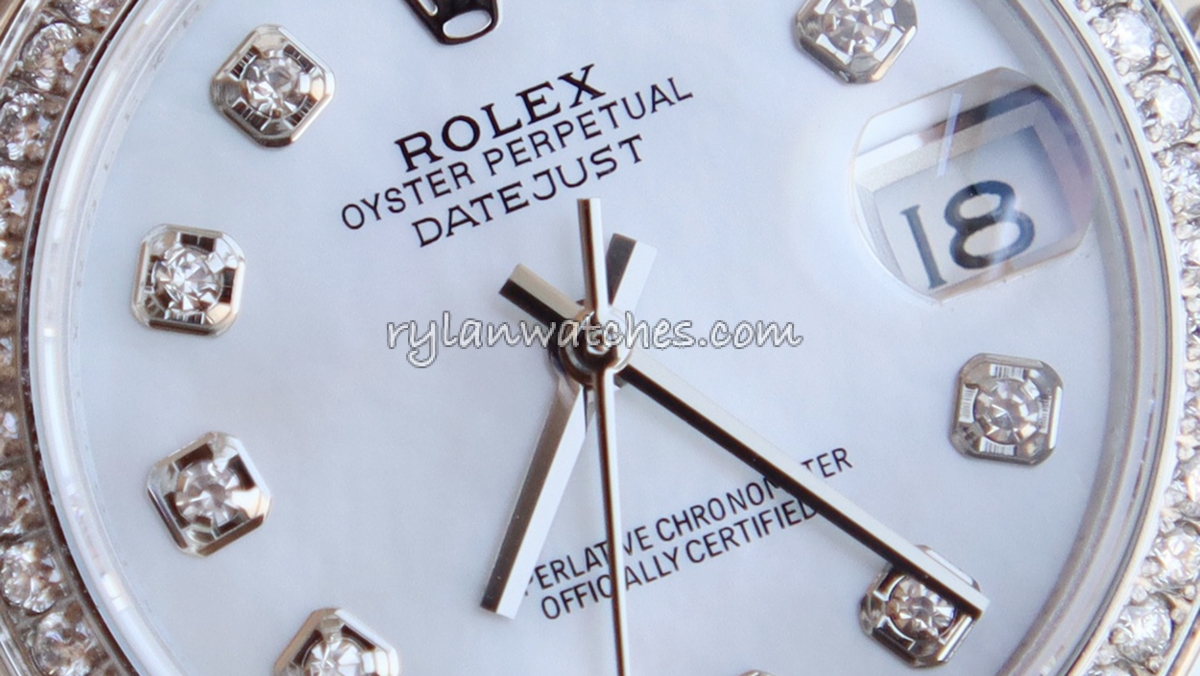
Use a straight, evenly lit photograph. Compare marker position, text spacing, coronet shape, minute-track alignment, hand length, date printing and the relationship between the dial and rehaut. Model differences matter: a Submariner-style dial, Daytona-style chronograph and Datejust-style date display need different checkpoints.
Color is difficult to judge across cameras and displays. White balance, reflections and editing can change black, blue, green and metallic dials. Look for internal consistency first: matching lume application, centered elements, clean printing and hands that align with their tracks.
If lume is part of the comparison, expose both watches to the same light for the same period, then photograph them with fixed camera settings at timed intervals. This does not authenticate either watch, but it avoids the common mistake of comparing one fully charged dial with another that received less light.
4. Bezel, Crystal and Date Magnifier
On rotating-bezel models, compare insert color, numeral fill, marker alignment, action and side-to-side play. On fixed-bezel or engraved chronograph designs, examine scale spacing and the transition from bezel to case. Sound alone is not an authentication method; recording equipment and handling alter it.
For the crystal and date magnifier, use centered images from equal distance. Review date centering, clarity and the amount of distortion as the viewing angle changes. Avoid treating a single advertised magnification number as proof. Crystal height, date-wheel position, camera distance and optics affect the result.
Bezel checks must follow the model. A Submariner-style rotating bezel requires alignment and action review; a GMT-style bidirectional bezel adds color transition and 24-hour indexing; a Daytona-style fixed bezel is judged through scale position and engraving. Applying one bezel test to every Rolex design produces misleading conclusions.
5. Movement Architecture and Function
A display that looks correct from the dial side does not prove that the movement matches the genuine caliber. Rolex-inspired replicas may use clone-style, adapted or alternative automatic movements. Differences can involve architecture, decoration, date-change behavior, crown direction, power delivery, chronograph layout and future parts availability.
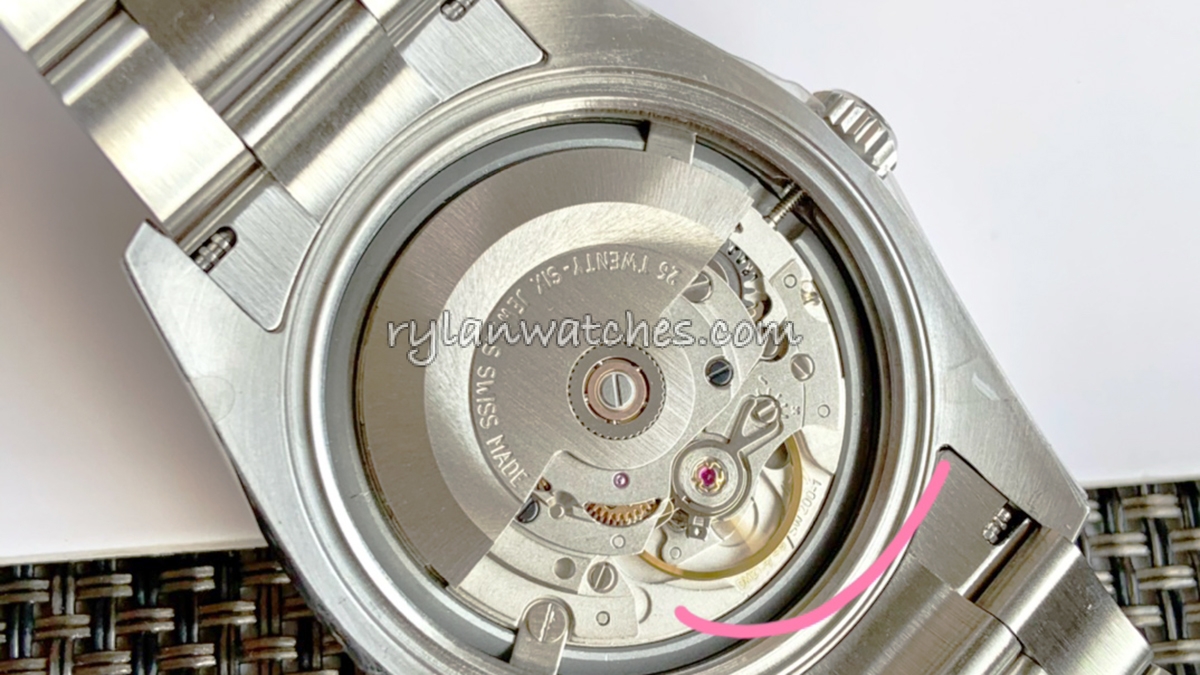
Compare measured performance under stated conditions rather than assuming that one origin or caliber name guarantees accuracy. Genuine manufacture includes a defined brand testing and service context; a replica relies on the specification, individual QC and independent repair options available. Read the replica watch movement comparison and service guide before choosing complexity for appearance alone.
A useful movement record identifies the winding method, test duration, resting positions and whether the watch was fully wound. Timegrapher numbers can support diagnosis, but one reading in one position is not a complete statement of wrist performance. Movement sound recorded on a phone is even less decisive because microphone gain, room acoustics and distance change the result.
6. Bracelet, End Links and Clasp
Bracelet quality is both visual and tactile. Compare end-link fit, gap consistency, articulation, screw or pin condition, clasp alignment, extension operation and the sharpness of unfinished edges. A replica can look close from above but feel different when the bracelet flexes or the clasp closes.
Weight alone is not quality proof. A heavy watch with poor link movement can be less comfortable than a lighter, well-balanced assembly. Fit the bracelet correctly and examine whether the watch head stays centered on the wrist.
Check the clasp several times without forcing it. Review the security of the lock, comfort of any extension or micro-adjustment, and whether screws or pins sit correctly. Sharp internal edges, stiff links and uneven gaps may matter more in daily use than a small visual difference on the dial.
7. Water Resistance and Real-World Testing
A screw-down crown, rotating bezel and depth marking do not prove the water resistance of an individual replica. Gaskets, crown tube, crystal, caseback and assembly condition determine sealing. If water use matters, require an appropriate current pressure test for the actual watch.
A genuine watch’s stated rating belongs to its manufacturer specification and testing system, but any used watch can still require inspection after age, impact or service. For both genuine and replica watches, current condition matters. Without reliable evidence, avoid swimming, showers, steam and hot water.
Pressure testing is evidence for the condition at the time of the test, not a permanent guarantee. Opening the case, damaging the crown or aging a gasket can change sealing later. Match the type of test and its limit to the intended use instead of asking only whether the result was “passed.”
8. Consistency and Individual QC
A genuine production system and an independently produced replica do not offer the same consistency or traceability. Reviews of one replica version can become outdated, and individual pieces may vary. Factory or version names are useful only when connected to the exact reference, current specification and date.
Inspect the watch you will receive rather than transferring a reviewer’s conclusion. The replica watch QC guide covers configuration, dial, bezel, case, bracelet and function checks. The page on the most accurate super clone Rolex explains how accuracy priorities change among models.
Keep pre-shipment QC separate from a genuine-versus-replica comparison. QC asks whether the selected piece matches its order and has visible defects; authentication asks who manufactured the watch. Good QC can improve a replica purchase, but it cannot transform the product’s identity.
9. Warranty, Service, Resale and Ownership
The genuine watch includes authenticity, manufacturer identity and access to an established service and resale ecosystem. A replica depends on the seller’s terms, independent repairers and the availability of compatible movement parts. It should never be represented or sold as genuine.
Compare total cost rather than entry price alone: purchase, possible regulation or repair, water testing, strap or bracelet work, shipping and the risk that a complex movement becomes uneconomic to fix. Review the super clone warranty guide and the discussion of whether super clones are worth the price.
Ownership also includes disclosure. A replica should remain clearly identified as a replica in storage, service, gifting and any later transfer. This prevents another person from relying on copied branding, packaging or serial-style markings as evidence of genuine origin.
Model-Specific Comparison Priorities
Case profile, bezel alignment and action, marker layout, crown guards, bracelet and pressure test.
Subdial layout, hand alignment, pusher operation, bezel scale, movement thickness and chronograph behavior.
Bezel color and alignment, GMT-hand sequence, date change, rehaut, bracelet and clasp. See the GMT-Master II review.
Fluted or smooth bezel, date magnifier, dial printing, day/date centering, bracelet style and polished finishing.
How to Make a Fair Side-by-Side Comparison
- Use the same reference, generation, size, dial and bracelet configuration.
- Clean both crystals and use the same neutral lighting and camera settings.
- Photograph front, side, crown, caseback, clasp and wrist profile from equal distances.
- Separate observations from assumptions; do not infer alloy, pressure resistance or caliber identity from appearance.
- Record functional checks and measured results under the same conditions.
- Use a qualified professional when authenticity or a high-value genuine purchase is at stake.
The Real Difference Is Larger Than Appearance
A fair super clone Rolex vs real Rolex comparison can show where an independently produced watch follows a design closely and where differences appear in execution. But the genuine watch’s provenance, original movement, testing, manufacturer support and authentic resale status cannot be reduced to a macro photograph.
Buyers interested in design and price can browse the current Rolex-inspired watch collection and use the exact product page for dimensions, movement and options. Buyers evaluating a watch offered as genuine should obtain independent authentication rather than relying on this article.
Trademark notice: Replica products are independently produced and are not manufactured, authorized or endorsed by Rolex. Rolex and its model names are trademarks of their respective owner.