
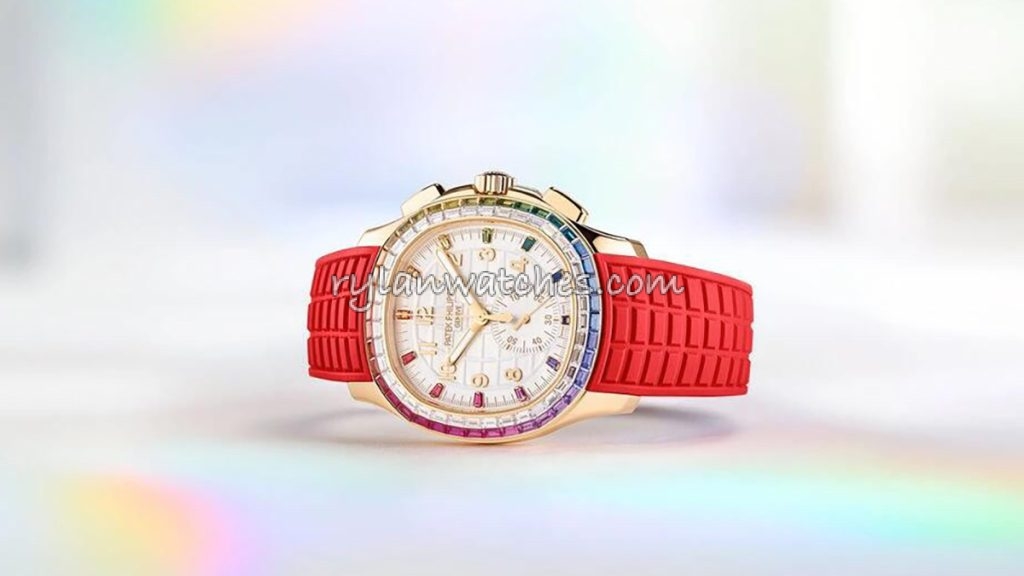
Swiss vs Japanese Movement: What First-Time Buyers Should Understand First
For first-time buyers, the debate between Swiss and Japanese movement is often framed as a question of prestige. Swiss movements are widely perceived as the gold standard, while Japanese movements are frequently labeled as “entry-level” or “budget alternatives.” In the super clone watch market, however, this perception can be misleading. What matters most at the beginning is not the country name engraved on the movement, but how that movement behaves inside a replica environment—under real-world QC conditions, assembly tolerances, and long-term daily wear.
Many newcomers assume that choosing a Swiss movement automatically reduces risk. In practice, movement reliability in super clone watches is shaped by a combination of factory consistency, assembly quality, and how complex the movement architecture actually is. This is why experienced buyers evaluate movement choices differently than marketing descriptions suggest. Understanding this distinction early helps prevent the most common beginner mistakes, especially those caused by overpaying for specifications that do not translate into real stability. This mindset is also reflected in our breakdown of common buying errors explained in the replica watch scams checklist, where movement labeling is often used as a distraction rather than a true quality indicator.
A critical misconception worth addressing early is the belief that movement origin functions as a shortcut for quality judgment. In the super clone ecosystem, labels such as “Swiss movement” or “Japanese movement” often serve more as psychological anchors than predictive indicators. Buyers who rely on these labels alone frequently overlook more meaningful signals—such as factory track record, batch maturity, and QC transparency—that ultimately determine whether a watch performs reliably after weeks or months of real-world use. In many cases, the movement label becomes a focal point precisely because it is easier to understand than the more complex reality behind clone production.
From a technical standpoint, Japanese automatic movements are often more forgiving in clone applications. Their simpler architecture, wider tolerance margins, and lower dependency on perfect assembly conditions make them easier to regulate, inspect, and maintain during QC. Swiss movements, while refined, can introduce additional variables when replicated—particularly in chronograph and ultra-thin designs—where small deviations during assembly can lead to inconsistencies that only appear after delivery.
This is why movement choice should always be evaluated alongside factory capability and post-order inspection standards, not in isolation. If you want to understand how movement selection fits into the broader process after purchase, our step-by-step explanation of what happens after an order is placed outlines how QC, testing, and final approval actually work in practice.
For buyers interested in the technical background behind movement engineering rather than brand perception, independent horology resources provide useful context on why simpler calibers often outperform complex ones in non-factory environments. A neutral overview of mechanical movement design principles can be found through educational horology references such as Hodinkee’s movement fundamentals, which explain how tolerance, power delivery, and architecture affect real-world performance beyond marketing language. This technical reality is exactly why movement choice for first-time buyers should prioritize predictability and serviceability over prestige alone.
Why Japanese Movements Often Make More Sense for First-Time Buyers
For first-time buyers, Japanese movements often provide a level of practical reliability that aligns better with the realities of the super clone market. This is not because they are inherently “better” than Swiss movements in absolute terms, but because they are better suited to the conditions under which replica watches are produced, assembled, and quality-checked. Simpler architecture, fewer ultra-tight tolerances, and proven mass-production stability all work in favor of Japanese calibers when consistency matters more than pedigree.
One of the most important advantages lies in tolerance flexibility. Japanese automatic movements are designed to perform reliably even when assembly conditions are not perfectly controlled. In a clone environment—where parts are replicated rather than manufactured by the original brand—this tolerance margin significantly reduces the likelihood of issues such as inconsistent amplitude, noisy rotors, or premature wear. For buyers who are still learning how to read QC photos and videos, this predictability lowers the chance of missing subtle problems that only surface weeks after delivery.
Another key factor is QC transparency. Watches powered by Japanese movements are easier for factories to regulate and test before shipping. Beat error, power reserve, and hand alignment tend to remain stable across batches, making QC results more representative of long-term performance. This consistency allows buyers to rely more confidently on pre-shipment inspections rather than hoping post-delivery adjustments will resolve hidden issues. In contrast, cloned Swiss movements—especially those based on chronograph or ultra-thin designs—often require a higher level of assembly precision that is not always evenly achieved across production runs.
Cost efficiency also plays a role, particularly for first-time buyers who are still calibrating expectations. Japanese movements generally offer a better balance between price and performance, allowing buyers to allocate budget toward overall watch quality rather than movement branding alone. This often results in a more satisfying first experience, where the watch feels stable, accurate, and wearable from day one. Over time, many experienced collectors still keep Japanese-movement models in their rotation for this exact reason: they are dependable, low-maintenance, and forgiving in daily use.
Most importantly, choosing a Japanese movement early on helps buyers focus on learning the fundamentals that truly matter—case finishing, dial accuracy, factory consistency, and seller reliability. These factors have a far greater impact on long-term satisfaction than movement origin alone. Once these foundations are understood, transitioning to Swiss-movement clones becomes a deliberate choice rather than a leap based on assumptions. For first-time buyers, that learning curve is far smoother when the movement itself introduces fewer unknowns.
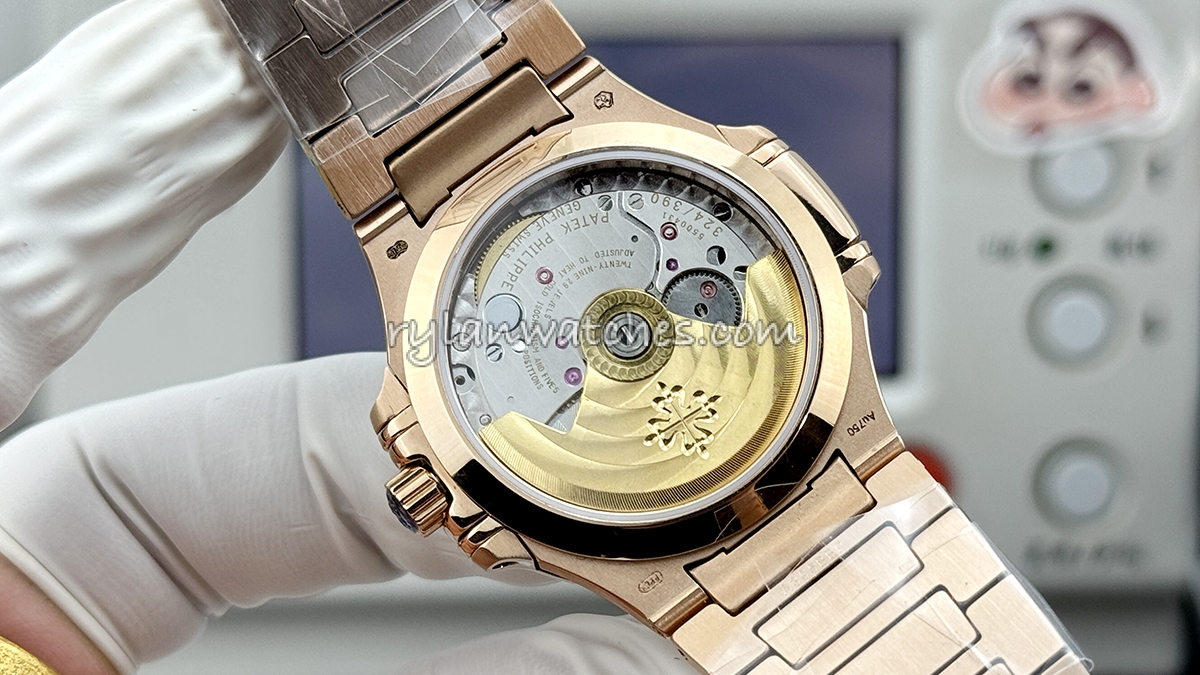
Where Swiss Movements Add Real Value — And Where They Don’t
Swiss movements undeniably carry a strong emotional and symbolic weight. For many buyers, especially those entering the super clone market from genuine luxury watches, the word “Swiss” immediately signals prestige, precision, and legitimacy. However, in the replica environment, the value of a Swiss movement is highly conditional. It adds real benefit only under specific circumstances, and outside of those conditions, it can easily become an unnecessary risk multiplier rather than an upgrade.
Swiss movements add the most value when three factors align simultaneously: a mature clone architecture, a factory with proven long-term consistency, and a buyer who understands how to evaluate QC beyond surface-level visuals. In these cases, Swiss-movement clones can deliver smoother winding behavior, slightly improved finishing on visible components, and more authentic mechanical feedback—especially in time-only or simple date models. When executed correctly, the experience can feel closer to the original not just visually, but mechanically.
However, problems arise when Swiss movements are paired with complexity too early in the buyer journey. Chronographs, ultra-thin calibers, and heavily modified designs introduce dependencies that magnify even small assembly errors. In the clone ecosystem, where parts are reverse-engineered rather than originally designed, Swiss movements often operate closer to their tolerance limits. This means that issues such as hand misalignment, unstable power reserve, or chronograph reset drift may not appear during QC but emerge after regular wear begins.
Another overlooked limitation is service reality. Genuine Swiss movements benefit from global service infrastructure and standardized parts availability. Clone Swiss movements do not. When something goes wrong, repair options become narrower, more expensive, and more dependent on the skill of the local watchmaker. For first-time buyers, this creates a mismatch between expectation and reality: the movement sounds premium, but the ownership experience may feel fragile or restrictive.
It is also important to separate movement origin from overall watch quality. Many buyers assume that a Swiss movement automatically guarantees a superior watch. In practice, dial accuracy, case geometry, bezel finishing, and bracelet construction have a far greater impact on daily satisfaction. A well-finished watch with a stable Japanese movement often feels more complete and reliable than a visually compromised watch powered by a Swiss clone. This is why experienced collectors frequently prioritize factory reputation over movement labels when advising newcomers.
For first-time buyers, Swiss movements should be approached as a second-stage decision rather than a default upgrade. They make sense once the buyer understands how different factories perform, how QC signals translate into real-world use, and how to manage maintenance expectations. Without that foundation, Swiss movements can shift focus away from what actually matters early on: predictability, durability, and learning confidence. When chosen deliberately, they add value. When chosen prematurely, they often add noise.
Movement Choice vs Factory Consistency: What Really Determines Reliability
For many first-time buyers, movement choice feels like the most important technical decision. Swiss or Japanese is often treated as a shortcut for judging quality, reliability, and long-term satisfaction. In reality, movement origin is only one variable—and rarely the one that determines whether a watch performs well over time. What matters far more, especially in the super clone market, is factory consistency.
Factory consistency refers to how reliably a factory can reproduce the same level of assembly quality, tolerances, finishing, and testing across multiple batches of the same model. A consistent factory produces watches that behave predictably: the movement runs within an expected range, hands align correctly, date changes occur on time, and components wear evenly. An inconsistent factory, even when using a theoretically “better” movement, produces watches that vary widely from one unit to the next.
This distinction is critical because super clone watches are not built in a controlled, vertically integrated Swiss manufacturing environment. Movements—whether Swiss or Japanese—are adapted, modified, and installed into cases that were not originally designed for them. This adaptation process introduces friction points: dial feet adjustments, hand height tolerances, calendar alignment, and rotor clearance. A factory that has mastered these integrations will outperform a factory that has not, regardless of the movement’s country of origin. For readers who want a deeper breakdown of this concept, our explanation of factory consistency explained outlines how production discipline impacts real-world reliability.
Japanese movements often benefit from this reality. They are mechanically forgiving, robust under imperfect alignment, and tolerant of minor assembly variance. When paired with a factory that produces stable case and dial geometry, Japanese-powered super clones tend to age more gracefully. They maintain accuracy, resist premature wear, and are less sensitive to small shocks or daily handling errors. For new buyers, this translates into fewer surprises after delivery.
By contrast, Swiss movements demand precision not just in movement construction, but in everything around them. Case thickness, dial spacing, hand pressure, and lubrication all matter more. If a factory’s QC discipline is inconsistent—even slightly—Swiss movements amplify those weaknesses. What looks perfect during QC can degrade faster once the watch enters real-world use, especially if worn daily.
Another overlooked factor is batch drift. Even reputable factories can experience variation between production runs. Experienced buyers track these shifts closely, often waiting for later batches once early issues are identified. First-time buyers rarely have this context. As a result, choosing a watch based solely on movement label exposes them to variability they are not yet equipped to evaluate or mitigate.
Reliability, then, is not a product of movement origin alone. It is the outcome of a system: factory process control, assembly experience, testing discipline, and realistic movement pairing. When those elements align, both Swiss and Japanese movements can perform well. When they don’t, neither label offers protection.
Why Japanese Movements Often Perform Better in Real-World Use
In controlled descriptions, Swiss movements often sound superior: tighter tolerances, more refined finishing, and closer replication of genuine calibers. However, first-time buyers rarely experience their watches under controlled conditions. What matters instead is how a movement behaves in daily use—after shipping, temperature changes, wrist shocks, imperfect winding habits, and long wear cycles. In these real-world conditions, Japanese movements often outperform expectations.
Japanese movements are designed with durability and tolerance in mind. They are built to function reliably even when assembly conditions are not perfect, which is a crucial advantage in the super clone environment. Minor misalignment in dial feet, hand height, or case spacing—issues that are common even among reputable factories—tend to have minimal impact on Japanese movements. They continue running smoothly, maintain stable accuracy, and show fewer early-stage issues.
This tolerance directly affects first-time buyers. New buyers are less likely to open casebacks, regulate movements, or service watches early. They expect the watch to “just work.” Japanese movements are better aligned with this expectation. They are less sensitive to shipping shock, less prone to rotor noise escalation, and more forgiving when worn inconsistently. Miss a day of winding, wear it loosely, or leave it resting dial-up for extended periods—Japanese movements adapt without complaint.
Swiss movements, by contrast, are optimized for precision within narrow margins. When everything is assembled correctly, they perform beautifully. But when tolerances stack—even slightly—the result can be increased friction, uneven wear, or inconsistent timekeeping. These issues do not always appear during QC. They often emerge weeks later, after the watch has been worn and exposed to real conditions. For a first-time buyer, this delay can be confusing and frustrating, especially when the watch initially appeared flawless.
Another practical consideration is service accessibility. Japanese movements are widely understood by independent watchmakers around the world. Parts availability is broader, service costs are lower, and diagnostic familiarity is higher. Swiss clone movements, especially those that replicate proprietary calibers, can be more difficult to service outside specialized circles. For new buyers who are not yet comfortable navigating the service ecosystem, this difference matters more than advertised movement prestige.
There is also a psychological factor. First-time buyers often wear their watches more casually. They experiment, switch straps, adjust bracelets, and wear the watch in a wider range of environments. Japanese movements tolerate this exploratory phase better. They absorb learning mistakes without punishing the owner. Swiss movements reward experience, but they expect it too.
When a Swiss Movement Actually Makes Sense for Buyers
Swiss movements begin to matter only after a buyer’s decision framework changes. For first-time buyers, most risks come from uncertainty—uncertainty about factories, QC interpretation, post-delivery behavior, and long-term expectations. Once those uncertainties shrink, Swiss movements become meaningful rather than risky. A Swiss movement makes sense when the buyer can reliably evaluate more than the movement itself. This includes the factory’s historical consistency, the specific batch reputation of the model, and the buyer’s ability to read QC photos and videos beyond surface-level aesthetics.
Swiss movements also become more appropriate when usage patterns are predictable. Buyers who wear watches on rotation, wind them correctly, avoid unnecessary shocks, and understand power reserve behavior tend to extract real value from Swiss calibers. Precision rewards discipline. Without that discipline, the benefits narrow quickly.
Another signal that a Swiss movement makes sense is model maturity. Some references have gone through enough production cycles that factories have refined tolerances, solved early integration issues, and stabilized assembly procedures. In these cases, Swiss movements are no longer fragile—they are supported by process experience. This is why experienced buyers often wait before recommending a newly released Swiss-movement clone, even if early reviews look promising.
Service readiness is another threshold. Buyers who already know where and how they would service a Swiss clone—locally or through trusted channels—face less long-term risk. Without a plan for maintenance, the theoretical advantage of a Swiss movement can turn into downtime or unexpected cost.
Finally, expectations must align. Swiss movements do not guarantee perfection. They offer tighter performance ceilings, not immunity from issues. Buyers who understand this distinction enjoy Swiss movements for what they are: refined tools that demand matching care. Buyers who expect them to eliminate all risk often end up disappointed.
A Practical Decision Framework for First-Time Buyers
For buyers who are still building confidence, movement choice is only one part of the decision. Equally important is understanding how sellers manage quality control, verification, and post-order handling. If you want to see how these elements work together in real transactions, our post-order process guide breaks down what happens from confirmation to QC, shipping, and after-sales support.
The first priority should always be predictability. Ask whether the watch model you’re considering has a stable history across multiple batches. Predictability comes from repetition: the same factory producing the same reference with consistent results. When predictability is high, even modest movements perform reliably. When it is low, even prestigious movements become liabilities.
The second priority is QC readability. First-time buyers should favor movements and models that are easy to evaluate during quality control. Simple three-hand or date-only watches make it easier to spot alignment issues, printing flaws, or mechanical irregularities. Complicated layouts hide problems. If you cannot confidently interpret QC materials, the movement choice becomes irrelevant—because you are flying blind.
Third is tolerance to real-world use. Early ownership involves learning. Watches get worn loosely, rotated inconsistently, or exposed to environments the buyer didn’t anticipate. Movements that tolerate these variables reduce friction. This is why many experienced collectors recommend starting with Japanese-powered super clones: they absorb beginner mistakes without turning them into costly lessons.
Fourth is service realism. Consider not just whether a movement is serviceable in theory, but whether it is serviceable for you. Access to watchmakers, parts availability, and cost all matter. A movement that performs slightly less precisely but is easy to maintain often delivers higher long-term satisfaction than a technically superior movement that becomes a burden.
Finally, evaluate upgrade timing. A first watch is not a final watch. Starting with a stable, forgiving platform builds confidence and skill. Once you can read QC accurately, recognize factory variance, and understand your wearing habits, upgrading to Swiss movements becomes logical rather than aspirational. If you’re looking for models that align with this learning-first approach, exploring beginner-friendly super clone models can help narrow options without overwhelming the decision process.
Quick takeaway for first-time buyers: If predictability, low maintenance, and learning confidence matter most, start with a Japanese-powered model from a proven factory. Once you understand QC signals, batch variation, and your own wearing habits, Swiss movements become a meaningful upgrade—not a gamble.