
Buying Guide: How to Choose a 1:1 Super Clone Watch That’s Truly Worth It
1:1 super clone watches have rapidly transformed the modern luxury-watch landscape, offering enthusiasts the chance to experience Swiss-level design, materials, and mechanical feel without entering the five-figure price bracket. Unlike the low-grade replicas of the past, today’s top-tier super clones deliver authentic weight, refined finishing, and functional accuracy that genuinely satisfy collectors.
The world of luxury watches has always carried a sense of exclusivity—the cool heft of solid steel, the glossy depth of ceramic, the crisp click of a perfectly machined clasp. But for buyers who value craftsmanship without excessive cost, high-quality super clones now provide an accessible and compelling alternative.
This comprehensive guide cuts through industry myths and marketing noise. Whether you’re purchasing your first super clone or expanding an existing collection, you’ll learn how to evaluate true quality, understand factory differences, avoid common pitfalls, and choose models that offer long-term reliability and satisfaction. With the right knowledge, you can secure 90% of the authentic experience for a fraction of the price.
What Defines a True 1:1 Super Clone Watch?
Not all replicas are created equal. The term “super clone” is frequently misused online, but in the industry it refers to a very specific level of engineering. A genuine 1:1 super clone is built to match the original Swiss watch in weight, proportions, tactile feel, and movement behavior. These pieces are the closest the replica industry has ever come to Swiss authenticity.
1. Materials That Match the Original
A true super clone uses the same category of materials as the authentic reference:
- 904L stainless steel for Rolex-style cases, offering a brighter shine and higher corrosion resistance than standard steel.
- 316L steel for brands like Omega, AP, and Patek where this alloy is traditionally used.
- Sapphire crystal glass — not mineral glass or acrylic — ensuring scratch resistance and clarity.
- Ceramic bezels with correct gloss, resistance to fading, and laser-engraved numerals.
- Forged carbon and ceramic cases for Richard Mille models, replicating the layered texture and lightweight build.
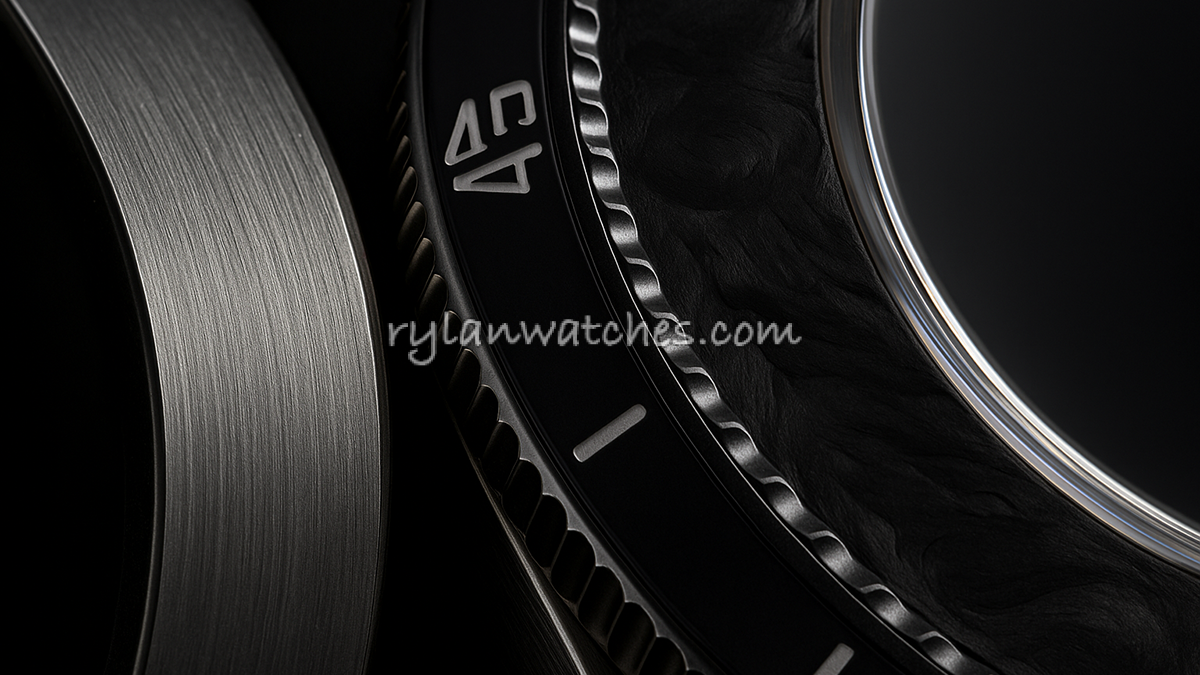
Factories that specialize in high-grade clones often invest heavily in case molds and finishing techniques. The brushing direction, edge curvature, chamfers, and bezel texture are all refined to match genuine Swiss finishing. This is one of the clearest differences between a $150 replica and a $1000 super clone.
2. High-Grade Clone Movements
The heart of a super clone watch is its movement. Today’s top factories offer remarkable recreations of famous Swiss calibers:
- Rolex 4130/4131 clone for the Daytona — with working chronograph and smooth reset.
- Rolex 3235 clone — known for its long power reserve and accuracy.
- Patek 26-330 and 324SC clones — extremely thin, stable, and visually convincing.
- Audemars Piguet 4302 clones — reliable automatic performance and accurate rotor design.
- Richard Mille skeleton/tourbillon clones — visually stunning and structurally complex.
While no clone movement can equal Swiss COSC accuracy, top-tier super clones often achieve ±5 to ±10 seconds per day, which is exceptional at this price category.
3. Precision and Visual Accuracy
Collectors care deeply about details that casual buyers rarely notice. Sharp dial printing, correct logo thickness, perfect date wheel font, lume color temperature, caseback spacing — these micro-details separate a truly premium clone from a passable one. When comparing models from different factories, experienced collectors examine:
- Dial ink density and alignment
- Hour marker height and polishing quality
- Calendar window beveling
- Rehaut engraving depth
- Bezel rotation torque
- Bracelet articulation and clasp engagement
These details aren’t “nice to have.” They directly affect realism — especially for watches worn daily or shown among other collectors.
The Evolution of Super Clone Factories — A Look Behind the Scenes
The modern super clone industry is dominated by a few elite factories, each known for specialized strengths. While lower-tier sellers may claim to offer “factory direct” pieces, only a small handful consistently produce collector-grade watches:
Clean Factory (C Factory)
Known primarily for Rolex and Daytona references. Clean is respected for its finishing consistency, strong 904L steel cases, and accurate ceramic bezels. Their 4130 clone remains a benchmark for the replica industry.
VS Factory
A leader in Omega and Panerai models. Their movements are renowned for stability, with excellent dial finishing and coherent part quality.
PPF and 3K Factory
These two factories lead the Patek Philippe segment, especially for Nautilus and Aquanaut. 3K’s 324SC clone is known for its accuracy and rotor construction.
BTF, BBS, and ZF
BTF and BBS handle many Audemars Piguet references, while ZF covers a wide range of models with consistently strong finishing.
Understanding factory differences is essential because two identical-looking watches online may perform very differently in real life. Factory pedigree often determines long-term satisfaction.
How to Evaluate a Super Clone Watch Before Buying
With so many sellers and factories competing for attention, it’s easy for new buyers to feel overwhelmed. The key is learning how to verify quality using criteria that professionals and experienced collectors rely on. A proper evaluation avoids disappointment, unnecessary returns, and long-term problems.
Understanding quality is only one part of making a safe decision. Many buyers correctly assess materials and movements, yet still run into trouble by choosing the wrong seller or trusting misleading factory claims. To reduce this risk, our replica watch scams checklist explains how experienced buyers identify red flags, avoid payment traps, and protect themselves before money changes hands.
If you already understand how to evaluate quality but are still wondering what happens after you place an order, we’ve outlined the full post-order process step by step — from order confirmation and QC to packaging, shipping, and after-sales support — so you know exactly what to expect.
Read the full post-order process guide →
1. Assessing Movement Performance
The movement is the engine of the watch. Even if the exterior looks flawless, a poorly made movement will result in time loss, misaligned hands, power reserve issues, or chronograph malfunctions. When evaluating a movement, consider:
- Timekeeping stability — A good clone keeps ±5–10 seconds/day.
- Sweep smoothness — Especially visible on Rolex and Omega models.
- Chronograph operation — Reset alignment must be immediate and centered.
- Rotor noise — Higher-end clones have more controlled winding sound.
- Power reserve — Quality clones maintain 40–70 hours depending on design.
Many sellers fail to test movements properly. At RylanWatches, each watch is filmed during QC so buyers see real-world performance before paying. This level of transparency is essential when investing in a high-grade clone.
2. Inspecting Material Quality
Experienced collectors often develop an eye for steel, ceramic, and sapphire finishing. Here’s what separates excellent materials from cheap ones:
- 904L vs 316L steel: 904L has a brighter luster and a slightly warmer tone, matching modern Rolex aesthetics. It also resists corrosion better.
- Sapphire crystal: High-end pieces use double-domed sapphire, often with correct AR color.
- Ceramic bezel quality: A good ceramic insert should have a clean gloss and precisely engraved numerals. Cheap replicas often show faded printing or incorrect fonts.
- Forged carbon: Premium forged carbon must have layered texture, not a printed pattern.
The tactile feel is just as important. A super clone should feel solid but balanced; cheap replicas often feel hollow or lightweight due to inferior case molds.
3. Evaluating Micro-Details
Collectors often spend hours comparing tiny differences. Micro-details are the soul of a luxury watch — the exact slope of a bracelet link, the alignment of a date window, the thickness of a printed numeral. High-grade super clones pay attention to details such as:
- Correct rehaut depth and engraving style
- Hour marker height and polishing symmetry
- Clasp tension and secure lock
- Rotor finish closely matching Swiss specifications
- Lume brightness and color temperature (green vs blue)
If any one of these elements feels “off,” enthusiasts notice immediately. That’s why buying from credible sellers — not random marketplace vendors — is critical.
Understanding the Watch Categories: Which Super Clones Are Best for You?
Different collectors gravitate toward different brands based on lifestyle, design taste, and long-term goals. Below is a breakdown of the most popular categories and what makes each appealing.
Rolex – The Most Counterfeited, and the Most Refined
Rolex dominates both the luxury and clone markets. Modern super clones of Rolex references — especially Daytona, Submariner, GMT-Master II, Datejust, and Oyster Perpetual — have reached unprecedented levels of accuracy. Factories like Clean and VSF replicate:
- 904L steel finishing
- Precise dial fonts
- Cerachrom-style ceramic bezels
- Smooth hand sweep
The Daytona remains the flagship of the clone world thanks to its 4130 movement recreation. For many collectors, a Daytona super clone isn’t just a watch — it’s a rite of passage into the hobby.
Patek Philippe – Elegance, Minimalism, and Prestige
Patek Philippe clones attract buyers who prefer refined, understated luxury. The Nautilus 5711 and 5980, along with the Aquanaut series, are the most frequently replicated. The challenge with Patek clones lies in achieving perfect dial finishing and correct brushing patterns — areas where cheap replicas often fail.
Factories like PPF and 3K excel in recreating rotor finishing, date wheels, and case thickness. These watches appeal to collectors who value thin profiles, comfortable bracelets, and timeless design.
Audemars Piguet – Sculpted Construction & Strong Wrist Presence
The Royal Oak, especially the 15500 and 15400 models, is known for its octagonal bezel, exposed screws, and complex finishing. Only a handful of factories can replicate its multi-directional brushing and exact case angles. Super clones from BBS and ZF offer:
- Accurate tapisserie dial texture
- Sharp case bevels
- Good 4302 clone performance
Collectors often choose AP clones for their bold geometry, presence, and sculptural aesthetic.
Richard Mille – The Ultimate Statement Piece
Few watches capture attention like a Richard Mille. The skeletonized architecture, tonneau case, and carbon/ceramic shell make RM clones some of the most visually dramatic pieces. High-grade RM super clones replicate:
- Forged carbon texture
- Sapphire caseback
- Skeleton bridges and gear wheels
- Color-accurate rubber straps
These models appeal to collectors who want something expressive and futuristic, especially for casual or sporty daily wear.
Omega – Technical Precision & Heritage
Omega super clones, particularly the Speedmaster and Seamaster lines, are known for excellent dial finishing and very stable movements. VSF has long dominated this category, offering clones with reliable accuracy and refined laser-engraved ceramic bezels.
Many first-time buyers choose Omega clones for their versatility, readability, and strong everyday reliability.
How to Read QC Photos & Videos Like a Collector
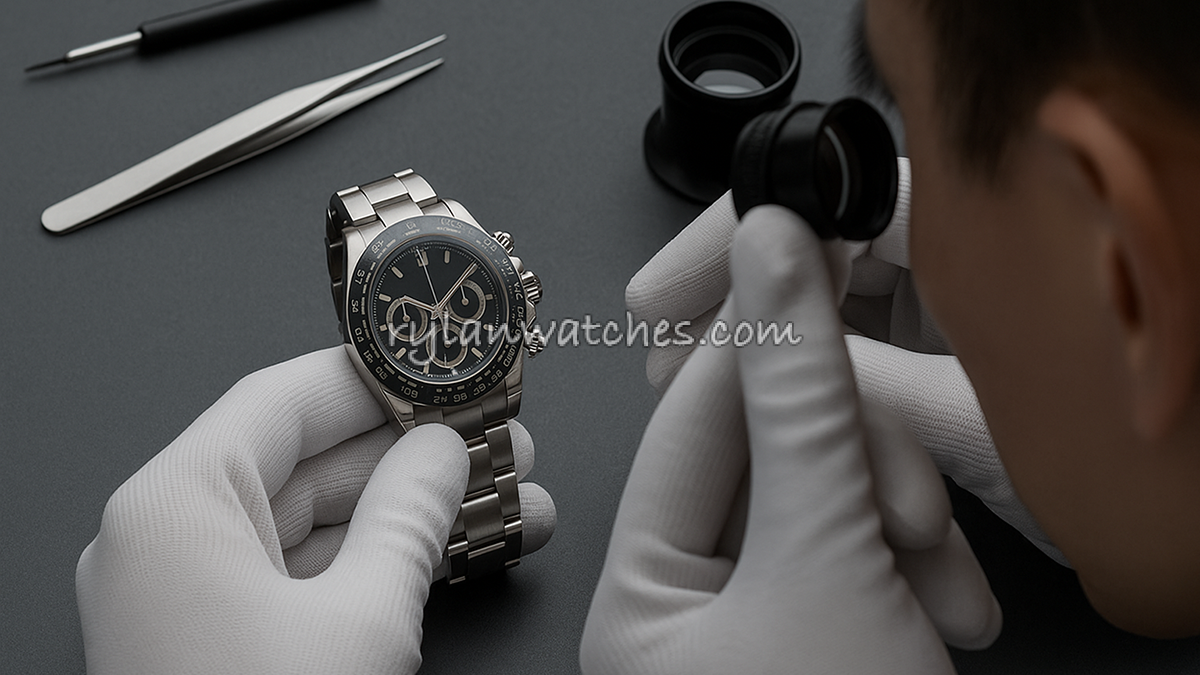
One of the advantages of today’s super clone market is that reputable sellers provide QC photos and videos before shipping. However, many buyers don’t know how to interpret them. Understanding what to look for will help you avoid bad batches and ensure you’re getting a top-tier piece.
1. Inspecting the Dial
The dial is the most important part of the watch visually — and also the easiest place for factories to make mistakes. When reviewing QC:
- Check logo sharpness — Look for clear edges and correct spacing.
- Examine marker alignment — Crooked or uneven markers indicate poor assembly.
- Look for dust or debris — Small particles inside the crystal suggest sloppy QC.
- Verify color tone — Especially important for blue, green, or gradient dials.
A high-quality super clone will show uniform printing density and clean, crisp outlines even under magnification.
2. Evaluating Case & Bezel Quality
- Bezel alignment — Misaligned bezels are an immediate red flag.
- Bezel click sound — For dive watches, the click should be clean and consistent.
- Case brushing — Pay attention to the direction and sharpness of the lines.
- Polished edge symmetry — Should be even and smooth, never wavy.
Factories like Clean and VSF excel in case finishing, which is why their models often hold the highest reputation among buyers.
3. Bracelet, Clasp & Screw Quality
- Bracelet articulation — High-grade links articulate smoothly without rattling.
- Clasp engravings — Engravings should be deep, not laser-etched too lightly.
- Screw integrity — Screw heads should not be stripped or scratched.
Cheap replicas frequently use thin, lightweight bracelets that feel hollow or fragile. A genuine super clone bracelet should feel secure and substantial.
4. Movement Testing in QC Videos
Movement checks should always include:
- Hand winding smoothness
- Rotor sound and spin behavior
- Chronograph start-stop-reset (for Daytona, Speedmaster, AP chronographs)
- Date wheel switching speed
- Second hand sweep consistency
These tests reveal issues long before the watch reaches your wrist.
Industry Scams & Red Flags: What to Avoid
Before deciding how to pay — whether PayPal, bank transfer, or crypto — it is necessary to understand how scams occur in the luxury and super clone watch space. Thousands of reputable sellers exist, but so do large numbers of bad actors, misleading listings, and fraud attempts. Recognizing early warning signs is one of the most important foundations of Crypto Safety for Luxury Watch Buyers, because avoiding the wrong seller is the first level of protection.
1. Prices Too Good to Be True
A $300 “Daytona 4130 clone” does not exist. Nor does a $600 “full ceramic RM.” When a product looks impossibly cheap, assume that it is. Scammers typically use low prices to lure inexperienced buyers, then ship low-grade replicas or nothing at all. Understanding realistic price benchmarks can help you avoid entering the wrong conversation — review our guide on common mistakes made when buying super clones to understand how pricing connects to real quality.
2. Sellers Who Avoid Showing QC Photos or Videos
Any seller who refuses to provide QC photos or a short walk-around video should be avoided immediately. This usually indicates batch shipping, old stock images, or unpredictable quality control. A reputable seller always provides real QC to buyers before payment — see how this works in our own process on our QC sample and verification method. If a seller will not let you visually verify the watch before you send money, that is a complete stop sign.
3. No Return Policy or Warranty Information
Reputable sellers clearly state their return and repair policies. Avoid sellers who:
- Refuse after-sale assistance
- Offer no replacement options
- Cannot explain how they test watches
These sellers usually disappear after receiving payment. If you want to see what a safer structure looks like from the buyer’s side — including how to protect yourself when using crypto instead of PayPal — read our full guide on Crypto Safety for Luxury Watch Buyers, which walks through the entire process step by step.
4. Fake Factory Claims
Many low-end sellers use packaging labels such as “Clean,” “VSF,” or “PPF” simply to sell inferior products at inflated prices. Real factories do not distribute through random Telegram accounts, Instagram DMs, or marketplace listings. Verified sourcing requires long-term relationships, consistent QC batches, and traceable delivery channels. If a seller cannot demonstrate sourcing transparency — assume there is none.
Recognizing scams **before** you choose a payment method is the foundation of Crypto Safety for Luxury Watch Buyers. Once you filter out risky sellers, you can move to the next step — choosing the safest way to pay, which crypto can offer when used correctly. Continue below for the step-by-step safety workflow.
Water Resistance: Understanding the Real Limitations
This is one of the most misunderstood topics in the super clone industry. Many new buyers assume water resistance ratings printed on the dial — like “100m” or “300m” — reflect actual performance. In reality, clone watches are not pressure tested to Swiss standards, no matter how well they are built.
Why Clones Can’t Match Swiss Water Resistance
- Factories do not perform pressure testing — at least not the kind used by Swiss brands.
- Gasket quality varies — even among top factories.
- Crown tube tolerances are close but not identical to Swiss precision.
- Assembly environments are not perfectly controlled for humidity and dust.
As a result, even the best super clones should be treated as “splash-resistant” watches.
Safe Water Practices for Clone Owners
- Safe for: hand washing, rain, occasional splashes.
- Not safe for: swimming, showering, diving, sauna use.
- Always ensure the crown is tightened before wearing.
Understanding this limitation prevents frustration and unnecessary repair costs. If water resistance is essential for your lifestyle, only an authentic Swiss dive watch can provide true certified protection.
Maintenance, Longevity & Realistic Expectations
With proper care, a high-quality super clone can last many years. Their durability depends largely on how they are worn and maintained.
1. Everyday Wear
Super clones are perfectly suitable for daily use. Wear them confidently, but avoid unnecessary shocks, moisture, or magnetic fields (especially with open-caseback RM models). A microfiber wipe every evening keeps the watch looking new.
2. Service Intervals
Most clone movements benefit from servicing every 2–3 years, similar to entry-level Swiss movements. Service includes:
- Lubricating the movement
- Replacing gaskets
- Cleaning the rotor mechanism
- Inspecting the escapement
This helps maintain accuracy and prevents long-term wear.
3. Storage
Store your watch in a cool, dry place. If unworn for months, wind the movement occasionally to keep lubrication distributed evenly.
How to Choose a Trustworthy Seller in the Super Clone Market
Even with all the technical knowledge in the world, your experience ultimately depends on the seller you choose. The super clone market is decentralized — meaning there is no official distribution network. This creates a landscape where legitimate, long-established sellers coexist with newcomers, resellers, and opportunistic scammers. Choosing wisely is as important as choosing the watch itself.
1. Look for Transparent QC Process
Any reputable seller will provide unedited QC photos and videos before shipping your watch. The QC set should include:
- Front, side, back, and clasp views
- Macro shots of dial, markers, hands, and date window
- Movement operation video (winding, second-hand sweep, chronograph test if applicable)
- Lume test in the dark
- Bracelet articulation demonstration
Sellers who cannot provide this information likely do not control their supply chain.
2. Clear Communication & Knowledge
A trustworthy seller can confidently explain factory differences, movement variations, and real-world performance expectations. They should be able to recommend the best version of a model — not simply push the most expensive version.
3. Secure Payment Options & Order Tracking
In the clone market, secure payment channels, buyer guidance, and reliable shipping are essential. Reputable sellers provide:
- Traceable shipping (DHL, FedEx, EMS, or registered options)
- Detailed payment instructions
- Clear timelines for QC and dispatch
- After-sales support for minor issues
These factors dramatically reduce risk and ensure a smooth buying experience.
Collector Psychology: What Kind of Super Clone Buyer Are You?
As the super clone market matured, buyer motivations became surprisingly diverse. Understanding your own collector identity helps you choose models you will enjoy long-term:
1. The Daily Wearer
This buyer wants a durable, comfortable, visually pleasing watch for everyday use. Good options include:
These watches balance versatility, ruggedness, and long-term reliability.
2. The Statement Collector
Some buyers want a piece that stands out instantly — a talking point, a visual centerpiece. Top picks include:
- Richard Mille RM055 or RM35-02
- Audemars Piguet Royal Oak Offshore
- Daytona with unique colorways (e.g., “Panda,” “Paul Newman” aesthetics)
These models turn heads and deliver strong wrist presence.
3. The Purist
This buyer wants the most technically accurate clone available — movement, finishing, thickness, brushing, symmetry. For these collectors:
- Patek Nautilus 5711 (3K or PPF version)
- Rolex Daytona 4130 Clone (Clean version)
- Audemars Piguet 15500 BBS/ZF
Precision and authenticity matter above all else.
4. The Long-Term Value Collector
Some buyers treat super clones similarly to art prints: affordable but worth keeping long-term. They often build collections based on:
- Iconic design history
- Factory consistency
- Model demand trends
- Rarity within the clone market
This collector often starts with classic pieces and expands based on factory improvements.
Market Trends: The Future of 1:1 Super Clone Watches
The super clone industry continues to evolve rapidly. Materials improve yearly, and factories compete to release better movements, more accurate brushing, and slimmer cases. Several trends are shaping the next era of super clones:
1. Enhanced Clone Movements
Factories are investing heavily in rebuilding Swiss calibers from the ground up. Expect more accurate chronographs, smoother winding systems, and thinner profiles. The gap between genuine and clone movements will continue to narrow — especially in Rolex and Patek models.
2. Surge in Carbon, Ceramic & Titanium Models
As collectors shift toward modern materials, factories follow suit. RM, AP Offshore, and even ceramic Rolex models are gaining popularity for their futuristic look and scratch resistance. The demand for lightweight materials is rising rapidly.
3. Increasing Awareness of Water Resistance Reality
Buyers are becoming more educated about what clone watches can — and cannot — do. As a result, factories emphasize dial accuracy, case finishing, and visual realism rather than unrealistic water-resistance claims.
4. Shift Toward Trusted Sellers
With scams widespread, the community increasingly relies on verified sellers with strong reputations. The next phase of the industry will be shaped by transparency and consistent QC — not flashy marketing.
Should You Buy a 1:1 Super Clone? A Realistic, Balanced Conclusion
A 1:1 super clone watch is not a Swiss watch — but it is the closest alternative the market has ever produced. For many collectors, it offers the perfect balance of aesthetics, mechanical satisfaction, and financial prudence. You enjoy:
- The look, feel, and emotional appeal of an iconic luxury watch
- Fully functional complications
- High-grade materials and finishing
- A price that fits comfortably into an enthusiast’s lifestyle
If you approach the purchase with realistic expectations — especially regarding water resistance and long-term service — a good super clone can provide years of enjoyment, daily reliability, and immense wrist satisfaction.
Why RylanWatches Is Trusted by Collectors Worldwide
- Only top-tier factory super clones
- Manual QC inspections with unedited video proof
- Secure, insured global shipping
- Clear after-sale support and care guidance
- Fast, responsive communication
These standards ensure buyers receive not just a watch — but a reliable, consistent, collector-friendly experience.
Start Your Super Clone Journey Today
Whether you’re exploring your first clone or expanding a growing collection, the key is understanding quality, choosing reputable sources, and selecting models that match your lifestyle. With informed decisions, owning a super clone watch becomes not just a purchase — but a rewarding, long-lasting hobby.
Browse our curated selection here:
Discover 1:1 Super Clone Luxury Watches →
Join thousands of collectors who now enjoy the design, engineering, and emotion of luxury watchmaking — without the five-figure price tag.