
What “Warranty” Really Means in the Super Clone Watch Market
When people look for a super clone watch warranty guide, they often approach the topic with expectations shaped by
the traditional luxury watch industry. In the world of genuine Swiss watches, warranty is a legally defined system supported by
brands, authorized service centers, and standardized documentation. In the super clone market, however, the concept of warranty
operates under very different rules and should be understood in a much more practical, realistic way.
In most cases, “warranty” for super clone watches does not mean long-term coverage or brand-backed protection. Instead, it refers
to a limited form of after-sales support provided directly by the seller. This support is typically informal, not legally binding,
and designed to address problems that appear shortly after the watch is delivered. Common examples include a movement that fails
to start, hands that do not move correctly, or mechanical issues clearly present upon arrival.
It is important to recognize that there is no manufacturer-level warranty in the clone watch ecosystem. Factories do not offer
public service networks, official repair documentation, or internationally recognized warranty cards. Once a watch leaves the
factory, responsibility shifts almost entirely to the seller who arranged the transaction. This makes the seller’s credibility,
communication habits, and track record far more important than any written warranty claim.
Another key difference lies in enforcement. In the luxury watch world, warranty claims are handled through formal service channels.
In the super clone market, warranty claims are negotiated. Buyers usually need to provide clear evidence—such as videos or photos—
to demonstrate that a problem exists and that it was not caused by misuse. Approval depends on the seller’s judgment rather than an
independent technical assessment.
Understanding warranty in this context helps buyers avoid frustration. A super clone warranty is not designed to cover long-term
wear, accidental damage, water exposure, or routine servicing. It exists primarily as short-term functional protection. Approaching
it with realistic expectations allows buyers to assess offers more clearly and evaluate sellers based on transparency rather than
marketing language.
Mechanical Warranty: What Is Actually Covered Inside the Movement
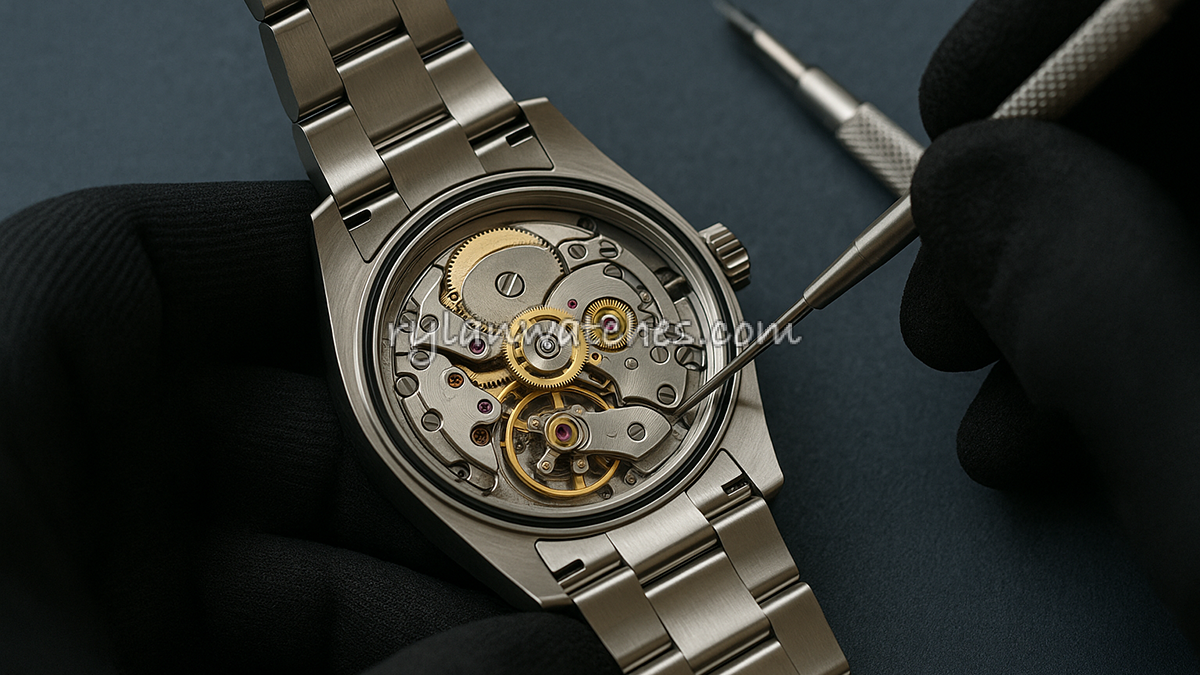
From a technical perspective, most warranty claims in the super clone market are related to the mechanical movement itself.
Understanding how mechanical warranty works is a key part of any serious
super clone watch warranty guide. Unlike cosmetic issues, movement problems are measurable, observable, and often
easier for sellers to verify through video evidence.
Mechanical warranty coverage usually focuses on basic functionality rather than precision performance. If a movement fails to
start, stops completely, or shows obvious defects such as a detached rotor, loose hands, or a crown that cannot engage the
keyless works, these issues are commonly considered valid warranty claims—provided they appear shortly after delivery and show
no signs of external damage.
However, it is important to understand what is not covered. Timing accuracy, power reserve variation, noise level,
and long-term amplitude stability are almost never guaranteed. Clone movements—even high-quality ones based on platforms such as
Miyota or modified Seagull calibres—are not regulated to chronometer standards. A watch gaining or losing time within a wide
daily range is generally viewed as normal behavior rather than a mechanical fault.
Another limitation involves lubrication and wear. Clone factories apply basic lubrication during assembly, but the quality and
quantity are inconsistent. If oils dry out after several months of use, sellers rarely classify this as a warranty issue. From
their perspective, lubrication degradation is part of normal mechanical aging, not a manufacturing defect. This is why many
experienced buyers plan for an early service if they intend to wear the watch regularly.
Mechanical warranty also does not extend to damage caused by magnetization, shock, or improper handling of the crown and pushers.
If a movement stops after impact or exposure to strong magnetic fields, sellers usually reject responsibility. Even when the
external case shows no visible damage, internal stress marks or displaced components can void mechanical coverage.
In practical terms, mechanical warranty in the super clone market should be viewed as short-term functional assurance rather than
long-term performance protection. It exists to confirm that the movement is assembled correctly and operational at delivery—not
to guarantee years of flawless mechanical behavior. Buyers who understand this distinction are better prepared to evaluate
warranty terms realistically and avoid disputes rooted in unrealistic expectations.
What Is Covered vs What Is Never Covered Under Warranty
A critical part of understanding warranty in the super clone market is learning how sellers draw the line between
covered defects and excluded issues. Many disputes arise not because a seller refuses all support,
but because buyers and sellers operate with very different assumptions about what warranty realistically includes. Any
reliable super clone watch warranty guide must address these boundaries clearly.
Issues that are typically covered fall into a narrow category: manufacturing or assembly defects that are present at delivery
or appear shortly after first use. These include movements that do not run at all, hands that are misaligned or detached,
crowns that cannot be pulled or pushed correctly, and rotors that are visibly loose or scraping inside the case. In these
situations, the fault is considered inherent to the build rather than user-related.
By contrast, many issues that buyers assume should be covered are almost always excluded. Timing deviation is a common example.
Clone movements are not regulated to strict tolerances, and daily variance—even if noticeable—is usually considered normal
behavior rather than a defect. Similarly, power reserve that falls short of advertised figures is rarely treated as a warranty
issue, as sellers view these specifications as approximations rather than guarantees.
This distinction becomes clearer when comparing how expectations differ between standard replicas and higher-grade super
clones. A detailed structural explanation can be found in this
super clone vs replica comparison guide, which helps explain why warranty coverage is limited even in higher-tier builds.
Cosmetic wear is another area where coverage does not apply. Scratches, fading coatings, worn clasps, lume degradation, and
strap deterioration are all classified as normal use. Even when these changes occur quickly, sellers typically reject warranty
claims on the basis that external appearance is influenced by handling, environment, and wear habits rather than assembly
quality.
Water damage is almost universally excluded, regardless of stated depth ratings. Clone watches may pass basic pressure tests,
but sellers do not guarantee long-term sealing integrity. Exposure to water—especially hot water, steam, or saltwater—is
considered a user risk. Once moisture enters the case, warranty coverage is usually void, even if the watch was advertised with
a high water-resistance number.
Finally, any form of third-party modification voids coverage immediately. Opening the case, regulating the movement, replacing
parts, or even removing the caseback sticker can be used as grounds for rejection. From the seller’s perspective, warranty
applies only while the watch remains in its original delivered condition. Understanding these exclusions helps buyers assess
warranty claims realistically and avoid disputes rooted in mismatched expectations.
How Warranty Claims Actually Work in Real Transactions
In practical terms, warranty claims for super clone watches do not follow a formal or standardized procedure. Instead, they are
handled through direct communication between buyer and seller. Understanding how this process works in real transactions is a
core element of any accurate super clone watch warranty guide, as it helps buyers anticipate both outcomes and
limitations.
When a problem occurs, the first step is documentation. Sellers almost always require clear video evidence showing the issue in
real time. This may include demonstrating that the watch is fully wound but not running, showing a crown that cannot engage, or
capturing abnormal rotor movement through sound or visual inspection. Still photos are rarely sufficient on their own; video is
considered the most reliable form of proof.
Once evidence is submitted, the seller evaluates whether the issue appears to be a manufacturing defect or a result of external
factors. This evaluation is subjective and depends heavily on the seller’s experience, technical knowledge, and willingness to
support the buyer. There is no independent arbitration or third-party inspection involved. Approval is based on trust,
communication clarity, and perceived reasonableness of the claim.
If a claim is accepted, sellers typically offer one of three resolutions. The first is repair guidance, where the seller provides
instructions or advice for a local fix. The second is a partial refund, intended to offset local repair costs. The third option
is return-for-repair, which involves shipping the watch back to the seller or their service partner. This option is the least
popular due to international shipping risks, customs complications, and long turnaround times.
Return shipping costs are almost never covered by the seller. In some cases, buyers may also be responsible for reshipping fees
after repair. For this reason, many experienced buyers prefer partial refunds combined with local watchmaker servicing, which is
often faster and more predictable than cross-border returns.
Communication style plays a major role in claim success. Clear explanations, reasonable expectations, and cooperative tone tend
to produce better outcomes than aggressive demands. Warranty in this market functions as a negotiated support process rather
than a guaranteed right, and buyers who understand this dynamic are far more likely to resolve issues efficiently.
Red Flags: Misleading or Unrealistic Warranty Promises
One of the most important skills buyers can develop is the ability to recognize unrealistic warranty claims before making a
purchase. In the super clone market, misleading warranty language is common and often used to create a false sense of security.
A practical super clone watch warranty guide must therefore highlight the warning signs that indicate when a
seller’s promises are more marketing-driven than operationally reliable.
The most obvious red flag is the use of terms such as “international warranty,” “factory-authorized service,” or “brand-level
coverage.” These phrases have no technical meaning in the clone ecosystem. There are no authorized service centers, no official
manufacturer-backed programs, and no standardized documentation recognized across sellers. When such language is used without
clear explanation, it is usually intended to impress rather than inform.
Another common issue is vague warranty duration. Sellers may advertise “long-term warranty” or “extended coverage” without
specifying exact timeframes, conditions, or exclusions. A legitimate seller will clearly state how long coverage lasts and what
events void it. Ambiguity often allows the seller to deny claims later by redefining terms after a problem occurs.
Overly broad coverage claims are also a concern. Warranty offers that appear to cover water damage, accuracy guarantees,
cosmetic wear, or accidental impact should be viewed skeptically. These areas are almost universally excluded in real-world
practice due to the mechanical limitations of clone watches and the difficulty of verifying cause. Promising coverage in these
areas often signals inexperience or deliberate exaggeration.
Inconsistent communication is another warning sign. Sellers who frequently change warranty explanations, avoid written
confirmation, or redirect questions without providing specifics may not be prepared to support claims later. Reliable sellers
tend to explain limitations upfront rather than making flexible promises that shift depending on the situation.
Finally, buyers should be cautious of sellers who discourage documentation. Refusing to provide written warranty terms, QC
videos, or claim procedures suggests that support is handled arbitrarily. In a market without legal enforcement, clarity and
consistency are the buyer’s primary safeguards. Recognizing these red flags early helps buyers evaluate warranty claims based on
realistic support capacity rather than attractive but unenforceable language.
How to Protect Yourself Beyond Seller Warranty
Because warranty coverage in the super clone market is inherently limited, experienced buyers rely on additional strategies to
reduce risk beyond seller promises. A realistic super clone watch warranty guide should therefore emphasize
preventive measures that protect the buyer regardless of whether a warranty claim is ultimately approved.
The first layer of protection is seller selection. Longevity and consistency matter more than warranty wording. Sellers who have
operated under the same identity for years, maintain clear communication channels, and provide detailed pre-shipment quality
control tend to offer more reliable post-sale support. A short or frequently changing seller history increases the risk that
warranty promises will become meaningless over time.
Pre-shipment inspection is another critical safeguard. Requesting QC videos that show time-setting, winding, date change, and
basic function verification significantly reduces the chance of receiving a defective watch. These videos also establish a
baseline condition, which can be useful if a problem appears immediately after delivery. While QC does not guarantee long-term
performance, it helps eliminate obvious assembly defects before shipment.
Buyers should also factor local servicing into ownership planning. Many issues that are difficult to resolve through warranty—
such as inconsistent timing, dry lubrication, or minor mechanical noise—can be addressed quickly by a competent local
watchmaker. This reflects the reality that even authentic mechanical watches require periodic maintenance, as outlined in
general watch-care resources such as
Hodinkee’s mechanical watch care guides, which help explain why long-term warranty expectations are rarely realistic at any
price level.
Usage habits play a major role in longevity. Avoiding water exposure, protecting the watch from magnetic fields, and handling the
crown gently reduce the likelihood of failures that would not be covered under warranty. Clone watches can perform reliably when
used within realistic limits, but aggressive use accelerates wear and increases the risk of denied claims.
Finally, documentation should be treated as a form of insurance. Keeping QC files, delivery condition photos, and communication
records with the seller creates clarity if a dispute arises. In a market where warranty is negotiated rather than enforced,
preparation and realistic ownership practices often provide more protection than warranty terms alone.
Final Thoughts: Setting Realistic Warranty Expectations
Understanding warranty in the super clone watch market ultimately comes down to aligning expectations with reality. A reliable
super clone watch warranty guide is not about promising risk-free ownership, but about explaining how support
actually functions once a watch changes hands. Buyers who approach warranty with a traditional luxury mindset often experience
disappointment, while those who understand the informal nature of clone after-sales support tend to navigate issues more
smoothly.
Warranty in this context should be viewed as short-term functional assurance rather than long-term protection. Its primary role
is to confirm that the watch arrives operational and free from obvious manufacturing defects. Beyond that initial window,
responsibility gradually shifts toward the owner, both in terms of maintenance and risk management. This model reflects the
structural realities of clone production, international logistics, and the absence of centralized service infrastructure.
This does not mean warranty has no value. When handled transparently by an experienced seller, it provides a safety buffer
during the most vulnerable phase of ownership: the delivery and early-use period. It also acts as a credibility signal,
indicating whether a seller is willing to stand behind the product at least in the short term. However, its value lies in
reasonable support, not in absolute guarantees.
Buyers who succeed in this market tend to adopt a balanced mindset. They recognize the strengths of modern super clone watches—
impressive visual accuracy, solid basic functionality, and accessible pricing—while accepting their limitations. Instead of
treating warranty as a decisive factor, they evaluate the entire ownership equation: seller reliability, QC transparency,
mechanical platform, and realistic servicing plans.
Ultimately, the most effective protection comes from informed decision-making. When buyers understand what warranty can and
cannot do, they reduce conflict, manage costs more effectively, and enjoy the watch for what it is. In that sense, knowledge
itself becomes the strongest form of warranty—one that applies regardless of seller policies or written promises.