A Patek Philippe cannot be authenticated from its weight, packaging, or serial number alone. Start by identifying the exact reference, comparing its specifications and visible details with reliable documentation, checking the case and movement numbers against the paperwork, and reviewing its ownership and service history. For any high-value purchase, have the watch inspected by a qualified professional before completing the transaction.
This practical guide explains how to spot a fake Patek Philippe, which warning signs you can check yourself, which details vary by reference, and when professional authentication is essential.
Quick answer: Never rely on one feature. Confirm the exact reference, inspect the dial and case finishing, compare the dimensions and movement with official specifications, examine the paperwork and provenance, and use an authorized retailer or service center when the caseback must be opened.
How to Spot a Fake Patek Philippe: Quick Authentication Checklist
Use this checklist as an initial screen, not as a final verdict. A sophisticated counterfeit may reproduce several visible details correctly, while a genuine vintage watch may have legitimate service parts or signs of age.
| Area | What to check | Why it matters |
|---|---|---|
| Reference | Model, metal, dial, complication, production period, and dimensions | Details differ between references; the wrong comparison can create a false conclusion. |
| Dial | Typography, spacing, alignment, texture, date window, and subdial layout | Inconsistent printing or geometry may indicate a refinished dial, incorrect parts, or a counterfeit. |
| Case | Proportions, finishing transitions, engravings, hallmarks, and signs of heavy polishing | Incorrect dimensions or soft case lines can reveal a mismatched or poorly made case. |
| Bracelet and clasp | Reference-correct construction, articulation, finishing, stamps, and fit | A genuine watch can have a replacement bracelet, so confirm compatibility rather than relying on one stamp. |
| Movement | Correct caliber, layout, finishing, inscriptions, and movement number | The movement is one of the strongest checks, but the caseback should be opened only by a qualified professional. |
| Documents | Reference, case number, movement number, retailer details, date, and ownership history | Papers support provenance but can be altered, mismatched, or counterfeited. |
| Seller | Identity, reputation, invoice, return terms, authenticity guarantee, and payment protection | A trustworthy transaction process is as important as the watch itself. |
1. Identify the exact reference before comparing details
The first step is not inspecting the logo; it is identifying exactly which watch the seller claims to offer. Record the full reference, case material, dial variant, approximate production period, bracelet or strap type, and movement caliber. Then compare those details with the manufacturer’s documentation, reputable auction records, or specialist reference books.
This matters because Patek Philippe models can change across generations. Dial printing, case construction, clasp design, movement caliber, and dimensions may vary even within the same collection. A feature that is correct for one Nautilus or Calatrava reference may be wrong for another.
For current models, use the technical specifications and images on the official Patek Philippe collection pages. For discontinued or vintage watches, use multiple reference-specific sources and allow for documented service replacements.
2. Inspect the dial, hands, and date display
Examine the dial under neutral light and, if possible, with magnification. Compare it with clear images of the exact reference—not merely another watch from the same collection.
- Typography: Look for consistent letterforms, spacing, alignment, and printing density. Uneven or fuzzy text deserves further investigation.
- Markers and hands: Check their shape, length, position, finish, and relationship to the minute track.
- Date and subdials: Confirm the font, centering, aperture shape, hand length, and subdial spacing against the claimed reference.
- Dial texture and color: Compare the pattern and finish under several lighting angles. Photographs can distort color, so color alone is weak evidence.
- Lume: Confirm that the location and style are appropriate for the reference. Age, storage, and restoration can change its appearance.
A dial that looks unusual is not automatically fake. It may have been refinished, damaged, or replaced during service. Each possibility affects originality and value differently, so ask for documentation and an expert opinion.
3. Check the case, bezel, bracelet, and dimensions
Good counterfeits can feel substantial, so weight is not a reliable test by itself. Use accurate measurements and reference-specific specifications instead.
- Dimensions: Measure case diameter, thickness, lug width, and—where relevant—bracelet dimensions. Account for normal measurement tolerance.
- Surface finishing: Look for clean transitions between polished and satin-finished surfaces. Excessive polishing can soften lines even on an authentic case.
- Case geometry: Compare bezel shape, crown guards, lugs, pushers, and caseback construction with the exact reference.
- Engravings and hallmarks: Check location, layout, and consistency. Do not treat engraving depth or font as conclusive without a reference-correct comparison.
- Bracelet and clasp: Inspect articulation, edges, fastening action, stamps, and compatibility with the case. A replacement component should be disclosed and documented.
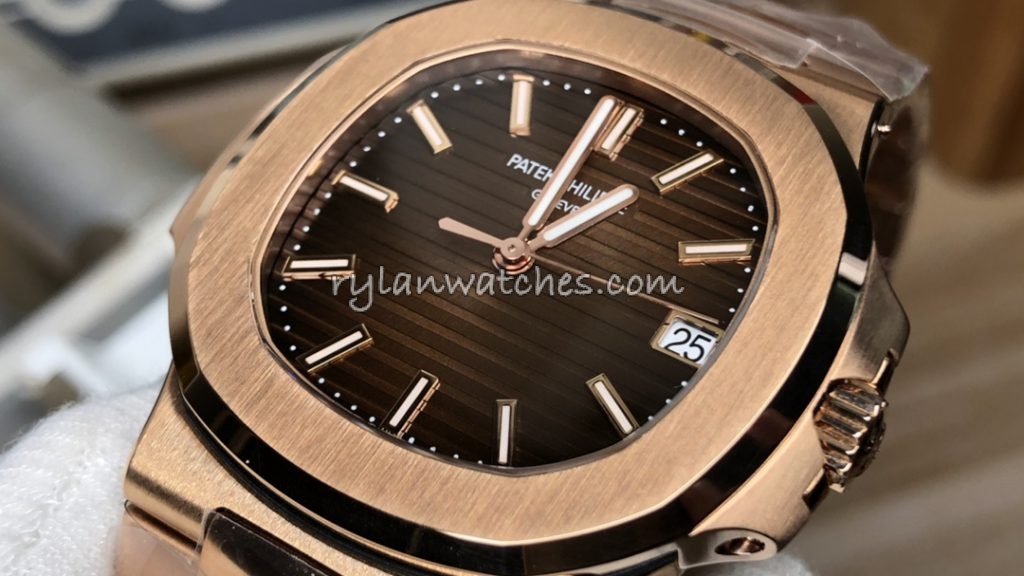
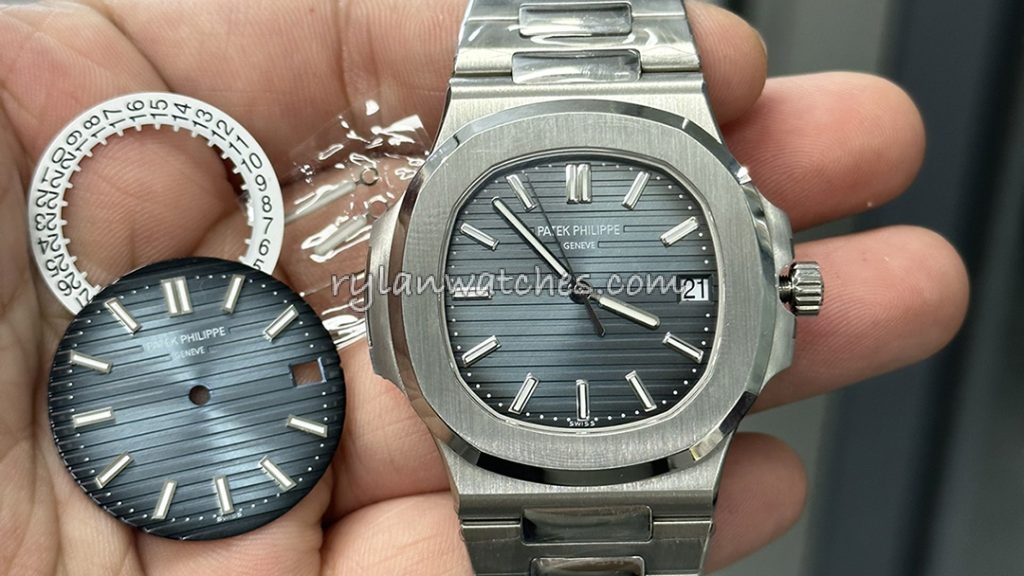
For example, the Nautilus is known for its rounded octagonal bezel, horizontally embossed dial, and contrasting polished and satin finishes, but materials, dimensions, movements, and complications differ by reference. Use the official Nautilus collection as a starting point rather than applying one model’s specifications to every Nautilus.
4. Verify the movement and caseback safely
The movement can provide important evidence, but do not open the caseback yourself. Incorrect tools or handling can damage the case, compromise water resistance, or mark the movement. Patek Philippe states that the caseback should be removed only by an authorized retailer or authorized service center.
A professional should confirm:
- the caliber is correct for the reference and production period;
- the bridge layout, rotor, balance, engravings, and finishing match reliable reference material;
- the movement number and case number are present in their expected locations;
- there are no signs of altered numbers, mixed components, corrosion, or undisclosed repair work; and
- the movement’s condition is consistent with the seller’s description.
Do not expect every Patek Philippe movement to look identical. Calibers, seals, rotor designs, and finishing details vary by model and era. The comparison must be reference-specific.
For safe inspection, consult the manufacturer’s authorized service-center directory.
5. Review case numbers, movement numbers, documents, and provenance
Patek Philippe distinguishes between the movement number engraved on the movement and the case number engraved inside the caseback. According to the manufacturer, accessing these numbers requires removal of the caseback and should be handled by an authorized retailer or service center.
The original Certificate of Origin lists the movement, case, and reference numbers. Patek Philippe describes it as the original document delivered with a new watch and states that it cannot be reissued. Compare every listed detail with the watch, but remember that paperwork alone does not authenticate a transaction.
For an eligible watch first sold more than ten years ago, the owner may request an Extract from the Archives. This is a transcript of information held in the manufacturer’s archives; it is not a replacement Certificate of Origin and should be considered alongside a physical inspection.
Also examine the broader provenance:
- original purchase invoice and retailer information;
- service invoices and repair history;
- previous auction or dealer records;
- ownership history and consistency of dates;
- clear photographs of the watch before payment; and
- a written description of replacement or restored components.
For more detail, see our guide to Patek Philippe case and movement numbers.
6. Common warning signs
No single item below proves that a watch is counterfeit. Several inconsistencies together, however, are a strong reason to stop the transaction and obtain independent verification.
- The seller cannot state the full reference or provides specifications that do not match it.
- Dial printing, date placement, subdial geometry, or hand lengths differ from reference-correct examples.
- Case dimensions are materially different from reliable specifications.
- Polished and satin-finished surfaces meet in the wrong places, or the case shape is visibly distorted.
- The claimed caliber does not match the reference, or the movement layout differs from documented examples.
- Case, movement, reference, invoice, and certificate information is inconsistent.
- The seller refuses an independent inspection or will not provide clear photographs.
- The transaction has no written return policy or authenticity guarantee.
- The price is far below comparable examples without a credible explanation.
- The seller pressures you to pay quickly or use a payment method with no buyer protection.
7. When to seek professional authentication
Use professional help whenever the purchase value is significant, the caseback must be opened, the watch is vintage, the provenance is incomplete, or any detail is inconsistent. Photographs can identify obvious problems, but they cannot reliably establish the movement’s condition, confirm hidden numbers, or rule out a watch assembled from mixed components.
The strongest route is an inspection through an authorized Patek Philippe service center or authorized retailer. If that is not practical before purchase, use an independent watchmaker with documented experience in the exact brand and caliber, and obtain the findings in writing.
8. Final checklist before buying
- Write down the complete reference and all seller claims.
- Compare the watch with reliable information for that exact reference and production period.
- Request sharp, unedited photographs of the dial, case, crown, caseback, clasp, paperwork, and disclosed defects.
- Match the reference, case, and movement information across the watch and documents through a qualified inspection.
- Review service history, ownership history, and any replacement components.
- Confirm the seller’s identity, reputation, physical address, and transaction history.
- Obtain a written invoice, authenticity guarantee, return period, and payment protection.
- Arrange professional inspection before the return window expires.
- If the seller prevents verification or the evidence does not align, walk away.
Frequently asked questions
Can you identify a fake Patek Philippe from photographs?
Photographs may reveal incorrect proportions, printing, components, or finishing, but they usually cannot confirm hidden numbers, movement condition, provenance, or internal modifications. Treat a photo review as preliminary screening.
Is the watch’s weight enough to prove authenticity?
No. Materials, bracelet sizing, model variations, and sophisticated counterfeits can produce similar weights. Compare reference-correct dimensions and construction, then verify the movement and documentation.
Do box and papers prove a Patek Philippe is genuine?
No. Boxes and documents can be separated from watches, altered, or counterfeited. Check their consistency with the physical watch, seller history, service records, and professional inspection.
Where are the movement and case numbers?
Patek Philippe states that the movement number is engraved on the movement and the case number is inside the caseback. The caseback should be removed only by an authorized retailer or authorized service center.
What is the difference between a Certificate of Origin and an Extract from the Archives?
The Certificate of Origin is the original document supplied with a new watch and cannot be reissued. An Extract from the Archives is a later transcript of information held in Patek Philippe’s records and is available only for eligible older watches. Neither eliminates the need to inspect the physical watch.
What is the safest way to buy a genuine Patek Philippe?
For a new watch, use an authorized retailer. For a pre-owned watch, choose an established specialist that provides a written authenticity guarantee, transparent provenance, a meaningful return period, and access to professional inspection.