Patek Philippe super clone serial numbers are often presented as proof of quality or as a way to “verify” a watch. That interpretation goes too far. An engraved number can be checked for consistency with a product description, but it cannot give a replica official registration, authenticity, warranty or provenance.
The first step is to separate four things that listings frequently mix together: the reference number, case number, movement number and paperwork. Once each has a clear role, the numbers become useful product details instead of a misleading authenticity claim.
Identifies a model or configuration; it is not the unique identity of one individual watch.
On a genuine Patek Philippe, this identifies the case and is recorded separately.
Identifies the movement rather than the external model reference.
Records information, but its value depends on origin—not merely matching printed numbers.
Why “Serial Number” Is Often the Wrong Shortcut
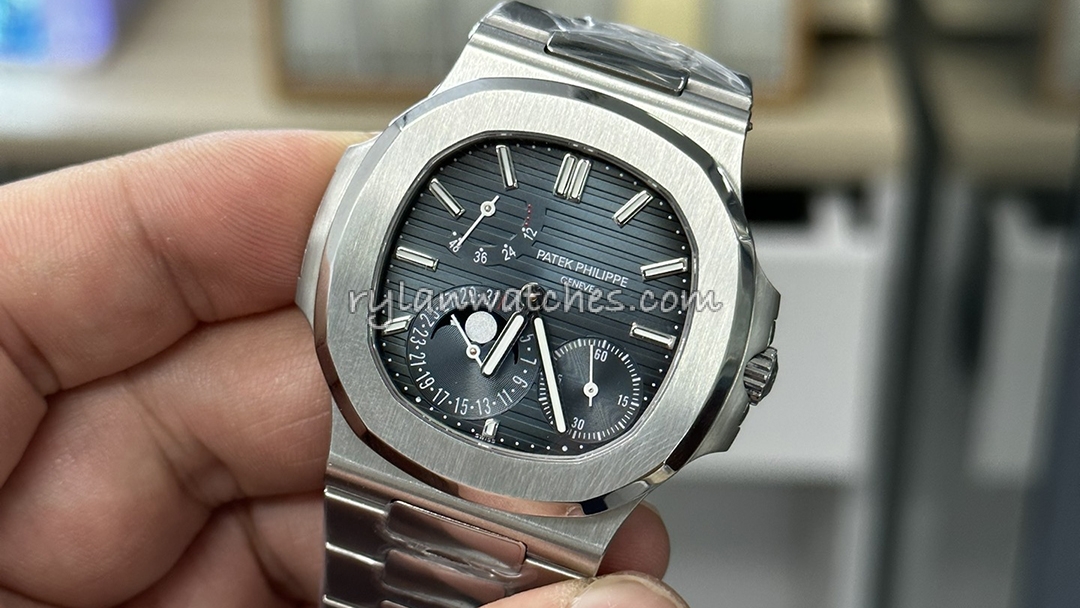
Replica listings commonly use “serial number” as a catch-all phrase for any alphanumeric engraving. In official Patek Philippe terminology, the more useful distinction is between the watch’s reference, movement number and case number. These fields answer different questions.
The reference identifies the watch design and configuration. A reference such as a Nautilus or Aquanaut designation can be shared by watches of the same model, with suffixes sometimes distinguishing material, dial or bracelet variations. It should not be treated as a unique number for one watch.
For genuine watches, Patek Philippe’s official authenticity FAQ states that the movement number is engraved on the movement and the case number is engraved inside the case back. It also says that opening the case should be performed only by an authorized retailer or authorized service center.
What the Numbers Mean on a Super Clone
On a replica, a reference-style marking helps show which design the watch intends to reproduce. Case and movement-style engravings can add visual completeness, especially when a caseback or movement is visible in product photography. Their useful role is descriptive and cosmetic.
They do not create an entry in Patek Philippe’s records. They do not activate a manufacturer warranty, qualify the watch for brand service or transform replica paperwork into an official document. Matching numbers across a watch, card and box show that the set was assembled consistently; they do not prove where the watch originated.
Certificate of Origin and Extract From the Archives
These two genuine Patek Philippe documents are not interchangeable. According to the manufacture’s Extract from the Archives FAQ, the original Certificate of Origin is delivered with a new watch, contains its movement, case and reference numbers, serves as its warranty document and cannot be replaced with another copy.
An Extract from the Archives is a partial transcript of information held in Patek Philippe’s historical records. The current service is available only for eligible watches whose first sale was more than ten years before the request, and it requires specified photographs or qualifying service documentation. An extract is not a replacement Certificate of Origin.
A replica card, booklet, QR code, stamp or “full set” package is therefore presentation material. Even when the printed numbers match the watch, it does not gain the origin or function of either official document.
Evaluate Engraving as Finish, Not Authentication
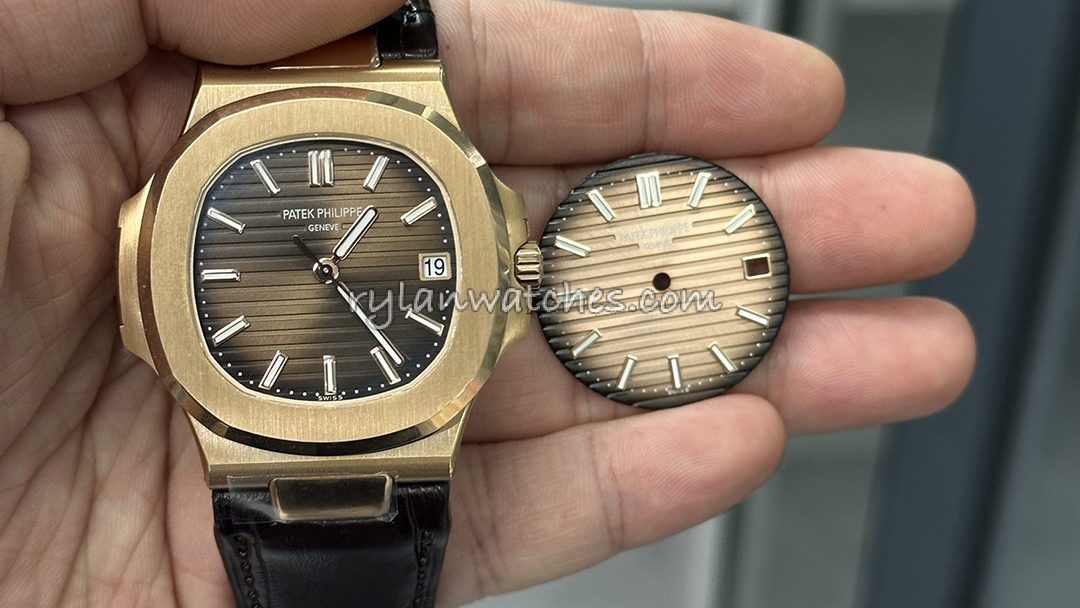
A close photograph can help assess whether the engraving looks clean, centered and consistent with the rest of the watch. Look for legible characters, even spacing, a finish that does not appear damaged and agreement between the photographed item and the written listing. These checks help identify poor production or a product different from the one advertised.
Engraving depth by itself is not a universal grade. Different surfaces, coatings and manufacturing methods can produce different appearances. A highly polished number does not prove movement quality, timekeeping, water resistance or long-term reliability. Those features require their own product specifications and functional evidence.
The replica watch QC guide explains how photographs, timekeeping information and function checks work together before shipment. Number photography should be one part of that evidence—not the entire QC decision.
Four Number Scenarios and Their Real Meaning
The watch, listing and accessories are internally consistent. This is useful product evidence, not official authentication.
Pause and ask which watch or accessory set will actually be delivered.
Uniqueness cannot be established from one listing and does not prove official registration.
Treat the claim as incompatible with the watch being openly sold as a replica.
Use an Evidence Ladder Before Buying
- Listing identity: confirm the reference-style designation, dial, case, bracelet and selected quality option.
- Product-specific evidence: review photographs of the exact watch or the QC material supplied for the order.
- Functional evidence: assess timekeeping and every listed display or complication separately from engraving.
- Seller terms: understand what happens if the received configuration differs from the confirmed order.
The super clone watch buying guide covers the wider purchase process. For one specific design, the Nautilus 5711 super clone analysis shows how proportions, dial, case, bracelet and movement must be considered together.
Authenticating a Watch Represented as Genuine
If a watch is being sold as an authentic Patek Philippe, replica-market checks are not enough. Do not open the case yourself to search for numbers. Use an authorized service route or a qualified independent specialist who can examine the watch safely, then compare the physical watch, documentation and provenance as a complete record.
The separate guide on how to spot a fake Patek Philippe explains this broader authentication process. A number that appears plausible is only one data point; it cannot overrule contradictions in the dial, movement, case, paperwork or ownership history.
Patek Philippe Super Clone Serial Numbers: Final Interpretation
Patek Philippe super clone serial numbers are best treated as visual and organizational details. They can help confirm that the photographed watch, stated reference and presentation set are consistent. They cannot provide manufacturer recognition, official provenance or proof of authenticity.
If you are comparing replica designs, browse the current Patek Philippe super clone collection by model and use the individual product page for its current specifications, options and photographs.
Trademark notice: Watches discussed in this article are independently produced replicas. They are not manufactured, authorized or endorsed by Patek Philippe. Patek Philippe and the named collection names are trademarks of their respective owner.