

Order Received: What Happens Immediately After Checkout
What happens after you place an order often feels unclear at first. The moment you complete checkout, your order does not disappear into a black hole, even if it may seem that way from the outside. What actually happens first is not shipping, packaging, or label creation, but confirmation. This stage exists to slow the process down just enough to prevent mistakes that are difficult or impossible to fix later.
As soon as the order is placed, the system records a fixed snapshot of your purchase. This includes the exact model, configuration, payment method, delivery country, and contact details. That snapshot becomes the reference point for every step that follows. Nothing moves forward until this information is confirmed to be complete and internally consistent.
One important detail many buyers do not realize is that payment confirmation and order handling are intentionally separated. Payment verification ensures that the transaction is valid and complete, but it does not automatically trigger physical preparation. This separation protects both sides. It prevents situations where a watch is prepared or allocated before an order is fully cleared, and it avoids rushing fulfillment based solely on financial signals.
During this stage, the order is checked for common issues that often go unnoticed by buyers. These include mismatched configurations, incomplete shipping details, country-specific restrictions, or model variants that look similar but are not identical. Catching these issues early prevents delays later that would otherwise require rework, reshipment, or uncomfortable back-and-forth communication.
From the buyer’s perspective, this phase can feel inactive. There is usually no tracking number, no shipping notification, and no visible progress. This silence is often misinterpreted as inaction. In reality, it is a deliberate buffer that allows the rest of the process to run smoothly. Orders that skip or rush this stage are statistically more likely to encounter problems after dispatch. Another purpose of this step is queue management. Orders are placed into a structured workflow rather than processed randomly. This ensures fairness and predictability, especially during periods of higher volume. Each order waits its turn to be reviewed and prepared properly, rather than being rushed through based on timing alone.
This initial confirmation phase also sets expectations internally. Once an order passes this stage, it is treated as a committed request, not a tentative transaction. Resources such as production allocation, quality control scheduling, and shipping preparation are planned based on confirmed orders, not assumptions. For buyers, understanding this stage helps reduce anxiety.
The absence of immediate updates does not mean your order has stalled. It means the groundwork is being laid to ensure that what moves forward is accurate, verified, and aligned with what you actually ordered. In short, the first step after checkout is about precision, not speed. It is the quiet foundation that allows everything else — from quality control to shipping — to happen with fewer surprises and greater confidence.
Manual Order Review: Why Human Checks Still Matter
After an order passes the initial system confirmation, it enters a stage that many buyers do not expect: manual review. In an age where automation dominates online shopping, it is easy to assume everything moves forward automatically. With watches, that assumption often leads to mistakes. This is precisely why human checks still matter. At this point, a real person reviews the order in detail. This review is not symbolic. It exists because watches are not uniform products. Even when two models look nearly identical on a product page, there can be meaningful differences beneath the surface. Dial variations, bezel revisions, bracelet types, clasp versions, or movement generations can change over time without altering the model name.
The reviewer compares the order against current production information. This includes confirming which version is available, which batch it belongs to, and whether the configuration requested matches what is realistically deliverable at that moment. Automated systems struggle with these nuances, especially when visual similarity hides technical differences. This step also catches inconsistencies that buyers may not notice during checkout. A common example is a configuration that exists in theory but is temporarily unavailable in practice. Without manual review, such an order might proceed until it fails later in the process, causing longer delays and confusion.
Human review also accounts for geographic factors. Shipping destinations matter. Certain routes, carriers, or packaging methods may not be suitable for every country. Identifying these considerations early allows adjustments before the watch is prepared, rather than after it is already boxed. Another important function of manual review is prioritization. Orders are not processed blindly in the order they arrive. Instead, they are grouped and sequenced based on readiness. An order that passes all checks cleanly can move forward smoothly, while one that requires clarification or adjustment is paused before it creates downstream problems.
From the buyer’s perspective, this stage is invisible. There is usually no notification that a human has reviewed the order. However, this invisibility does not reduce its importance. In fact, it is precisely because this work happens quietly that the later stages feel more predictable. Skipping manual review might save time on paper, but it increases the likelihood of errors that are far more costly to fix. Once a watch enters quality control or shipping with the wrong specifications, reversing the process becomes slow and complicated.
Manual order review acts as a checkpoint between intention and execution. It ensures that what you asked for, what is available, and what will be prepared are aligned before physical work begins. For buyers who understand this step, waiting feels different. It no longer feels like uncertainty. It feels like due diligence happening on their behalf.
Production Allocation vs Custom Preparation
Once an order has passed system confirmation and manual review, the next step in what happens after you place an order is production handling. This stage is often misunderstood by buyers because it does not always mean the same thing for every order. Assuming that it does can lead to incorrect expectations around timing and availability. At this point, the order follows one of two paths. The first is production allocation. The second is custom preparation. Both are legitimate, controlled processes, and neither is inherently better than the other. The difference lies in how closely a watch must be matched to your specific order.
Production allocation means assigning a watch from a recent production batch that already meets your exact specifications. This is not the same as pulling an item from long-term storage. Allocation typically happens only from fresh or recently completed batches, where condition, consistency, and traceability are known. This approach is used when the requested configuration aligns perfectly with available stock. Because the watch already exists in finished form, this path can appear faster. However, speed is not the primary reason allocation is used. The real advantage is predictability. The watch has already passed internal checks and only needs to be scheduled for quality control verification.
Custom preparation follows a different logic. In this case, the watch is not taken as-is from a completed batch. Instead, it requires final assembly, adjustment, or configuration before it can be considered complete. This may involve pairing specific components, making final movement adjustments, or completing assembly steps that are intentionally left until after an order is confirmed. Custom preparation is often misunderstood as a delay or inefficiency. In reality, it exists to ensure consistency. Certain components are best matched at the final stage to avoid tolerance issues or cosmetic inconsistencies. Completing these steps too early increases the chance that parts from different runs behave or age differently.
Another reason custom preparation exists is to avoid unnecessary idle time. Fully assembling and storing watches indefinitely introduces risks: environmental exposure, lubrication settling, or minor handling wear. Preparing a watch closer to the moment it will be shipped reduces these risks. From the buyer’s perspective, the distinction between allocation and custom preparation is usually invisible. Both paths ultimately lead to the same next step: quality control. However, understanding that different orders may follow different preparation paths explains why timelines are not identical, even for the same model.
This stage is also where production planning and workload balancing matter. Orders are not rushed through preparation simply to appear fast. They are scheduled to ensure that QC resources are available when the watch is ready. Sending a watch to QC before it is properly prepared defeats the purpose of inspection. Importantly, neither path represents a compromise. Allocation is not “old stock,” and custom preparation is not “unfinished work.” Both are controlled methods designed to deliver a watch that performs as expected once it reaches the buyer.
When buyers are unaware of this distinction, waiting can feel arbitrary. When they understand it, waiting feels intentional. This stage exists to align availability, preparation quality, and inspection readiness before the watch moves forward. Production handling is not about speed or shortcuts. It is about choosing the correct path for each order so that what arrives on your wrist reflects consistency rather than coincidence.
Quality Control (QC): What Is Checked in Detail
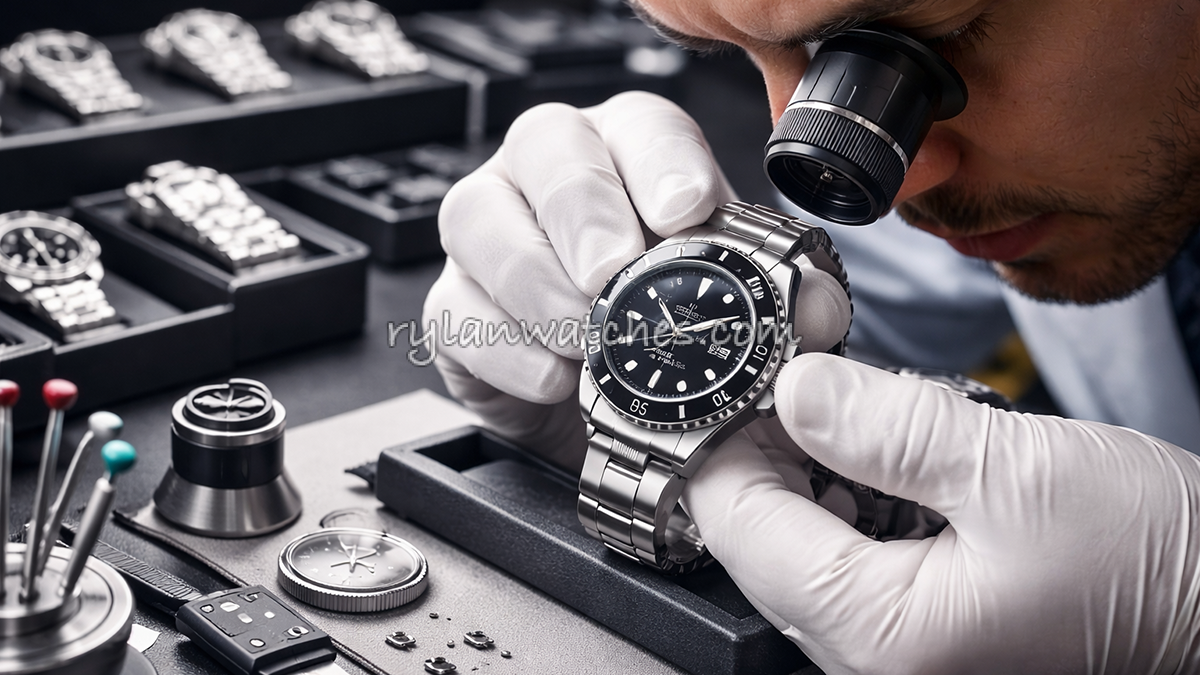
Quality Control, often shortened to QC, is the stage most buyers hear about but rarely fully understand. Many people assume QC is a quick visual glance before shipping. In reality, it is a structured inspection process designed to catch issues that are easy to miss once a watch is sealed, shipped, and worn. QC begins with visual inspection. This is not about subjective beauty or marketing appeal. It focuses on consistency and alignment. Inspectors look at dial printing clarity, marker placement, hand alignment, bezel positioning, and overall symmetry. Small deviations may seem insignificant in photos, but on a watch, even minor misalignment becomes obvious during daily wear.
Attention is also given to finishing details. Case edges, brushing patterns, polishing transitions, and crown alignment are checked to ensure they match the expected standard for that model. These details do not affect timekeeping, but they strongly affect long-term satisfaction. Once a watch is worn regularly, small finishing flaws become increasingly noticeable. After visual inspection, mechanical checks follow. The movement is tested for basic operational integrity. This includes checking crown functions, winding resistance, time-setting behavior, and date or complication changes if applicable. The goal is not to simulate years of use, but to confirm that the movement behaves correctly under normal conditions.
Timekeeping stability is also observed. While QC does not attempt laboratory-level chronometer testing, it looks for obvious irregularities such as inconsistent ticking, erratic hand movement, or abnormal power behavior. These signs often indicate underlying issues that would worsen after shipping. Another key aspect of QC is functional consistency. Buttons, pushers, or rotating components are checked to ensure they operate smoothly and return correctly. This step helps catch mechanical resistance or misalignment that could cause premature wear.
Documentation is often created during QC. Photos or videos are taken to record the exact watch that has passed inspection. These are not promotional materials. They are records. They show the real watch, in its actual condition, at the moment it is approved for shipment. This documentation serves two purposes. First, it allows buyers to verify that the watch meets expectations before it is packed. Second, it creates a reference point. If a question arises later, both sides can refer back to the same baseline condition.
QC exists because international shipping magnifies small problems. A minor issue that could be corrected locally becomes far more complicated once borders, carriers, and transit time are involved. Catching issues early is not about perfection; it is about practicality. For buyers who want a deeper understanding of how this inspection stage fits into the full order lifecycle, our Buying Guide provides broader context on how quality control, preparation, and verification work together. Understanding what QC actually checks often transforms waiting time into reassurance.
Ultimately, QC is not a promise that nothing will ever go wrong. It is a risk-reduction step. It filters out preventable problems before the watch leaves controlled hands. That is why this stage is given time and attention rather than rushed for appearances. When QC is done properly, the watch that moves forward is not just visually acceptable, but functionally verified. This is the point where uncertainty starts to meaningfully decrease.
QC Approval & Buyer Confirmation: Why This Step Exists
After a watch passes quality control, many buyers assume the next step should be immediate shipping. When that does not happen, confusion often follows. The approval and buyer confirmation stage is frequently misunderstood as unnecessary delay, when in reality it exists to protect both the buyer and the fulfillment process. This stage begins once QC inspection is completed and documented. At this point, the watch has already been visually and mechanically checked. Nothing here is theoretical. The watch physically exists, has been inspected, and is ready to move forward. The question now is not whether the watch can be shipped, but whether it should be shipped without alignment.
Buyer confirmation serves as a shared checkpoint. It allows the buyer to see the exact watch that has passed QC, not a representative image or catalog photo. This distinction matters. Product pages often show idealized images taken under controlled conditions. QC documentation shows the real object that will be packed and sent. This step is especially important because watches are detail-driven products. Small visual elements such as marker alignment, dial texture, bezel spacing, or hand positioning may not affect function, but they strongly affect satisfaction. What one buyer considers acceptable, another may question. Confirmation allows this to be addressed before shipping rather than after delivery.
From the fulfillment side, this step dramatically reduces post-delivery disputes. Once a watch is shipped internationally, reversing a decision becomes complex. Returns are slow, expensive, and sometimes impractical. Addressing concerns before shipping saves time and cost for everyone involved. It is important to understand what this step is not. It is not an opportunity to endlessly compare or request perfection beyond reasonable standards. QC approval means the watch meets defined criteria. Buyer confirmation exists to ensure expectations are aligned, not to restart the production process.
In practice, most confirmations are straightforward. Buyers review the QC documentation, confirm that the watch matches expectations, and approve shipment. The process moves forward without issue. The existence of this step does not imply that problems are common. It exists precisely to keep them rare. Another reason this stage exists is accountability. Once a buyer approves QC, both sides share a clear reference point. If a question arises later, there is a documented baseline. This clarity protects buyers from uncertainty and sellers from ambiguous claims.
Some buyers worry that confirmation slows everything down. In reality, skipping this step would only create the illusion of speed. Any issue discovered after delivery would cost far more time than a brief confirmation window. This stage also reinforces trust. It shows that the process is not designed to push products out the door as quickly as possible, but to ensure that what is delivered is what was agreed upon. Transparency replaces assumption.
QC approval and buyer confirmation represent the moment where uncertainty meaningfully decreases. The watch is no longer an abstract order. It is a verified object, approved by both sides, ready for the final steps. Once confirmation is complete, the process moves forward with clarity. Packaging and shipping begin with shared understanding rather than unresolved questions.
Secure Packaging & Discreet Handling
Once QC approval and buyer confirmation are completed, the process moves into a phase that is often underestimated: packaging and handling. Many people associate packaging with presentation, branding, or unboxing experience. In reality, at this stage, packaging serves a very different purpose. It is about protection, discretion, and reducing risk during transit.
The first priority of packaging is physical stability. A watch is a compact object, but it contains delicate components that can be affected by repeated movement, vibration, or impact. During international shipping, parcels may be handled dozens of times, loaded onto multiple vehicles, and exposed to varying conditions. Packaging must account for this reality.
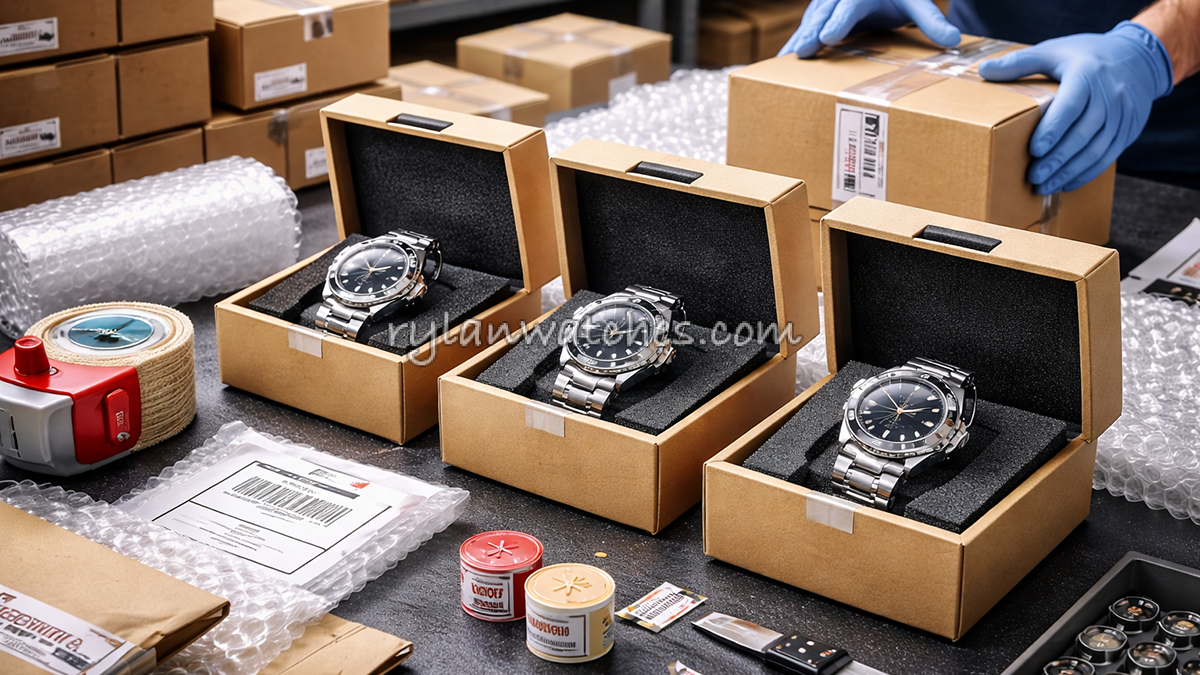
The watch is secured in a way that prevents internal movement. This includes stabilizing the bracelet or strap, protecting the case and crystal, and ensuring that the crown and pushers are not under pressure. The goal is to keep the watch in the same condition it was in at the moment of QC approval. Protective materials are selected for function rather than appearance. Layers are used to absorb shock, reduce friction, and prevent surface contact that could cause scratches. Excessive packaging can be just as problematic as insufficient packaging, so balance matters. Everything used serves a specific purpose.
Another critical aspect of this stage is discretion. International shipping introduces risks that have nothing to do with product quality. Visible branding, suggestive labeling, or unnecessary markings can increase attention during transit. Discreet handling minimizes this risk by keeping the exterior of the package neutral and unremarkable. Discretion also applies to documentation. Shipping paperwork is prepared carefully to ensure accuracy without inviting unnecessary scrutiny. This reduces the chance of delays caused by misunderstandings or incorrect declarations.
Timing is another consideration. Packaging is coordinated with shipping schedules so that parcels do not sit idle longer than necessary. Leaving a packed watch in storage for extended periods increases exposure to environmental factors. Aligning packaging closely with dispatch reduces this risk. From the buyer’s perspective, this stage is largely invisible. There are usually no photos or updates because the work being done is preventative rather than visual. However, its impact becomes clear upon delivery. A watch that arrives in the same condition it left QC is the result of careful packaging and handling decisions made here.
It is also worth noting what this stage avoids. There is no emphasis on decorative boxes or elaborate presentation elements that add bulk without adding protection. Those elements can shift during transit and sometimes cause more harm than good. Secure packaging is not about impressing the buyer before the watch is worn. It is about ensuring that the first impression happens on the wrist, not through damage, misalignment, or unnecessary wear caused during shipping.
This stage exists because shipping is unpredictable, even when well managed. The best way to handle unpredictability is preparation. Proper packaging and discreet handling do not eliminate all risk, but they significantly reduce preventable issues. By the time a parcel leaves this stage, it is not simply boxed. It is stabilized, protected, and prepared for the realities of international transit. This preparation is what allows the next stage — shipping — to begin with confidence rather than hope.
International Shipping, Tracking, and Transit Reality
Once a package leaves the fulfillment center, the process enters its most opaque stage: international shipping. This is where many buyers feel the highest level of anxiety, largely because control shifts away from the seller and into the global logistics network. Shipping does not begin the moment a tracking number is created. Tracking information only becomes meaningful once the parcel is physically handed over to the carrier and scanned into the system. Until that scan occurs, there is nothing real to follow. This is why tracking numbers are often issued slightly before or at the moment of dispatch, not at checkout.
After dispatch, the parcel moves through several stages that are rarely explained clearly. These include local carrier intake, export processing, transit routing, and destination-side handling. Each stage may involve different systems, which is why tracking updates can appear irregular or paused. One of the most misunderstood aspects of international shipping is tracking silence. It is common for tracking to show no updates for several days, especially while a parcel is in transit between countries. This does not mean the package is lost or delayed. It often means it is moving through systems that do not provide real-time public updates.
Another source of confusion is routing. Packages do not always travel in a straight line. They may pass through intermediary hubs based on carrier efficiency, customs clearance patterns, or cargo consolidation schedules. What looks like a detour is often the fastest or safest available route. Customs handling is another area where expectations and reality diverge. Customs clearance does not operate on a fixed timeline. Processing speed varies by country, volume, and inspection priority. Most parcels pass through without issue, but even routine processing can take time without generating visible tracking updates.
It is also important to understand that shipping speed is not the same as shipping reliability. Routes and carriers are selected based on historical success rates, not just advertised delivery times. A slightly slower route that consistently delivers safely is preferred over a faster one with higher risk. Buyers often refresh tracking pages frequently, hoping for reassurance. Ironically, this can increase anxiety rather than reduce it. Tracking systems are designed to log major events, not continuous movement. Long gaps between updates are normal and expected.
Understanding how international logistics works can help reframe this waiting period. Neutral resources such as this overview of international logistics explain why visibility decreases once a parcel crosses borders. Another reality of transit is that delays are often administrative rather than physical. A parcel may arrive at a hub quickly but wait for processing based on scheduling, capacity, or compliance checks. This waiting does not indicate a problem with the package itself.
From the seller’s perspective, this stage is largely about monitoring rather than intervention. Until a clear exception appears, there is little that can be done to accelerate movement. Intervening too early can sometimes complicate rather than help. For buyers, the key is understanding what is normal. A lack of updates for several days, route changes, or temporary status messages are part of standard international shipping behavior. They are not warning signs on their own.
When a parcel reaches the destination country, updates usually resume more frequently. Final delivery tends to feel sudden after a long period of quiet movement. This stage tests patience, but it is also where preparation pays off. Proper packaging, accurate documentation, and reliable routing decisions made earlier are what allow the parcel to pass through this phase successfully. International shipping is not fast, visible, or emotionally satisfying. It is procedural. Understanding that reality transforms waiting from uncertainty into expectation.
After-Sales Support: What Happens If Something Goes Wrong
For many buyers, the biggest concern does not end with shipping. It begins after delivery. Once the watch arrives, questions naturally shift from “Where is my order?” to “What happens if something goes wrong?” This is where after-sales support becomes the final, and often most important, part of the entire process. After-sales support exists because no physical product exists in a perfect, risk-free environment. Transportation, climate changes, daily wear habits, and individual expectations all introduce variables. A responsible process acknowledges this reality rather than pretending problems never occur.
The first principle of after-sales support is clarity. When an issue arises, the goal is not to assign blame or create friction, but to understand what is actually happening. Most issues fall into a few broad categories: adjustment-related, functional behavior questions, shipping-related concerns, or cosmetic observations noticed after arrival. Many situations that initially feel like problems turn out to be normal behavior or simple adjustments. Mechanical watches, for example, may behave differently depending on how they are worn, wound, or stored. Clear guidance at this stage often resolves concerns quickly without any need for further action.
When an issue requires more attention, documentation becomes important. Photos or videos help establish context and allow accurate assessment. This is not about skepticism. It is about precision. Understanding the exact nature of an issue prevents unnecessary steps and leads to faster, more appropriate solutions. One key aspect of effective after-sales support is proportional response. Not every issue requires the same level of intervention. Minor concerns may be addressed through advice or local adjustment recommendations. More serious issues may require repair coordination or other solutions. The response matches the problem, not a rigid policy.
Another important factor is practicality. International returns are complex and time-consuming. Whenever possible, solutions are designed to avoid unnecessary shipping back and forth. This approach reduces downtime for the buyer and avoids introducing new risks during transit. Communication plays a central role here. Clear, calm exchanges prevent escalation and misunderstanding. After-sales support works best when both sides focus on resolution rather than urgency. Most problems benefit from methodical handling rather than rushed decisions.
It is also important to understand what after-sales support represents conceptually. It is not an extension of marketing. It is an acknowledgment that responsibility does not end at delivery. A process that ends the moment a package arrives is incomplete by definition. For buyers, knowing that support exists changes how they experience the entire purchase. Instead of feeling alone after delivery, they know there is a framework in place if questions or concerns arise. This knowledge reduces anxiety even if support is never actually needed.
After-sales support also creates continuity. The same care applied during QC, packaging, and shipping carries forward into ownership. This continuity is what transforms a transaction into a relationship, even if interaction is minimal. Ultimately, after-sales support is not about expecting problems. It is about being prepared for them. When buyers understand that issues will be handled thoughtfully and proportionally, trust replaces worry. This final stage completes the process. From order confirmation to delivery and beyond, each step exists to reduce uncertainty. By the time after-sales support is understood, the original question — “What happens after I place an order?” — has a clear answer: a structured process designed to move from uncertainty to confidence, step by step.